While mainstream technology headlines are currently dominated by Meta’s surging popularity with its AI-powered smart glasses, a quiet software update has revealed that Mark Zuckerberg’s tech giant has by no means abandoned its long-term virtual reality and metaverse aspirations.
A newly uncovered asset points directly to the next evolution of Meta’s mixed-reality hardware ecosystem. As the company prepares for its upcoming Meta Connect showcase, a blend of leaked hardware, mounting regulatory hurdles, and an aggressive pivot toward artificial intelligence-native hardware is painting a complex picture of Meta’s future.
Executive Overview
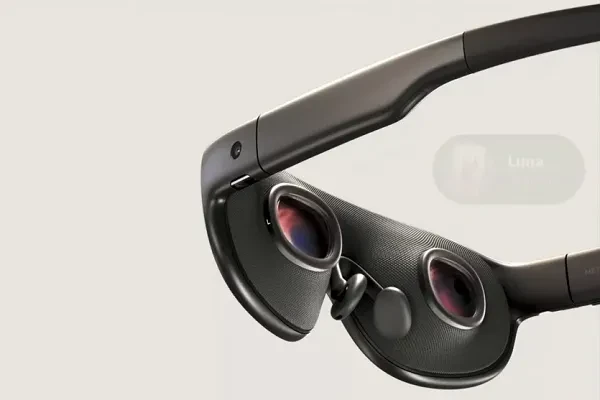
Meta Platforms may appear to have shifted its immediate public relations and hardware strategy toward lightweight, AI-infused spectacles, but its internal roadmaps tell a vastly different story. Recent discoveries within the company’s firmware packages have exposed a secretive next-generation mixed-reality (MR) headset, internally designated as "Phoenix."
This leak, first unearthed by prominent VR data miner and researcher @Lunayian via a HorizonOS Prescription Lens firmware package, offers the clearest picture yet of what the post-Quest era of Meta’s immersive computing hardware will look like. According to industry reports from outlets like Road to VR, Phoenix represents just one branch of a sprawling, multi-pronged hardware strategy that also encompasses cutting-edge augmented reality (AR) glasses such as the Hypernova and Aria projects.
Yet, this ambitious hardware expansion arrives at a precarious crossroads for Meta. While demand for its wearable AI technology has demonstrated the commercial viability of face-worn computing, it has simultaneously ignited severe privacy concerns. Regulators in the United States and the United Kingdom have launched investigations into the company’s recording-enabled smart glasses, and several entertainment venues and retail stores have enacted outright bans.
As Meta heads toward its pivotal Meta Connect conference, the company faces an uphill battle: convincing consumers, lawmakers, and shareholders that its sweeping vision of an AI-driven, immersive future can coexist with the mounting social and legal friction of everyday surveillance.
Detailed Chronology: Uncovering the "Phoenix" Leak and Meta’s Hardware Pipeline
To understand where Meta is heading, it is essential to trace how this latest hardware roadmap came to light and how it fits into the company’s broader historical trajectory regarding the metaverse.
The HorizonOS Firmware Discovery
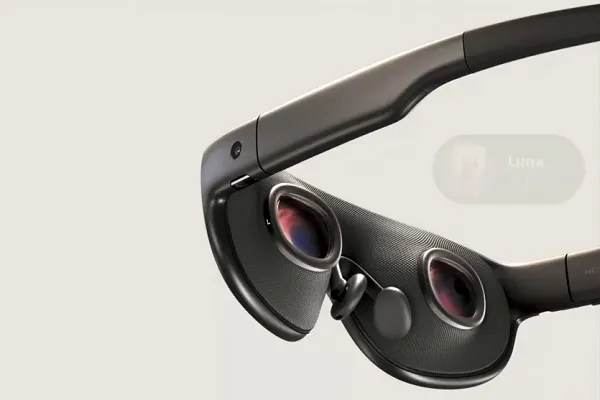
The revelation of the "Phoenix" headset began not with a flashy press release or a keynote teaser, but inside the dense, obscure files of Meta’s operating system. VR researcher @Lunayian discovered a short video embedded deep within the recently updated HorizonOS Prescription Lens firmware package.
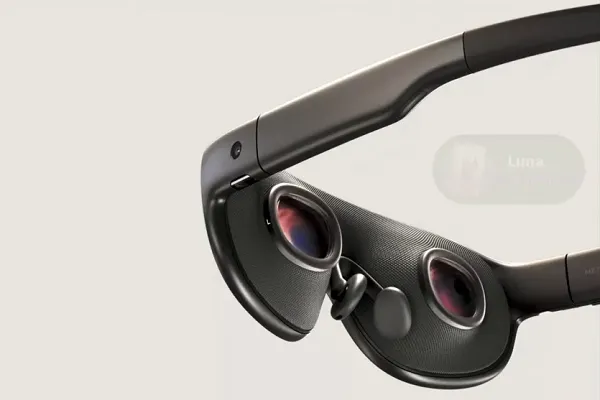
While short in duration, the video provided a structural look at a new mixed-reality headset model that diverges significantly from the current design language of the Meta Quest 3 and Quest Pro lineups. Industry analysts quickly cross-referenced the asset, tying it to ongoing reports that Meta has been quietly incubating a device codenamed "Phoenix"—anticipated by hardware watchers to make a formal debut around the 2026 window.
Tracing Meta’s Multi-Tiered Hardware Strategy
The Phoenix leak confirms that Meta’s hardware division is simultaneously executing several distinct research and development pipelines:
- The Mixed-Reality Line (The "Phoenix" Era): Serving as the spiritual successor to the Quest ecosystem, Phoenix is expected to push the boundaries of spatial computing, blending high-fidelity pass-through video with advanced neural interfaces and lightweight ergonomic design. It proves that despite corporate downplaying of the term "metaverse" in favor of "AI," Meta still views immersive VR/MR environments as the ultimate destination for digital interaction.
- The Lightweight Smart Glasses Line ("Hypernova"): Positioned as the direct commercial evolution of Meta’s current Ray-Ban smart glasses collaboration, the Hypernova line aims to integrate heads-up displays (HUDs) into a traditional eyewear form factor, marrying generative AI capabilities with real-time visual overlays.
- The Advanced Research Line ("Aria"): Distinguished by its chunky, sensor-laden black frames, the Aria project functions as Meta’s internal testbed. Packed with an array of cameras, microphones, and spatial tracking sensors, Aria continues to provide the foundational telemetry data required to train Meta’s computer vision and contextual AI models.
The Pivot from Pure VR to AI-Infused Spatial Computing
When Meta famously rebranded from Facebook in 2021, the company bet its entire corporate identity on the metaverse—a fully immersive, virtual-first social and economic landscape. However, astronomical financial losses within Reality Labs, combined with the explosive mainstream breakthrough of generative AI in late 2022 and 2023, forced a strategic realignment.
For the past two years, Meta’s narrative has heavily favored artificial intelligence, specifically positioning smart glasses as the ideal consumer vessel for digital assistants. The Phoenix leak, however, bridges these two worlds. It demonstrates that Meta has not abandoned immersive headsets; rather, it has re-engineered its VR roadmap to be fundamentally co-dependent with its AI infrastructure. Future headsets will not simply be screens strapped to the face for gaming; they will act as spatial AI nodes capable of contextualizing the physical and virtual worlds simultaneously.

Supporting Context, Market Dynamics, and Regulatory Pressures
While the technological horizon looks promising for Meta’s engineering teams, the commercial and regulatory reality on the ground presents significant hurdles. The company’s aggressive push into facial computing is colliding head-on with growing societal anxieties regarding privacy, consent, and continuous surveillance.
The Surging Demand for AI Wearables vs. The Privacy Backlash
Meta’s current generation of AI-enabled smart glasses has enjoyed undeniable commercial momentum, capturing the public imagination in a way that early VR headsets struggled to do consistently. Consumers have embraced the ability to ask multimodal AI assistants questions about their surroundings, capture spontaneous point-of-view photos, and stream video hands-free.
However, this exact feature set has triggered a fierce backlash. The inclusion of discreet, high-definition recording capabilities has raised alarms among privacy advocates, civil liberties groups, and everyday citizens. Negative sentiment surrounding the potential for non-consensual recording in public and private spaces has cast a dark cloud over the product line, threatening to stunt long-term adoption rates.
Global Investigations and Venue Bans
The friction between Meta’s hardware ambitions and public privacy expectations has graduated from online discourse to institutional action:
- Regulatory Scrutiny: Meta currently faces formal inquiries and investigations from regulatory bodies in both the United States and the United Kingdom regarding the data collection practices and privacy safeguards of its AI smart glasses.
- Commercial Restrictions: A growing number of retail stores, gyms, concert venues, and entertainment complexes have begun banning the use of recording-enabled eyewear on their premises.
These developments present a formidable compliance challenge for Meta. If the company is forced to implement heavy restrictions—such as mandatory, highly visible recording indicator lights that cannot be easily disabled, or geofenced recording blocks—it could severely compromise the user experience and diminish the core value proposition of the devices.
Official Statements and Industry Perspectives
Although Meta has maintained relative silence regarding the specific details of the leaked Phoenix headset, company executives have consistently reiterated their long-term commitment to spatial computing and wearable AI during recent earnings calls and media appearances.
Industry insiders note that the leak aligns perfectly with Meta Chief Technology Officer Andrew Bosworth’s previous remarks regarding the convergence of AR, VR, and AI. Bosworth has frequently emphasized that the ultimate goal of Meta’s hardware division is to compress these disparate technologies into a single, seamless pair of everyday glasses—while maintaining high-end immersive capabilities for dedicated productivity and entertainment devices like the Phoenix line.
Independent hardware analysts, writing in publications such as Road to VR and Social Media Today, have echoed these sentiments. Many point out that while the term "metaverse" may have temporarily taken a back seat in marketing decks due to investor fatigue, the underlying technical infrastructure—spatial mapping, hand tracking, avatar fidelity, and real-time 3D rendering—remains the core engineering focus of Meta’s multi-billion-dollar R&D engine.
Future Outlook: What to Expect at Meta Connect
As the technology sector turns its gaze toward the upcoming Meta Connect showcase, anticipation is reaching a fever pitch. Scheduled to take place later this month, the conference is traditionally Meta’s primary stage for unveiling its hardware and software roadmap for the coming year.
Industry observers expect Meta to address several critical fronts during the event:
- Hardware Teasers and Official Announcements: While a full commercial release for the Phoenix headset may still be some time away (with 2026 frequently cited as the target window), Meta may offer a conceptual preview or developer-focused update regarding its next-gen mixed-reality ecosystem.
- AI Integration Deep Dives: Expect the company to showcase how its Llama AI models are being integrated more deeply into HorizonOS, transforming headsets and glasses from passive display devices into proactive, context-aware digital companions.
- Addressing the Privacy Elephant in the Room: Given the intensity of the ongoing UK and US investigations and public pushback against its recording glasses, Meta’s leadership will likely address how they plan to balance innovative wearable tech with robust privacy frameworks to restore consumer trust.
Conclusion
The accidental leak of the Phoenix mixed-reality headset serves as a definitive reality check for the tech industry: Meta’s metaverse dream is not dead; it is simply evolving. By fusing immersive spatial computing with generative artificial intelligence, Meta is attempting to build an interconnected ecosystem that spans from lightweight, everyday eyewear to advanced, room-scale headsets.
Yet, as regulatory walls close in and public skepticism regarding pervasive recording grows, the success of Meta’s ambitious hardware pipeline will depend as much on winning the trust of society as it does on the brilliance of its engineers. All eyes will now be on the Meta Connect stage to see how the company plans to navigate this high-stakes balancing act.