Executive Overview
For decades, the enterprise mainframe has occupied a singular position in the corporate technology hierarchy: the untouchable bastion of reliability. Renowned for its fault-tolerant hardware, built-in redundancy, and instantaneous automatic recovery, the platform has long delivered what systems architects colloquially refer to as "nine nines" of availability—translating to a mere 31.56 milliseconds of unplanned annual downtime per server.
Yet, this legendary resilience has cultivated a dangerous byproduct: institutional complacency.
Enterprise IT leadership often conflates platform availability with data recoverability. Operating under the comforting assumption that the mainframe is inherently shielded from catastrophic disruption, many organizations have historically underinvested in modernizing their disaster recovery (DR) frameworks. They rely on legacy procedures and outmoded tooling designed for an era when the primary threats to business continuity were localized power grid failures, hardware malfunctions, or physical site outages.
Today, that operational calculus is obsolete.
As enterprises increasingly anchor modern, business-critical workloads—including Generative AI (GenAI) initiatives and expansive general-purpose applications—onto the mainframe, the risk profile has fundamentally shifted. Modern threat actors do not merely target physical infrastructure; they deploy sophisticated cyberattacks engineered to simultaneously compromise production environments, administrative credentials, and traditional backup copies. In this high-stakes landscape, simply having a backup is no longer enough. Organizations must be able to verify that their recovery copies are immutable, uncompromised, and capable of instantaneous restoration.
To bridge this perilous gap between uptime and recoverability, forward-thinking enterprises are breaking away from legacy tape infrastructures. By securely fusing mainframe resilience with cloud object storage—exemplified by solutions like BMC AMI Cloud integrated with Amazon Web Services (AWS)—organizations are slashing backup windows by up to 98%, unlocking trapped data for advanced analytics, and future-proofing their core operations against an unpredictable threat horizon.
Detailed Chronology: The Evolution of Mainframe DR and the Modern Threat Vector
To understand why traditional mainframe disaster recovery is failing modern enterprises, one must trace the evolutionary arc of enterprise data protection and the simultaneous transformation of the threat landscape.
The Legacy Era: Protecting Against Physical Vulnerabilities
Since its inception, the mainframe ecosystem has been governed by rigorous engineering disciplines. In the decades preceding the widespread adoption of distributed architectures, disaster recovery for mainframes was almost exclusively focused on physical resilience. Backup operations relied heavily on physical tape libraries—a technology that, while revolutionary in its time, was bound by mechanical constraints, manual handling, and lengthy transit times to off-site storage vaults.
Disaster recovery drills were predictable, periodic events. They tested an organization’s ability to spin up alternate hardware configurations in the event of a datacenter flood, fire, or localized hardware failure. These processes operated under a comforting premise: the mainframe operating system and its underlying data stores were pristine, walled gardens untouched by malicious external tampering.
The Shift to Modern, Connected Mainframe Environments
As digital transformation accelerated over the last fifteen years, the role of the mainframe underwent a quiet renaissance. Far from being relegated to legacy batch processing, the platform evolved into the high-performance transaction engine driving digital banking, omnichannel retail, and real-time customer engagement.
Recent industry data underscores this resurgence. According to comprehensive research from BMC, 72% of IT leaders report that general-purpose capacity is actively growing across their organization’s mainframe estate. Crucially, 35% of those leaders explicitly attribute this capacity growth to the deployment of brand-new applications—or a hybrid combination of new and legacy workloads. Furthermore, nearly three-quarters (73%) of surveyed IT decision-makers state that Generative AI is either "extremely" or "very" important to their overarching mainframe strategy.
The Cybersecurity Pivot: When Backups Become Targets
As the mainframe integrated deeper into hybrid cloud ecosystems and processed increasingly complex, modern workloads, the nature of enterprise risk underwent a paradigm shift. Cybercrime evolved from opportunistic vandalism into organized, state-sponsored economic warfare.
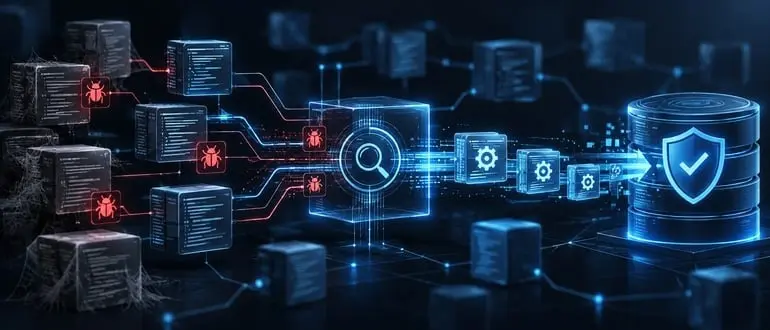
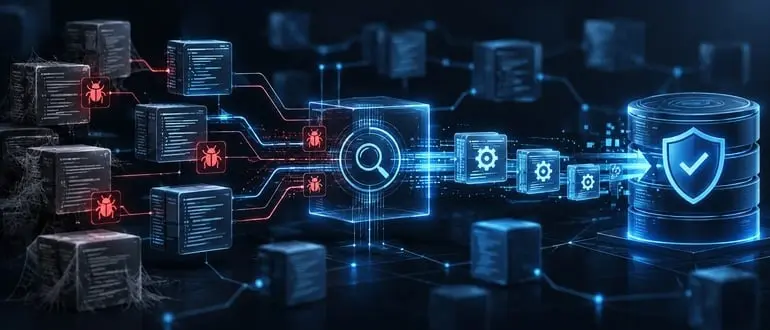
Today’s ransomware and wiper malware strains are purposefully engineered to evade traditional defenses. Advanced persistent threats (APTs) no longer strike blindly; they quietly infiltrate environments over weeks or months, mapping enterprise networks, harvesting administrative credentials, and—most critically—targeting backup systems before executing a production payload.
In these modern ransomware scenarios, traditional mainframe disaster recovery plans collapse. If an organization’s backup copies reside on legacy systems that share administrative credentials or are accessible via vulnerable network pathways with the production environment, those backups will be encrypted, deleted, or corrupted simultaneously with the primary database.
Consequently, IT leaders are forced to confront an uncomfortable reality: traditional DR assumes an uncompromised recovery path. In the age of sophisticated cyberattacks, that assumption is a fatal vulnerability. Organizations require solutions that decouple recovery data from production vulnerability, establishing immutable, air-gapped sanctuaries from which systems can be safely restored.
Supporting Context & Metrics: Unlocking Efficiency and AI Readiness
Migrating away from entrenched legacy infrastructure is notoriously fraught with political, financial, and operational friction. For mainframe engineers—traditionally among the most innovative technologists in the enterprise, having pioneered early virtualization and virtual tape libraries decades ago—adopting cloud-enabled object storage has historically sparked caution.
This hesitation is rarely rooted in an aversion to innovation. Rather, it stems from the immense gravity of mainframe operations. Data management and storage decisions on the Z platform carry profound cybersecurity, regulatory, and business continuity implications. A misstep does not merely slow down an application; it can halt an entire global enterprise.
However, the operational mathematics of modern data management are making the status quo untenable. Maintaining aging, physical tape infrastructure is increasingly costly, talent pools for legacy storage management are shrinking, and the sheer volume of data required for modern AI and analytics initiatives demands a more agile approach.
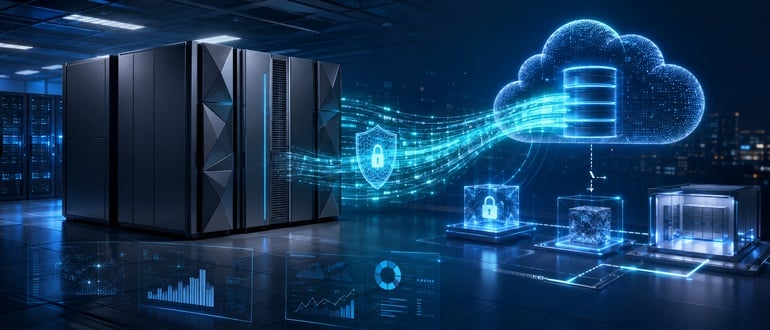
The Architecture of Modern Hybrid Resilience
Modernizing mainframe data management does not require ripping out the transactional core of the enterprise. The mainframe remains the undisputed champion for high-throughput, secure transaction processing. Instead, the transformation occurs at the secondary data management layer.
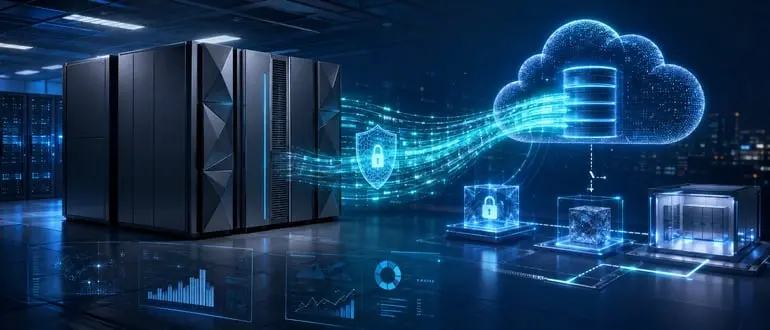
Solutions like BMC AMI Cloud fundamentally alter this dynamic by seamlessly bridging the Z platform with cloud-native infrastructure, such as Amazon Web Services (AWS S3) and AWS Mainframe Modernization services.
Through this integration:
- Backup and Recovery Acceleration: Traditional backup workflows are extracted from mechanical tape libraries and routed to scalable cloud object storage.
- Cyber Protection via Immutability: Mainframe data is locked down into immutable, air-gapped copies. These files cannot be altered, encrypted, or deleted by malicious actors—even those possessing administrative privileges.
- Clean-Room and Bare-Metal Restores: In the event of a breach, security teams can initiate clean-room or bare-metal restores directly from cloud object storage into a trusted environment, bypassing compromised infrastructure layers entirely.
- AI and Analytics Enablement: As mainframe data is copied to cloud object storage, it can be automatically converted off-platform into open, accessible data formats. This empowers data scientists to ingest core transactional data into modern AI pipelines and business intelligence analytics without imposing performance overhead on the mainframe itself.
Official Statements & Case Studies: Real-World Transformation at Nedbank
The theoretical benefits of uniting mainframe resilience with cloud economics are powerfully validated by enterprise implementations in the field. A prime example is Nedbank, one of the largest and most forward-thinking financial institutions in South Africa.
Faced with the imperative to modernize its technological capabilities while safeguarding mission-critical banking services, Nedbank’s leadership recognized that leveraging cloud resources was essential for future agility. Yet, the prospect of undertaking a protracted, high-risk infrastructure migration hung heavy over the IT department.
As Ashwin Naidu, IT Manager at Nedbank, candidly observed:
"When you ask any infrastructure person what they hate most about the job, it’s migrating from one solution to another. It normally takes 12 to 18 months to migrate anything. Fortunately, with our approach, it took us just eight months."
By partnering with BMC to deploy BMC AMI Cloud for cloud-backed secondary data management, Nedbank bypassed the typical operational friction associated with legacy migrations. The results were immediate and staggering.
Prior to deploying the BMC AMI Cloud solution, a single comprehensive backup operation for Nedbank’s critical mainframe environment required a grueling 48 hours to execute. Following the migration to a streamlined, cloud-integrated architecture, that exact same backup process runs in a mere 36 minutes—representing an astonishing 98% reduction in backup times.
This dramatic compression of recovery windows not only freed up invaluable processing capacity but also transformed Nedbank’s risk profile, giving IT leadership unprecedented confidence in their operational agility and disaster recovery readiness.
Future Outlook: Navigating Complexity Without Disruption
As enterprises gaze into a future characterized by escalating cyber threats, accelerating cloud adoption, and the relentless integration of Generative AI, the imperative to modernize mainframe data resilience has never been more urgent.
Organizations can no longer afford to rely on the comforting illusion that historical platform stability is a substitute for active, cyber-resilient recoverability. The challenge facing IT executives is clear: how to protect modern, expansive mainframe workloads from multi-vector cyberattacks without introducing unacceptable downtime or destabilizing foundational systems.
The path forward lies not in abandoning the mainframe, but in intelligently extending its perimeter into secure, cloud-enabled architectures. By embracing immutable storage, air-gapped recovery copies, and automated off-platform data conversion for AI readiness, enterprises can transform their mainframe environments from potential compliance and security blind spots into engines of proactive operational resilience.
Join the Conversation
To help organizations navigate this increasingly complex risk landscape without disrupting their core mainframe operations, industry leaders are uniting to share strategic insights.
On September 2 at 9:00 a.m. Eastern Time, experts from BMC and AWS will participate in an exclusive webinar hosted by Techstrong Learning, titled "Disaster Recovery in Uncertain Times."
During this interactive session, engineering and security leaders will explore:
- The changing threat vectors targeting modern mainframe environments.
- Practical strategies for transitioning from legacy tape infrastructure to secure cloud object storage.
- Proven methodologies for implementing immutable, air-gapped backups and rapid bare-metal restores.
- How to leverage modernized mainframe data to fuel enterprise AI and advanced analytics initiatives safely.
To register for this essential event and secure your organization’s resilient future, click here.