Executive Overview
At the 2026 International Broadcasting Convention (IBC), the media technology landscape found itself at a critical crossroads. While the exhibition halls were dominated by the ubiquitous promises of generative Artificial Intelligence (AI) and cloud-based virtualization, a quieter but far more consequential revolution was unfolding in the domain of physical optical capture. For all the industry’s enthusiasm for server-side computational manipulation, the fundamental bottleneck of broadcast television and cinema remains the physical interface between reality and silicon: the image sensor.
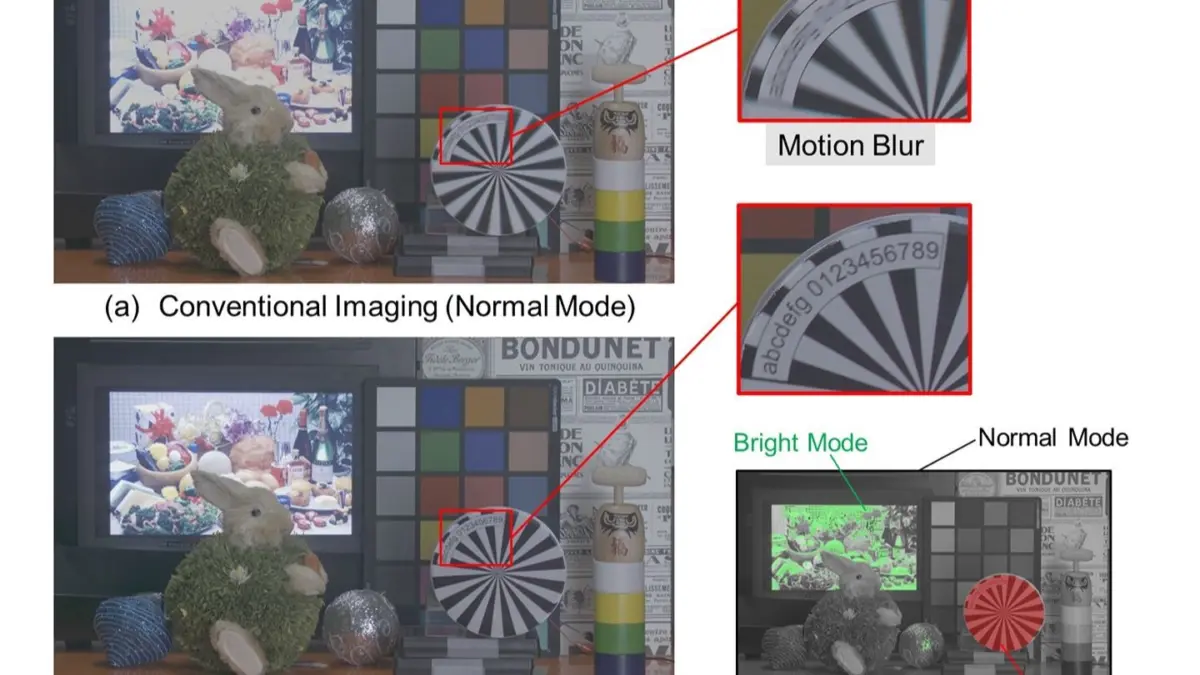
Recognizing that the industry cannot rely solely on the "hallucinations" of data-center GPUs to reconstruct reality, NHK (Japan Broadcasting Corporation), in collaboration with Shizuoka University, unveiled a groundbreaking technical paper and prototype camera that challenges the traditional limits of sensor design. Rather than applying global parameters across an entire silicon wafer, their new scene-adaptive camera sensor dynamically segments its photosites into localized, independently controlled regions. By varying exposure times, pixel binning, and operational modes across hundreds of tiny, localized blocks, this sensor optimizes its behavior in real time to match the specific high-contrast, fast-moving, or low-light characteristics of a given scene.
This technology represents a profound paradigm shift. Instead of continuing the race for redundant, lens-limiting pixel counts, NHK’s research redirects silicon innovation toward maximizing the quality of every individual pixel. By offering a hardware-level solution to the classic compromises of dynamic range, noise, and sensitivity, this scene-adaptive architecture offers a glimpse into a future where physical optical fidelity coexists with, and secures, the integrity of the digital image.
Detailed Chronology of the Scene-Adaptive Sensor
The development of the scene-adaptive sensor by NHK and Shizuoka University is a story of rapid, iterative engineering aimed at solving one of the most stubborn limitations of solid-state imaging: global parameter uniformity. Historically, when a camera operator adjusts exposure, gain, or shutter speed, those settings are applied uniformly across the entire sensor surface. If a scene contains both a blazing stadium floodlight and a deep shadow in the dugouts, the camera must compromise, inevitably sacrificing highlight detail or introducing severe noise into the shadows.
To break this compromise, the research team embarked on a multi-year development cycle to decentralize sensor control.
[2024 Prototype]
  - 1-Megapixel Resolution
  - Coarse Control: 64x64 Photosite Blocks
  - Proof of Concept for Localized Modes

[2026 Prototype]
  - ~4K Resolution (Three-Chip Topology)
  - Fine Control: 4x4 Photosite Blocks
  - 240 Frames Per Second (FPS) Real-Time Capability
The 2024 Proof of Concept
The foundation of this technology was demonstrated in 2024 with a one-megapixel prototype sensor. This early iteration proved that a sensor could be divided into independently controlled blocks, though the control was relatively coarse. The sensor was partitioned into blocks measuring 64 photosites square. Each block could independently determine its exposure parameters based on the light levels hitting that specific region of the silicon. While successful as a proof of concept, the large block size (64×64) posed a risk of visible boundary artifacts—referred to as "quilting" or "blocking"—where adjacent regions with vastly different exposure parameters met.
The 2026 Breakthrough
Presented by NHK’s Kohei Tomioka at IBC 2026, the latest prototype represents a massive leap forward in both resolution and granularity. The new system features:
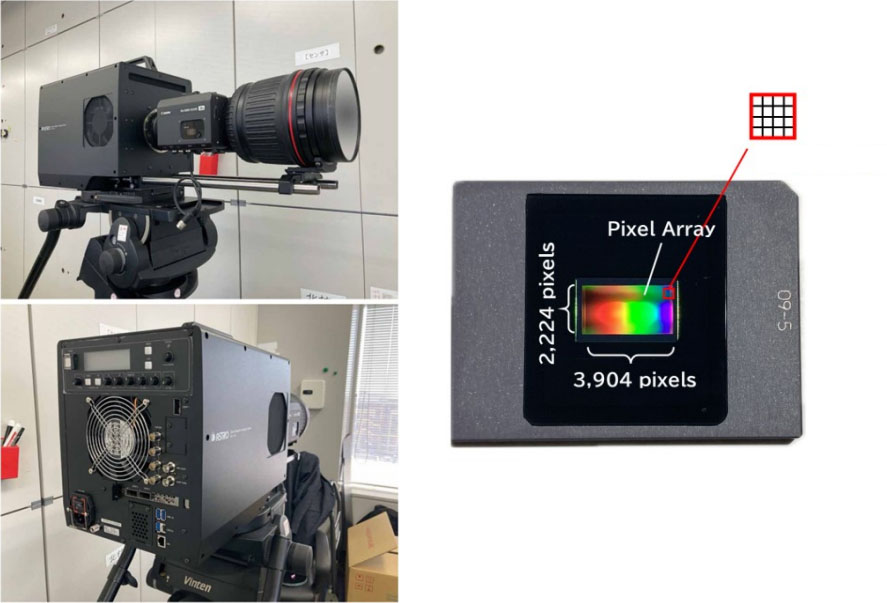
- Micro-Block Control: The control resolution has been drastically refined down to blocks of just four photosites square (4×4). This ultra-fine granularity renders the transitions between different exposure zones virtually invisible to the human eye, allowing for seamless integration of highly disparate exposure profiles across a single frame.
- High-Speed Readout: The prototype operates at up to 240 frames per second (fps), depending on the active resolution. This high temporal resolution is critical for live sports broadcasting, where fast-moving action must be captured without motion blur, even while other parts of the frame remain optimized for high-contrast HDR rendering.
- Complete Camera Integration: Moving beyond a bare sensor on a laboratory test bench, the team demonstrated a fully functional, highly compact prototype camera body. This camera processes the complex, multi-exposure data streams coming off the sensor in real time, proving that the technology is viable for integration into standard broadcast signal chains.
Supporting Context & Technical Metrics
To appreciate the significance of NHK’s scene-adaptive architecture, it is necessary to examine the physical constraints of modern broadcast camera design.
In the consumer and cinema spaces, the trend has favored larger sensor formats, such as Super-35mm or Full Frame. However, the live broadcast industry operates under vastly different logistical constraints. Broadcasters rely heavily on deep depth-of-field and massive, high-ratio zoom lenses (often exceeding 100x magnification) to cover live sports and news. These lenses are optically optimized for smaller sensor formats, historically 2/3-inch and more recently 1.25-inch standards.
Attempting to scale these massive broadcast zoom lenses to accommodate larger cinema-sized sensors results in optics that are prohibitively heavy, fragile, and expensive. As the industry jokes, an 8K broadcast camera requiring a high-range zoom can easily occupy "two parking spots" just for the lens setup.
+-------------------------------------------------------------+
|               COMPARATIVE PHOTO-SITE METRICS                |
+-------------------------------------------------------------+
| Sensor Type                    | Photosite Pitch (microns)  |
+-------------------------------------------------------------+
| Standard Super-35mm (4K)       | ~5.0 to 6.0 μm             |
| NHK 2026 Prototype (1.25-inch) | 2.5 μm                     |
+-------------------------------------------------------------+
By utilizing a three-chip (3-CMOS) prism block topology with 1.25-inch sensors, NHK’s prototype achieves a highly compact physical profile. However, shrinking the sensor while maintaining a roughly 4K resolution requires incredibly small photosites—in this case, just 2.5 micrometers across, roughly half the size of those found on a standard Super-35mm cinema sensor.
Normally, photosites this small suffer from severely degraded dynamic range and poor signal-to-noise ratios, as they have a much lower "well capacity" (the amount of light/electrons a photosite can hold before saturating). This is where the scene-adaptive parameter control becomes mathematically and physically elegant.
The Three Operational Modes
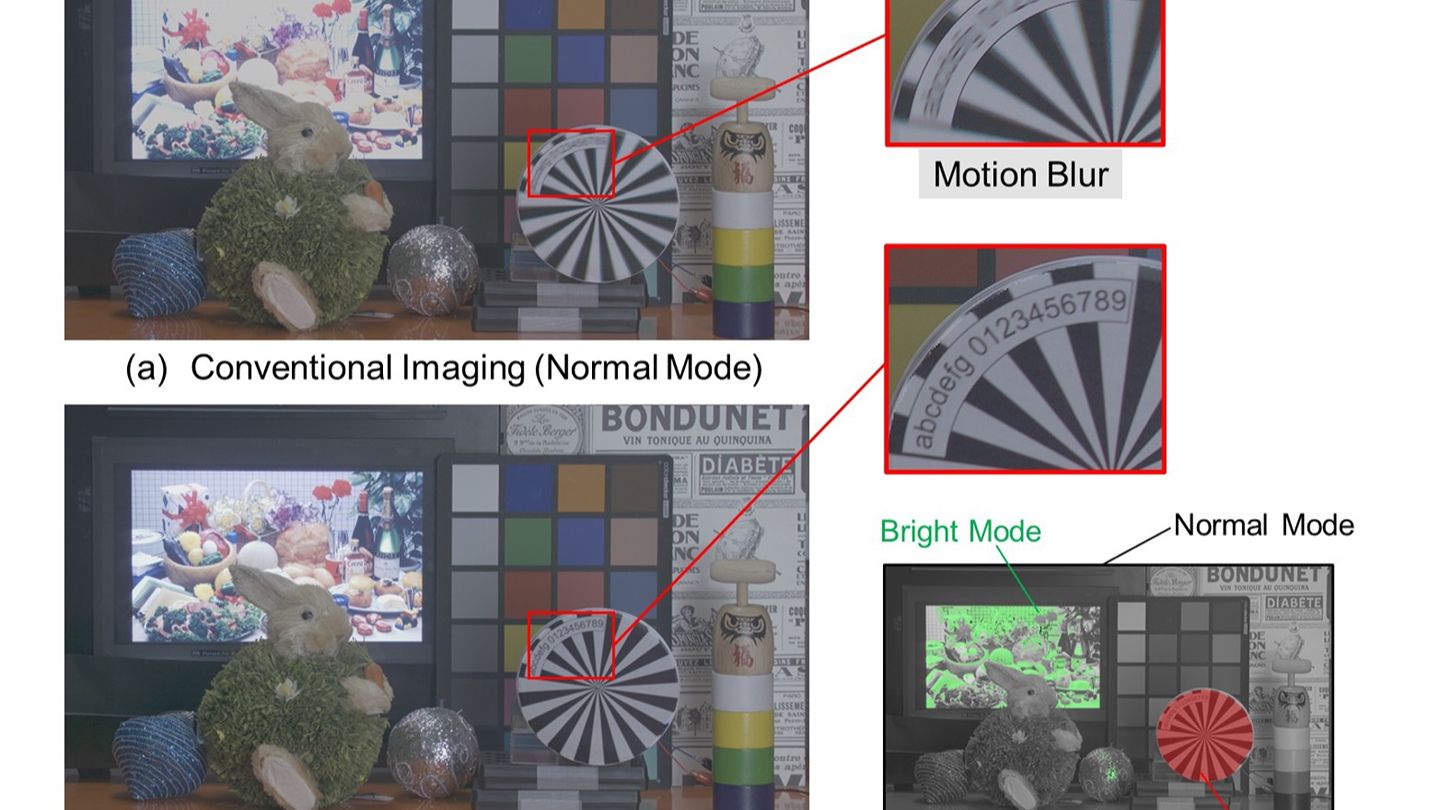
The sensor bypasses the physical limitations of its small photosites by allowing each 4×4 block to dynamically switch between three specialized operating states:
                  +-----------------------------------+
                  |  NHK Scene-Adaptive Sensor Block  |
                  +-----------------------------------+
                                    |
         +--------------------------+--------------------------+
         |                          |                          |
         v                          v                          v
+------------------+       +------------------+       +------------------+
|  Highlight Mode  |       | Low-Light Mode   |       | High-Speed Mode  |
|  - Low exposure  |       |  - Pixel binning |       |  - High temporal |
|  - Avoids clipping|      |  - Low noise     |       |    readout       |
+------------------+ +------------------+ +------------------+- Highlight Rendering Mode: For blocks capturing extreme light sources (such as stadium floodlights, direct sunlight, or specular reflections), the sensor shortens the exposure time specifically for those photosites. This prevents the wells from overflowing, preserving color and detail that would otherwise be lost to white clipping.
- Low-Light/Sensitivity Optimization Mode: In shadow regions, the sensor can employ localized pixel binning (combining the charge of adjacent photosites) or extend exposure times. This dramatically boosts the signal-to-noise ratio, pulling clean, detailed imagery out of near-darkness without introducing global noise or affecting the exposure of brighter areas.
- High-Speed/Temporal Optimization Mode: For areas of the frame containing rapid motion (such as a tennis ball crossing the court or a racing car), the sensor prioritizes high-speed readout to eliminate motion blur and rolling shutter artifacts, while stationary background elements remain optimized for detail and noise reduction.
Historical Context: The Long Road to Dethroning Bayer
The concept of modifying sensor architecture to capture wider dynamic range is not entirely new. Over the decades, numerous manufacturers have attempted to challenge the dominance of Bryce Bayer’s ubiquitous color filter array (CFA) and global shutter systems.
In the past, these efforts fell into two primary categories:
- Alternative Color Filter Arrays: Some designs replaced the standard Red-Green-Blue-Green Bayer pattern with alternative layouts incorporating cyan, yellow, or unfiltered "white" photosites to increase light sensitivity. While successful in boosting raw luminance capture, these designs frequently suffered from severe color crosstalk and required highly complex demosaicing mathematics that degraded overall color fidelity. Furthermore, these color-space manipulations are largely irrelevant to a three-chip broadcast topology, which uses a physical glass prism to split incoming light into dedicated red, green, and blue sensors.
- Dual-Sensitivity Photosite Arrays: Other sensors featured a mix of large, highly sensitive photosites and small, low-sensitivity photosites nested together on the same silicon wafer (most notably Fujifilm’s Super CCD SR). While this approach successfully expanded dynamic range, it did so at the cost of effective resolution, as a significant portion of the silicon real estate was permanently dedicated to capturing highlights, even in scenes where no highlights existed.
The NHK and Shizuoka University design represents a massive leap forward because it does not rely on permanent, hard-wired physical compromises. The silicon real estate remains uniform; instead, the behavior of the silicon is dynamically reallocated in real time. If a scene is perfectly lit and balanced, the entire sensor can operate in a conventional, high-resolution mode. If the scene demands extreme high-speed capture in one corner and deep shadow recovery in another, the sensor adapts on the fly.
The Computational Philosophy of Modern Imaging
The development of the scene-adaptive sensor highlights a profound philosophical shift in how image capture is conceptualized. Historically, a camera was a passive recording device, capturing a direct physical analog of the light passing through the lens. Today, the line between optical physics and computer science has blurred.
[Traditional Capture]
Light -> Lens -> Global Sensor Readout -> Linear Video Stream

[Modern Computational Capture]
Light -> Lens -> Adaptive Sensor Readout -> Micro-Block Metadata -> Algorithmic Reconstruction -> Final Image
Modern cameras are increasingly reliant on sophisticated mathematical algorithms to reconstruct meaning from the raw data streaming off the sensor. Indeed, many contemporary sensors are designed not just to capture a pleasing image out of the box, but to generate data structures that make downstream digital signal processing (DSP) and noise-reduction mathematics work more efficiently.
While this computational approach has unlocked unprecedented low-light capabilities, it has also introduced a degree of artificiality. In consumer smartphones, "computational photography" often results in over-processed, plasticky textures and artificial contrast boundaries. In professional broadcast and journalism, this artificiality poses a deeper threat. As generative AI models become capable of synthesizing entirely fabricated imagery, preserving a verifiable, unbroken chain of physical optical custody from the lens to the screen is paramount.
This reality was reflected in another prominent track at IBC 2026: Trust, Provenance, and Authenticity. As broadcasters grapple with the rise of deepfakes and AI-generated content, there is a renewed demand for hardware-level security and physical authenticity. NHK’s scene-adaptive camera serves this need directly. Rather than relying on cloud-based generative algorithms to "guess" and paint in shadow detail or reconstruct clipped highlights after the fact, the scene-adaptive sensor captures those physical photons at the moment of exposure. It represents a commitment to optical truth, ensuring that the high dynamic range and low-noise performance of the broadcast stream are rooted in physical reality rather than algorithmic hallucination.
Future Outlook and Road to Commercialization
While the prototype demonstrated by NHK and Shizuoka University at IBC 2026 is a monumental technical achievement, several hurdles remain before this technology becomes a common sight on studio floors or in OB (Outside Broadcast) trucks.
The Processing and Bandwidth Bottleneck
Operating a three-chip 4K sensor array at 240 fps with localized, block-level parameter switching generates an astronomical volume of data. The camera’s internal image processing pipeline must not only demosaic and align the three color channels, but also seamlessly stitch together the boundaries of the 4×4 blocks, applying localized gain compensation to ensure that the final image does not exhibit block-like luminance steps. This requires specialized, ultra-low-latency Application-Specific Integrated Circuits (ASICs) capable of processing multiple gigabytes of data per second within the strict power and thermal envelopes of a portable camera body.
Optical Alignment and Three-Chip Complexity
Manufacturing three-chip camera blocks is an incredibly precise art. Aligning three separate 1.25-inch sensors to a glass prism with sub-micrometer accuracy—ensuring that the red, green, and blue channels align perfectly down to the individual 2.5-micrometer photosites—is exceptionally difficult and costly. NHK’s commitment to this topology underscores their focus on the uncompromising color fidelity required for high-end broadcasting, but it also means these cameras will initially be highly specialized, premium instruments.
Long-Term Industry Impact
Despite these challenges, the long-term implications of scene-adaptive sensor technology are vast. Beyond the immediate benefits to live sports and high-contrast broadcast environments, this technology could pave the way for a new generation of compact, highly versatile cameras across various industries:
- Autonomous Vehicles & Robotics: Self-driving systems require instantaneous, high-dynamic-range imaging to navigate sudden lighting transitions, such as entering or exiting a dark tunnel into bright sunlight. A scene-adaptive sensor could optimize exposure for the dark tunnel interior while simultaneously tracking road signs in the blinding glare outside.
- Scientific and Industrial Imaging: High-speed manufacturing lines and scientific laboratories often require simultaneous monitoring of ultra-fast physical processes and highly detailed, stationary structural elements.
- Next-Generation Cinema: By decoupling sensor size from dynamic range limitations, cinematographers could enjoy the immense creative freedom of smaller, lighter camera packages and vintage, character-rich lenses without sacrificing the pristine highlight and shadow latitude of large-format digital cinema systems.
Ultimately, NHK and Shizuoka University’s scene-adaptive sensor is a reminder that the physical world is too complex, too dynamic, and too beautiful to be captured by uniform, rigid parameters. By bringing intelligence down to the level of the individual photosite, this technology ensures that even in an era increasingly dominated by virtual synthesis, the art of capturing real light remains as vital and innovative as ever.