SAN FRANCISCO — Artificial intelligence unicorn Anthropic is facing an escalating legal crisis that threatens to redefine the boundaries of data acquisition for machine learning. Despite paying a staggering $1.5 billion last September to resolve a class-action lawsuit brought by book authors over millions of pirated titles, the company is finding little shelter from the ongoing fallout.
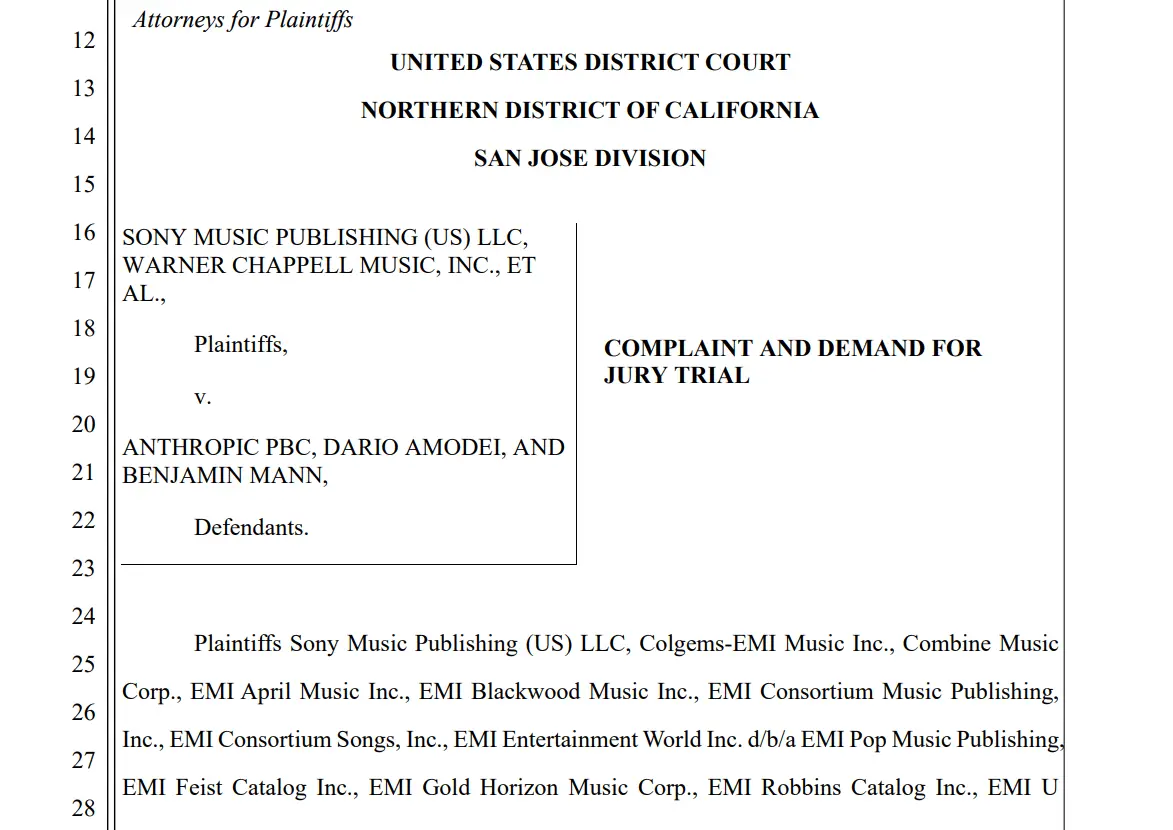
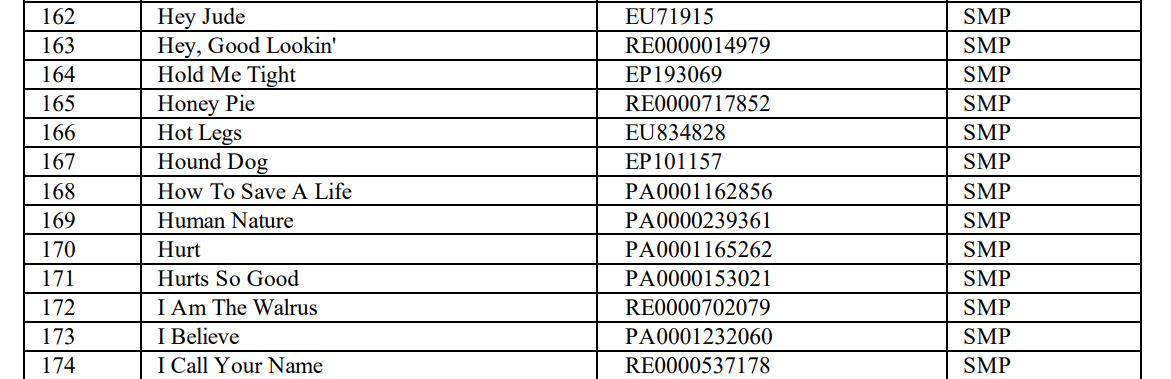
In a newly expanded legal offensive filed late Friday in the U.S. District Court for the Northern District of California, a coalition of prominent music publishers—including industry heavyweights Sony Music and Warner Music Group—has levied serious allegations against the AI firm. The complaint asserts that the massive data hauls previously exposed in literary copyright litigation also contained thousands of proprietary songbooks, official sheet music collections, and copyrighted lyrics.
The lawsuit goes far beyond standard AI training disputes, directly targeting corporate data procurement methods. Crucially, the litigation names high-level leadership, including CEO Dario Amodei and co-founder Benjamin Mann, as individual defendants. As the legal battle unfolds, it exposes internal corporate communications that reveal a casual attitude toward digital piracy, raising fundamental questions about how foundational AI models are built.
Executive Overview: A Multi-Front Legal War Over Data Acquisition
The core of the dispute centers on how AI developers procure the staggering volumes of text and media required to train Large Language Models (LLMs). While public discourse has largely focused on whether ingesting copyrighted works for algorithmic training constitutes "fair use," this lawsuit—and the broader legal war surrounding Anthropic—draws a sharp, legally significant line between training an AI model and acquiring the source data via peer-to-peer torrent networks.
According to the music publishers’ complaint, Anthropic bypassed legal, paid licensing channels not out of technical necessity, but out of convenience. Internal company records detailed in the court filing show that executives and engineers actively utilized shadow libraries like Library Genesis (LibGen) and the Pirate Library Mirror (PiLiMi). Rather than purchasing official editions of works such as The Beatles Complete Scores, the Best of Taylor Swift Songbook, and Bon Jovi’s These Days, engineers allegedly downloaded them via BitTorrent because it was faster and free.

By applying traditional BitTorrent mechanics—where downloading a file inherently involves uploading and distributing fragments of that same file to other peers—the publishers argue that Anthropic functioned as a mass distributor of pirated material. With statutory damages requested at up to $150,000 per infringed work across tens of thousands of suspected titles, the financial exposure facing Anthropic could easily scale into billions of dollars.
Detailed Chronology: From Slack Chats to Federal Court
The narrative woven in the Northern District of California complaint relies heavily on factual revelations unearthed during earlier legal battles, specifically the Bartz v. Anthropic literary copyright case. These internal documents trace a clear timeline of how Anthropic’s technical staff sourced, justified, and managed their unauthorized data repositories.
The "LibGen Babysitter" and "Sketchy AF" Repositories
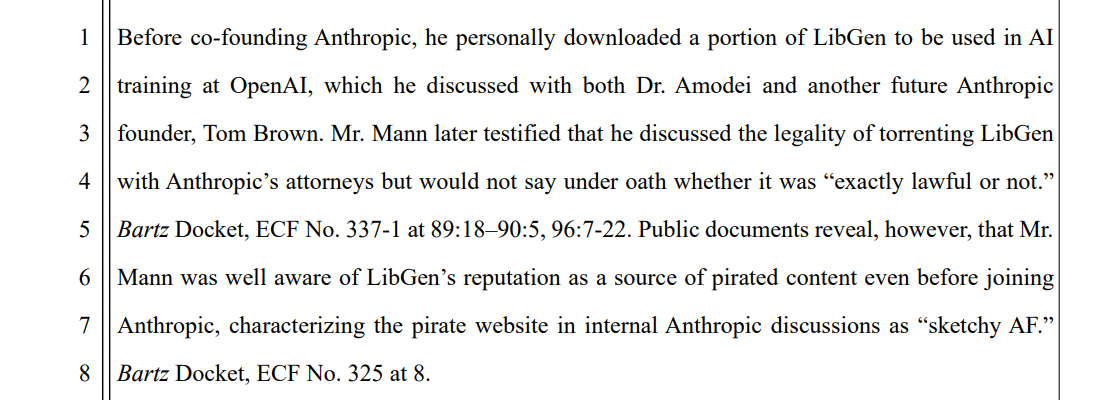
In the summer of 2022, as Anthropic’s engineering teams raced to gather training data, co-founder Benjamin Mann took a hands-on approach to data harvesting. Internal Slack channel logs show Mann openly discussing torrenting activities originating from Library Genesis. He shared screenshots of his progress with colleagues and proudly described a custom software script he authored to manage the downloads as “a cute little libgen babysitter.”
Despite this enthusiastic participation, internal messages reveal that Anthropic’s staff was fully aware of the dubious legality of their sources. Mann himself reportedly characterized LibGen as “sketchy AF.” Other internal groups, such as Anthropic’s Archive Team, went further, labeling the repository a “blatant violation of copyright.”
Nonetheless, these warnings did not halt the operation. According to the complaint, CEO Dario Amodei personally approved the torrenting initiative. Dr. Amodei allegedly admitted internally that while Anthropic had numerous legitimate avenues through which it could have purchased the copyrighted texts for training, the company chose to torrent them simply because the method was faster and cost-free.

Expanding the Haul: The Pirate Library Mirror (PiLiMi)
The operation expanded significantly in the summer of 2022 when the Pirate Library Mirror (PiLiMi)—an offshoot designed to mirror Z-Library assets—became available for torrenting. Upon discovering the release, Mann shared the link with his team, writing, “[J]ust in time!” Another employee responded enthusiastically with the phrase, “zlibrary my beloved.”
Anthropic engineers quickly cross-referenced the five million books they had already scraped from LibGen against the seven million titles available via PiLiMi, pulling down an additional two million items. Internal chat logs from this period demonstrate that employees openly acknowledged the nature of the platform, describing PiLiMi in internal documentation as “a popular (and illegal) library.”
Even as internal hesitation grew regarding the legal liabilities of training models on pirated data—with staff noting the company was becoming “not so gung ho” about the practice—the acquired files were retained in Anthropic’s central data libraries.
Supporting Context & Metrics: The Mechanics of the Infringement
The legal theories underpinning the new lawsuit break down into distinct phases of digital interaction: direct infringement through unauthorized copying, contributory infringement via the distribution network, and Digital Millennium Copyright Act (DMCA) violations for stripping embedded copyright notices.
The BitTorrent Trap
Counts one and two of the complaint focus squarely on the mechanics of BitTorrent protocol usage. Because the peer-to-peer network relies on simultaneous uploading and downloading, the music publishers argue that Anthropic did not merely act as a passive downloader. Instead, by participating in the swarm, the company actively distributed copyrighted songbooks, sheet music, and lyrics to countless unknown third parties across the global internet.
This legal angle applies time-tested antipiracy doctrines—historically deployed against individual file-sharers over the past two decades—to an enterprise-level technology company valued in the tens of billions of dollars. The publishers assert that Anthropic’s actions systematically sustained and normalized the BitTorrent piracy ecosystem.
Fact-Checking the Shadow Library History
Interestingly, while the complaint’s technical allegations are anchored by previously disclosed Slack logs and server logs, its historical framing of shadow libraries contains notable factual inaccuracies.
The legal filing claims that the FBI shut down Library Genesis in late 2021, prompting pirates to copy its contents to establish Z-Library. In reality, historical records show that LibGen was never successfully shut down and remains accessible online. Conversely, Z-Library originated years earlier in 2008 as a mirror before its domains were seized by federal law enforcement in November 2022—months after Anthropic completed its primary data ingestion sprees.
While these historical discrepancies do not invalidate the core allegations of unauthorized acquisition, legal analysts note that they underscore the rushed nature of assembling complex multi-party tech litigation.
Official Statements and Industry Reactions
The litigation represents the third major legal action arising from Anthropic’s 2022 torrenting activities. Following the settlement with book authors and an earlier January lawsuit filed by music publishers including Concord, Universal, and BMG, this new filing broadens the front line.
Anthropic’s Defense: Fair Use and Recycled Claims
Anthropic has mounted a robust defense, framing the latest lawsuit as an aggressive, repetitive maneuver by legal teams attempting to cash in on prior discoveries.
In a statement provided to Ars Technica, an Anthropic spokesperson dismissed the action:
"This is the third lawsuit from the same lawyers, recycling allegations from cases already before the courts. AI training is fair use, as the court held in Bartz, and we will defend ourselves robustly."
Legal scholars point out a critical nuance in Anthropic’s defense strategy. While the Bartz court recognized certain aspects of AI training as potentially falling under the umbrella of fair use, that protection did not extend to the initial acquisition phase. The presiding court previously characterized the act of mass-downloading millions of copyrighted titles from pirate libraries as “straightforward piracy but at massive scale.”
Future Outlook: Implications for the Generative AI Sector
As the case proceeds through the U.S. District Court for the Northern District of California, the implications extend far beyond Anthropic’s corporate offices. The outcome threatens to establish a vital legal precedent for the entire generative AI industry regarding data provenance.
- The Separation of Acquisition and Training: If courts maintain the legal distinction between how data is acquired and how it is used for algorithmic training, AI companies can no longer hide behind fair-use arguments to sanitize illicitly downloaded training sets.
- Personal Liability for Executives: By naming CEO Dario Amodei and co-founder Benjamin Mann as individual defendants, the plaintiffs are piercing the standard corporate veil. This strategy sends a chilling message to tech founders and startup executives who take a hands-on approach to engineering data pipelines.
- Financial Exposure: With statutory damages potentially reaching $150,000 per infringed work, the accumulation of thousands of songbooks, lyric sheets, and musical arrangements could result in liability judgments running into billions of dollars.
For an industry currently rushing toward massive initial public offerings and multi-billion-dollar valuations, the message from the judicial system is becoming increasingly clear: the era of "move fast and break copyright laws" is drawing to a close.