









Executive Overview
In the realms of linguistics, history, and cultural anthropology, terminology is fiercely contested. For decades, scholars, purists, and cultural advocates have debated the validity of the term "Latin America" (Latinoamérica in Castilian). Critics argue that the phrase is an artificial, historically compromised construct, lobbying instead for more precise designations such as Hispanoamérica (Spanish-speaking America), Iberoamérica (Iberian-influenced America, including Brazil), or Castellanoamérica (Castilian-speaking America).
While these critics hold undeniable merit from a cultural and linguistic standpoint, their arguments falter when confronted with the realities of global commerce. In the corporate arena, "Latin America" (often abbreviated as LATAM) is not merely a cultural descriptor; it is a highly standardized, functional commercial region with distinct operational boundaries, regulatory frameworks, and logistical networks.
This investigative analysis explores the structural dichotomy between cultural geography and corporate territory. It examines why multinational corporations maintain strict boundaries that exclude the United States from "Latin America" despite the U.S. possessing the world’s second-largest Spanish-speaking population. Furthermore, it analyzes how anomalous non-Romance-speaking territories are integrated into LATAM sales portfolios, proving that in the global market, administrative utility consistently triumphs over linguistic purity.
Detailed Chronology: The Evolution of a Contested Term
To understand why the commercial definition of Latin America diverges so sharply from its linguistic counterparts, one must trace the geopolitical and corporate history of these terms.
Linguistic & Geopolitical Terminology Evolution:

[16th-18th Century]
Hispanoamérica / Iberoamérica
(Defined by Spanish & Portuguese colonial empires)
       │
       ▼
[Mid-19th Century]
"Latin America" Coined
(French geopolitical campaign to justify expansion under Napoleon III)
       │
       ▼
[Mid-20th Century]
Corporate Market Segmentation
(Establishment of "LATAM" as a standardized multinational sales division)
       │
       ▼
[21st Century]
The Modern Paradox
(U.S. is culturally Hispano-American, but commercially strictly domestic/North American)
1. The Colonial Roots: Hispanoamérica and Iberoamérica
For centuries following the European arrival in the Western Hemisphere, the territories south of the US-Mexico border were defined by their colonial administrations. Hispanoamérica referred strictly to the territories colonized by the Spanish Empire where Castilian Spanish was the dominant language. Iberoamérica expanded this definition to include Brazil, reflecting the shared heritage of the Iberian Peninsula (Spain and Portugal). These terms were precise, legally defined by colonial charters, and linguistically cohesive.
2. The French Imperial Invention of "Latin America"
The term "Latin America" is not an indigenous creation, nor did it emerge organically from the Spanish- or Portuguese-speaking populations of the region. Instead, it was popularized in the mid-19th century during the reign of French Emperor Napoleon III.
French intellectuals, notably Michel Chevalier, championed the concept of a "Latin" race in the Americas to justify French imperial expansion—specifically, the installation of Maximilian I as Emperor of Mexico during the French intervention (1861–1867). By grouping French, Spanish, and Portuguese heritages under the umbrella of "Latin," France sought to position itself as the natural leader of a pan-Latin alliance against Anglo-Saxon expansionism from the North.
3. The Rise of the Multinational "LATAM" Territory
Despite its politically charged origins, the term "Latin America" was adopted by international organizations (such as the United Nations Economic Commission for Latin America and the Caribbean, established in 1948) and eventually by multinational corporations.
During the post-WWII economic boom, corporations expanding globally required standardized regional divisions. "Latin America" became the default designation for operations south of the United States. Over the decades, this corporate division crystallized into a rigid administrative territory, complete with dedicated regional headquarters—frequently situated in hub cities like Miami, Florida, or São Paulo, Brazil.
Supporting Context & Metrics: The Linguistic vs. Commercial Paradox
The tension between cultural accuracy and commercial necessity is best illustrated by analyzing the demographic and operational metrics of two distinct entities: the United States and the non-Romance-speaking enclaves of the Americas.
The United States: Culturally Hispano-American, Commercially Segregated
One of the most compelling arguments against the commercial use of "Hispanoamérica" or "Castellanoamérica" is that these terms technically include the United States, yet the U.S. is categorically excluded from the commercial region of Latin America.
Demographic and Linguistic Realities
- The Second-Largest Spanish-Speaking Nation: According to data from the U.S. Census Bureau and the Instituto Cervantes, there are over 42 million native Spanish speakers in the United States, with an additional 15 million bilingual or heritage speakers. This makes the United States the second-largest Spanish-speaking country in the world, surpassed only by Mexico, and larger than Spain, Colombia, and Argentina.
- Media and Cultural Infrastructure: The U.S. boasts massive Spanish-language media conglomerates (Univision, Telemundo), academic institutions dedicated to the Castilian language, and deep-seated cultural roots across the Southwest, Florida, and major metropolitan centers.
By any objective linguistic or cultural metric, the United States is an integral part of Hispanoamérica, Iberoamérica, and Castellanoamérica.
The Corporate Division
Despite this profound cultural alignment, a "Latin American Sales Manager" working for a multinational corporation is strictly prohibited from executing domestic sales within the United States.
| Metric / Attribute | United States (Domestic Market) | Latin America (LATAM Commercial Region) |
|---|---|---|
| Primary Regulatory Framework | SEC, FTC, FCC, FDA (Strict federal oversight) | Varied national frameworks (Anatel, Cofepris, etc.) |
| Tariff & Trade Barriers | Uniform federal customs; USMCA integration | Complex intra-regional tariffs, Mercosur, Pacific Alliance |
| Currency and Finance | U.S. Dollar (Reserve currency) | Highly volatile local currencies; varied exchange controls |
| Sales Executive Jurisdiction | US Domestic Sales Team | Latin American Sales Manager (often US-based but restricted to export) |
For a multinational enterprise, grouping the U.S. into the same commercial bucket as Argentina or Colombia simply because they share a language would be operational madness. The U.S. is a high-purchasing-power, highly regulated, unified market. Latin America, conversely, is treated as an export territory characterized by developing economies, distinct import duties, and localized distribution channels.
The Non-Romance Enclaves: Culturally Foreign, Commercially Integrated
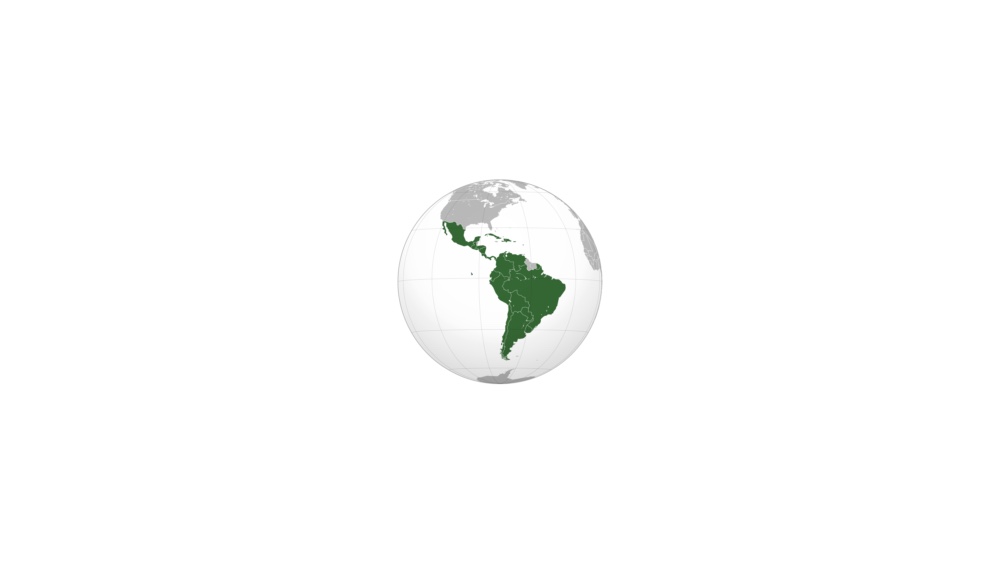
Conversely, the commercial definition of Latin America frequently swallows territories that have no historical, linguistic, or cultural connection to Romance languages.
      [ LATAM Commercial Sales Territory ]
 ┌───────────────────────────────────────────┐
 │  Linguistic/Cultural Core:                │
 │  - Mexico, Brazil, Colombia, Argentina    │
 │                                           │
 │  Non-Romance Commercial Enclaves:         │
 │  - Belize (English)                       │
 │  - Suriname (Dutch)                       │
 │  - Guyana (English)                       │
 │  - French Guiana (French/Eurozone)        │
 └───────────────────────────────────────────┘
For practical, geographic, and strategic reasons, a LATAM Sales Manager’s authorized territory often includes:
- Belize: An English-speaking nation with British colonial roots.
- Guyana: An English-speaking country culturally aligned with the Caribbean.
- Suriname: A Dutch-speaking nation.
- French Guiana: An overseas department of France, technically part of the European Union and utilizing the Euro.
None of these territories belong to Hispanoamérica, Iberoamérica, or Castellanoamérica. Yet, because of their geographic proximity and relatively small market sizes, corporations bundle them into the Latin American sales portfolio. To manage Suriname from a European division or Belize from a North American division would create logistical inefficiencies. Thus, the corporate definition of "Latin America" expands to accommodate these non-Latin anomalies, prioritizing geographical convenience over linguistic taxonomy.
Official Statements and Industry Perspectives
To understand how this dynamic plays out in practice, one can examine the structural guidelines of multinational technology, broadcast, and industrial manufacturers.
The Corporate Mandate: Export vs. Domestic
An executive serving as the Gerente de Ventas para Latinoamérica (Sales Manager for Latin America) at a major broadcast equipment manufacturer based in Florida summarized the operational boundary:
"My business card reads ‘Sales Manager, Latin America.’ Physically, my office is in Miami. Culturally, I speak Castilian Spanish daily with my clients. But legally and operationally, I cannot sell a single unit to a television station in Miami, Los Angeles, or Puerto Rico under my LATAM quota. Those accounts belong strictly to our US Domestic Sales Division. Conversely, I routinely oversee distribution contracts in Belize and Guyana, where I must negotiate in English. The boundary is defined by import laws, tax structures, and corporate jurisdictions, not by the language spoken on the street."
The Dilemma of Puerto Rico
The status of Puerto Rico further highlights this administrative complexity. As a U.S. territory, Puerto Rico operates under U.S. federal laws, uses the U.S. dollar, and falls under the jurisdiction of federal agencies like the FCC and the FDA. Yet, culturally and linguistically, it is undeniably Latin American.
Multinationals are often deeply divided on how to categorize the island:
- Category A (Regulatory Alignment): Some corporations assign Puerto Rico to their U.S. domestic sales division because shipping, compliance, and currency align perfectly with U.S. federal standards.
- Category B (Cultural & Language Alignment): Other corporations assign Puerto Rico to their LATAM division because local distributors, consumer behavior, and media consumption are heavily integrated with the wider Caribbean and Latin American markets.
This corporate tug-of-war illustrates that even when a territory sits on the boundary of both worlds, corporations must make a definitive, pragmatic choice based on logistics rather than linguistics.
Future Outlook: The Indestructibility of "LATAM"
As global trade continues to evolve, there is no indication that the term "Latin America" will be replaced in the commercial lexicon. While cultural movements may successfully advocate for Hispanoamérica or Iberoamérica in academic, literary, and diplomatic circles, the corporate world operates on standardization and brand equity.
The Power of the "LATAM" Acronym
In international finance, logistics, and corporate strategy, "LATAM" has transcended its literal linguistic meaning. It is now a highly recognized brand in its own right:
- Financial Indices: Major financial institutions track the "MSCI Emerging Markets Latin America Index," which benchmarks equity performance across key regional economies. Changing this index’s name would require restructuring global financial products.
- Aviation and Logistics: The region’s largest airline group, formed by the merger of Chile’s LAN and Brazil’s TAM, chose the name LATAM Airlines, cementing the acronym in the minds of millions of travelers.
- Regional Headquarters: Cities like Miami, Panama City, and São Paulo have built entire economic ecosystems around serving as "gateways to LATAM."
Conclusion
For those who value cultural, linguistic, and historical precision, the terms Hispanoamérica, Iberoamérica, and Castellanoamérica remain vital tools. They accurately describe the rich tapestry of shared language, history, and values that unite millions of people across the Western Hemisphere—including those residing in the United States.
However, when entering the boardroom, analyzing import-export data, or drafting a regional sales contract, "Latin America" remains an indispensable designation. It is a commercial construct designed not for cultural preservation, but for operational efficiency. In the global marketplace, where logistics, tariffs, and corporate jurisdictions reign supreme, Latin America stands alone as a commercial region with no viable alternative name.