








Executive Overview
For decades, the core mandate of Digital Asset Management (DAM) has remained remarkably consistent: locate assets quickly, protect them rigorously, and deploy them effectively to drive business value. However, an invisible cost has long been omitted from this operational ledger—the environmental toll of retention. Every master video file, high-resolution graphic, layered design composition, and AI-generated variant sits on storage infrastructure that demands continuous electrical power, specialized cooling, and constant network routing. Despite this physical reality, a asset’s environmental footprint almost never appears in standard metadata schemas, initial business cases, software selection matrices, or vendor service-level agreements.
As global data centers face unprecedented scrutiny over their energy consumption, water usage, and strain on electrical grids, the digital supply chain of enterprise media is coming under the microscope. Modern DAM repositories are expanding at an exponential rate. Driven by ultra-high-resolution video, 3D modeling, immersive formats, and automated AI image generation, organizations are storing, transforming, and delivering volumes of data that dwarf previous generations. Beneath this growth lies a vast accumulation of redundant files, unmanaged renditions, and dark data—files that are accessed once and then forgotten, yet continue to draw power indefinitely.
Simultaneously, the regulatory landscape is shifting. Governments and international bodies are enacting stricter carbon reporting requirements for digital infrastructure. In regions like the European Union, data center operators are legally mandated to track and report their resource consumption, while frameworks like the UK Sustainability Reporting Standards establish new benchmarks for corporate transparency. Against this backdrop, a pressing question faces the enterprise technology community: Can any DAM administrator, IT director, or vendor accurately state the carbon footprint of their asset repository?
To address this blind spot, DAM News has issued an industry-wide call for contributions, inviting practitioners, software vendors, and academic researchers to share their insights, methodologies, and cautionary tales regarding sustainable digital asset management.
Detailed Chronology: The Evolution of Digital Bloob and Environmental Blindness
To understand how the DAM industry arrived at its current environmental crossroads, it is necessary to examine the historical trajectory of enterprise storage and digital asset management over the past thirty years.
Phase One: The Physical-to-Digital Transition (Late 1990s – Early 2010s)
In the early days of enterprise DAM, systems were implemented primarily to solve physical storage and retrieval nightmares. Organizations migrated away from physical slide libraries, tape archives, and disjointed hard drives toward centralized servers. During this era, storage capacity was expensive, physical hardware was housed in on-premises server closets, and file sizes were relatively modest. The focus was on metadata tagging and access control. While servers consumed electricity, the sheer volume of data was low enough that the environmental conversation was dominated by office-level recycling initiatives rather than server-room power draw.
Phase Two: The Cloud Migration and Infinite Storage Illusion (2010s – 2020)
The mid-2010s marked a structural shift as organizations migrated their DAM infrastructure from on-premises servers to hyper-scale cloud environments (such as AWS, Microsoft Azure, and Google Cloud Platform). Cloud adoption democratized storage, offering what felt like an infinite, frictionless capacity. Organizations no longer had to worry about purchasing physical hard drives or running out of rack space.
However, this convenience created a dangerous psychological illusion: the belief that cloud storage is weightless and cost-free in environmental terms. In reality, cloud infrastructure relies on massive, power-hungry data centers operating 24 hours a day, 365 days a year. During this decade, media file sizes exploded. High-definition video became standard, followed rapidly by 4K and 8K workflows, raw camera formats, and complex multi-layered vector graphics. The DAM became a bottomless pit where duplicate assets, outdated campaign iterations, and uncompressed working files were dumped simply because storage was cheap.
Phase Three: The Generative AI Explosion and Hyper-Production (2020 – Present)
The current era has introduced a compounding factor: Generative AI and automated asset transformation. Modern DAM platforms no longer just store human-created content; they act as hubs for AI-driven localization, automated cropping, dynamic video transcoding, and synthetic asset generation.
While these capabilities save creative teams countless hours, they multiply the number of file variants exponentially. A single master asset may now spawn dozens of localized renditions, AI-upscaled versions, and synthetic alternatives—each of which must be stored, indexed, backed up, and served across content delivery networks (CDNs). Furthermore, the processing power required to train, fine-tune, and run AI models embedded within creative pipelines has placed an unprecedented burden on energy grids.
Today, the digital asset management ecosystem stands at a critical juncture. The historical disconnect between creative asset production and environmental accountability is no longer sustainable, either ecologically or economically.
Supporting Context & Metrics: The Anatomy of Digital Waste
The environmental impact of a DAM system is not merely a theoretical concern; it is driven by hard physics and measurable infrastructure realities. To quantify the footprint of digital assets, organizations must look beyond the user interface and examine the underlying layers of the technology stack.
1. The Power Consumption of Active vs. Cold Storage
Not all storage is created equal. Enterprise DAM systems typically utilize a tiered storage architecture:
- Tier 1 (Hot Storage / High-Performance SSDs): Used for frequently accessed assets, real-time collaboration, and fast retrieval. This tier requires high electrical input and continuous cooling to prevent thermal throttling.
- Tier 2 (Warm Storage / Standard Cloud Storage): Used for routine daily operations and active campaign archives.
- Tier 3 (Cold Storage / Glacier/Tape Archives): Used for long-term legal retention and historical preservation. While cold storage consumes significantly less energy, retrieving data from it incurs high computational and network costs.
Every time a user searches for an asset, streams a preview, or downloads a master file, energy is drawn across storage servers, switches, routers, and Content Delivery Networks (CDNs). Multiply this by millions of annual API calls in a global enterprise, and the kilowatt-hour (kWh) consumption climbs rapidly.
2. The Dark Data Phenomenon
Industry studies consistently show that a staggering percentage of enterprise data qualifies as "dark data"—information that is collected, processed, and stored during regular operations but never analyzed, utilized, or accessed again. In the realm of Digital Asset Management, dark data manifests as:
- Orphaned Master Files: Large video and 3D files uploaded for short-term projects that were cancelled or completed years ago.
- Redundant Renditions: Automated systems frequently generate multiple web-optimized renditions (thumbnails, medium resolutions, web-p formats) upon ingestion. If retention policies are poorly configured, these temporary files linger indefinitely.
- Out-of-Date Localization Variants: Multilingual campaign assets created for localized markets that have long since sunsetted.
Storing these dormant assets requires physical hard drive space, continuous background indexing, replication across backup servers, and energy-intensive disaster recovery protocols.
3. The Water and Energy Footprint of Data Centers
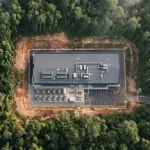
The digital infrastructure supporting modern SaaS and cloud-based DAM platforms relies on data centers that require massive amounts of electricity—frequently generated by fossil fuels—to power servers and run cooling systems. Many facilities utilize evaporative cooling towers, consuming millions of gallons of water daily to maintain optimal operating temperatures. As climate change accelerates water scarcity and grid instability worldwide, the tech sector’s resource consumption has transformed from a back-office utility expense into a front-page ESG (Environmental, Social, and Governance) priority.
Regulatory Shifts and Corporate Accountability
For years, sustainability reporting was limited to heavy industries such as manufacturing, logistics, and energy production. Digital technologies enjoyed a "clean" reputation, viewed as environmentally neutral alternatives to paper-based workflows. That regulatory shield is rapidly dissolving.
The Emerging Global Compliance Landscape
Governments are enacting rigorous transparency mandates that extend deep into the technology supply chain:
- European Union Directives: Under updated EU energy efficiency frameworks, data center operators meeting specific power capacity thresholds (such as 500 kW or more of IT power demand) are legally required to report detailed metrics regarding energy consumption, power usage effectiveness (PUE), waste heat utilization, and water usage to centralized databases. While these rules target data center operators directly, enterprise software buyers are increasingly pressured to audit their SaaS vendors’ supply chains to ensure compliance.
- UK Sustainability Reporting Standards: The United Kingdom has rolled out domestic reporting frameworks aligned with international climate disclosure standards. While adoption is initially phased for voluntary use among certain corporate tiers, regulators are laying the groundwork for mandatory disclosure requirements across broader business sectors.
- Corporate Scope 3 Emissions Accounting: Under the Greenhouse Gas (GHG) Protocol, corporate emissions are categorized into Scopes 1, 2, and 3. Scope 3 encompasses all indirect emissions that occur in a company’s value chain, including the cloud computing and software services they procure. Because enterprise DAM platforms represent a significant share of a media company’s digital footprint, procurement teams are beginning to demand carbon-per-terabyte metrics from software vendors.
The Accountability Gap in DAM
Despite these sweeping regulatory changes, the enterprise DAM industry suffers from a profound metrics gap. While financial controllers can track software licensing costs down to the cent, and security officers can audit access logs down to the millisecond, very few DAM administrators can answer fundamental environmental questions:
- What is the carbon footprint associated with storing one terabyte of digital assets in our repository?
- How much energy is consumed when our creative teams render, transcode, and distribute a major marketing campaign?
- Do our vendor contracts include clauses regarding renewable energy usage in data center hosting?
Without standardized frameworks to measure these impacts, sustainability remains an elusive ideal rather than an actionable operational metric.
DAM News Call for Contributions: Documenting the Sustainable Transition
Recognizing the urgent need to bring this hidden infrastructure cost into the open, DAM News is launching an open initiative to document how practitioners, technology vendors, and academic researchers are addressing the environmental impact of digital asset management.
The publication is actively seeking submissions from industry professionals willing to share practical strategies, empirical research, and honest assessments of the trade-offs involved in greening a DAM ecosystem.
Key Themes and Areas of Investigation
Contributors are encouraged to explore a wide range of topics, including but not limited to:
- Carbon Auditing Methodologies: How organizations are calculating the energy consumption and carbon emissions of their digital asset repositories, storage tiers, and retrieval workflows.
- Retention and Deletion Policies: Case studies on how enterprises balance the desire for endless historical archiving with the ecological necessity of purging dark data and redundant renditions.
- Vendor Accountability: Evaluations of how cloud providers and SaaS DAM vendors are transitioning to 100% renewable energy data centers and whether they provide transparent sustainability dashboards to their enterprise clients.
- Technical Optimization: Engineering strategies designed to reduce server load, streamline transcoding pipelines, minimize unnecessary AI model queries, and optimize Content Delivery Network efficiency.
- The Creative vs. Sustainability Tension: Honest examinations of the friction that occurs when environmental reduction goals collide with legal retention mandates, creative flexibility demands, and rapid-fire marketing requirements.
Editorial Guidelines and Submission Process
In keeping with the investigative and authentic spirit of this initiative, DAM News has outlined specific criteria for prospective contributors:
- Exclusivity: Submissions must be original works not previously published elsewhere.
- Length: Articles must be a minimum of 800 words.
- Non-Promotional Tone: Contributions must focus on substantive analysis, industry challenges, and practical methodologies rather than serving as promotional marketing copy for specific commercial software products. Editorial guidelines are available on the DAM News website.
- Submission Contact: Interested authors, researchers, and practitioners should send their completed drafts or pitch proposals directly to Russell McVeigh at [email protected].
Editorial Note: Submissions may undergo light editing to align with publication standards, with authors notified prior to publication. Accepted contributions will feature direct backlinks to the author’s or company’s website and/or professional LinkedIn profiles.
A Special Note on Authenticity: Given the thematic focus of this initiative—critiquing automated and resource-intensive digital generation—DAM News has introduced a lighthearted challenge: Extra editorial recognition and kudos will be awarded to contributors who craft their articles entirely through human effort, without relying on AI writing assistants.
Future Outlook: The Sustainable Future of Digital Asset Management
As the enterprise technology landscape matures, sustainability will inevitably transition from an optional corporate afterthought to a core operational pillar of Digital Asset Management. The era of treating digital space as an infinite, consequence-free resource is drawing to a close.
Looking ahead over the next decade, several key transformations are likely to reshape the DAM industry:
- Carbon-Aware Metadata Schemas: Future DAM iterations may incorporate native environmental metadata fields, tracking the carbon cost of ingestion, transformation, and distribution alongside traditional descriptive, administrative, and technical metadata.
- Automated Ecological Governance: DAM platforms will likely introduce automated lifecycle management tools powered by intelligent auditing algorithms that flag dark data, identify redundant renditions, and recommend secure deletion schedules based on ecological as well as legal criteria.
- Green Procurement Standards: Software selection processes will increasingly treat data center energy efficiency and renewable energy sourcing as mandatory baseline requirements rather than secondary features.
Ultimately, the future of digital asset management depends on aligning operational efficiency with planetary boundaries. By shining a light on the hidden carbon ledger of digital storage and retrieval, the DAM community can take the first crucial steps toward building a truly sustainable digital infrastructure.