Executive Overview
In an aggressive escalation of the ongoing war against digital piracy in the PC gaming sector, anti-piracy titan Denuvo—a subsidiary of security giant Irdeto—has officially petitioned a California federal court for permission to issue third-party subpoenas. The target of this legal maneuvering is "voices38," an anonymous online persona accused of systematically bypassing Denuvo’s notoriously robust Anti-Tamper digital rights management (DRM) software.
The lawsuit, filed under the Digital Millennium Copyright Act’s (DMCA) anti-circumvention provisions, targets a total of 26 high-profile video games, including blockbuster titles such as Hogwarts Legacy and Black Myth: Wukong. However, because the defendant currently operates behind a veil of complete anonymity, Denuvo’s initial complaint listed only a collection of digital footprints: a Discord user ID, a Reddit account, and seven distinct Steam profiles.
To pierce this anonymity, Denuvo has asked U.S. District Judge Haywood S. Gilliam Jr. for permission to execute expedited discovery. If granted, the company will legally compel technology heavyweights Valve Corporation, Discord, Inc., and Reddit, Inc. to surrender foundational account registration data, IP logs, billing addresses, and transactional histories. Concurrently, court filings have unveiled a fresh layer to Denuvo’s private investigation: the tracking of cryptocurrency transactions tied to the defendant across the decentralized exchange FixedFloat.
As this high-stakes legal drama unfolds, its shockwaves are already reshaping the underground scene. Prominent cracking collectives have begun to fold under the looming threat of civil litigation, while the broader PC gaming community watches closely to see if traditional corporate litigation can effectively dismantle modern digital piracy syndicates.
Detailed Chronology: From Digital Bypasses to Federal Court Filings
The genesis of the current legal confrontation traces back months of mounting tension between Denuvo’s security engineers and the decentralized underground community of reverse-engineers who view the company’s anti-tamper software as a digital straightjacket. Denuvo’s technology, designed to protect video game publishers from day-one piracy, has long been a primary hurdle for release groups. When the anonymous entity known as "voices38" successfully engineered reliable bypasses for multiple major releases—culminating in the cracking of 26 marquee titles—it posed a direct commercial threat to Irdeto’s core business model.

Last month, Denuvo took the unprecedented step of filing a formal DMCA anti-circumvention lawsuit in a California federal court. Because the anti-piracy firm lacked the true legal identity of the individual behind the moniker, the complaint utilized the placeholder designation "voices38" and cited specific online identifiers.
Realizing that voluntary cooperation from major digital platforms would be impossible due to strict corporate privacy policies, Denuvo’s legal representation filed an ex parte motion for expedited discovery. In the filing, attorney Ryan Morris articulated the necessity of early subpoenas. According to the document, both Valve and Reddit formally declined to disclose user data without a direct court order, citing their internal privacy frameworks, while Discord failed to respond to informal inquiries altogether.
Faced with a brick wall of corporate data protection policies, Denuvo turned directly to the federal judiciary. The newly submitted court documents outline a meticulously compiled digital trail, weaving together activity from Valve’s gaming ecosystem, social media participation on Reddit, community engagement on Discord, and newly unearthed blockchain movements.
Supporting Context & Metrics: Unpacking the Subpoena Targets and Crypto Trails
The scope of information Denuvo aims to extract through its proposed subpoenas is comprehensive, designed to eliminate any plausible deniability on the part of the defendant. The legal team has targeted three major digital service providers, each yielding distinct vectors of potential identification.
The Valve and Steam Ecosystem
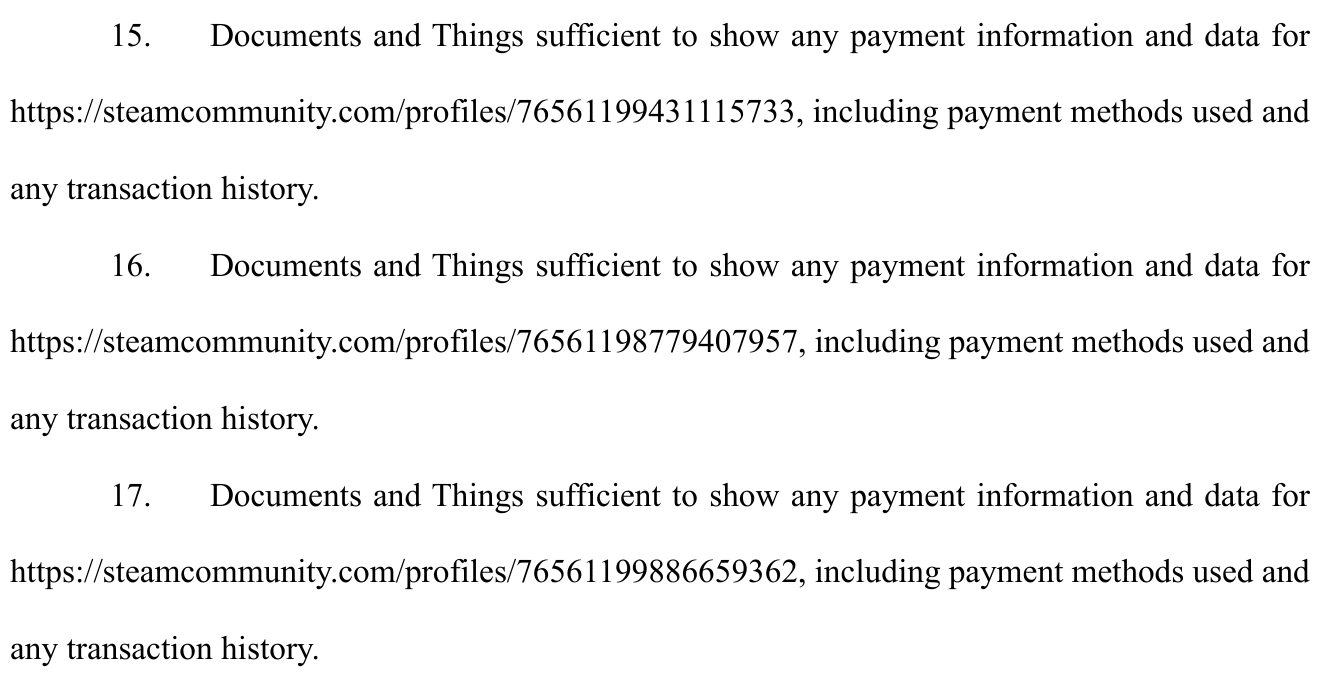
Denuvo’s proposed subpoena directed at Valve Corporation focuses intensely on seven distinct Steam profiles linked to the investigation. The demands are sweeping:
- Registration Data: Full names, verified email addresses, and telephone numbers tied to the accounts.
- Billing Information: Credit card details, PayPal accounts, and physical billing addresses used to purchase digital goods.
- Network Logs: IP addresses paired with precise timestamps indicating when the user logged in and out.
- Device Identifiers: Hardware hashes and device fingerprints that can link multiple accounts to a single physical machine.
- Transaction Histories: Complete ledgers of purchases, inventory trades, and gift transactions.
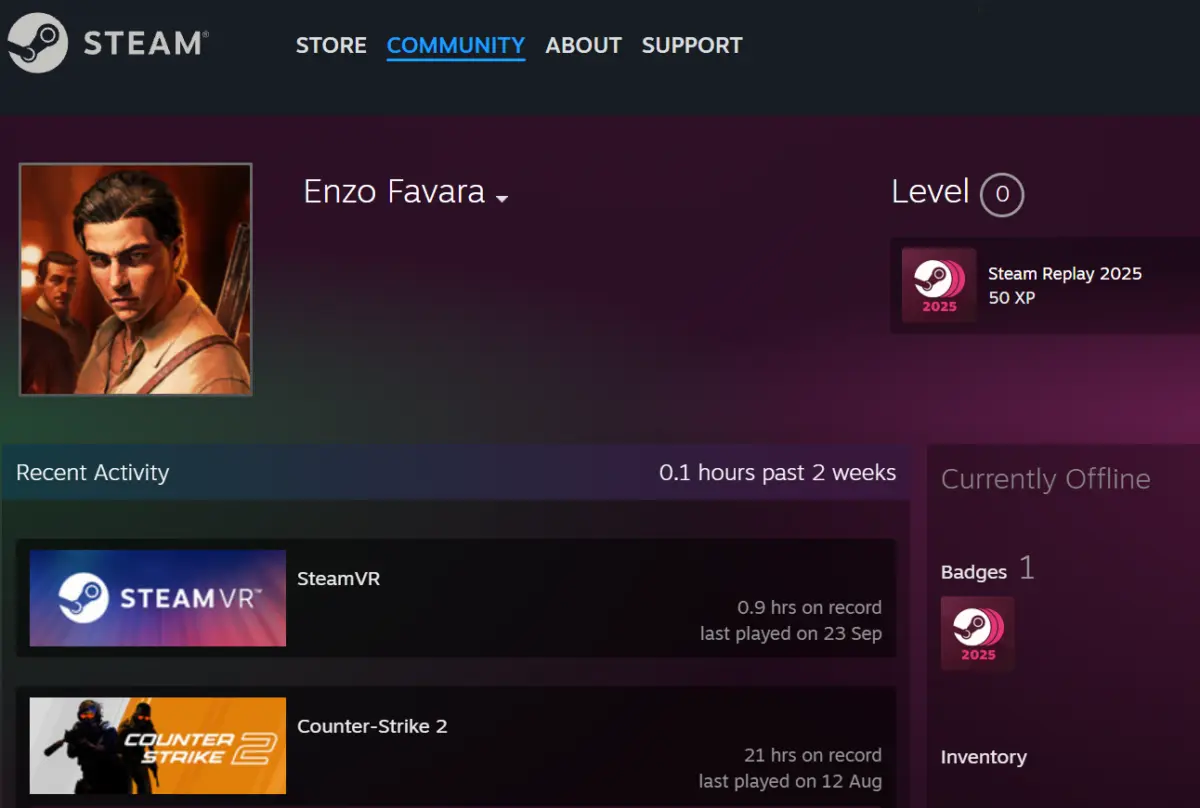
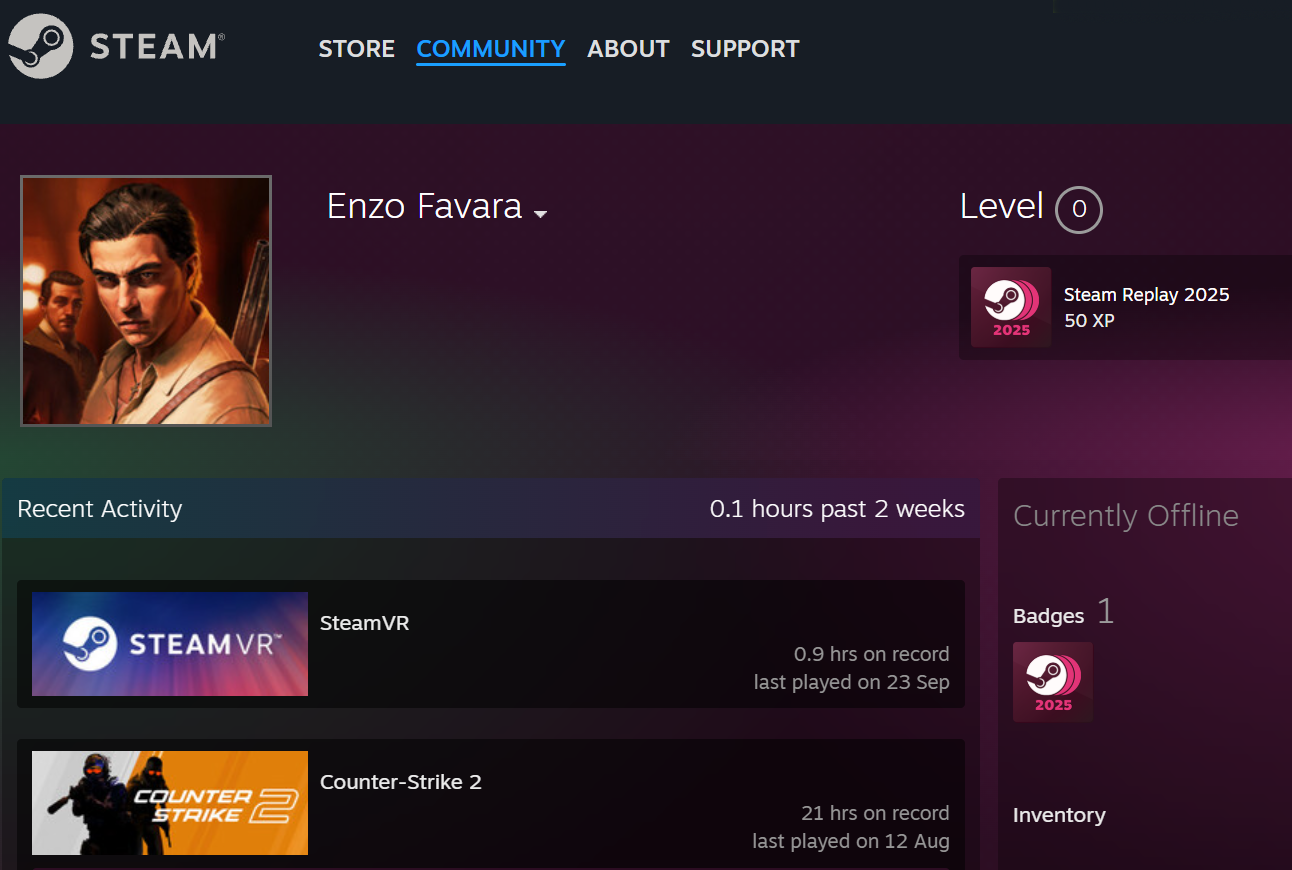
Notably, one of the seven Steam profiles explicitly highlighted in the court filings utilizes the display name Enzo Favara—the protagonist of Mafia: The Old Country, a title included in the portfolio of games that Denuvo alleges voices38 successfully cracked. While the accounts themselves display relatively low public gaming activity, Denuvo’s internal forensic analysis has evidently correlated their creation, maintenance, or interaction logs with the broader infrastructure of the voices38 cracking operation.
Discord and Reddit Digital Footprints
Beyond the gaming storefronts, Denuvo has turned its gaze toward community and social platforms where underground developers coordinate, share updates, and cultivate followings.
- Discord, Inc.: The subpoena seeks comprehensive account ownership data, along with exhaustive logs detailing every server the target account has joined, the specific channels accessed, and administrative or participant roles assigned within those communities.
- Reddit, Inc.: The motion demands the complete submission history of the target account—including deleted or edited posts and comments—alongside a comprehensive audit of all subreddit memberships and private message metadata, where applicable.
The FixedFloat Cryptocurrency Nexus
Perhaps the most intriguing revelation within the newly filed declarations is the discovery of cryptocurrency transactions linked to the defendant via FixedFloat, an instant cryptocurrency exchange known for its privacy-centric, minimal-verification framework ("no registration and unnecessary details").
According to Denuvo’s legal declarations, investigators traced digital asset flows involving Bitcoin (BTC), Ethereum (ETH), and Solana (SOL) connected to the defendant’s operations. FixedFloat has historically been favored by actors seeking to obscure financial trails due to its automated, non-custodial swaps. Interestingly, while Denuvo’s legal team explicitly highlighted these crypto movements in attorney Ryan Morris’s declaration, the current motion does not include a formal request to subpoena FixedFloat itself. Whether this omission points to an ongoing separate investigation, uncooperative jurisdiction, or strategic restraint remains to be seen.
Official Statements and Industry Reactions
The legal initiative has generated shockwaves across the global PC gaming landscape, dividing opinions between corporate rights advocates and defenders of digital preservation and open-source tinkering.
When the lawsuit was initially filed, the reaction from the accused entity appeared nonchalant. Writing on Reddit shortly after public disclosure, voices38 maintained a defiant posture:
"All is fine. Everything will continue as normal."
However, the immediate aftermath of the legal filing tells a more sobering story for the underground community. Just weeks after Denuvo initiated its legal campaign, reports surfaced that DenuvOwO—a prominent cracking collective responsible for engineering hypervisor bypasses for numerous Denuvo-protected titles—had officially disbanded. Industry analysts at Tom’s Hardware reported that the threat of federal litigation served as an intense chilling effect. Members of DenuvOwO reportedly panicked over potential legal exposure, prompting major community hubs like the CS.Rin forum to actively purge download links and references to the group’s releases.
Denuvo’s parent company, Irdeto, has maintained a resolute stance throughout the process. By pursuing civil litigation under the DMCA, the company is attempting to shift the paradigm of anti-piracy enforcement from mere software patches to severe, life-altering financial and legal consequences for individual reverse-engineers.
Legal scholars observing the case note that while obtaining civil subpoenas is a standard procedural step under U.S. federal rules when dealing with anonymous John Doe defendants, successfully translating IP logs and crypto transfers into a legally binding identification of a foreign or domestic national remains a complex hurdle.
Future Outlook: What Lies Ahead for Denuvo and ‘voices38’
The immediate trajectory of the case now rests entirely in the hands of U.S. District Judge Haywood S. Gilliam Jr. Should the judge approve the ex parte motion for expedited discovery, Discord, Valve, and Reddit will be legally mandated to comply with the document requests, bringing Denuvo one step closer to uncovering the legal identity behind the keyboard.
If the subpoenas successfully yield matching billing addresses, consistent IP geolocations, or verifiable transaction methods that tie voices38 to a real-world individual, the case will transition from a speculative "John Doe" proceeding into a fully realized federal civil lawsuit. Such an outcome could result in severe statutory damages, permanent injunctions, and potentially criminal referrals depending on the scale of commercial distribution alleged.
Conversely, if the digital trail constructed by Denuvo proves inconclusive—or if the defendant successfully utilized robust, multi-layered privacy tools (such as virtual private networks, randomized hardware identifiers, and untraceable proxy billing)—the case could stall, highlighting the persistent challenges corporations face when attempting to police decentralized, pseudonymous internet subcultures.
Regardless of the courtroom outcome, the psychological and structural impact on the PC gaming underground is already profound. The dissolution of DenuvOwO and the sudden cessation of new releases from voices38 demonstrate that the specter of American federal litigation carries enough weight to disrupt, if not entirely paralyze, some of the most resilient bypass operations in modern gaming history.
As digital security measures evolve alongside increasingly sophisticated legal strategies, the landscape of software protection has entered a volatile new era—one where the battle lines are drawn not just in compiled assembly code, but in federal courtrooms across California.