







By Global Security & Maritime Correspondent
Published: October 2026
Executive Overview
In what international security analysts are calling a dangerous and unprecedented escalation of the ongoing war in Eastern Europe, a coordinated series of sea and aerial drone attacks has struck commercial shipping within the exclusive economic zones (EEZs) of NATO member states. For the first time since the onset of the Russian invasion of Ukraine, international waters and sovereign economic zones belonging to the Alliance’s eastern flank have become active combat vectors for asymmetric naval warfare.
Over a chaotic 48-hour window on October 5 and October 6, three separate civilian cargo vessels—the Royad Mammadov, the Alfa Watan, and the Able—were targeted by advanced uncrewed surface vessels (USVs) and uncrewed aerial vehicles (UAVs). The devastating strikes have left at least two sailors confirmed dead, multiple mariners severely injured, and two cargo ships sunk to the floor of the Black Sea, while a third was heavily damaged and engulfed in flames.
The incidents occurred roughly 80 miles off the coast of Bulgaria and within the maritime borders of Romania, striking deep into areas previously regarded as safe commercial corridors. This disruption threatens to strangle maritime commerce, spike global insurance premiums, and test the outer boundaries of NATO’s Article 5 collective defense commitments.
While European Union leadership has urged caution while forensic and naval investigations establish definitive attribution, Ukrainian state officials and allied intelligence assessments have pointed directly at Moscow. They characterize the coordinated drone strikes as a reckless manifestation of "hybrid warfare" designed to project Russian hegemony, punish nations trading with Kyiv, and test the nervous system of Western maritime defenses.
Detailed Chronology: 48 Hours of Terror in the Black Sea
The sequence of events unfolded with terrifying speed, shattering the fragile equilibrium that commercial operators had maintained in the western sectors of the Black Sea over the preceding months.
October 5: The Strike Within Romania’s EEZ
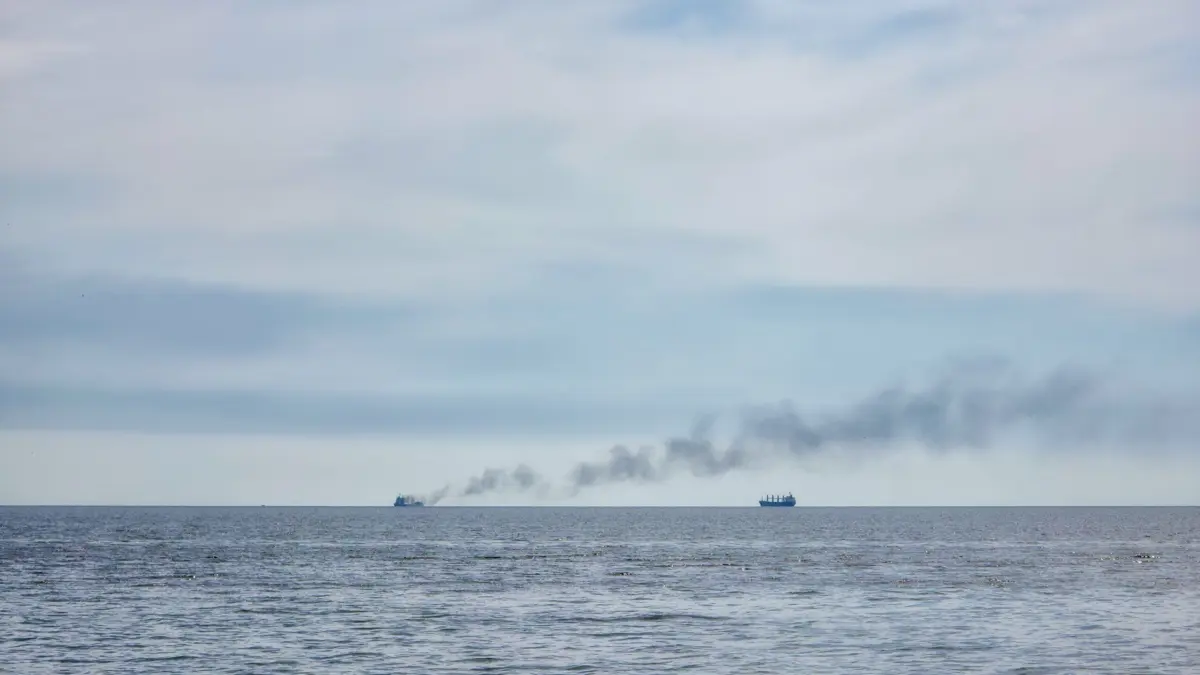
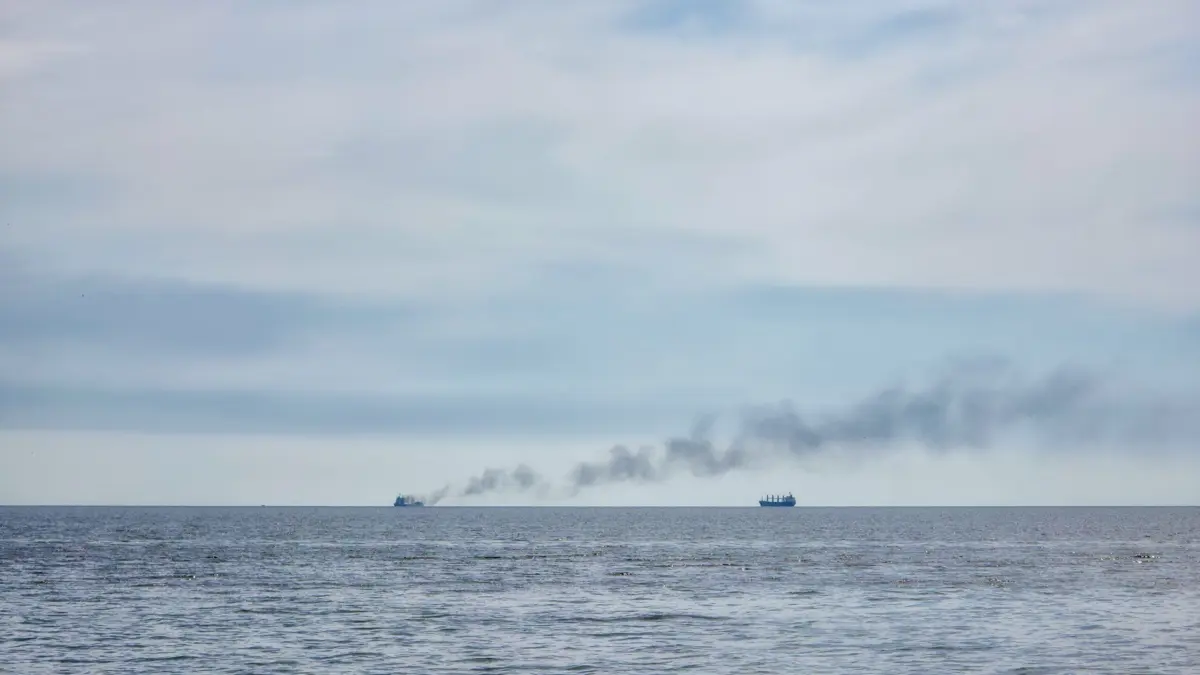
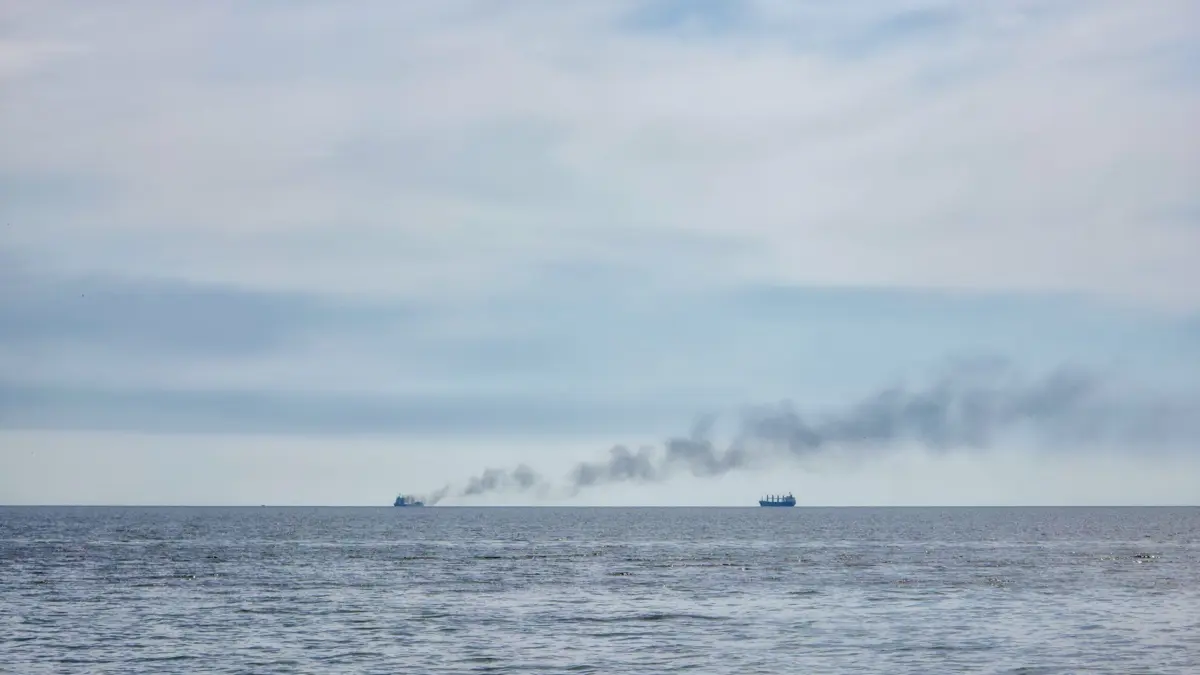
The campaign of devastation began on the morning of October 5. The Royad Mammadov, a Turkish-owned and operated dry bulk cargo vessel, was plying its trade within Romania’s legally designated Exclusive Economic Zone. According to reports compiled by Euronews, the vessel was suddenly intercepted by what security analysts believe was a combination of loitering aerial munitions and explosive-laden sea drones.
Without prior warning or military challenge, the ship was struck port-side, rupturing fuel bunkers and sparking an immediate, ferocious fire that quickly crippled the engine room. As thick black smoke billowed across the horizon, the crew issued frantic distress signals.
Neighboring Romanian maritime rescue authorities mobilized swiftly, deploying coast guard cutters and search-and-rescue helicopters to the coordinates. Out of a total crew complement, 11 sailors were successfully pulled from the freezing waters or rescued from the burning superstructure. However, the human toll was immediate and severe: two crew members were confirmed dead at the scene from blast injuries and smoke inhalation, while another sailor remained unaccounted for, presumed lost at sea. Despite desperate firefighting efforts, the structural integrity of the Royad Mammadov failed, and the vessel slipped beneath the waves.
October 6: The Double Strike Off the Bulgarian Coast
Barely twenty-four hours after the catastrophe in Romanian waters, the theater of operations shifted slightly south, targeting the sovereign economic zone of Bulgaria—another critical NATO member state situated on the Black Sea rim.
At approximately 80 miles (128 kilometers) off the Bulgarian coastline, a multi-vector swarm of sea and aerial drones launched a coordinated surprise assault on two moving merchant vessels.
- The Alfa Watan: Flying under the flag of Togo, this cargo vessel took the brunt of the assault. Hit simultaneously by at least one aerial drone and a high-speed sea-borne suicide drone, the Alfa Watan suffered catastrophic hull breaches. Water rushed into the cargo holds faster than pumps could manage, causing the ship to list violently and sink within minutes. At the time of publication, the immediate fate and precise whereabouts of the entire crew of the Alfa Watan remain shrouded in uncertainty, with rescue operations hampered by lingering security threats and adverse sea conditions.
- The Able: Operating under the flag of Palau, this cargo ship was targeted in the same barrage. While it did not immediately sink, the Able was set ablaze by incendiary munitions delivered via drone, turning the vessel into a floating inferno.
Fortunately, a regional Bulgarian passenger ferry and specialized maritime safety vessels intercepted the stricken ship. They executed a daring evacuation of all 18 crew members aboard the Able. Among the rescued, two mariners sustained critical burn injuries and polytrauma. They were airlifted via emergency medical evacuation helicopters directly to a trauma center in the coastal city of Varna for intensive care.
Supporting Context & Metrics: The Evolution of Black Sea Insecurity
To fully grasp the gravity of the October 2026 strikes, one must examine the evolutionary arc of maritime security in the Black Sea since February 2022.
The Asymmetric Revolution at Sea
The war in Ukraine has fundamentally rewritten the doctrines of naval warfare. Denied a traditional blue-water navy, Ukraine pioneered the mass tactical deployment of uncrewed surface vessels—essentially remote-controlled jet skis packed with hundreds of kilograms of high explosives—alongside sophisticated aerial reconnaissance and strike drones. These asymmetric tactics enabled Kyiv to sink or damage a significant portion of the Russian Black Sea Fleet, forcing Moscow to relocate its major surface combatants from occupied Crimea to safer harbors further east, such as Novorossiysk.
However, as the conflict has matured, the technological capability to deploy long-range, precision sea drones has proliferated. Security analysts note that the precision, payload capacity, and communication range demonstrated in the attacks against the Royad Mammadov, Alfa Watan, and Able reflect industrial-scale capabilities.
Economic and Strategic Implications
The geographic location of these recent attacks marks a qualitative shift in the conflict:
- Exclusive Economic Zones vs. Territorial Waters: While a nation’s territorial waters extend 12 nautical miles from its coast, an Exclusive Economic Zone extends up to 200 nautical miles. Within an EEZ, coastal states have sovereign rights over natural resources, but international shipping enjoys freedom of navigation. Striking commercial ships in these zones violates international maritime norms and represents a direct economic provocation to NATO allies.
- Insurance and Logistics Impact: Following the collapse of the UN-brokered Black Sea Grain Initiative, Ukraine successfully established its own maritime corridor hugging the western coastline close to Romania and Bulgaria. These latest attacks strike directly at the heart of that corridor. Global marine insurance underwriters have already announced emergency reviews of risk ratings for the entire Western Black Sea, threatening to choke off vital grain, metal, and energy exports from Eastern Europe to global markets.
Official Statements and Diplomatic Fallout
The international community has reacted with profound alarm, balancing diplomatic restraint with fierce condemnation as leaders attempt to assign accountability.
European Union and NATO Reactions
European Commission President Ursula von der Leyen took to social media platform X (formerly Twitter) to voice the bloc’s deep anxieties. Describing the simultaneous drone strikes on three civilian vessels as "increasingly concerning," von der Leyen emphasized the absolute sanctity of civilian maritime trade.
"Attacks on civilian shipping are unacceptable," von der Leyen wrote. "We stand in full solidarity with our Member States on the Eastern flank."
However, EU officials maintained a diplomatic posture of due diligence. Von der Leyen cautioned that the technical forensics and specific circumstances of the attacks are "still being established," stopping short of naming a definitive state perpetrator in her initial remarks.
Bulgarian Condemnation
Bulgarian Prime Minister Rumen Radev did not mince words during a televised emergency press briefing. Addressing the attack on the Alfa Watan and the Able within his nation’s EEZ, Radev categorized the events as "an unacceptable attack in Bulgaria’s exclusive economic zone" and condemned them as "a blatant violation of international law and maritime law." Radev confirmed that Bulgaria’s naval command and intelligence services are cooperating intimately with international partners to trace the telemetry and guidance signals of the offending drones.
Kyiv’s Assessment: Pointing the Finger at Moscow
In stark contrast to Brussels’ cautious rhetoric, Ukrainian President Volodymyr Zelenskyy released findings from a joint intelligence and naval investigation conducted alongside Bulgarian defense counterparts. According to Reuters, Zelenskyy asserted that the strikes were definitively a "Russian combined attack using both sea and aerial drones."
Furthermore, the Ukrainian head of state went on the defensive regarding operational responsibility, explicitly stating that Ukraine’s armed forces were not conducting any military operations, exercises, or drone flights in that specific sector of the western Black Sea at the time of the attacks. Kyiv argues that the strikes bear all the hallmarks of a deliberate Russian false-flag or hybrid warfare operation aimed at disrupting the Ukrainian maritime export corridor and intimidating NATO littoral states.
Future Outlook: A Critical Test for the Western Alliance
As search-and-rescue operations wind down and maritime investigators comb through the debris and digital telemetry recovered from the surviving vessels, the incident leaves policymakers in Washington, Brussels, and regional capitals facing critical questions.
- The Doctrine of Proportional Response: Will NATO’s eastern members invoke enhanced naval patrols, intelligence-sharing, and air-shielding mechanisms under Article 4 of the North Atlantic Treaty? The militarization of commercial lanes requires a robust counter-strategy to protect civilian mariners.
- The Threat of Escalation: If ongoing investigations definitively prove Russian state direction behind the attacks on Togo-, Palau-, and Turkish-flagged vessels within NATO EEZs, the Alliance will face immense pressure to respond beyond economic sanctions. A failure to establish a credible deterrent could invite further grey-zone provocations.
- The Future of Black Sea Trade: Without guaranteed security corridors protected by robust electronic warfare and kinetic counter-drone systems, commercial shipping lines may abandon the Black Sea altogether. This outcome would trigger severe inflationary pressures on global food supplies and deal a heavy blow to the economies of Ukraine, Romania, and Bulgaria.
The tragedy of the Royad Mammadov, the Alfa Watan, and the Able serves as a grim reminder that the war in Ukraine cannot be safely contained within land borders. As sea drones reshape the topography of modern combat, the sovereign waters of NATO’s eastern frontier have become the newest and most volatile frontline of a shifting global order.