







Executive Overview
For decades, the rugged landscape of the U.S.–Mexico border has served as a silent backdrop to human tragedy. Yet, in an era defined by rapid technological escalation, this landscape has transformed into something far more paradoxical: one of the most heavily monitored strips of land on Earth, where human lives continue to slip away in plain sight.
When 30-year-old Graciela Gómez Hernández crossed the border from Tijuana into Southern California on September 14, 2025, she stepped into an environment blanketed by an interconnected grid of high-resolution cameras, autonomous sensors, infrared lenses, and artificial intelligence. Within hours, exhausted and disoriented in the treacherous terrain of the Otay Mountain Wilderness, she whispered a final, desperate message into her phone: "I can’t do it anymore."
Two weeks later, forensic crews recovered what remained of her body, which had largely decomposed into the earth just a mile away from a towering, gray surveillance installation.
An investigation by Times of San Diego and MIT Technology Review reveals a chilling statistical reality across the California borderlands: over a four-year period, at least 138 migrant remains were discovered within the nominal tracking range of the very electronic systems designed to monitor the border. Topographical analyses further indicate that more than half of these individuals died in locations where cameras had a direct, unobstructed line of sight.
This profound disconnect between trillion-dollar technological capabilities and humanitarian rescue exposes critical questions about modern border security. As federal agencies pour billions of dollars into AI-enabled towers and satellite tracking, thousands of vulnerable individuals continue to perish from exposure, dehydration, and exhaustion—often within shouting distance of the watchful mechanical eyes meant to secure the frontier.

Detailed Chronology: The Last Days of Graciela Gómez Hernández
Graciela Gómez Hernández did not share her plan with her family until the eve of her departure. A resident of southern Mexico, she was motivated by desperation. Her husband, who had previously crossed the border to find work, had stopped sending financial support. Left with three children and aging parents who struggled to afford basic necessities—such as a bag of laundry detergent or daily meals—Graciela resolved to make the perilous journey northward. Her oldest son, age 11, had recently asked for a bicycle; she hoped to earn enough in California to fulfill that simple wish.
The Crossing and the Ascent
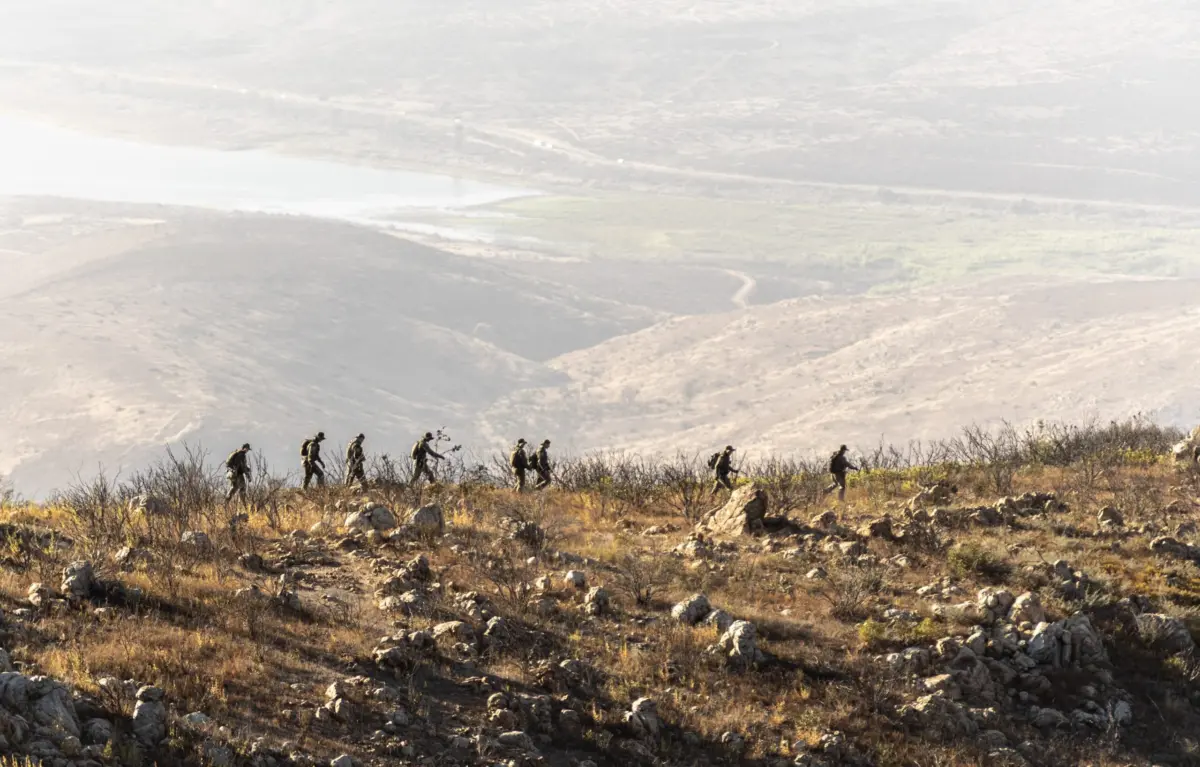
On the afternoon of September 14, 2025, Graciela crossed the international boundary from the eastern edge of Tijuana into Southern California. Whether she scaled a makeshift ladder over the imposing border wall or slipped through a rugged, un-fenced section of steep terrain, she quickly found herself navigating the dust-choked game trails of the Otay Mountain Wilderness, weaving through thickets of sagebrush and manzanita.
She paid smugglers roughly 20,000 pesos (about $1,150)—significantly below the prevailing average rate—for instructions and coordinates rather than a physical guide. Her agreement required her to travel alone while her phone transmitted automated location pings back to a contact in Tijuana.
While the eastern edge of San Diego lies only a mile away from the initial crossing point, migrants attempting to evade Border Patrol checkpoints routinely march 10 to 20 miles north through punishing mountain ranges. The physical toll of this trek is compounded by scorching daytime temperatures and brutal topography.
Whispers in the Wilderness
Between 2:00 p.m. and 3:00 p.m., Graciela sent a series of frantic voice messages to her mother and sister, Irma, via WhatsApp. She described feeling overwhelmed by exhaustion and fear.

"I can’t do it anymore," she whispered into her phone.
According to her sister, Graciela encountered another solitary traveler along the brush-lined trails during her final hours. In one of her last transmissions, she noted that the man remarked that "there isn’t time" to pause or pray. By late afternoon, her phone calls ceased, though automated location pings continued briefly before fading out entirely.
The Discovery
For weeks, Irma fought through silence and stonewalling from smugglers before finally obtaining a screenshot of Graciela’s last known coordinates. On October 3, 2025, search volunteers from the Armadillos group passed these coordinates to the U.S. Border Patrol.
When Jennifer Wright, a local medical examiner, arrived at the dirt path approximately 100 yards north of the international border on October 4, she discovered skeletal remains lying supine in the dirt. Due to rapid decomposition accelerated by wildlife and intense solar exposure, determining the exact cause of death—whether dehydration, heatstroke, or foul play—proved impossible. Nearby sat a pile of clothing, Mexican currency, and personal items, including a bottle of women’s spray deodorant and a small container of perfume.
Nearly a year later, after a costly repatriation process handled by her grieving family, a simple wooden cross stands at the site of her death, marked by rosaries and framed by the hum of surveillance equipment overhead.

Supporting Context & Metrics: Surveillance Saturation and Migrant Mortality
The tragedy of Graciela Gómez Hernández is not an isolated anomaly; it is part of a systemic pattern documented along the southwestern frontier.
The Scale of the Surveillance Grid
According to data compiled by the Electronic Frontier Foundation, more than 120 surveillance towers stand sentinel along the California border alone, backed by an intricate web of hidden trail cameras, underground seismic movement detectors, long-range radar, infrared sensors, uncrewed aerial drones, and tethered blimps. This infrastructure has expanded dramatically:
- Federal Expansion: In June 2026, a Government Accountability Office (GAO) report stated that Customs and Border Protection (CBP) operated 803 fielded surveillance towers across the southwestern border, with plans to deploy another 175. Total expenditures for this initiative have surpassed $1.4 billion.
- AI Integration: Roughly half of these modern installations are autonomous surveillance towers manufactured by defense contractor Anduril. These units utilize artificial intelligence to autonomously distinguish human border-crossers from animals, rotating mechanically to lock onto targets over long ranges.
- Federal Spy Assets: In March 2025, the administration directed the Department of Defense to integrate national spy satellites into the border surveillance apparatus.
The Spatial Paradox of Technology and Death
Despite the billions invested in situational awareness, a spatial analysis conducted by Times of San Diego and MIT Technology Review highlights a harrowing correlation between technological deployment and migrant fatalities:
- The Four-Year Toll: Between 2022 and 2025, researchers identified at least 138 instances where migrant remains were discovered directly within the nominal tracking range of a nearby surveillance tower.
- Unobstructed Lines of Sight: Topographical modeling demonstrates that in over half of these cases, natural terrain features like hillsides or canyons did not block the camera’s view; the individuals lay within clear optical range of automated lenses.
- Operational Blind Spots: Internal federal memos have revealed chronic maintenance issues. An October 2024 memo uncovered that roughly 30% of older, legacy surveillance towers—requiring human operators to review live feeds—were broken, non-functional, or missing critical parts, functioning essentially as multi-million-dollar scarecrows. Furthermore, military evaluations of combat-grade towers deployed in mountainous regions noted vulnerabilities to rough terrain, including battery failures, rodent damage, and cameras becoming permanently stuck in zoomed-in positions.
Official Statements and Industry Perspectives
The coexistence of sophisticated surveillance and widespread migrant deaths has generated intense friction among federal agencies, private defense contractors, and humanitarian rescue organizations.
Industry Claims vs. Ground Realities
Manufacturers defend the efficacy of their hardware. In a mid-2024 press release, Anduril asserted that its autonomous surveillance towers "directly contributed to saving lives and stopping illicit drugs from entering the U.S.," later claiming in June 2026 that its systems had autonomously identified hundreds of thousands of crossings. Similarly, Border Patrol sector chiefs have expressed profound confidence in regional coverage, with Arizona Sector Chief John Morris remarking at a May 2026 security expo that enforcement agencies are "dang close to pretty much knowing everything that comes across."

However, humanitarian workers and search-and-rescue volunteers paint a vastly different picture. Rafael Hernández Larraenza, leader of the Desert Angels rescue group, argues that many towers function merely as "adornment" rather than active rescue assets. He notes that agents frequently communicate a lack of resources or time to initiate immediate wilderness searches for solitary distressed individuals.
Bryce Peterson of the advocacy group No More Deaths explains that human beings in medical distress are rarely prioritized unless they travel in large, easily interceptable groups. "Even one person who’s not sick… often Border Patrol will just ignore them because it’s not worth their time to just only catch one person," Peterson observed.
When approached by journalists for comment, representatives for Anduril declined to address the performance of towers in rugged, mountainous terrains. General Dynamics directed all inquiries regarding Graciela’s nearby tower to the Border Patrol, while CBP officials did not respond to questions regarding whether surveillance systems tracked Graciela prior to her death.
Future Outlook: The Escalating Perils of "Smart Borders"
As federal policy continues to emphasize technological enforcement, humanitarian organizations warn that the humanitarian crisis in border wilderness areas will likely intensify rather than abate.
Altered Migration Routes
Historical data indicates that the erection of physical walls and electronic towers does not halt migration; rather, it displaces it. Faced with heavily monitored lowlands and primary entry points, migrants are forced deeper into extreme, remote environments—such as the rugged canyons of the Otay Mountain Wilderness—where rescue operations are exponentially more difficult.

Furthermore, the proliferation of AI towers has altered migrant behavior on the ground. Fearing immediate interception by law enforcement within a brief 15-minute response window, many individuals resort to running rapidly through harsh environments, skipping vital hydration breaks, and taking desperate risks to bypass sensor arrays.
Persistent Push Factors
Despite fluctuations in monthly apprehension statistics and reported border deaths following shifts in executive administration, humanitarian coordinators emphasize that root socioeconomic pressures in countries of origin remain entirely unaddressed. Cesar Ortigoza of the Armadillos search group notes that daily calls from families seeking missing relatives persist unabated.
"If the riches of the world were distributed more equitably, we wouldn’t have to do things like this to reach a better life," Ortigoza reflected while placing flowers at Graciela’s memorial cross.
As defense contractors continue to swap aging cameras for advanced AI models—such as the recent upgrades deployed in late 2026—the technological capabilities of the border wall will only sharpen. Yet, unless operational protocols prioritize emergency medical rescue alongside enforcement, the silent watchers mounted on hundred-foot steel poles will continue to record a tragic paradox: an all-seeing electronic eye bearing witness to preventable human suffering in the dark folds of the American wilderness.