









Executive Overview
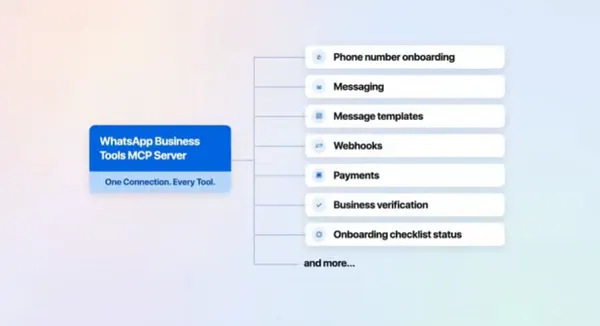
In a strategic move designed to redefine how global brands interact with their consumer bases, Meta has launched a streamlined, highly accessible pathway for businesses to integrate third-party artificial intelligence tools directly into the WhatsApp Business Platform. Dubbed the WhatsApp Business Tools MCP (Model Context Protocol), this newly introduced framework allows corporate entities and marketers to utilize external AI applications to design, configure, and deploy automated agent profiles and dynamic messaging responses without requiring deep-seated coding expertise or complex software engineering infrastructure.
As consumer behavior undergoes a historic and structural shift away from public social media feeds and toward private, direct-messaging environments, companies are under increasing pressure to meet their customers where they spend their time. WhatsApp, boasting billions of active users globally and rapidly climbing adoption rates in key markets such as the United States, has emerged as the premier channel for conversational commerce.
However, historically, scaling customer support and marketing operations on the app has demanded significant technical overhead—often requiring specialized development teams to build APIs, configure webhooks, and manage database integrations. The introduction of the WhatsApp Business Tools MCP effectively democratizes this process. By allowing users to converse naturally with their preferred AI tooling to orchestrate backend workflows, set up automated marketing templates, and handle customer queries round-the-clock, Meta is removing the friction from digital customer relationship management (CRM).
This comprehensive report examines the mechanics of the new MCP integration, traces the chronological evolution of Meta’s enterprise messaging strategy, analyzes the shifting paradigms of digital marketing toward private communication channels, incorporates crucial market metrics, reviews official platform insights, and projects the long-term future outlook for AI agents within the messaging ecosystem.
Detailed Chronology of Meta’s Business Messaging Evolution
To fully appreciate the significance of the WhatsApp Business Tools MCP release, it is necessary to examine the systematic trajectory Meta has pursued over the past decade to transform WhatsApp from a simple peer-to-peer messaging application into a powerhouse for enterprise communications.
Phase 1: The Foundation of Enterprise Infrastructure (2018–2020)
- January 2018: Recognizing the massive commercial potential of conversational interactions, Meta (then Facebook Inc.) officially launched the WhatsApp Business app for small-to-medium enterprises (SMEs), allowing local businesses to establish a verified presence, set up automated greeting messages, and organize customer chats with labels.
- August 2018: Meta introduced the WhatsApp Business API, targeted at medium-to-large enterprises. This allowed major brands to scale customer service and send transactional notifications (such as flight updates and shipping confirmations) securely at a global scale. However, this phase required substantial developer resources and integration through authorized Business Solution Providers (BSPs).
- October 2020: Meta announced the expansion of Facebook-hosted services for the WhatsApp Business API, allowing businesses to manage their customer communications using secure hosting infrastructure provided directly by Meta, thereby reducing the technical barrier to entry.
Phase 2: Democratization and Cloud Migration (2021–2023)
- May 2022: Meta rolled out the Cloud API for WhatsApp, making it accessible to any business globally within minutes. This pivotal update eliminated the reliance on third-party intermediaries for API access, allowing engineering teams to connect directly to Meta’s servers.
- September 2022: The launch of the WhatsApp Business Search feature in Brazil, Indonesia, Mexico, and the UK allowed users to discover businesses directly inside the app by category (such as travel, retail, or food and beverage), shifting WhatsApp from a reactive communication channel to an active discovery engine.
- 2023: Meta integrated conversational commerce features, including in-chat catalog browsing, cart management, and native payment integrations in select markets like India and Brazil, cementing WhatsApp as an end-to-end commercial ecosystem.
Phase 3: The Generative AI and MCP Era (2024–Present)
- Late 2024: As the generative AI landscape matured, businesses increasingly demanded ways to deploy conversational agents that could understand nuanced human prompts rather than relying on rigid, rule-based decision trees.
- September 2026: Meta officially launched the WhatsApp Business Tools MCP framework. By leveraging Model Context Protocol standards, this update bridges the gap between third-party AI ecosystems and the WhatsApp Business Platform. Marketers and operations teams can now use natural language to command their preferred AI tools to construct systematic workflows, manage marketing templates, and establish continuous customer service channels.
Technical Architecture & Mechanics: How the WhatsApp Business Tools MCP Operates
To understand the operational impact of the new toolset, one must examine the underlying mechanics of how third-party artificial intelligence platforms interface with Meta’s developer infrastructure.
The Power of Model Context Protocol (MCP)
At its core, the WhatsApp Business Tools MCP acts as a secure, standardized bridge. Traditionally, connecting an external Large Language Model (LLM) or a specialized AI agent builder to an enterprise messaging platform required custom API integrations, hard-coded parameter mapping, and rigorous testing of webhooks to ensure message delivery and state synchronization.
With the MCP implementation:

- Tool Selection: Marketers connect their AI chatbot tool or agent-building platform of choice directly into the WhatsApp Business Platform via the new protocol framework.
- Natural Language Specification: Instead of writing code or navigating complex developer consoles, users can articulate their business requirements in plain English (or other supported natural languages). For example, a user can prompt the AI: "Create an automated agent profile for our upcoming holiday sale that greets customers, answers FAQs regarding shipping times, and provides a discount code."
- Automated Systematic Requirements: The chosen AI tool interprets the request and translates it into the precise technical specifications, systematic process requirements, and data schemas required by the WhatsApp Business API.
- Instant Deployment: The workflow, including interactive message buttons, automated replies, and marketing template structures, is deployed directly into the brand’s WhatsApp environment.
Streamlining Marketing Templates and Workflows
One of the most tedious aspects of managing a corporate WhatsApp presence has been the creation and pre-approval of messaging templates. Meta requires structured templates for outbound notifications to protect users from spam.
Under the new MCP framework, businesses can bypass manual template construction. If a brand wants to design a new marketing template—such as a personalized cart-abandonment reminder or a loyalty program update—they can initiate the creation process through conversational requests with their AI assistant. The AI structures the template according to Meta’s compliance guidelines, submits it for review, and deploys it upon approval, drastically cutting down time-to-market for promotional campaigns.
Furthermore, these systems support "always-on" continuous operation. By integrating sophisticated AI agents, businesses ensure that customer queries regarding inventory, order status, or basic troubleshooting are handled instantly, regardless of the time zone or hour of the day.
Supporting Context & Metrics: The Shift to Private Digital Spaces
The strategic timing of Meta’s release is underscored by profound behavioral changes among global consumers. Public social media feeds are increasingly experiencing fatigue, with users pivoting away from public broadcasting and engagement toward intimate, closed-loop digital environments.
The Rise of Direct Messaging and Private Channels
- The Death of the Public Square: Modern social media users—particularly Gen Z and Millennials—are growing weary of algorithmic clutter, public performative posting, and the public scrutiny of traditional social networks. Consequently, social interactions are rapidly migrating into Direct Messages (DMs), private group chats, and encrypted messaging applications.
- Explosive User Growth: WhatsApp has demonstrated extraordinary resilience and expansion in Western markets where it historically lagged behind SMS and iMessage. Recent data confirms that WhatsApp has officially surpassed 100 million active users in the United States alone, marking a historic turning point for a platform that was once viewed primarily as an international phenomenon. Globally, the platform boasts over 2 billion active monthly users across more than 180 countries.
- Conversion and Engagement Superiority: Industry studies consistently show that messaging app marketing campaigns achieve significantly higher open rates and click-through rates (CTR) compared to traditional email marketing or display advertising. While open rates for corporate emails often hover around 20%, WhatsApp marketing messages routinely achieve open rates exceeding 90%, with the vast majority of messages read within minutes of receipt.
The Business Case for Conversational AI
Integrating automated AI agents into high-volume messaging channels addresses two major corporate challenges: scalability and consumer expectations.
- Instant Gratification: Modern consumers expect real-time resolutions to their service inquiries. Waiting 24 to 48 hours for an email response is no longer acceptable.
- Cost Efficiency: Human customer support centers are expensive to scale, particularly during peak seasonal rushes. By deploying AI agents capable of handling up to 80% of tier-one customer service inquiries (such as tracking shipments, processing returns, and answering frequently asked questions), enterprises can dramatically reduce operational overhead while maintaining high customer satisfaction (CSAT) scores.
Official Perspectives and Industry Implications
While Meta continues to roll out documentation and developer guidance through its official channels (including the Meta Developers Blog), industry analysts and digital marketing leaders have begun weighing in on the broader implications of the WhatsApp Business Tools MCP.
Bridging the Developer Divide
For years, advanced chatbot deployment was a luxury reserved for enterprise-level organizations with dedicated engineering departments. Small and medium-sized enterprises (SMEs) often found themselves constrained by rigid, out-of-the-box auto-responders that lacked contextual awareness or dynamic integration capabilities.
By enabling third-party AI tools to interface seamlessly via MCP, Meta is leveling the playing field. A boutique e-commerce brand utilizing an off-the-shelf AI agent builder can now construct a customer service ecosystem that rivals those of Fortune 500 retailers.
Compliance, Privacy, and Trust
As automated AI agents take on frontline communication responsibilities, questions surrounding data privacy, compliance, and brand safety naturally arise. Meta has maintained strict guardrails regarding how businesses interact with WhatsApp users:
- Opt-In Mandates: Businesses cannot initiate unsolicited marketing conversations without explicit user consent (opt-in).
- End-to-End Encryption: While business-to-consumer messages are decrypted upon reaching the business’s server or its authorized hosting provider, Meta enforces rigorous security standards to protect customer data.
- AI Guardrails: By utilizing trusted third-party AI tools connected through the MCP framework, brands can establish strict behavioral boundaries, preventing hallucination or off-brand responses that could damage corporate reputation.
Future Outlook: The Next Generation of Conversational Commerce
As the integration of artificial intelligence and enterprise messaging matures, the launch of the WhatsApp Business Tools MCP represents a foundational stepping stone toward a fully autonomous, conversational commercial economy.
1. Hyper-Personalization at Scale
In the near future, the integration of third-party AI tools with WhatsApp will move beyond reactive customer service and pre-scheduled marketing templates. We will see the emergence of predictive AI agents that analyze a user’s purchase history, browsing behavior, and real-time preferences to initiate hyper-personalized product recommendations directly within a WhatsApp chat, complete with one-click checkout options.
2. Multi-Platform AI Orchestration
As frameworks like MCP become industry standards, marketers will likely manage unified AI agent ecosystems that synchronize data across Meta’s entire family of apps—seamlessly bridging interactions initiated on Instagram DMs, Facebook Messenger, and WhatsApp into a single, cohesive customer profile managed by a centralized AI brain.
3. Voice and Multimodal Interactions
While text-based messaging remains the primary medium for WhatsApp business interactions today, the integration of advanced multimodal AI models points toward a future where voice notes, image recognition, and video interactions are handled autonomously by AI agents. A customer could snap a photo of a broken household appliance, send it via WhatsApp, and have an AI agent immediately diagnose the issue, verify warranty status, and schedule a technician—all orchestrated seamlessly through the backend MCP architecture.
Conclusion
Meta’s introduction of the WhatsApp Business Tools MCP is more than just a minor software update; it is a clear signal of where digital engagement is heading. By dismantling technical barriers and inviting third-party artificial intelligence tools into the world’s most popular messaging platform, Meta has opened the floodgates for a new era of conversational marketing. Brands that embrace these low-friction, high-efficiency AI workflows stand to capture the attention of modern consumers in the spaces where they feel most comfortable—turning private chats into powerful, scalable commercial engines.