









September 1, 2026
By Diego Argüello
Executive Overview
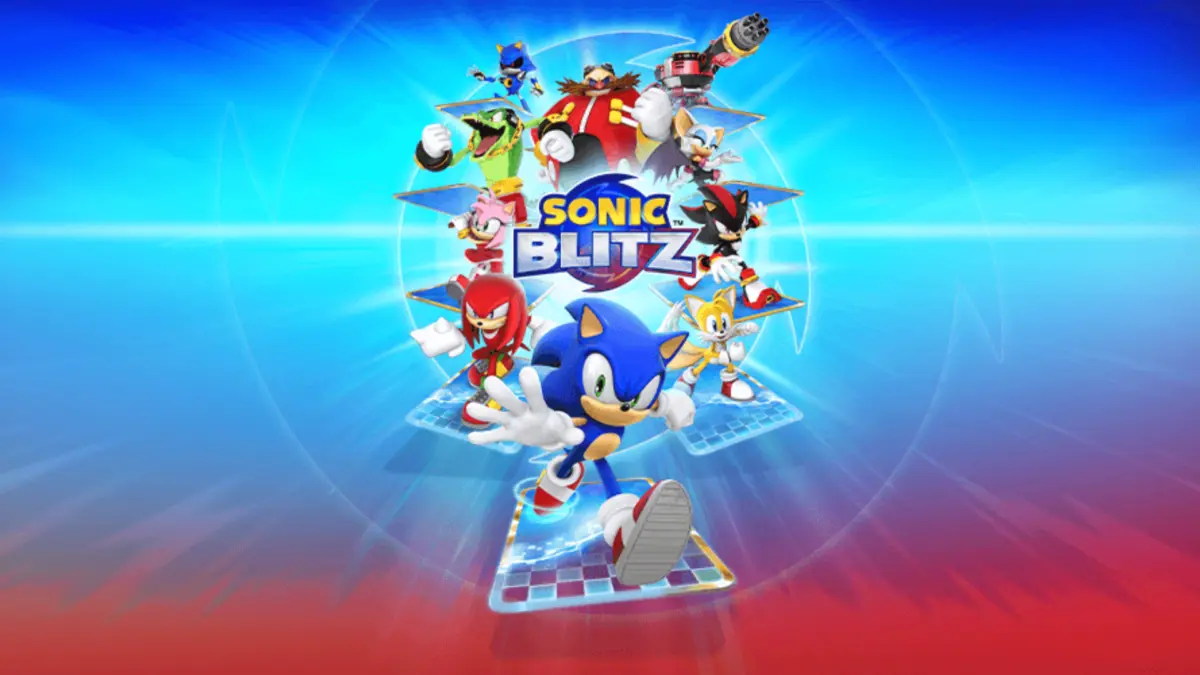
In yet another turbulent chapter for the mobile games industry, Sega-owned Rovio is shuttering its Copenhagen studio, bringing an abrupt end to operations in Denmark following the cancellation of its high-profile mobile project, Sonic Blitz. The closure affects a dedicated team of approximately 20 developers, marking the latest wave of contractions for the Angry Birds developer since its acquisition by Japanese entertainment titan Sega in August 2023.
Sonic Blitz, designed as an ambitious hybrid runner and card-collection title fusing Sega’s iconic blue blur with Rovio’s casual mobile expertise, ultimately failed to capture the long-term player retention metrics required in today’s hyper-competitive mobile marketplace. While corporate restructuring and studio downsizings have unfortunately become commonplace across the broader interactive entertainment sector, this latest casualty highlights the immense friction traditional console and PC giants face when attempting to scale legacy intellectual properties into sustainable, long-running mobile service models.
As the redundancy process unfolds, Rovio has committed to offering comprehensive transition packages, outplacement services, and wellbeing support to affected staff. However, the closure further underscores a sobering reality: even with beloved global icons like Sonic the Hedgehog and Angry Birds under one corporate umbrella, achieving mobile market longevity remains an elusive and perilous endeavor.
Detailed Chronology: A History of Restructuring Under Sega
The permanent closure of the Copenhagen studio is not an isolated incident; rather, it is the continuation of a sweeping, multi-year reorganization effort that began almost immediately after Sega finalized its €706 million acquisition of Rovio in mid-August 2023. To understand how Rovio arrived at this juncture, it is necessary to examine the timeline of structural shifts and project cancellations that have defined the studio’s post-acquisition era.
Late 2023: The Immediate Post-Acquisition Shifts
Barely four months after Sega officially absorbed Rovio, the newly merged entity began trimming its global footprint. In late 2023, Rovio moved to close down its Montreal-based subsidiary, Studio Lumi, signaling an early intent to consolidate resources around core competencies rather than expanding experimental satellite offices.
Spring 2024: Sunset of Niche Projects
The contraction continued into the following year. In April 2024, Rovio pulled the plug on its regional Moomin mobile game, taking the title completely offline. The decision reflected a strategic pivot away from lower-performing or culturally niche properties in favor of maximizing shareholder value through powerhouse global franchises.
Fall 2024: Internal Reorganization and Layoffs
By October 2025, structural adjustments deepened. Rovio announced a round of layoffs impacting 36 employees. At the time, corporate leadership framed the cuts as a necessary internal reorganization designed to "tighten relations" with Sega and streamline corporate pipelines. However, industry analysts viewed the move as an early warning sign that projected revenue synergies between Sega and Rovio were falling short of internal forecasts.
Early 2026 to Present: The Sonic Blitz Collapse and Copenhagen Closure
The friction reached a boiling point with the development of Sonic Blitz. Conceived as a hybrid runner and card-collection experience, the game was meant to bridge the gap between Sega’s fast-paced platforming heritage and modern mobile monetization loops. Unfortunately, internal telemetry and soft-launch metrics revealed deep retention issues. Following a critical review, Sega and Rovio leadership made the definitive call to cancel the project outright, triggering the total wind-down of the Copenhagen studio and the termination of its workforce.
Supporting Context & Metrics: The Mobile Retention Crisis
To fully contextualize the closure of Rovio Copenhagen, one must look closely at the modern mobile gaming ecosystem, where user acquisition costs (UAC) are skyrocketing, and player retention has become the ultimate metric for survival.
The Metrics That Broke Sonic Blitz
During a candid discussion regarding the project’s cancellation, Sega West COO and Rovio CEO Alex Pelletier-Normand laid bare the underlying performance metrics that sealed the game’s fate. According to Pelletier-Normand, Sonic Blitz simply failed to satisfy the essential prerequisite of modern mobile live-service games: long-term player engagement.
In the hyper-casual and hybrid-casual sectors, developers rely on day-1, day-7, and day-30 retention curves to determine whether a game can sustain itself over a multi-year lifecycle. When a title is built around complex meta-systems like card collection mixed with runner mechanics, the drop-off rate can be severe if the core gameplay loop doesn’t hook players past the initial novelty phase. According to leadership, Sonic Blitz suffered from user bleed during the transition from early novelty to sustained daily play, rendering ongoing server and maintenance expenditures unviable.
The Broader Industry Landscape
Rovio’s struggles mirror a wider systemic contraction across the global video game industry. Throughout 2024, 2025, and into 2026, thousands of developers have lost their jobs as venture capital tightens, publishers reevaluate games-as-a-service (GaaS) investments, and consumers spend more time in established "forever games" (such as Roblox, Fortnite, and Candy Crush) rather than trying new releases.
.png?disable=upscale&width=1200&height=630&fit=crop)
Earlier this year, Sega publicly acknowledged that its financial returns from the Rovio acquisition had underperformed relative to initial expectations. Executives noted that realizing higher revenue streams from cross-pollinating Sega’s vault of classic characters with Rovio’s mobile infrastructure proved significantly more complex than anticipated.
Official Statements and Industry Reactions
The human cost of corporate consolidation remains the most painful aspect of these industry shifts. In a statement provided to Mobilegamer.biz, Rovio management addressed the closure with solemn acknowledgment of the difficulties facing the team.
"Following a redundancy process, Rovio will discontinue all its operations in Denmark," a company spokesperson stated.
While the formal redundancy proceedings remain ongoing—preventing the release of a finalized headcount—approximately 20 professionals dedicated their careers to bringing Sonic Blitz to life. In response to criticisms often leveled at tech corporations during mass layoffs, Rovio emphasized its commitment to softening the blow for the affected workforce:
"For team members who we cannot allocate to a new project within Rovio, we will provide a comprehensive transition package, including dedicated outplacement services and wellbeing support to assist them in securing their next career opportunities."
Rovio further admitted that the decision was "extremely difficult," acknowledging the compounding stress of executing studio closures against the backdrop of an unforgiving macroeconomic climate within the broader interactive entertainment sector.
Alex Pelletier-Normand offered further reflections on the strategic ambitions—and subsequent hurdles—of trying to bring Sega’s crown jewel to mobile platforms in a meaningful way:
"I still am convinced that there is a way to reach more players on mobile with Sonic, it turns out that it’s much more complicated than I think both Sega and Rovio thought," Pelletier-Normand explained. Despite the cancellation and subsequent studio shuttering, he maintained a sense of professional pride: "We’re still very proud of the game, very proud of what the team achieved, but it didn’t work."
Future Outlook: What Lies Ahead for Sega and Rovio?
As the dust settles on the closure of the Copenhagen studio, critical questions loom regarding the long-term trajectory of Sega’s mobile strategy and Rovio’s standing within the corporate hierarchy.
Reassessing the Mobile Frontier
Sega’s acquisition of Rovio was initially lauded as a masterstroke—a marriage of Western mobile expertise and legendary Japanese IP creation. However, the subsequent closures of Studio Lumi, the cancellation of regional projects, and now the termination of Sonic Blitz demonstrate that buying mobile market share is vastly different from earning it organically.
Moving forward, Sega is likely to dial back aggressive, experimental mobile spin-offs in favor of more conservative, proven deployment models. Earlier corporate disclosures indicated that Sega is actively lowering the priority of certain internal games-as-a-service initiatives. This conservative posture suggests that future mobile endeavors utilizing Sega IP will face much stricter budgetary oversight and higher performance hurdles during early prototyping phases.
The Human Toll and Talent Dispersion
For the Danish games industry, the closure of Rovio Copenhagen represents a significant loss of institutional knowledge and technical talent. However, given the high concentration of skilled engineers, artists, and designers exiting the studio, the local tech ecosystem will likely see these professionals absorbed into other Nordic gaming hubs or founding independent ventures.
Conclusion
The death of Sonic Blitz and the shuttering of Rovio Copenhagen serve as a cautionary tale for an industry currently navigating the painful transition from unchecked expansion to sustainable consolidation. While the iconic red bird of Angry Birds and the swift blue silhouette of Sonic the Hedgehog will continue to anchor global entertainment ecosystems, the path to mobile monetization has proven to be an unpredictable gauntlet where even corporate giants stumble. As Rovio regroups around its core operational centers, the industry watches closely to see how the veteran studio adapts to an increasingly demanding digital marketplace.