The global enterprise technology sector has reached a critical inflection point in 2026. The initial hype surrounding pilot AI projects and standalone foundation models has transitioned into a rigorous, operational era: bringing enterprise AI into production at scale. As organizations worldwide pivot from experimental generative AI applications to mission-critical operational systems, their underlying infrastructure requirements have fundamentally shifted. Modern enterprise IT environments no longer run on single, isolated AI models. Instead, enterprises are adopting heterogeneous, multi-model architectures—deploying frontier reasoning models where cognitive capability is paramount, alongside smaller, specialized open-weight models where cost, latency, and granular control dictate economics.
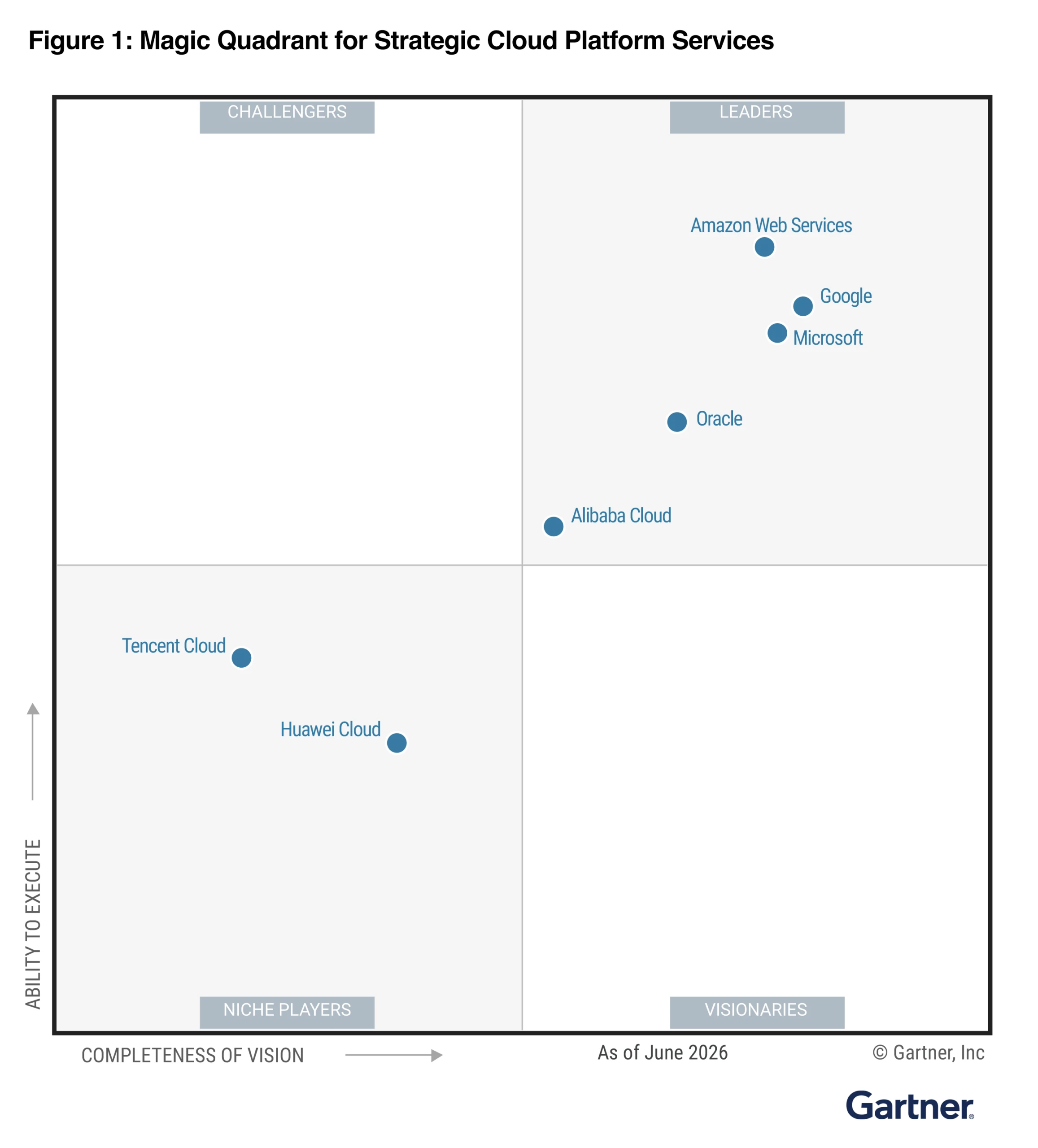
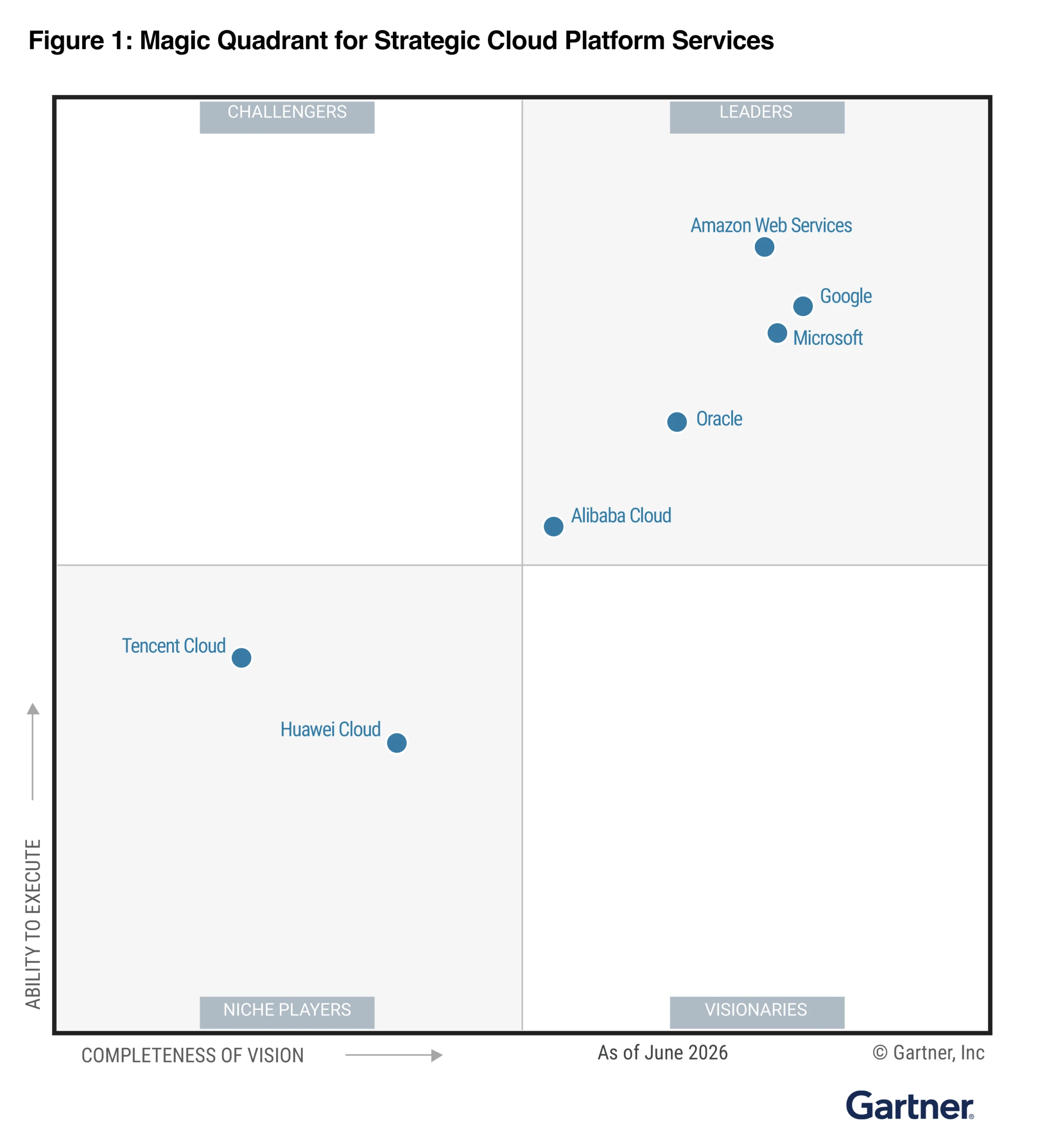
Against this market backdrop, global research firm evaluations published in late 2026 have recognized Microsoft Azure as a dominant leader in public cloud infrastructure and enterprise AI integration. Microsoft has achieved Leader placement in both the 2026 Gartner® Magic Quadrant™ for Strategic Cloud Platform Services—marking its fourth consecutive year at the top (2023–2026)—and The Forrester Wave™: Public Cloud Platforms, Q3 2026.
+-------------------------------------------------------------------+
|               ENTERPRISE AI PLATFORM ARCHITECTURE                 |
+-------------------------------------------------------------------+
|  AGENTS & APPLICATIONS  |  GitHub Copilot, Microsoft IQ           |
+-------------------------+-----------------------------------------+
|  MODEL & TOOL LAYER     |  Microsoft Foundry (Multi-Model Hub)    |
+-------------------------+-----------------------------------------+
|  DATA & GOVERNANCE      |  Fabric, Purview, Azure SQL, Cosmos DB  |
+-------------------------+-----------------------------------------+
|  INFRASTRUCTURE LAYER   |  Azure Silicon, Compute, Security       |
+-------------------------------------------------------------------+
Analyst evaluations emphasize that Microsoft’s competitive advantage does not stem from any individual feature or isolated model benchmark. Rather, it reflects a system-level strategy that tightly integrates silicon, cloud compute, data fabrics, governance frameworks, developer tools, and agentic application layers into a unified operational environment. As enterprises grapple with data sovereignty, operational resilience, legacy application refactoring, and cost management, Microsoft’s integrated stack strategy offers a clear blueprint for production-grade enterprise intelligence.
Detailed Chronology
Understanding Microsoft’s current platform positioning requires examining the structural multi-year evolution of enterprise cloud requirements between 2023 and 2026.
2023–2024: The Model-Centric Era
  - Enterprise focus on single, large foundation models (e.g., GPT-4).
  - Standalone pilots and isolated generative AI experimentations.

2025: The Infrastructure Realignment
  - Pivot toward multi-model strategies, smaller specialized models (SLMs), and open-weight models.
  - Emergence of enterprise data governance bottlenecks and cloud cost challenges.

Late 2026: System-Level Production Era
  - Widespread adoption of full-stack integration (silicon to software agent).
  - Gartner & Forrester publish landmark reports crowning Microsoft Azure as a Leader.
2023–2024: The Foundation Model Explosion and Early Cloud Adaptation
During the initial wave of generative AI, enterprise IT strategies were primarily model-centric. Organizations rushed to integrate premier foundation models—such as OpenAI’s GPT series—into business applications. Cloud platform providers were initially evaluated on raw GPU capacity, availability of raw compute, and basic API access to top-tier models. However, organizations quickly encountered bottlenecks regarding data privacy, security boundaries, fragmented workflows, and unpredictable operational expenses.
2025: The Shift to Multi-Model Architectures and Data Gravity
By 2025, enterprise IT departments realized that a one-size-fits-all model approach was financially and operationally unsustainable. Workloads began separating into distinct categories:
High-reasoning enterprise tasks requiring frontier foundation models.
High-volume, domain-specific processes suited for smaller, fine-tuned models or open-weight variants running on dedicated infrastructure.
This diversification raised a new challenge: managing multi-model environments without introducing operational fragmentation. Organizations struggled with disjointed identity management, isolated data silos, and mismatched security protocols across different model providers.
Late 2026: Independent Analyst Validation of Systemic Integration
In Q3 2026, independent industry evaluations published by Gartner and Forrester formally validated the shift from point-solution tools to vertically integrated cloud systems. On September 1, 2026, Gartner published its Magic Quadrant for Strategic Cloud Platform Services, placing Microsoft in the Leaders quadrant based on its execution and vision.
Simultaneously, The Forrester Wave: Public Cloud Platforms, Q3 2026 awarded Microsoft top marks, explicitly framing Azure’s strategic direction as a unified, vertically integrated system engineered to abstract the complexity of modern multi-model AI environments.
Supporting Context & Metrics
The Enterprise Reality: Multi-Model Orchestration
Modern enterprise cloud environments demand seamless interoperability across heterogeneous software and hardware layers. The current enterprise AI landscape is defined by three main structural pillars:
Model Diversity Without Operational Seams: Companies require access to frontier AI models alongside open-weight architectures (e.g., Llama, Mistral, and proprietary fine-tuned variants). Microsoft Foundry serves as the management and orchestration plane within Azure, enabling developers to evaluate, deploy, monitor, and secure diverse AI models using a uniform operational model across public cloud, edge, on-premises, and multi-cloud environments.
Data Gravity and Contextual Intelligence: AI models are inherently commoditized without proprietary business data. As Forrester noted in its evaluation, "Models come and go; data has gravity." To deliver contextual business value, AI must operate on top of an enterprise’s existing data infrastructure without requiring redundant data replication or compromising governance policies.
Legacy Modernization as an AI Prerequisite: Decades of mission-critical business logic reside within legacy enterprise systems built on legacy .NET, Java, and relational database architectures. Generative and agentic AI cannot operate in a vacuum; legacy applications must be modernized and exposed through secure interfaces to allow software agents to execute business workflows directly.
Deep-Dive Analysis: Key Components of the Azure Integrated Stack
Layer / Solution
Primary Function
Business Impact
Microsoft Foundry
Unified AI orchestration platform for model choice, evaluation, and operations.
Eliminates vendor lock-in; allows workload-specific model routing and uniform security policy enforcement.
Microsoft Fabric & Purview
Unified analytics engine paired with enterprise-wide data governance and compliance.
Maintains data lineage, security, and governance across structured/unstructured operational data without duplicate copies.
Provides AI agents with real-time business context across corporate documents, communications, and workflows.
GitHub Copilot Agentic Tools
AI-assisted refactoring and code migration frameworks for .NET and Java.
Accelerates legacy application refactoring while preserving original business logic and human developer oversight.
Field Implementation Case Studies
1. Healthcare Sector: UNC Health
Healthcare organizations face strict regulatory frameworks (including HIPAA and stringent patient data controls) that make unstructured AI deployment risky. UNC Health modernized its underlying data analytics environment using Microsoft Fabric to centralize operational data, while employing Microsoft Purview for end-to-end governance and compliance enforcement.
By building a secure, governed data foundation first, UNC Health successfully introduced operational AI and predictive analytics into clinical workflows, administrative operations, and medical research without exposing sensitive patient health information (PHI) to third-party model providers.
2. Global Retail & Apparel: Levi Strauss & Co.
Legacy apparel brand Levi Strauss & Co. faced the classic enterprise challenge: decades of supply chain logic, inventory data, and retail management frameworks locked within legacy infrastructure.
Using Azure Migrate, the company systematically modernized its core back-end systems on Azure compute infrastructure. Once modern cloud foundation was established, Levi Strauss deployed AI agents built on Microsoft Foundry to streamline inventory forecasting, automate decision-making across global retail networks, and accelerate internal operations—demonstrating that legacy digital transformation and AI integration are two sides of the same strategy.
Official Statements
Industry Analyst Evaluations
The formal report in the 2026 Gartner® Magic Quadrant™ for Strategic Cloud Platform Services, authored by analysts Alessandro Galimberti, Carolin Zhou, Douglas Toombs, Dennis Smith, Ed Anderson, Tobi Bet, and Chuck Lawton (published September 1, 2026), emphasized Microsoft’s practical approach to enterprise cloud evolution. Gartner highlighted Microsoft’s pragmatic application modernization frameworks alongside its developer ecosystem:
"Gartner highlights Microsoft’s pragmatic approach to application modernization and its integrated, end-to-end software developer lifecycle."
In The Forrester Wave™: Public Cloud Platforms, Q3 2026, analysts focused on Azure’s platform-level cohesiveness and strategic alignment with enterprise realities:
"Forrester describes Microsoft’s direction as a vision of Azure as a single, vertically integrated system… Models come and go; data has gravity."
Executive Perspective and Engineering Philosophy
Reflecting on the double analyst leadership recognition, Microsoft’s cloud engineering leadership outlined the underlying architectural philosophy driving Azure’s continuous investment:
"Enterprise AI is moving into production, and our customers are becoming multi-model. Organizations will use frontier models where capability matters, and smaller, specialized, and open-weight models where economics and finer controls matter. But the value does not come from any model in isolation. It comes from the system around it: infrastructure, data, applications, agents, security, and operations working together."
Microsoft’s platform communications further reiterated that long-term cloud commitments require platform choices built for multi-year stability:
"What matters more is that customers choosing a platform today are shaping their infrastructure for years, and that choice rests on system-level capability. A cloud platform now must do more than provide individual services. It must give customers choice across models and infrastructure while helping them build faster, run reliably, manage risk, control cost, and improve outcomes."
Future Outlook
The Next Frontier: Agentic Systems and Heterogeneous Compute
As enterprise cloud strategies look toward 2027 and beyond, the battleground for public cloud platforms will center on agentic automation and silicon-to-software co-design. The isolated deployment of chat interfaces is rapidly giving way to autonomous software agents capable of executing multi-step business processes, querying live databases, writing code, and triggering enterprise resource planning (ERP) workflows.
To sustain this shift, hyperscale providers must solve complex system architecture challenges:
Heterogeneous Compute Abstraction: Cloud providers must seamlessly manage diverse compute hardware—ranging from custom silicon (such as Microsoft’s proprietary AI accelerators) to specialized GPUs—allowing workloads to automatically route to the optimal hardware tier based on cost, latency, and throughput requirements.
Standardized Agent Governance: As millions of autonomous agents begin operating within enterprise networks, governance tools like Microsoft Purview and Microsoft IQ will be required to manage agent permissions, prevent data leakage, and maintain strict operational audit trails.
Continuous Agentic Modernization: Legacy software codebases will increasingly be refactored by AI-driven development agents (such as GitHub Copilot’s agentic application suites), dramatically reducing the cost and timeframe required to migrate legacy on-premises applications into AI-ready, cloud-native architectures.
The recognition of Microsoft Azure in late 2026 by both Gartner and Forrester reflects a broader industry consensus: the winner of the AI revolution will not simply be the vendor with the largest single model, but the platform that builds the most coherent, secure, and integrated system around it. By aligning custom silicon, cloud infrastructure, data governance, multi-model orchestration, and developer tools into a single platform, Microsoft has established a robust baseline for enterprise AI in production.
Research References & Reports
Gartner Report:Gartner® Magic Quadrant™ for Strategic Cloud Platform Services, 1 September 2026. Authors: Alessandro Galimberti, Carolin Zhou, Douglas Toombs, Dennis Smith, Ed Anderson, Tobi Bet, Chuck Lawton. Access Gartner Report