






Executive Overview
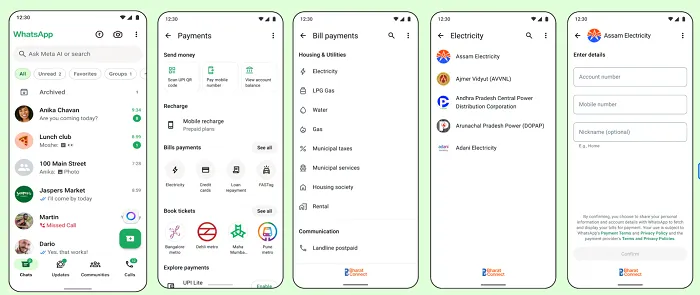
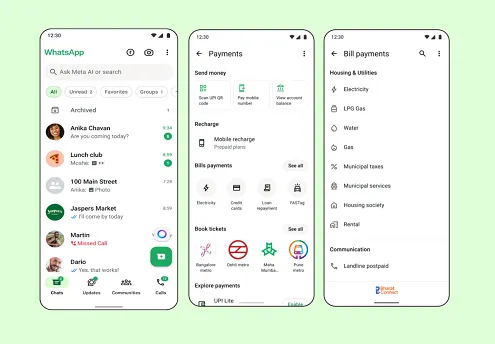
Meta has officially pushed WhatsApp deeper into its ambition to replicate China’s WeChat super-app phenomenon, rolling out an extensive bill payment infrastructure for its massive user base in India. Powered by the Bharat Connect (BBPS) network, the newly integrated feature allows hundreds of millions of Indian consumers to seamlessly discover, manage, and settle utility and household expenses directly within the messaging interface.
This latest development is far more than a simple convenience upgrade. It represents a vital milestone in Meta’s long-term strategy to diversify its revenue streams away from traditional digital advertising and firmly establish WhatsApp as the undisputed digital operating system of daily life in the world’s most populous nation. Serving over 800 million local users, WhatsApp is uniquely positioned to capture the burgeoning digital economy of South Asia.
However, this transition has not been without friction. Regulatory hurdles, fierce local competition, and complex compliance frameworks have historically slowed Meta’s financial integrations in the region. To overcome these hurdles, Meta has recently executed high-stakes structural maneuvers, including the strategic acquisition of Indian fintech pioneer Cred and the appointment of its founder, Kunal Shah, to helm WhatsApp’s domestic operations. This in-depth analysis explores the mechanics of the new bill-payment system, the geopolitical and economic ambitions driving Meta’s "WeChat strategy," and what this means for the future of global messaging platforms.
Detailed Chronology: The Evolution of WhatsApp Pay in India
To understand the magnitude of WhatsApp’s latest feature launch, it is necessary to examine the arduous, highly strategic timeline that brought Meta to this juncture in the Indian market.
1. The Long Road to Regulatory Approval (2018–2020)
WhatsApp’s journey into the Indian fintech space began years before the actual rollout of peer-to-peer (P2P) payments. Initially trialed as a beta feature in 2018, WhatsApp Pay faced a labyrinth of regulatory constraints mandated by the National Payments Corporation of India (NPCI) and the Reserve Bank of India (RBI). Chief among these concerns was data localization, consumer privacy, and the potential for market monopolization given the app’s unrivaled reach.
By late 2020, after rigorous compliance testing and adherence to India’s Unified Payments Interface (UPI) framework, WhatsApp was finally granted regulatory clearance to roll out payments—initially capped at a restrictive user threshold that hampered rapid scaling compared to native Indian competitors like PhonePe and Google Pay.
2. Expanding Utility: Beyond Chat (2021–2024)
Recognizing that P2P transfers alone were insufficient to drive hyper-growth in a market already dominated by entrenched domestic players, Meta began layering auxiliary public and private utilities onto the platform.
- Public Transport & Ticketing: Users gained the ability to book transit passes and commuter tickets directly within chat flows.
- Citizen Services: Through partnerships with various state and federal government-managed chatbots, citizens could access identification documents, vaccine certificates, and governance portals without leaving the app.
- Mobile Recharges: Pre-paid and post-paid telecommunications top-ups became seamless within the conversational UI.
3. The Fintech Pivot: Acquiring Cred and Leadership Shakes (Mid-2025–2026)
Realizing that Western product management playbooks were failing to capture the unique nuances of India’s hyper-competitive digital economy, Meta executed a dramatic strategic pivot in mid-2025. In a move that signaled a renewed aggression in the region, Meta acquired a strategic stake in prominent Indian fintech platform Cred and appointed its visionary founder, Kunal Shah, to spearhead WhatsApp’s domestic expansion.
Shah’s deep contextual intelligence of the Indian consumer mindset instantly injected localized agility into Meta’s product pipeline. This leadership shift directly paved the way for the robust utility frameworks unveiled today, proving that Meta is willing to adapt its corporate architecture to conquer the subcontinent.
4. The Grand Rollout: Comprehensive Bill Payments (September 2026)
Marking the culmination of years of lobbying, infrastructure integration, and localized leadership, WhatsApp officially announced the launch of comprehensive bill payments in India. Powered by Bharat Connect (BBPS), this feature instantly bridges the gap between messaging and institutional financial management, transforming a chat application into an essential household ledger.
Supporting Context & Metrics: The Scale of the Opportunity
The economic stakes for Meta in India are exceptionally high. To grasp why the tech giant is pouring billions of dollars and structural capital into this market, one must analyze the raw data defining the ecosystem.
+-------------------------------------------------------------------+
|                   WHATSAPP IN INDIA: AT A GLANCE                  |
+-------------------------------------------------------------------+
| Metric                                    | Data Point            |
+-------------------------------------------------------------------+
| Estimated Local Users                     | 800+ Million          |
| Billers Accessible via BBPS Integration   | 22,722                |
| Service Categories Covered                | 30                    |
| Primary Underlying Infrastructure         | Bharat Connect (BBPS) |
| Strategic Fintech Partner / Acquisition   | Cred                  |
+-------------------------------------------------------------------+
The BBPS Integration: A Monumental Financial Bridge
The technical backbone of WhatsApp’s new bill-paying capacity is the Bharat Bill Payment System (BBPS), operated by Bharat Connect. By plugging directly into this centralized network, WhatsApp instantly bypasses the need to negotiate bilateral agreements with thousands of individual utility providers.
The scope of this integration is staggering:
- 22,722 Billers: Users can now interface with tens of thousands of service providers across the country.
- 30 Distinct Categories: The platform covers everything from essential utilities (electricity, piped gas, water) to recurring financial obligations (credit card bills, loan repayments, insurance premiums, and FASTag toll recharges).
Moving Beyond the Advertising Dependency
For over a decade, Meta’s global business model has suffered from acute vulnerability: an over-reliance on targeted digital advertising revenue. Economic downturns, privacy policy overhauls by competitors (such as Apple’s App Tracking Transparency), and shifting regulatory attitudes toward targeted ads have forced Meta to seek alternative monetization engines.
By evolving WhatsApp into a transactional super-app akin to WeChat, Meta unlocks multiple new revenue streams:
- Merchant Processing Fees & Convenience Charges: Taking micro-cuts or facilitating premium merchant services.
- In-App Commerce and Discovery: Monetizing business-to-consumer (B2C) chats where brands can market, sell, and service customers in a single conversational thread.
- Financial Services Distribution: Cross-selling insurance, credit, and wealth management products via specialized fintech partnerships.
Official Statements and Industry Perspectives
The announcement of the BBPS integration has generated substantial commentary across the technology and financial sectors. Meta executives have framed the move as a natural evolution of consumer communication utilities.
In an official corporate release detailing the launch, WhatsApp emphasized the core philosophy driving the product:
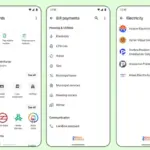
"Today we are announcing Bill payments in India, making it easier for people to find, manage, and pay their everyday household and utility bills — all within the app. Powered by the Bharat Connect (BBPS) network, the feature gives people access to 22,722 billers across 30 categories, including electricity, gas, water, FASTag, insurance, credit card and loan repayments."
Furthermore, Meta highlighted the inclusion of proactive account management tools, noting that the system is designed not merely for one-off transactions, but to act as a centralized dashboard. Users can access comprehensive bill summaries, track payment histories, and receive automated reminders for upcoming dues, effectively replacing dedicated third-party financial apps with a single, unified interface.
Industry analysts note that while Western markets have historically rejected the "super-app" concept—preferring decentralized, single-purpose applications—the Asian market has proven intensely receptive to consolidated digital utilities. By tailoring its roadmap to match the infrastructural rhythms of India’s digital public infrastructure (DPI), Meta is finally learning how to play the game on local terms.
Future Outlook: The "WeChat" Blueprint and Global Implications
As Meta celebrates this milestone in India, technology strategists are already looking toward the horizon to evaluate what this means for the company’s global footprint and its 2014 acquisition economics.
Justifying the $16 Billion Acquisition
When Mark Zuckerberg acquired WhatsApp for a staggering $16 billion in 2014, critics questioned whether a messaging app with minimal direct monetization could ever justify such a colossal capital outlay. For years, the acquisition looked like a defensive play to neutralize a potential social media rival. However, if Meta successfully transforms WhatsApp into the financial and commercial nucleus of India—a nation of 1.4 billion people—the long-term return on investment will finally match the initial valuation.
Will the "WeChat" Model Scale Globally?
A central question remains: Can this blueprint be exported outside of Asia?
Thus far, attempts by Meta to introduce expansive financial services and in-app shopping within WhatsApp and Messenger across the United States, the European Union, and Latin America have met with lukewarm adoption. Western consumers exhibit deeply ingrained habits regarding banking apps, credit cards, and digital wallets, coupled with a higher degree of skepticism regarding data sharing between messaging platforms and financial institutions.
Consequently, India serves as the primary testing ground and proving ground for Meta’s super-app ambitions. Success in India will not necessarily guarantee replication in the West, but failure in India would permanently ground Meta’s aspirations of evolving past an ad-driven social media conglomerate.
Regulatory Vigilance and Trust
Moving forward, Meta’s primary bottleneck will not be technological capability, but regulatory diplomacy. Handling sensitive financial data, loan repayments, and credit card settlements places WhatsApp under the direct microscope of the Reserve Bank of India and national security lawmakers. To maintain its momentum, Meta must demonstrate absolute compliance, flawless cybersecurity measures, and transparent data localization practices.
Conclusion
WhatsApp’s integration of Bharat Connect bill payments is a watershed moment for digital commerce in India. By bridging conversational messaging with exhaustive financial utility, Meta has cleared a massive hurdle in its quest to build the "WeChat of the subcontinent." If local leadership under figures like Kunal Shah can successfully navigate the treacherous waters of Indian compliance while earning consumer trust, WhatsApp will cement its status not just as a tool for chatting, but as the indispensable financial circulatory system of modern India.