Executive Overview
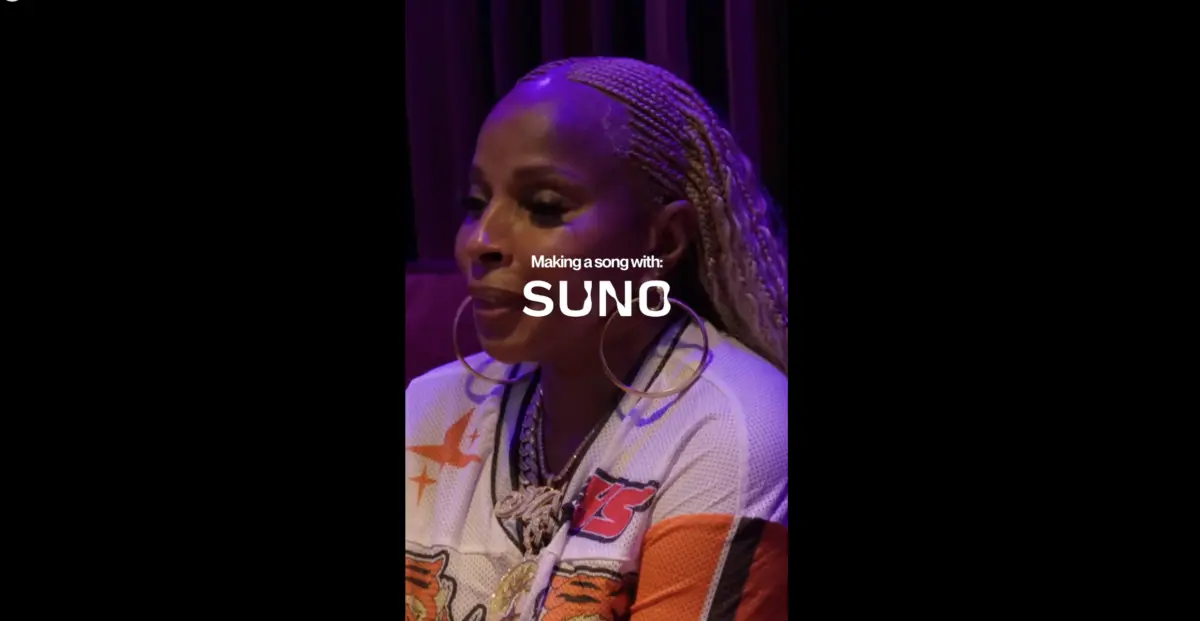
The intersection of artificial intelligence and the music industry reached a new flashpoint following a controversial marketing campaign involving R&B icon Mary J. Blige and AI music generation platform Suno. Last month, Suno circulated an 85-second promotional video depicting Blige in a recording studio, seemingly collaborating with and praising an AI-generated song that heavily mimicked her signature 1990s and 2000s sound.
The campaign immediately backfired, drawing sharp criticism and a barrage of online abuse directed at the legendary singer from fans who assumed she had willingly partnered with an AI platform. However, the situation was built on a foundational breach of protocol: Blige had never approved the advertisement, and the agreement facilitating her appearance had been executed by an unauthorized third party.
The incident highlights the volatile, high-stakes relationship between generative AI companies and legacy artists. For Suno, the mishap arrived at a profoundly delicate juncture. The tech firm has been fighting a multi-front war against the traditional music establishment over copyright infringement, unauthorized voice and style replication, and systemic intellectual property exploitation. While Suno quickly pulled the plug on the campaign once the misrepresentation came to light, the fallout underscores the chaotic governance plaguing the integration of generative AI into mainstream commercial partnerships.
Detailed Chronology of the Controversy
The Launch of the Promotional Campaign
The controversy began late last month when Suno rolled out a digitally distributed video advertisement intended to showcase the capability of its AI music generation technology. The primary 85-second asset was published predominantly on Suno’s official Facebook page, though excerpts and full cuts quickly spread across various social media networks.
In the primary video, Blige is seen in a professional recording studio environment alongside an unnamed music producer. The producer is shown interacting with Suno’s interface to construct a track tentatively titled "Pretty Flowers." The resulting audio features a distinct R&B cadence, vocal timbre, and production style strikingly similar to the classic material that defined Blige’s storied career throughout the ’90s and 2000s—eras punctuated by iconic records like What’s the 411?, No More Drama, The Breakthrough, and Growing Pains.
As the track is built in mere seconds, Blige reacts to the software’s output. She is seen requesting adjustments—first asking for strings, then for a drum beat—and watching the software manifest these changes in real time. Visibly impressed, Blige describes the technological process using terms like "amazing" and "dope."
However, the editing of the video left room for ambiguity. It remained unclear whether her commentary was directed at the specific AI-generated composition or simply the novelty of the software’s speed. Shortly after the initial release, a shorter, heavily edited secondary video began circulating online. This clip compressed her reactions further, stripping away context to create an even stronger impression of an explicit endorsement, though it remains undetermined whether Suno or an unaffiliated third party manufactured the shorter edit.
The Immediate Social Media Backlash
Because generative AI remains intensely polarizing within the creative community—largely due to concerns over job displacement, unauthorized data scraping, and the imitation of human artistry—the reaction from the public and Blige’s core fanbase was fierce.
Fans took to X (formerly Twitter), Instagram, and Facebook to express profound disappointment, accusing the multi-platinum, Grammy-winning artist of selling out to an industry-disrupting technology that many musicians view as an existential threat. The barrage of online abuse caught the singer’s team off guard, given that she had never consented to the campaign.
The Breakdown of Representation and Campaign Termination
As public scrutiny intensified, inquiries from entertainment journalists revealed a glaring administrative breakdown. Blige had not signed off on the project, and the business agreement permitting her likeness and presence to be used in the advertisement had been brokered with an individual who lacked the legal authority to represent her or license her image.
Confronted with the unauthorized nature of the deal and the immediate distress caused to the artist, Suno officials moved to contain the PR disaster. The company pulled the advertising campaign down from its official channels, bringing a swift end to what was meant to be a high-profile showcase of AI-human creative synergy.
Official Statements and Industry Response
The fallout prompted swift public positioning from both parties, though the underlying friction remains unresolved.
Suno’s Official Statement
In a statement provided exclusively to Variety, a representative for Suno attempted to contextualize the company’s admiration for the artist while acknowledging the operational failure that led to the unauthorized ad:
"Ms. Blige is an icon who we all deeply admire. Ever since she broke onto the scene with What’s the 411, No More Drama, The Breakthrough, Growing Pains, etc., she hasn’t stopped innovating. That’s why we wanted to work with her.
We entered into a business deal with someone who presented themselves as Ms. Blige’s official representative. As soon as we learned this was not the case, and that Ms. Blige was uncomfortable, we terminated the advertising campaign."
Despite acknowledging the blunder, the statement underscored the tech sector’s ongoing strategy of attempting to validate generative platforms through association with legacy musical talent, even as those very platforms face fierce resistance from the broader creative community.
Mary J. Blige’s Stance
When contacted by industry trade publications for further comment, representatives for Mary J. Blige declined to expand beyond the baseline facts of the unauthorized deal. The artist herself maintained a measured public silence, leaving her legal and management teams to address the fallout behind closed doors. Observers note that this restrained approach prevents further amplification of the AI company’s messaging while preserving potential legal avenues should her team choose to pursue damages for unauthorized use of likeness.
Supporting Context, Metrics, and Legal Battles
The timing of the Mary J. Blige marketing misstep could not have been worse for Suno, arriving amid a tumultuous period defined by aggressive litigation, shifting licensing paradigms, and intense global scrutiny over copyright law.
The Copyright Landscape and Ongoing Litigation
Suno, alongside competing AI music platform Udio, has found itself embroiled in high-stakes legal battles with the major recorded music establishment. Record labels and independent artists alike have increasingly targeted generative AI platforms for training their models on copyrighted catalogs without permission, compensation, or attribution.
- Major Label Lawsuits: Suno is currently locked in active legal battles with Universal Music Group (UMG) and Sony Music Entertainment over the alleged unauthorized use of massive copyrighted musical catalogs to train its AI models.
- Prior Licensing Shifts: In an effort to stabilize its legal footing, Suno has pursued a dual track of defense and integration. The company previously secured a licensing deal with Warner Music Group—which had initially sued the tech firm—and recently finalized a similar pact with BMG.
- Artist-Led Class Actions: Beyond corporate label litigation, individual creators are increasingly taking legal action. Earlier this week, Grammy-winning Americana singer Jason Isbell, alongside a coalition of fellow artists, filed a lawsuit against Suno. The plaintiffs claim that the platform’s models systematically allow users to generate unauthorized musical compositions mimicking specific human artists’ identities, styles, and vocal characteristics without their explicit consent.
- International Setbacks: The legal pressure extends far beyond U.S. borders. Last month, a German court delivered a landmark ruling finding that Suno was actively violating both German and broader European Union copyright laws, casting a shadow over the company’s international expansion plans.
| Legal / Corporate Action | Status / Outcome | Impact on Suno |
|---|---|---|
| Universal & Sony Lawsuits | Ongoing | Threatens core model-training practices and financial liabilities. |
| Warner Music & BMG Deals | Executed | Provides partial protection through mainstream catalog integration. |
| Jason Isbell et al. Lawsuit | Active | Challenges unauthorized replication of artist identity and style. |
| German Court Ruling | Lost by Suno | Validates international copyright infringement claims within the EU. |
| Mary J. Blige Promo Blunder | Terminated | Exposes vetting vulnerabilities in marketing and partnership pipelines. |
Future Outlook: The Intersection of AI and Artist Rights
The convergence of Mary J. Blige’s accidental endorsement controversy and Suno’s broader legal reckoning serves as a case study for the fragile state of artificial intelligence in the creative industries. Several key takeaways will likely shape the entertainment landscape moving forward:
1. Tightened Vetting and Representation Verification
The incident exposes a vulnerability in how tech startups conduct business development. By relying on intermediaries who lack verified legal authority to represent high-profile talent, companies like Suno expose themselves to immediate public backlash, breach-of-privacy claims, and potential tort liability. Moving forward, entertainment law experts anticipate that agencies and artist management firms will implement much stricter protocols regarding third-party pitches involving generative AI tools.
2. The Battle Over Style Mimicry and Voice Simulation
While copyright law has traditionally protected specific sound recordings and musical compositions, the rise of AI has forced a legal reckoning over whether an artist’s distinctive "vibe," vocal texture, and stylistic cadence can be legally owned or protected. Cases like the Jason Isbell lawsuit and the fallout from the Blige video will help establish legal precedents determining where inspiration ends and unauthorized appropriation begins.
3. The Divide Within the Artist Community
The music industry remains deeply fractured over generative AI. While tech platforms argue that their tools democratize music production and offer new avenues for creative exploration, the vast majority of legacy and independent artists view them as sophisticated scrapers designed to devalue human labor. Incidents where an artist is inadvertently weaponized in a promotional campaign for a technology they do not support only serve to harden industry resistance, making future mainstream music-tech partnerships increasingly difficult to broker.
As generative AI continues to mature, the margin for error between technological innovation and ethical compliance grows narrower. For Suno, the Mary J. Blige campaign stands as a cautionary tale of what happens when rapid marketing ambitions outpace legal due diligence in an industry already on high alert.