Executive Overview
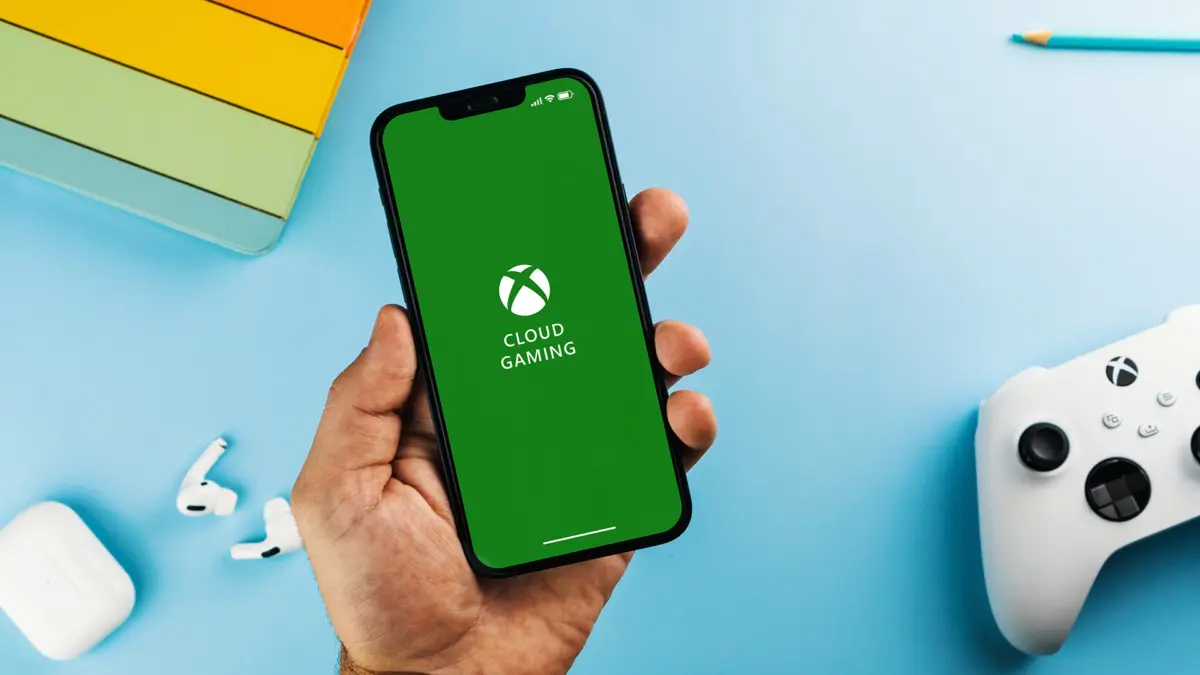
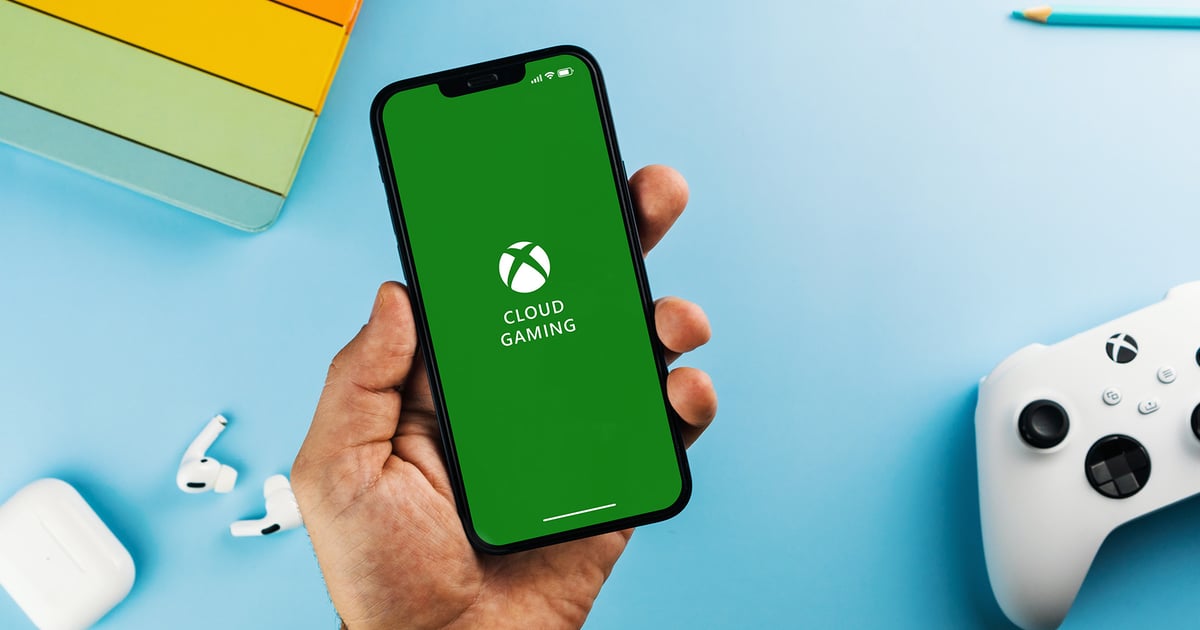
In a sweeping announcement that marks a watershed moment for the subscription video game industry, Microsoft has officially introduced strict monthly limits on its Xbox Cloud Gaming service. Set to take effect in November 2026, these new restrictions cap the number of hours Game Pass subscribers can spend streaming titles via the cloud, with tiered limitations directly tied to the specific subscription tier a user holds.
While cloud gaming has long been championed as an unbounded, hardware-agnostic frontier—allowing players to bypass the need for high-end local consoles or PCs—economic realities have finally caught up with the technology. According to official statements released via Xbox Wire, the soaring costs of maintaining and scaling server infrastructure, compounded by a turbulent global macro-economy, have forced Microsoft’s hand.
The company defends the move by stating that the surging popularity and prolonged play sessions of cloud gaming have inflated operational costs beyond sustainable margins. By instituting monthly caps—ranging from 15 hours for Ultimate subscribers down to a meager 5 hours for Essential members—Microsoft hopes to balance its ledger while continuing to fund service reliability. However, this policy adjustment is far more than a simple operational tweak; it is a symptom of a much larger economic crisis gripping the tech and gaming sectors. Surging memory chip costs, driven by artificial intelligence infrastructure booms, international trade tariffs, and sweeping corporate restructuring under Xbox leadership, paint a complex picture of an industry desperately seeking profitability in an inflationary landscape.
Detailed Chronology: How Microsoft Arrived at Cloud Gaming Caps
The path leading to the November 2026 rollout of cloud streaming restrictions has been paved with compounding industry pressures, strategic pivots, and economic headwinds.
The Rise and Constraints of Xbox Cloud Gaming
Introduced initially as Project xCloud, Microsoft’s cloud streaming ecosystem was designed to democratize gaming. It promised console-quality experiences on mobile devices, older hardware, and web browsers. For years, the feature was included as an unmetered, high-value perk within the broader Xbox Game Pass ecosystem, driving millions of subscribers to adopt the platform. However, streaming high-definition, low-latency video game graphics requires immense server capacity, proprietary blade architecture, and continuous bandwidth scaling. As user adoption multiplied, so too did the energy and infrastructure footprints required to maintain a seamless experience.
The Macroeconomic Squeeze of 2025–2026
The underlying pressures forcing these caps began to accumulate long before the public announcement. Throughout 2025, the global technology sector faced severe disruptions in hardware supply chains. Following the implementation of aggressive foreign import tariffs by the U.S. administration, the cost of manufacturing silicon components, microprocessors, and memory modules skyrocketed.
Simultaneously, the explosive demand for generative artificial intelligence placed unprecedented strain on global semiconductor manufacturing. OpenAI, a primary financial and technological partner of Microsoft, launched massive infrastructure initiatives—such as the multi-billion-dollar "Stargate" project—which locked in exclusive multi-year supply deals with major memory manufacturers like Samsung and SK Hynix. These agreements monopolized up to 40 percent of global DRAM output, starving traditional consumer electronics, including video game console manufacturers, of affordable memory components.
Internal Turmoil and Leadership Response
Facing these unprecedented hardware and operational costs, Microsoft’s gaming division underwent severe internal contraction. Under the leadership of Xbox CEO Asha Sharma, the company initiated sweeping cost-cutting measures, including the layoffs of thousands of employees across studios such as Double Fine, Compulsion Games, Ninja Theory, and Undead Labs.
In subsequent press interviews, Sharma repeatedly stressed the critical need for affordability across Xbox’s hardware and service lines. The overarching directive became clear: legacy models of unmonitored consumption were no longer viable. The announcement of monthly cloud gaming caps on Xbox Wire represents the direct execution of this survival-first philosophy, shifting the financial burden of high-bandwidth streaming back onto the consumer.
Supporting Context & Metrics: Breaking Down the Tiers and Economic Realities
To understand the practical impact of Microsoft’s new policy, one must examine the exact structural limitations being imposed across the Game Pass hierarchy, alongside the financial dynamics governing the modern tech ecosystem.
The Tiered Breakdown
Beginning in November 2026, the streaming landscape for Xbox users will fragment into distinct, restricted allotments:
- Xbox Game Pass Ultimate Subscribers: Granted a maximum of 15 hours per month of cloud streaming. As the highest-paying tier, Ultimate users bear the least restrictive cap, yet 15 hours equates to roughly 30 minutes of streaming per day—a limitation that will easily be exhausted by dedicated enthusiasts.
- Xbox Game Pass Premium Subscribers: Restricted to 10 hours per month.
- Xbox Game Pass Essential Subscribers: Subject to a restrictive 5 hours per month. For casual players, this amounts to little more than a trial period rather than a viable, long-term alternative to local hardware.
The "4 Percent" Metric and the Over-Limit Economy
Microsoft has publicly stated its projection that these monthly caps will directly "impact" only 4 percent of the total Game Pass subscriber base—implying that the vast majority of users currently consume fewer than these allotted hours. However, for that 4 percent—typically the most engaged, loyal, and vocal segment of the community—the restrictions represent a severe downgrade in service value.
For users who exhaust their monthly allotments, Microsoft is introducing an a la carte solution: the ability to purchase additional "playtime hours" directly through the Xbox Store. This introduces a monetization model reminiscent of mobile gaming microtransactions applied to console infrastructure. Furthermore, Microsoft is opening this playtime purchase option to non-subscribers, pitching it as an affordable alternative for gamers who do not want a recurring subscription.
The Semiconductor Bottleneck
The structural cost of cloud streaming is intimately tied to the global shortage of dynamic random-access memory (DRAM) and high-bandwidth memory (HBM). Because Microsoft’s cloud blades rely on specialized server-grade hardware mirroring Xbox Series X|S architectures, the replacement and scaling costs of these components have risen exponentially. With AI data centers outbidding traditional consumer tech for semiconductor wafers, Microsoft’s margins on cloud services have compressed, making throttling an inevitable corporate maneuver.
Official Statements and Industry Rationalization
In the wake of the Xbox Wire announcement, Microsoft executives have sought to frame the controversial policy shift as a necessary step to ensure the long-term survival and performance of the platform.
The Cost of Innovation
"The cost of providing cloud gaming grows as more people use it and play for longer," Microsoft noted in its official communication. The company emphasized that moving to a metered system is the only viable path to maintain service continuity: "Moving to monthly limits allows us to keep offering the service while continuing to invest in its reliability and performance. We understand that for some players the practical result is a higher cost."
Pitching Affordability to Legacy Owners
Simultaneously, Xbox leadership is attempting to spin the addition of a la carte playtime hours as an inclusive win for legacy hardware owners. By purchasing standalone cloud hours, owners of aging Xbox One consoles can theoretically access next-generation titles—such as Gears of War: E-Day—without purchasing a physical Xbox Series X|S console.
"This will provide another option for people who want occasional access to cloud gaming or do not want a recurring Game Pass subscription," the company explained in its brief. "Cloud gaming can also give Xbox One owners access to eligible games built for Xbox Series X|S without requiring an immediate hardware upgrade."
Reaching Emerging Markets
Beyond legacy console owners, Microsoft has identified another vital demographic for the a la carte hour system: gamers residing in regions where local currency devaluation or heavy import taxes make purchasing a physical Xbox console economically prohibitive. For a consumer in a developing market where a Series X|S is financially out of reach, purchasing occasional blocks of cloud streaming time offers a localized workaround to experience AAA software.
Future Outlook: What This Means for the Future of Cloud Gaming
Microsoft’s pivot away from unlimited cloud streaming signals a fundamental maturation—and potential contraction—of the cloud gaming market as a whole. For years, major tech giants subsidized the immense infrastructure costs of cloud computing to build market share, treating streaming as a loss leader.
As investors demand profitability and macro-economic pressures tighten corporate budgets, the era of unbridled, all-you-can-stream digital entertainment appears to be drawing to a close. Other market competitors, including NVIDIA GeForce Now and Amazon Luna, will likely monitor consumer reception closely. If Microsoft successfully transitions its user base to a metered or hybrid-monetized cloud model without suffering catastrophic churn, it could establish a new industry standard where cloud gaming is treated as a premium utility rather than a standard inclusion.
For the everyday gamer, however, the message is unmistakably clear. The promise of frictionless, boundless digital entertainment is encountering the hard boundaries of physical infrastructure costs, inflation, and corporate bottom lines. Whether the introduction of a la carte playtime hours will successfully lure Xbox One holdouts or alienate the platform’s most dedicated advocates remains one of the most critical questions facing the gaming industry as it navigates the latter half of the decade.