Executive Overview
The digital retail landscape is undergoing a structural transformation. As platforms compete for consumer attention and operational efficiency, software developers, fulfillment giants, and tech heavyweights are deploying infrastructure designed to automate once-manual workflows. This week’s dispatch of new services for e-commerce merchants illustrates a profound pivot from static, human-managed administration toward dynamic, AI-first ecosystems.
From WooCommerce and Adobe Commerce rolling out foundational architectural upgrades, to cross-border logistics disruptors like Cainiao slashing global shipping times to a mere three days, the industry is accelerating its pace. At the same time, venture capital and strategic investments are flowing heavily into specialized domains. Platforms like Whatnot securing $545 million in Series G funding and RepSpark pulling in $22 million demonstrate that investors remain exceptionally bullish on verticalized, high-engagement commerce models.
This report delivers a deep dive into the latest product releases, platform updates, and strategic partnerships shaping digital commerce. We analyze how autonomous marketing, generative AI discovery tools, and advanced fulfillment connectors are resetting the baseline for online merchants worldwide.
Detailed Chronology of New Tools and Platform Updates
Core Platform Architecture & Order Management
WooCommerce Releases Version 11.0
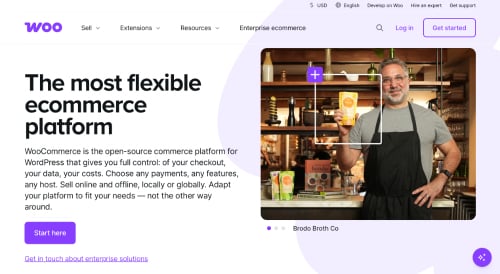
WooCommerce has officially launched version 11.0, focusing heavily on administrative speed and customer retention infrastructure. The update introduces advanced order-screen optimizations designed to expedite database queries. For merchants managing high-volume stores, this architectural shift drastically reduces search timeouts and eliminates empty search count frustrations. Additionally, the update integrates Checkout Recovery, a built-in testing environment that allows sellers to experiment with various abandoned-cart messaging sequences to optimize recovery rates and gauge shopper responsiveness.
Adobe Commerce Introduces Catalog Agent
Adobe Commerce (built on the Magento framework) has launched Catalog Agent to bridge the gap between traditional web stores and large language model (LLM) surfaces. Catalog Agent transforms standard product detail pages by enriching them with structured, machine-readable product data. By leveraging existing commerce attributes—such as inventory levels, dynamic pricing, tiers, and complex product relationships—Catalog Agent optimizes storefronts for AI crawlers and LLM-powered discovery engines.

Kibo Commerce Unifies Agentic Platform
Kibo Commerce has released the next generation of its composable commerce and order-management framework, introducing a model-agnostic agentic AI architecture. This new system can interface with virtually any large language model and operates across five distinct pillars: configure, explain, analyze, engage, and optimize. The framework is designed to streamline complex operational tasks across both front-end customer engagement and back-end order orchestration.
Artificial Intelligence & Automation Suites
ShipBob Introduces Anthropic-Verified Fulfillment Connector and AI Suite
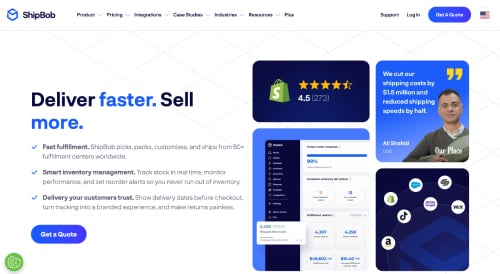
Fulfillment provider ShipBob has rolled out a comprehensive AI suite spanning its entire technology stack, touching both merchant dashboard software and physical warehouse automation robotics. Anchored by Model Context Protocol (MCP), ShipBob’s new suite seamlessly connects advanced AI tooling directly to a merchant’s live operational data. This is accessible either through a dedicated connector within Claude or via "Bobby," ShipBob’s proprietary in-dashboard AI agent.
AI Bulk Listing Generator Launches for Multi-Platform Sellers
To solve the bottleneck of manual catalog creation, the AI Bulk Listing Generator has debuted its automated listing platform. Allowing users to import structured product data directly from spreadsheets, the software generates thousands of optimized product listings in minutes. The platform maintains consistent brand voice and technical specifications across major ecosystems, including Shopify, WooCommerce, Etsy, Amazon, eBay, BigCommerce, and Wix.
Wayy.ai Raises $2 Million Pre-Seed and Debuts AI Co-Founder
Solopreneurs and small business owners have a new virtual workforce member with the launch of Wayy.ai. Backed by a $2 million pre-seed funding round led by Zero to One Ventures, the platform functions as an AI-powered co-founder and virtual salesperson. The tool automates sales workflows, identifies high-value prospects, and conducts initial outreach to potential investors and strategic partners, freeing founders to focus on product development.
Marketing, Ad-Tech, and Conversion Optimization
Wunderkind Partners with Cordial for Autonomous Marketing
Identity resolution leader Wunderkind has announced a strategic partnership with cross-channel messaging platform Cordial. By pairing Wunderkind’s proprietary identity graph and AI decisioning engine—which specializes in capitalizing on anonymous, unauthenticated web traffic—with Cordial’s advanced orchestration and predictive models, brands can significantly expand their addressable audience and automate cross-channel messaging within existing tech stacks.
Eyeota and Zeotap Data Integrate Into Amazon DSP
Audience data provider Eyeota and identity solutions firm Zeotap Data have partnered to integrate Eyeota’s global audience ecosystem directly into Amazon Demand-Side Platform (DSP). Advertisers can now leverage intent, interest, and behavioral signals to reach qualified consumer segments in a privacy-compliant manner across prime real estate such as Prime Video and Twitch.
Rokt Introduces Brain V4 for Real-Time Checkout Decisioning
Post-purchase optimization platform Rokt has released Brain V4, an advanced machine-learning engine that governs what consumers experience during the final checkout stage. Processing consumer, partner, advertiser, and contextual data in real time, Brain V4 uses automated auctions, ranking algorithms, and safety guardrails to dynamically serve the most relevant product recommendations, upsells, or third-party offers.
Social Commerce and Creator Economy
Whatnot Secures $545 Million Series G
Live-shopping powerhouse Whatnot has closed a massive $545 million Series G funding round led by prominent institutional investors ICONIQ, Lightspeed, and Avra. The capital infusion will be deployed to scale seller infrastructure, expand generative AI capabilities, and fund international market expansion. The funding follows a milestone month in August 2026, during which Whatnot officially surpassed its total gross merchandise volume (GMV) for the entirety of 2025.
Markable Launches Advanced Social Commerce Tools for Creators
Markable has introduced two major additions to its creator monetization suite: an AI-powered video editor and a 3D visual collage generator. The video editor transforms raw creator footage into shoppable videos by automatically optimizing the creator’s appearance, upgrading backgrounds, and generating professional scripts and voiceovers. Meanwhile, the 3D visual tool turns static products into dynamic, realistic photo collages optimized for conversion.
Minty Launches Shopify App to Capture Intent
AI-powered shopping companion Minty has launched its official Shopify app. Connecting merchant inventories directly to Minty’s shopper network, the app surfaces targeted cashback and reward offers at the exact moment of purchase intent. Whether interacting via AI chat interfaces, mobile apps, or desktop browsers (Chrome and Safari), merchants can now re-engage shoppers who browse and exit without completing a transaction.
Cross-Border Logistics and Wholesale Infrastructure
Cainiao Launches 3-Day Cross-Border Delivery Service
Alibaba-owned logistics titan Cainiao Group has unveiled a high-speed, door-to-door cross-border parcel delivery service designed to complete international transit in just three days across 15 major global trade lanes. The service utilizes Cainiao’s deeply integrated global network, which unifies air cargo transport, ground logistics, streamlined customs clearance, and local fulfillment hubs.
RepSpark Secures $22 Million to Scale B2B Platform
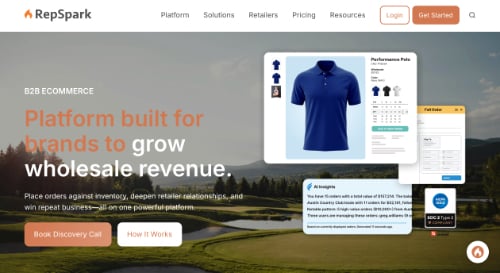
B2B wholesale e-commerce platform RepSpark has raised $22 million in a strategic investment led by growth equity firm Headlight Partners. Powering digital wholesale operations for major brands across sports, specialty retail, fitness, footwear, and tactical gear, RepSpark will use the funding to expand its enterprise feature set, deepen its integration ecosystem, and enhance its proprietary AI-driven wholesale tools.
Creative and Administrative Integrations
Adobe Launches ChatGPT Plugin Across Creative Suites
Adobe has introduced a comprehensive creativity and productivity plugin for ChatGPT. Drawing upon more than 70 distinct tools from Adobe’s creative and professional software suites, the plugin allows users to execute complex workflows directly within conversational prompts. From photo editing and marketing video creation to asset design and automated PDF generation, users can now type natural-language instructions to produce professional-grade digital media.
Knowband Expands PrestaShop Solutions
Plugin developer Knowband has launched three new modules for the 160,000 global PrestaShop merchants. Form Studio enables custom customer feedback and survey collection; the WhatsApp Business CRM module automates order confirmations, status tracking, and storefront chat widgets; and the new Blog Module provides a robust publishing system optimized specifically for organic search engine visibility.
Supporting Context & Metrics
The convergence of AI, real-time data processing, and ultra-fast logistics highlights a fundamental change in merchant priorities. Consumer acquisition costs (CAC) continue to climb across traditional paid search and social channels, forcing brands to invest heavily in conversion rate optimization (CRO) and retention mechanics at checkout (exemplified by Rokt Brain V4 and Minty).
Furthermore, the scale of recent investments underscores a maturing market:
- Whatnot’s $545 million Series G proves that live-shopping and community-driven commerce have transitioned from experimental novelties to core retail channels, rivaling traditional marketplace volumes.
- Cainiao’s 3-day global delivery network addresses the consumer demand for instantaneous gratification in cross-border trade—a sector historically plagued by multi-week delivery delays and customs bottlenecks.
- RepSpark’s $22 million raise highlights a long-overdue digital modernization of B2B wholesale, a sector that historically relied on manual trade shows, paper lookbooks, and legacy ERP systems.
Official Statements and Industry Insights
Industry leaders emphasize that integration, rather than standalone isolation, is the key theme for technology adoption in late 2026.
"By anchoring our new fulfillment AI suite with Model Context Protocol (MCP), we are shifting AI from a passive chat interface into an active, autonomous participant in warehouse and logistics execution," noted a ShipBob spokesperson regarding their latest Anthropic-verified connector rollout.
Similarly, the focus on LLM compatibility—highlighted by Adobe Commerce’s Catalog Agent and Kibo Commerce’s model-agnostic agentic framework—reflects the reality of modern search behavior. As consumers increasingly rely on AI assistants and conversational models for product discovery rather than traditional keyword search engines, merchants must structure their product data to be machine-readable.
Future Outlook
As we look toward the remainder of 2026 and into 2027, several clear trajectories are emerging for the e-commerce sector:

- The Rise of Agentic Workflows: Software is evolving from tools that humans operate to autonomous agents that execute multi-step business processes. Whether it is Wayy.ai acting as a virtual co-founder or ShipBob’s warehouse robotics driven by MCP, human operators will increasingly transition from executors to supervisors.
- Standardization of AI Discovery: Traditional Search Engine Optimization (SEO) will increasingly share real estate with Generative Engine Optimization (GEO). Platforms that fail to adopt structured layers like Adobe’s Catalog Agent risk invisibility as LLM-based shopping assistants dominate consumer purchase journeys.
- Hyper-Compressed Supply Chains: Cainiao’s 3-day global shipping standard will put immense pressure on domestic and regional fulfillment providers to match international speed-to-door metrics, raising consumer expectations across every retail vertical.
Merchants who successfully integrate these AI-driven, modular, and fast-fulfillment technologies into their operations will be best positioned to capture market share in an increasingly competitive digital economy.