





Executive Overview
The landscape of live sports and entertainment broadcasting is undergoing a profound paradigm shift. Historically, a rigid divide existed between the worlds of cinema and live television. Multi-camera live broadcasts relied on small-sensor system cameras designed for deep depth of field, high frame rates, and immediate transmission. Cinema, conversely, prioritized large-format sensors, high dynamic range (HDR), rich color science, and shallow depth of field—a combination historically too computationally heavy and logistically complex for real-time, zero-latency broadcast environments.
At the International Broadcasting Convention (IBC2026) in Amsterdam, RED Digital Cinema is set to demonstrate that this divide has officially collapsed. Located at Stand 11.C35 from September 11–14, RED will present a comprehensive, real-world showcase of its next-generation Cine-Broadcast technology. By transforming its exhibition space into a fully rigged, high-energy boxing ring, RED plans to showcase how its flagship V-RAPTOR and KOMODO camera systems are no longer just tools for Hollywood directors, but are now fully integrated, mission-critical assets for live, high-speed sports broadcasts.
Backed by the corporate and technological resources of its parent company, Nikon—which acquired RED in early 2024—the company is positioning itself to capture a significant share of the lucrative live broadcast market. The showcase at IBC2026 highlights this ambition, featuring real-time 8K immersive streaming to Apple Vision Pro headsets, 4K ultra-high-speed slow-motion replays, and seamless integration with industry-standard broadcast control protocols.
Detailed Chronology of the Live Demo & Technical Framework
To appreciate the scale of RED’s technological showcase at IBC2026, one must look at the specific hardware configurations and signal flows deployed across the live boxing ring environment on the exhibition floor.
[RED V-RAPTOR Cameras] (Dual Fisheye Lenses)
       │
       │ (8K 50fps RAW Capture)
       ▼
[RED Connect Software] (Real-time Processing & Encoding)
       │
       │ (High-Bandwidth Fiber Optic Stream)
       ▼
[Apple Vision Pro Headsets] (180° Immersive Spatial Video)
The Central Interactive Arena: The Boxing Ring
The centerpiece of Stand 11.C35 is a professional-grade boxing ring. This environment was chosen because boxing represents one of the most demanding challenges for live sports production: fast-moving athletes, unpredictable trajectories, reflective surfaces, and high-contrast, localized lighting.
Within this space, RED is deploying a multi-tier production workflow that mirrors the setup of premier global sporting events:
- Overhead Immersive Capture: Mounted directly to the overhead truss system above the ring, RED V-RAPTOR cameras fitted with dual spherical fisheye lenses will capture the action from an overhead perspective.
- High-Bandwidth Fiber Pipelines: The cameras will capture uncompressed 8K video at 50 frames per second (fps). Using the RED Connect software pipeline, these massive data streams are sent via fiber-optic cables with near-zero latency to a processing cluster.
- Real-Time Spatial Delivery: The processed 8K, 180-degree video is streamed live to Apple Vision Pro headsets on the booth floor. This setup allows attendees to put on a headset and instantly experience the boxing match as if they were standing directly inside the ring, demonstrating the viability of live, cinematic virtual reality (VR) and spatial computing for premium sports broadcasting.
The Cine-Broadcast Infrastructure
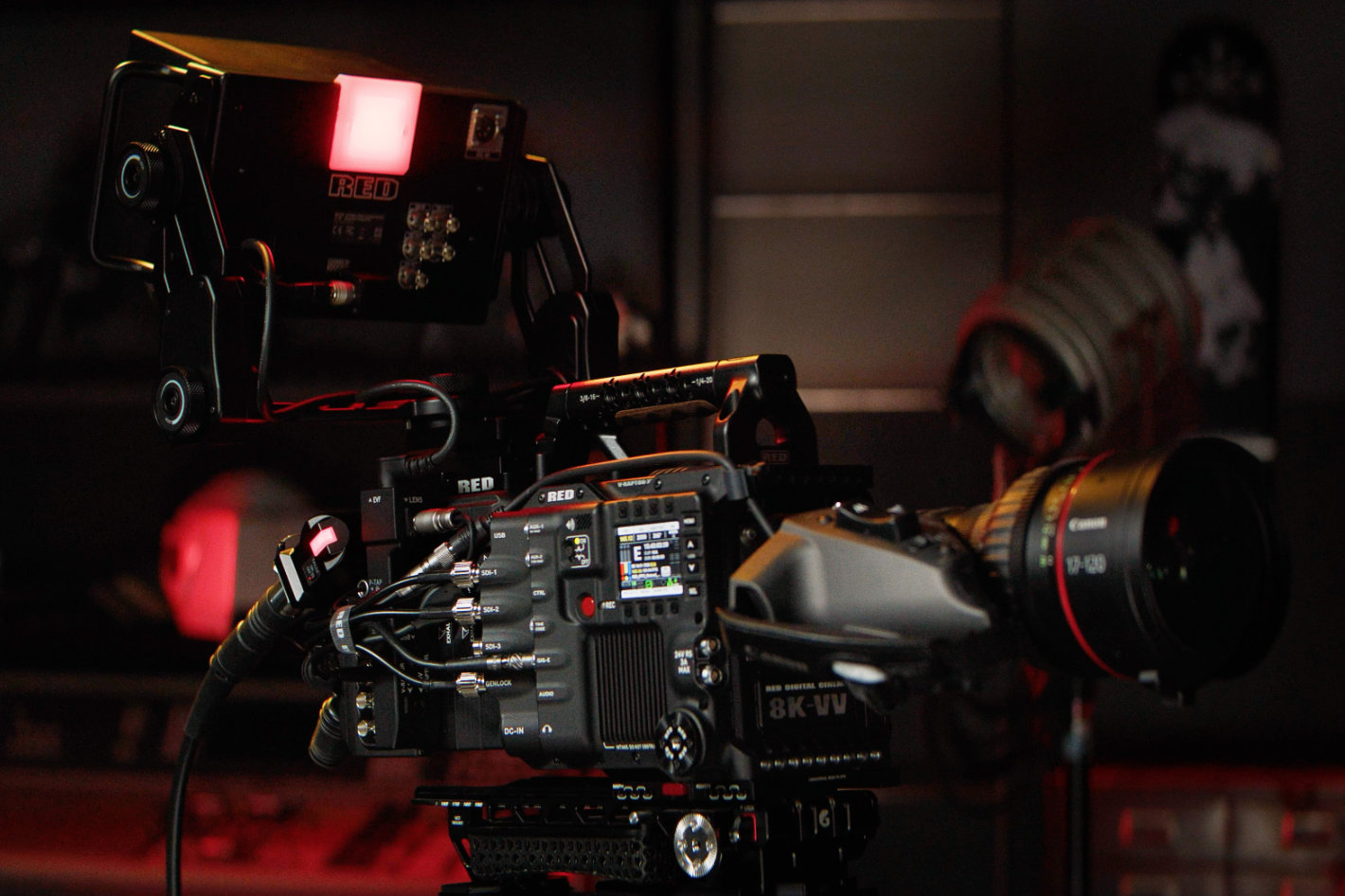
Beyond immersive spatial video, RED is demonstrating its readiness for traditional linear and digital broadcast workflows. The "Cine-Broadcast" portion of the booth is built around the V-RAPTOR [X] and V-RAPTOR XL [X] cameras, which utilize RED’s latest global shutter sensor technology.
- Super-Slow-Motion Replays: The V-RAPTOR [X] systems are configured to deliver real-time 4K feeds at 240fps. These feeds are routed directly into broadcast replay servers, showcasing the camera’s ability to capture ultra-smooth, flicker-free, super-slow-motion footage of high-impact moments without the "jello" artifacts common in rolling-shutter cameras.
- Dynamic Camera Movement: A V-RAPTOR XL [X] is mounted to a Dinky Dolly, paired with premium anamorphic lenses and complete wireless lens control systems. This demonstrates how cinematic camera moves can be integrated into live, unscripted environments.
- On-Set DIT Workflows: The live feeds from the dolly and handheld Steadicam rigs are sent wirelessly to a Digital Imaging Technician (DIT) cart. Here, real-time color grading, shading, and exposure adjustments are made on the fly using standard Remote Control Panels (RCPs) and broadcast switchers, proving that cinematic cameras can be controlled with the same speed and familiarity as traditional broadcast triax or fiber systems.
Supporting Context & Metrics: The Cinematic Shift in Live Production
The technology on display at IBC2026 is not merely a proof of concept; it is the commercialization of a workflow that has already been battle-tested on some of the world’s largest stages. Over the past 24 months, broadcasters have faced growing pressure to deliver "cinematic" visuals to home viewers who have become accustomed to high-end streaming content.
Traditional Broadcast vs. RED Cine-Broadcast
| Feature | Traditional Broadcast Cameras (B4 Mount) | RED Cine-Broadcast (Super 35 / Large Format) |
|---|---|---|
| Sensor Size | 2/3-inch (Small format, deep depth of field) | Full Frame / VistaVision (Shallow depth of field) |
| Shutter Type | Global Shutter (CCD/CMOS) | Global Shutter (V-RAPTOR [X] series) |
| Dynamic Range | ~10–12 Stops | 17+ Stops (Exceptional highlight recovery) |
| Color Science | Rec. 709 / Basic HDR | RED IPP2 (Cinema-grade color grading) |
| Slow Motion | Standard 1080p high-speed | Real 4K at 240fps / 8K at 120fps |
| Integration | Proprietary base stations | IP-based SMPTE ST 2110 / RED Connect |
Real-World Case Studies & Deployments
RED’s Cine-Broadcast Module has transitioned from niche application to mainstream adoption across major television networks and live event production companies:
- Major Network Sports (CBS & NBC): Both CBS Sports and NBC Sports Group have integrated RED V-RAPTOR and KOMODO cameras into their premier live broadcasts, including NFL games and championship golf. The cameras are typically used as "shallow depth of field" specialty cameras on Steadicams for sideline celebrations, player introductions, and post-game interviews, offering a distinct, high-end aesthetic that stands out from standard game coverage.
- Live Streaming Giants (Netflix): As Netflix expands its live sports and entertainment offerings, the company has mandated cinema-quality standards for its live streams. RED’s IP-based workflows have allowed Netflix to maintain its signature cinematic look during live, unscripted broadcasts.
- Concert Touring & Live Events: Fuse Technical Group has integrated RED cameras into its touring infrastructure for major artists, including Zach Bryan, Rush, and Jay-Z. These productions require cameras that can handle extreme, fast-changing stage lighting while feeding massive LED screens and live stream broadcasts simultaneously.
- Stadium-Scale Spectacles: Earlier this year, Epic Cinema utilized RED cameras to capture David Guetta’s "The Ultimate Monolith Show" at the Stade de France in Saint-Denis. The production required ultra-low-light sensitivity and high dynamic range to capture both the massive crowd and the complex laser and LED stage design.
Official Statements & Industry Reactions
The integration of cinema-grade equipment into live environments requires collaboration between camera manufacturers, service providers, and broadcast unions.
At the SVG (Sports Video Group) Europe Summit in Amsterdam on September 10—one day prior to the opening of the IBC show floor—executives from RED and Gravity Media will take the stage to discuss the operational realities of this technological convergence.
A key point of discussion will be the Six Kings Slam, an elite tennis exhibition held in Riyadh, Saudi Arabia. The broadcast of this event was widely praised for its premium, cinematic visual style, which was achieved through the strategic deployment of RED digital cinema cameras alongside traditional broadcast units.
During the panel, representatives from both companies are expected to address the critical hurdles that have historically limited cinema cameras in live sports, such as:
- The "Shading" Challenge: How broadcast engineers can paint and color-match a large-format cinema camera in real-time alongside standard system cameras.
- Focus Pulling at Speed: Managing the razor-thin depth of field of a full-frame sensor during high-speed athletic movements.
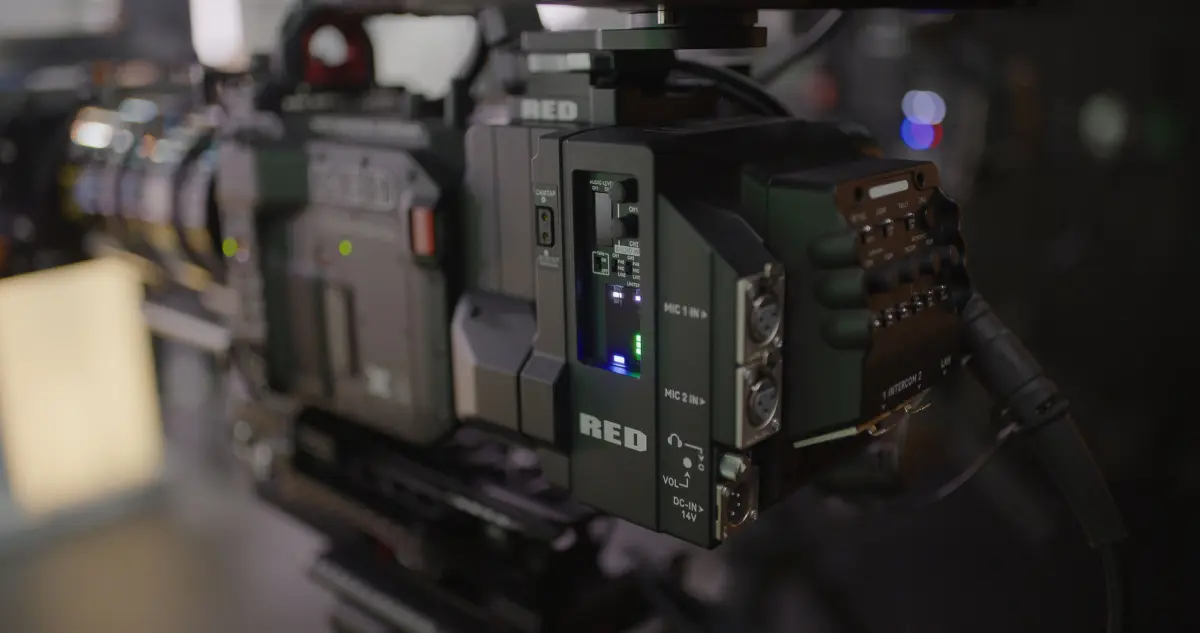
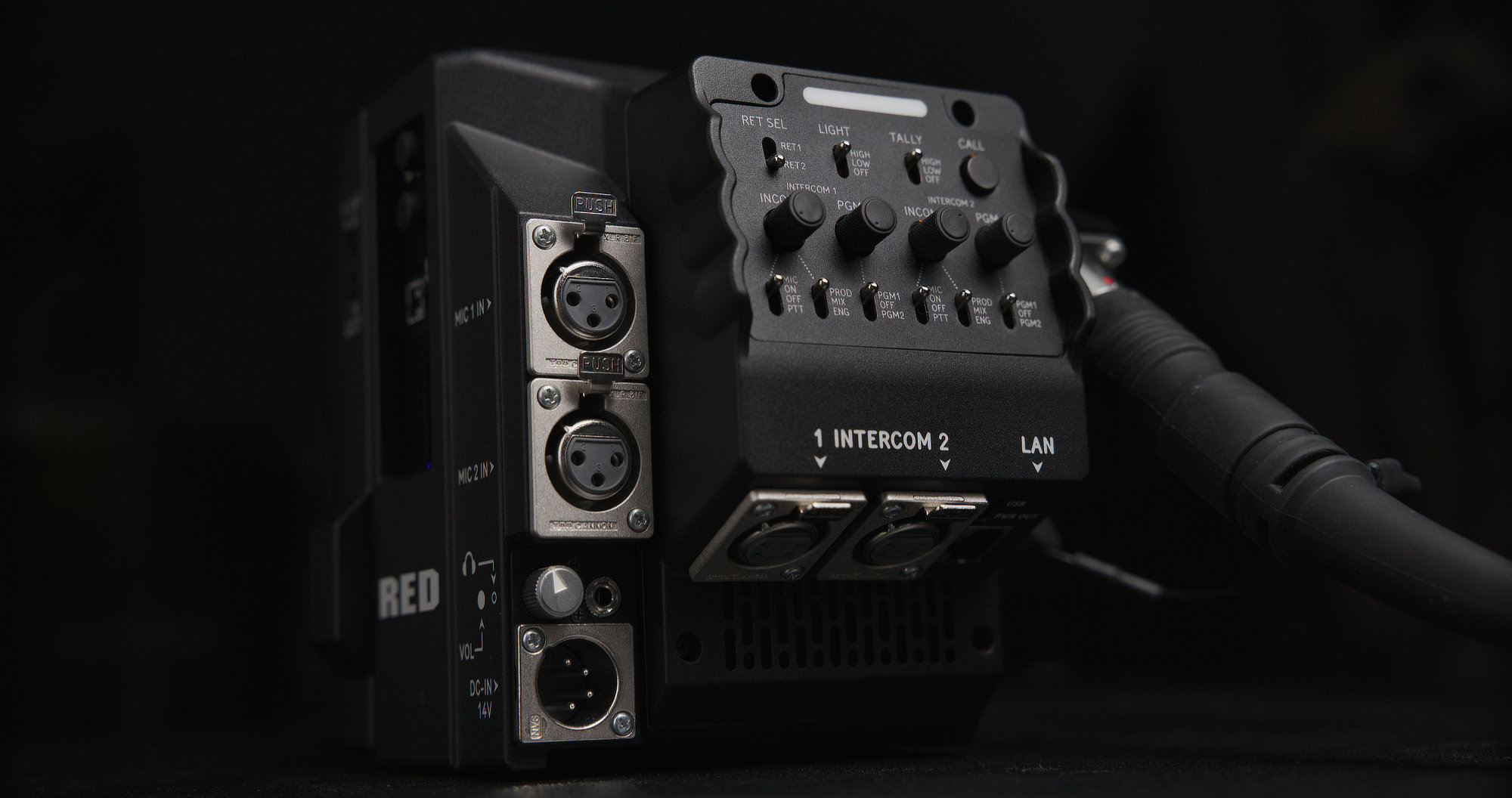
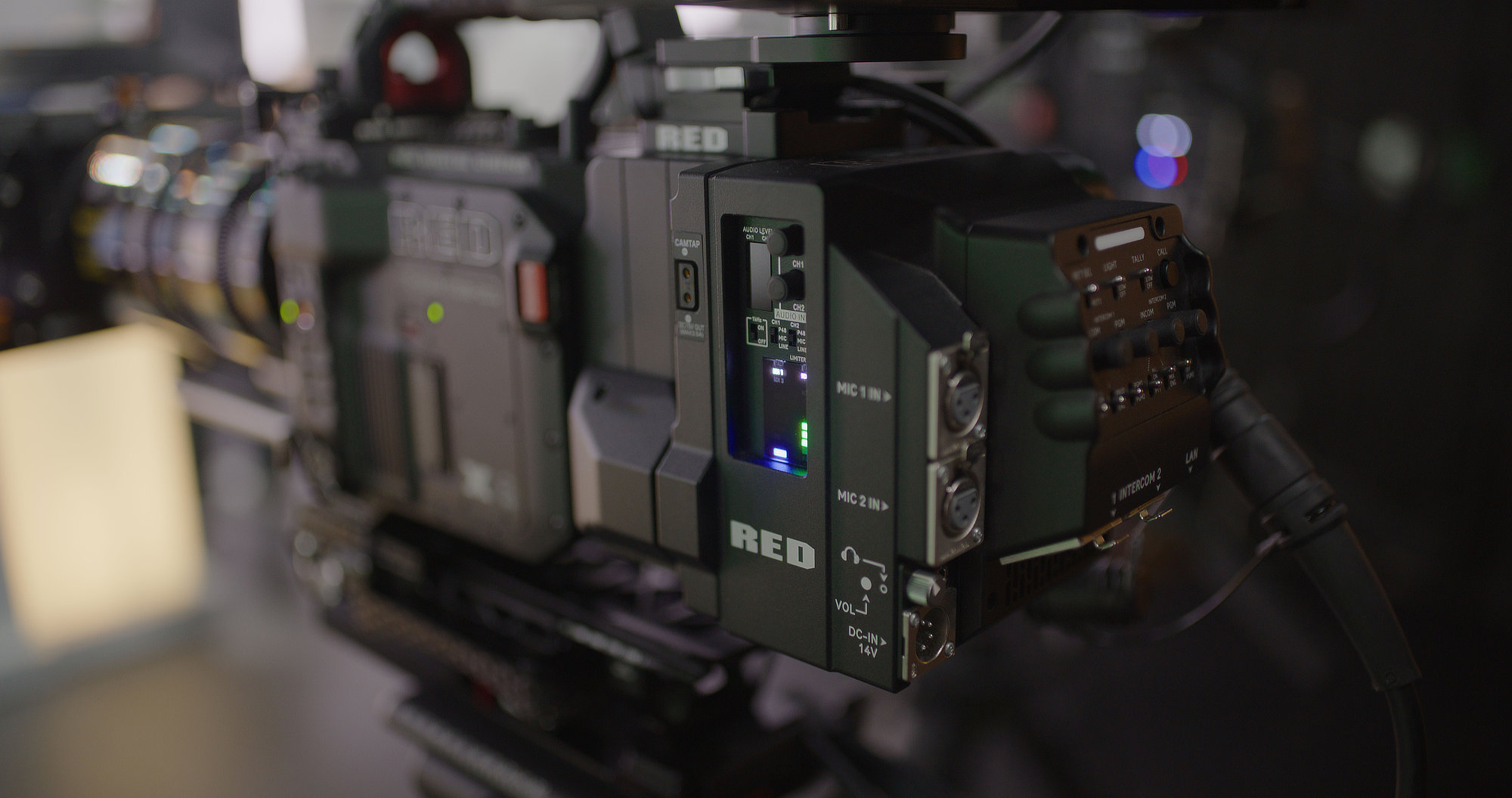
- Return Video and Tally: Ensuring operators have real-time return feeds, tally lights, and intercom integration—features that are standard on broadcast cameras but require specialized modules on cinema rigs.
Future Outlook: Spatial Computing and the Next Era of Sports Broadcasting
The demonstrations planned for IBC2026 point directly toward the future of home entertainment. As high-bandwidth fiber connections and 5G networks become ubiquitous, the constraints of traditional linear television formats are dissolving.
The Rise of Immersive Spatial Broadcasts
The integration of RED Connect with the Apple Vision Pro is a significant step toward commercializing volumetric and spatial live broadcasts. Rather than watching a flat 16:9 screen, future sports fans may purchase "virtual courtside seats."
By placing stereoscopic 8K cinema cameras at key locations—such as the ring apron in boxing, behind the glass in hockey, or at the net in tennis—broadcasters can sell premium virtual tickets. The viewer at home, wearing a spatial headset, will experience the event with realistic depth perception, high-fidelity color, and the ability to look around the venue in real time.
                   ┌──► 4K 240p Super-Slow-Mo (Replay Servers)
                   │
[Live Event] ──────┼──► Ultra-Wide 8K 50fps (RED Connect -> VR Headsets)
                   │
                   └──► Real-Time Color Graded SDR/HDR (Traditional Broadcast)
The Nikon Synergy
Following Nikon’s acquisition of RED, the industry is watching closely to see how the two companies integrate their intellectual property. Nikon’s deep expertise in optical design, autofocus algorithms, and high-volume manufacturing, combined with RED’s mastery of digital cinema sensors and raw compression, is expected to accelerate the development of hybrid broadcast solutions.
The technology showcased at IBC2026 is the first major wave of this new era, proving that RED is no longer a boutique cinema brand, but a dominant force shaping the future of live global media.