Executive Overview
In the high-stakes world of digital cinematography, the integrity of captured footage is paramount. For over two decades, CODEX has served as the silent, bedrock infrastructure behind some of Hollywood’s most prestigious and technologically demanding productions. From the high-flying action of Spider-Man: Brand New Day and the speculative sci-fi realism of Project Hail Mary, to the lush fantasy worlds of Wicked: For Good and HBO’s House of the Dragon, CODEX’s proprietary recording media and workflow pipelines have been the industry standard where data loss is simply not an option.
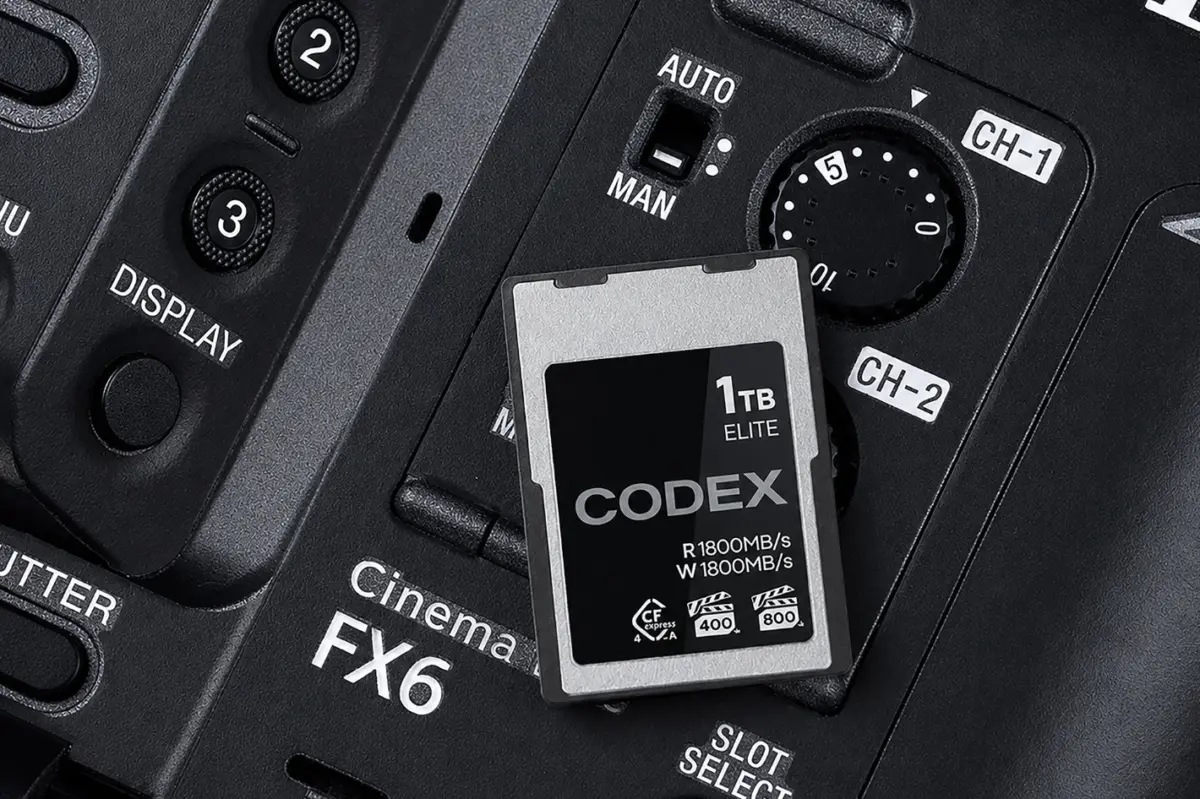
Now, in a significant strategic pivot, CODEX is democratizing its elite engineering heritage. The company has officially announced the launch of its new CFexpress media range, introducing cinema-grade storage solutions to the broader market of professional filmmakers, commercial photographers, and hybrid creators. By offering both Type A and Type B form factors across two performance tiers—Excel and Elite—and pairing them with a cutting-edge USB4 reader, CODEX is poised to disrupt a market currently saturated by consumer-grade flash storage manufacturers.
This move represents more than just a product launch; it is a calculated bridge between high-end Hollywood digital imaging pipelines and the rapidly evolving ecosystem of high-bitrate mirrorless and compact cinema cameras.
Detailed Chronology: The Legacy of CODEX and the Evolution of Camera Media
To understand the significance of CODEX’s entry into the CFexpress market, one must examine the company’s historical trajectory. Established in the early 2000s, CODEX built its reputation by solving the complex data management problems associated with early digital motion picture cameras.
[Early 2000s: Tape-to-Digital Transition]
       │
       ▼
[Partnership with ARRI: Proprietary CODEX Capture Drives for ARRIRAW]
       │
       ▼
[Hollywood Dominance: Industry-standard on major Oscar-winning productions]
       │
       ▼
[Modern Era: Convergence of Cinema & Hybrid Mirrorless Systems]
       │
       ▼
[2024: Democratization via CFexpress Type A/B & USB4 Ecosystem]
In the infancy of digital cinematography, uncompressed RAW recording required external, rack-mounted recorders that were heavy, power-hungry, and prone to failure under extreme environmental conditions. CODEX revolutionized this space by designing ultra-reliable, compact onboard recorders and solid-state "Capture Drives" that integrated directly into cameras like the ARRI ALEXA system. This close engineering partnership with ARRI established CODEX as the gold standard for data security and raw throughput on set.
As camera sensors evolved from 2K to 4K, and subsequently to 8K and 12K resolutions, the bandwidth requirements for media skyrocketed. At the same time, the physical size of cameras shrunk. The industry began moving away from bulky, proprietary media bays toward standardized, compact form factors.
The emergence of the CFexpress standard—built on the robust PCIe Gen 3 and Gen 4 protocols paired with NVMe interface technology—provided the perfect canvas for CODEX. Seeing a market where independent filmmakers and hybrid shooters were pushing consumer-grade CFexpress cards to their absolute thermal and write-speed limits, CODEX spent years adapting its enterprise-grade cinema technologies into the compact CFexpress Type A and Type B formats. The result is a product line designed to eliminate the anxiety of dropped frames, corrupted sectors, and thermal throttling.
Supporting Context & Metrics: Technical Architecture of the CODEX CFexpress Range
The new CODEX CFexpress lineup is engineered to address the three most common failure points of modern flash media: thermal buildup, write-speed degradation, and data corruption during unexpected power loss.
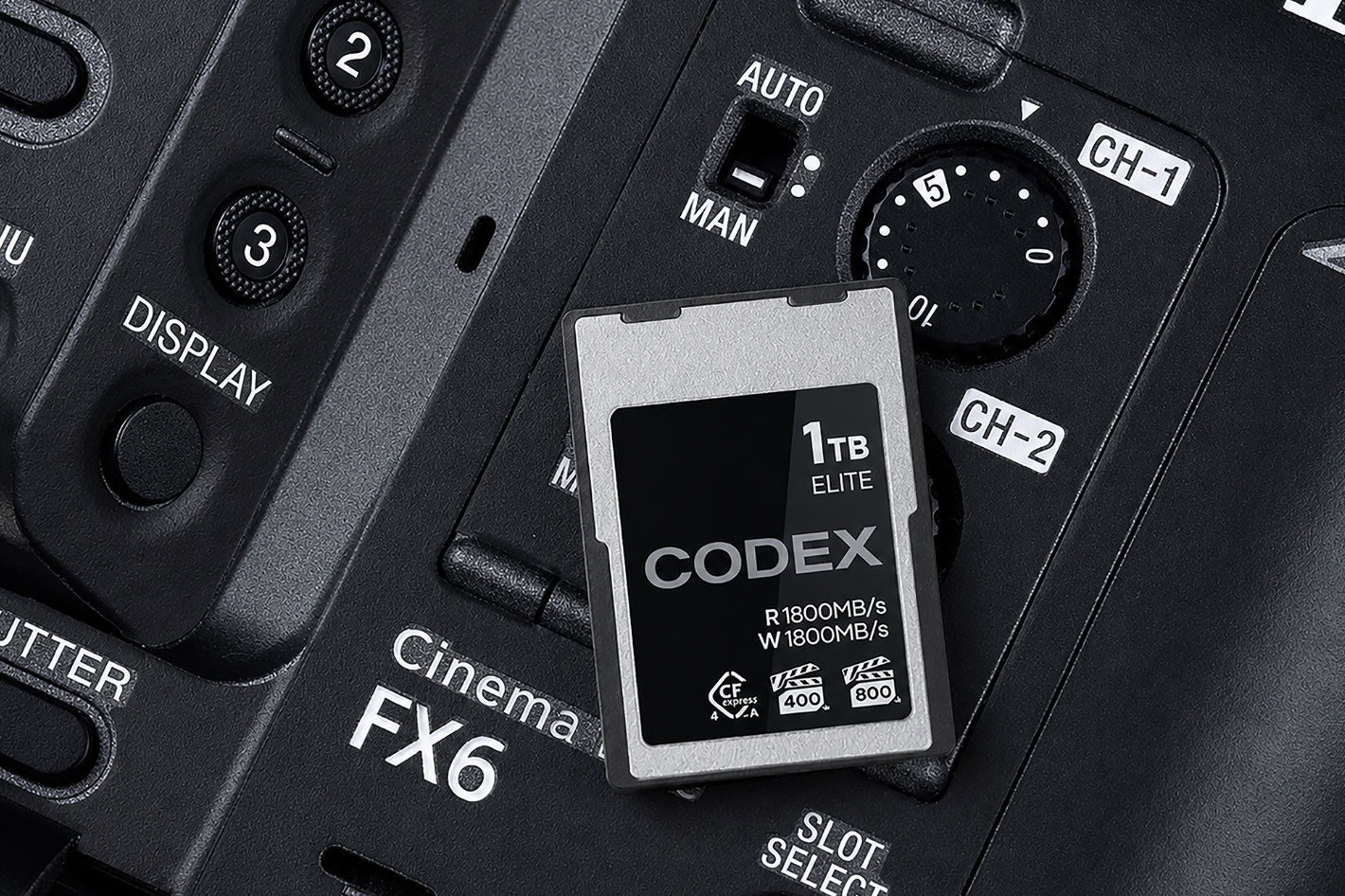
Performance Tiers: Excel vs. Elite
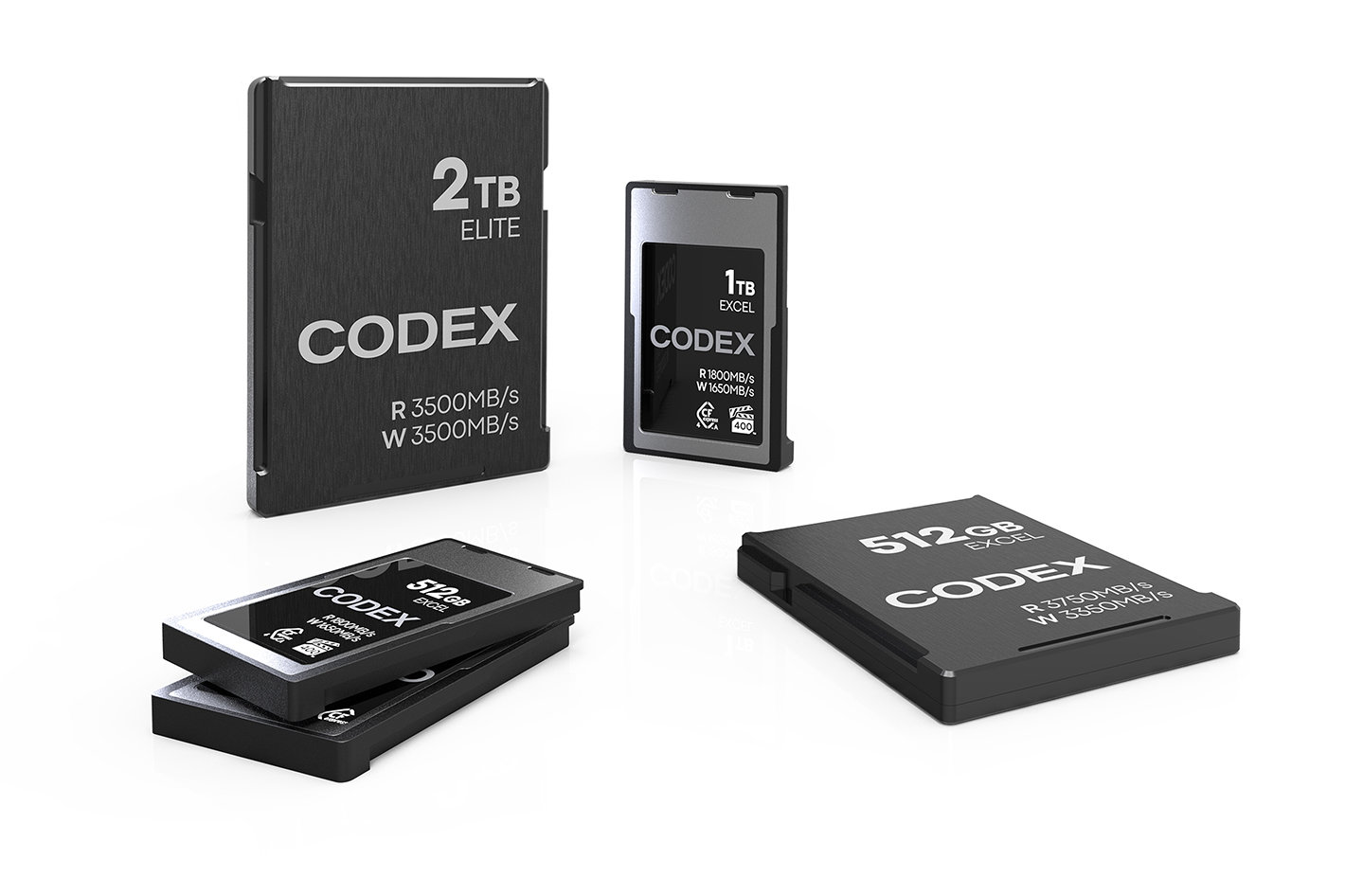
To cater to varying production demands, CODEX has structured its product portfolio into two distinct performance tiers:
- The Excel Series: Tailored for daily production environments, high-speed photography, and standard compressed video codecs (such as ProRes 422 HQ or H.265-based formats). This tier balances high-speed read/write capabilities with cost efficiency, making it ideal for independent documentary filmmakers and commercial photographers.
- The Elite Series: Engineered for uncompromised, maximum-bandwidth applications. These cards are specifically designed to handle sustained, uncompressed RAW recording in 8K and 12K resolutions without a single dropped frame. The Elite series targets elite digital cinema cameras from RED, Sony, Canon, and Blackmagic Design.
| Feature / Metric | CODEX CFexpress Type A | CODEX CFexpress Type B |
|---|---|---|
| Interface Protocol | PCIe Gen 3 x1 / NVMe | PCIe Gen 3 x2 / NVMe |
| Target Systems | Sony FX3, FX6, A1, A7S III | RED V-Raptor, Canon C500 Mk II, Blackmagic Pyxis |
| Performance Tiers | Excel & Elite | Excel & Elite |
| Proprietary Tech | ByteGuard, HeatControl, FastLane | ByteGuard, HeatControl, FastLane |
| Max Offload Speed | Up to 1000 MB/s (via Adapter) | Up to 5000 MB/s (via USB4 Reader) |
| Certification | VPG-400 (Select Models) | VPG-400 / VPG-200 (Select Models) |
Core Proprietary Technologies
Every card in the new CODEX range features a trio of hardware-level and firmware-level technologies designed to guarantee performance under pressure:
- FastLane: A proprietary flash-management controller algorithm that optimizes data pathways between the camera’s buffer and the card’s NAND flash memory. FastLane ensures that write speeds remain flat and consistent, preventing the steep performance drops common in consumer-grade cards once the write buffer is exhausted.
- HeatControl: CFexpress cards operate on PCIe technology, which naturally generates significant heat. In compact camera bodies, this can lead to thermal throttling, causing the camera to stop recording mid-take. CODEX’s HeatControl utilizes advanced thermal-conductive materials and low-power controller designs to dissipate heat efficiently, keeping the media running cool even during continuous, long-take recordings in hot environments.
- ByteGuard: Power failure on a film set—whether from an accidental battery pull or a camera crash—can corrupt an entire card’s file system. ByteGuard acts as an active data-protection shield, constantly writing metadata parity and securing the file allocation table (FAT) in real-time, ensuring that even if power is abruptly cut, previously recorded footage remains intact and uncorrupted.
The USB4 Reader Bottleneck Solution
High-speed capture is only half of the equation; post-production workflows require rapid offloads to keep sets running efficiently. To complement the cards, CODEX has introduced the CFexpress Type B Reader.
Utilizing the latest USB4 interface, this reader is capable of transferring data at blistering speeds of up to 5,000 MB/s. This represents a massive leap over standard USB 3.2 Gen 2×2 readers, which max out at approximately 2,000 MB/s. The reader natively accepts Type B cards and, via a custom-designed precision adapter, seamlessly ingest Type A cards, providing a unified, high-speed ingest station for multi-camera DIT (Digital Imaging Technician) carts.
Official Statements and Industry Endorsements
The industry response to CODEX entering the open-market storage space has been overwhelmingly positive, with key figures validating the engineering philosophy behind the launch.
Marc Dando, Chief Design Officer at CODEX, emphasized that this product range is a natural extension of the company’s core mission:
"We’ve always believed that the technology should support the creative process. We’ve spent more than twenty years working with filmmakers and building products that solve their problems. It felt like a natural step to bring that experience to a range of CFexpress media. It’s about giving creators media they know they can trust."
This sentiment is echoed by CODEX’s long-term hardware integration partners. Andrew Prior, Head of Technology and Development at ARRI Rental, highlighted how this move solidifies the reliability ecosystem for rental houses and high-end clients:
"The introduction of CFexpress media is a natural progression for CODEX. They have always delivered for our ARRI camera systems, and it will add that additional comfort to our customers."
Perhaps the most compelling testament to the absolute necessity of CODEX’s zero-failure engineering comes from veteran cinematographer James Neihouse ASC, who has pushed camera systems to the literal edge of human exploration:
"I’ve trusted CODEX technology in some of the most demanding environments imaginable, including filming aboard the International Space Station. When you’re capturing moments that can never be recreated, absolute confidence in your recording media isn’t a luxury—it’s a necessity. I’m pleased to see CODEX bring that same commitment to performance to its new CFexpress media."
Future Outlook: Redefining the Professional Storage Market
The entry of CODEX into the CFexpress market marks a critical shift in the landscape of professional media. Historically, the storage market has been bifurcated: high-end, proprietary cinema drives dominated Hollywood sets, while the rest of the industry relied on consumer-grade SD and CFexpress cards, which often prioritize maximum burst speeds over sustained write performance and long-term durability.
By applying cinema-grade validation processes to the standardized CFexpress Type A and Type B form factors, CODEX is directly challenging established storage giants. The inclusion of multi-year warranties, complimentary in-house data recovery services, and direct access to their specialized UK-based technical support team signals that CODEX is treating these cards not as disposable accessories, but as critical, long-term production assets.
As cameras continue to push the boundaries of resolution and color science—with 8K RAW becoming standard on mid-tier commercial sets and 12K/16K workflows on the horizon—the demand for media that can handle sustained thermal and write loads will only intensify. With its deep-rooted heritage in Hollywood’s most demanding environments, CODEX is uniquely positioned to lead this new era of high-fidelity capture, ensuring that creators at every level can shoot with the same absolute confidence as the world’s leading cinematographers.