










Executive Overview
Digital advertising has long been touted as the most measurable, targeted, and efficient medium in the history of marketing. Unlike traditional billboards, television spots, or print spreads, digital campaigns promise instantaneous feedback, granular audience segmentation, and exact return on ad spend (ROAS). However, beneath the polished veneer of programmatic dashboards and high-volume impression metrics lies a massive, sophisticated shadow economy: digital ad fraud.
According to industry experts, up to one-third—and sometimes more—of global programmatic ad spend is lost to fraudulent activities. From basic bot-driven impression inflation and malicious click farms to advanced device spoofing and complex money laundering schemes, ad fraud represents a hidden tax levied against brands of every size.
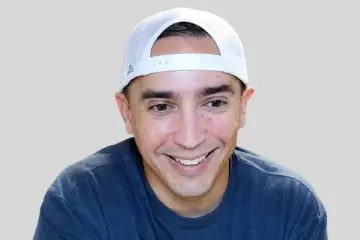
In a recent, revealing industry interview, Eric Bandholz, founder of the grooming brand Beardbrand, sat down with Jeromy Sonne, a veteran Facebook ad professional turned ad fraud detection expert and founder of Daypart. Sonne breaks down the mechanics of modern digital deception, exposes why the open web is fundamentally more dangerous than "walled gardens" like Meta and Google, and provides actionable frameworks for brands seeking to audit their traffic, eliminate waste, and optimize their real marketing efficiency.
Detailed Chronology: From Media Buying to Fraud Mitigation
To understand the anatomy of modern ad fraud, one must understand how the architecture of digital marketing has evolved over the past decade and a half. The career trajectory of Jeromy Sonne offers a direct window into this transformation.
The Early Days: The Mobile App Boom (2011)
Sonne entered the digital marketing landscape in 2011, focusing heavily on Facebook ads. During this era, the ecosystem was experiencing a massive gold rush driven by the explosion of mobile applications. Advertisers were eager to acquire users, and platforms like Facebook were rapidly expanding their inventory. Sonne spent years managing high-volume budgets, developing an intimate understanding of how ad auctions functioned, how user acquisition scaled, and how platforms reported performance metrics.
The Shift to Ad Tech and Audio
As the digital landscape matured, Sonne expanded his expertise beyond traditional social media buying into broader ad technology infrastructure. He founded Decibel, an early-stage ad tech platform designed specifically for podcast advertising. While podcasts represented an emerging, highly engaged medium, the infrastructure surrounding measurement, verification, and dynamic insertion was still in its infancy. Ultimately, Decibel did not survive the competitive and structural pressures of the nascent podcast ad tech market. Yet, the experience provided Sonne with a profound technical education regarding how media is bought, sold, measured, and—crucially—manipulated across non-traditional channels.
The Birth of Daypart: Combating the Bad Actors
Armed with a deep technical background in social advertising and programmatic ad tech, Sonne noticed a disturbing trend: brands and agencies were blindly pumping millions of dollars into digital campaigns with virtually no visibility into whether real humans were actually viewing their creative assets.
Recognizing a critical market gap, Sonne founded Daypart, an ad fraud detection firm. Daypart acts as an independent watchdog for agencies and enterprise-level advertisers, auditing campaign data to verify authenticity, uncover discrepancies, and systematically strip out fraudulent traffic. Today, Sonne considers this venture his most successful professional undertaking, noting that helping advertisers starve bad actors of revenue has become one of the most vital, high-ROI services in the modern marketing ecosystem.
Defining the Threat: What Is Modern Ad Fraud?
When most marketers hear "ad fraud," they envision simple botnets automatically refreshing a webpage to inflate banner ad impressions. While bot-driven impressions remain a staple of digital crime, Sonne emphasizes that ad fraud is a sophisticated umbrella term encompassing multiple tiers of malicious and deceptive behavior.
1. Basic Impression and Click Inflation
The most common and visible form of fraud involves automated scripts, headless browsers, and bot farms designed to mimic human browsing behavior. These bots repeatedly load web pages, click on banner ads, or interact with mobile applications to generate fake engagement. Advertisers are subsequently billed for impressions and clicks that have zero potential to convert into genuine customers.
2. Arbitrage and Contextual Spoofing
Fraud doesn’t always look like a computer-generated bot; sometimes it involves economic deception by human actors. For instance, an advertiser might contractually agree—and pay a premium $30 CPM (Cost Per Mille)—to have their video commercial run during a high-quality, brand-safe digital TV broadcast or premium news site. Behind the scenes, unscrupulous publishers route that ad through hidden layers of programmatic exchanges, ultimately serving it on a low-grade, MFA (Made-for-Advertising) website or a junk mobile app. The advertiser pays top dollar for premium placement but receives low-value, brand-damaging exposure.
3. The Extreme End: Money Laundering and Criminal Rings
At its most sophisticated and sinister level, ad fraud ceases to be merely a marketing nuisance and crosses into transnational financial crime. Sophisticated criminal syndicates utilize programmatic ad networks to launder money. By establishing shell companies, purchasing their own ad inventory, and using synthetic traffic to generate artificial revenue payouts, bad actors can cleanse illicit funds through legitimate-looking digital advertising channels.
Walled Gardens vs. The Open Web: Where Is the Risk Highest?
A central theme in Sonne’s analytical framework is the stark operational divide between closed ecosystems (often called "walled gardens") and the open programmatic web.
The Walled Gardens: Meta and Google
Platforms like Meta (Facebook and Instagram) and Google operate on a closed-loop model. While they are not entirely immune to sophisticated evasion techniques, their centralized control allows them to aggressively monitor, police, and refund fraudulent activity within their primary feeds.
According to Sonne, Meta and Google maintain dedicated trust-and-safety teams that are reasonably responsive when discrepancies or bot surges are flagged. For brands whose entire digital footprint resides within these walled gardens—such as Beardbrand, which allocates the entirety of its budget to Meta—the threat level is significantly lower than it is on the open internet.
However, even walled gardens have perimeter risks. Meta’s Audience Network—which extends Meta-targeted ads outward into third-party mobile apps and external websites—is described by Sonne as "the Wild West of advertising." Mobile apps operating within external networks carry a substantially higher risk of hosting automated click fraud, AI-driven browsing agents, and device-spoofing scripts.
The Open Programmatic Web: The Real Danger Zone
When brands expand their marketing budgets beyond Google and Meta into open programmatic networks—encompassing display exchanges, video networks, mobile app banners, Connected TV (CTV), and programmatic audio—the risk profile skyrockets.
Sonne notes that upwards of one-third or more of ad spend on open programmatic networks is likely fraudulent or compromised to some degree. Because the open web is decentralized, fragmented across countless middlemen, supply-side platforms (SSPs), and demand-side platforms (DSPs), it creates an environment where malicious actors can easily hide.
Case Study in Deception: Spotting the Impossible Device
How can an advertiser differentiate between genuine human engagement and fraudulent bot activity when ad tech dashboards routinely paint a picture of perfection? According to Sonne, the answer lies in rigorous data interrogation and historical logic.
During a recent forensic audit of a set of mobile ad campaigns, Sonne encountered a scenario that initially appeared entirely legitimate on the surface. Impression counts were high, click-through rates looked healthy, and the platform’s native reporting indicated normal user acquisition patterns.
However, when Sonne dug deeper into the granular device-level data logs, a glaring technical impossibility emerged:
- The Claim: The campaign reports stated that 100% of the ad impressions were being served on Apple iPads powered by Intel microprocessors.
- The Reality: Apple iPads have never utilized Intel chips; they run exclusively on Apple’s proprietary custom silicon (A-series and M-series chips).
This fundamental contradiction unmasked the operation. The publishers were actively spoofing device signatures through programmatic workarounds to trick targeting algorithms into believing ads were reaching high-value tablet users, when in reality, the impressions were being generated by automated server-side bot farms.
The "Trust But Verify" Methodology
Sonne advises advertisers to adopt a detective’s mindset:
- Demand Transparency: Never rely solely on the aggregated reports provided by the ad network or media buying platform. Insist on receiving raw data logs.
- Cross-Reference Analytics: Compare the impression and click data reported by the ad platform against independent analytics tools, internal server logs, and dedicated ad-verification trackers.
- Hunt for Discrepancies: Look for logical impossibilities, anomalous traffic spikes, suspicious geographic distributions, or mismatched device profiles.
- Demand Refunds: When verified discrepancies occur, escalate the findings to the platform, call out the anomalies, and demand financial restitution.
Economic Thresholds: When Do You Need Anti-Fraud Services?
Given the technical complexity and resource-intensive nature of ad fraud detection, specialized auditing firms like Daypart are not necessary or economically viable for every business.
Sonne outlines a clear financial threshold for when brands should consider retaining dedicated fraud mitigation experts:
- Small to Mid-Sized Brands (Meta/Google Focus): Companies spending their marketing budgets exclusively within walled gardens like Meta and Google typically do not have the financial exposure to justify hiring an external fraud detection firm. Their primary defense is internal vigilance, blocking sketchy apps within the Meta Audience Network, and monitoring conversion anomalies.
- Enterprise Advertisers (Open Web & CTV Focus): Firms that have fully saturated or maximized their growth potential on Meta and Google naturally expand into open programmatic channels, Connected TV (CTV), and digital audio. When companies reach an ad spend of $25 million to $50 million annually—frequently operating with agencies spending several million dollars a month on open-web programmatic—the cost of retaining an external auditing firm is easily justified by the millions recovered in wasted spend.
Sonne also highlights industry players committed to transparency, pointing to Comcast’s programmatic buying platform, Beeswax, as an example of a tightly run, highly secure programmatic environment that prioritizes ecosystem integrity.
Future Outlook: The AI Arms Race in Digital Advertising
As digital advertising enters a new era defined by rapid advancements in artificial intelligence, the battleground between ad fraud detection experts and malicious syndicates is evolving at a breakneck pace.
The Rise of Autonomous AI Agents
As Sonne noted, fraud is no longer limited to simple, static scripts executing repetitive clicks. The integration of advanced AI agents capable of mimicking nuanced human behavior—including browsing habits, mouse movements, form fills, and even simulated purchasing journeys—poses an unprecedented challenge for traditional fraud detection filters. These generative bots can dynamically adapt to security protocols, making them exponentially harder to distinguish from legitimate consumers.
Optimization Through Subtraction
In response to this growing complexity, the philosophy of digital marketing optimization is undergoing a profound philosophical shift. For years, marketers obsessed over addition: adding new channels, scaling budgets, expanding audience parameters, and deploying more creative variations.
Sonne argues that in today’s hyper-fraudulent landscape, the single most effective optimization tactic a brand can execute is subtraction. By ruthlessly auditing traffic sources, cutting out opaque programmatic networks, eliminating fraudulent mobile app placements, and ensuring that every real dollar reaches a verified human audience, brands can dramatically increase their true Return on Ad Spend (ROAS).
Ultimately, as the digital ecosystem becomes increasingly automated and contested, the brands that thrive will not necessarily be those that spend the most, but those that possess the visibility, skepticism, and technical rigor to ensure their marketing budgets are fighting real battles for real human attention.