Executive Overview
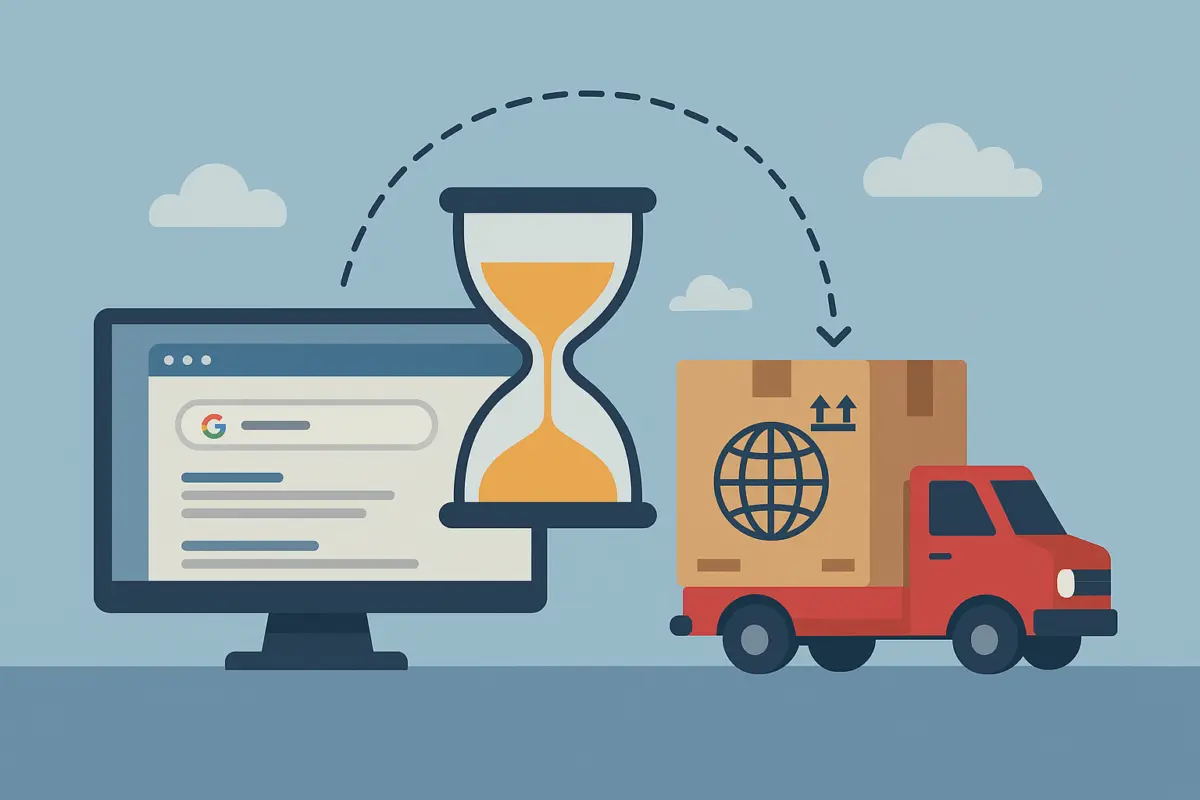
In the intricate architecture of the modern internet, a domain name is far more than a simple string of characters; it serves as the foundational routing address connecting billions of users to decentralized web services, massive databases, and digital libraries. However, when high-traffic platforms alter their public-facing web addresses—a routine practice driven by server load distribution, security resilience, and structural maintenance—users frequently encounter a frustrating digital phenomenon: indexing latency.
Search engine indexing latency explains why individuals navigating the web often stumble upon outdated cached results, broken hyperlinks, and temporary visibility gaps during platform migrations. According to technical documentation from Google Search Central and web migration best practices published by industry authorities like Semrush, search engines require a finite amount of time to process server redirects, purge or update cached references, and accurately map ranking signals to a new destination. This unavoidable lag creates a temporal disconnect between active publishing and visible search updates.
This structural reality is particularly pronounced within high-demand, distributed digital literature sources. Platforms such as Z-Library—which maintain vast, globally accessed repositories spanning academic journals, open-source textbooks, and general-interest literature—frequently adjust their network infrastructure and official domains to maintain operational continuity. Because of its massive digital footprint, community-driven inbound links, and integration into broader research workflows, users tracking the active Z-Library official domain often confront the friction caused by crawl delays.
This comprehensive report investigates the technical mechanics of search engine indexing latency, examines the operational drivers behind domain migrations for large-scale digital repositories, analyzes the broader implications for information retrieval, and provides a forward-looking perspective on how modern web architecture handles transitional phases.
Detailed Chronology: The Anatomy of a Web Domain Migration and Indexing Lag
To fully understand why users searching for resources like Z-Library encounter changing web addresses and lingering legacy pages, one must trace the chronological sequence of a domain transition and the corresponding reaction of automated search engine crawlers.
[Phase 1: DNS Update & Redirection]
       │
       ▼
[Phase 2: Crawler Discovery (Bot Ingestion)]
       │
       ▼
[Phase 3: Signal Re-mapping & Canonicalization]
       │
       ▼
[Phase 4: Cache Eviction & SERP Normalization]
Phase 1: The Initial DNS Shift and Server Redirection
A domain migration typically begins at the server level. Administrators modify Domain Name System (DNS) records, point traffic to a new hosting provider, or deploy server-side status codes (such as 301 Moved Permanently) to route visitors from an old address to a modern URL. In an ideal scenario, a browser resolves this instantly, seamlessly transporting the user to the updated interface.
However, the speed of this transition depends heavily on global DNS propagation times, which can range from a few minutes to 48 hours depending on Internet Service Provider (ISP) caching tiers and Time-To-Live (TTL) configurations set on the original domain.
Phase 2: Crawler Discovery and Bot Ingestion
Once the server configuration is altered, automated web crawlers (such as Googlebot, Bingbot, and various third-party indexing tools) must detect the change. Search engines do not monitor every website in real-time; instead, they deploy algorithmic budgets—known as crawl budgets—to allocate computing resources efficiently across trillions of web pages.
When a site shifts its address, search engine bots must encounter the 301 redirect or attempt to access the legacy URL, parse the new instructions, and queue the updated URL for crawling. This ingestion phase is where indexing latency fundamentally originates. As a 2024 empirical analysis by IndexCheckr highlighted, high-authority websites may experience rapid recrawling within hours, whereas distributed or frequently shifting networks often experience delayed bot discovery cycles.
Phase 3: Signal Re-mapping and Canonicalization
Beyond simply reading new text, search engines must transfer historical ranking signals—such as PageRank, domain authority, backlink weight, and historical trust metrics—from the legacy URL to the new destination. This process requires complex algorithmic evaluation to prevent malicious actors from hijacking domains through fraudulent redirects.
During this transition window, search engines often maintain dual entries in their internal databases: the old URL remains indexed due to persistent cached references, while the new URL is slowly being integrated. This duality explains why users frequently see historical web addresses dominating Search Engine Results Pages (SERPs) weeks after a migration has physically occurred.
Phase 4: Cache Eviction and SERP Normalization
The final phase of the migration lifecycle is cache eviction. Search engines systematically flush outdated snippets, meta descriptions, and cached page copies from their dynamic memory banks, replacing them entirely with fresh data extracted from the current web property. Until this cleanup cycle completes, users rely on legacy bookmarks, community forums, and cached snippets that point to obsolete server locations, creating the illusion of broken access or domain instability.
Supporting Context & Metrics: The Scale of Information Retrieval Friction
The friction experienced by users tracking decentralized platforms like Z-Library is underpinned by broader metrics of web expansion and crawler limitations. According to data aggregated by internet measurement firms, the global indexed web comprises tens of billions of active pages, with millions of domains undergoing structural modifications, SSL certificate updates, or full-scale migrations daily.
The Mechanics of Crawl Budgets and Indexing Delays
Search engines operate under strict computational constraints. Google Search Central documentation consistently emphasizes that crawl latency is a direct byproduct of resource allocation. When a platform migrates its domain:
- Inbound Link Inertia: Millions of external links pointing to the legacy domain must be individually re-evaluated by crawlers. If third-party blogs, academic resource lists, and social bookmarking sites fail to update their hyperlinks immediately, the legacy URL continues to accumulate crawler requests, diverting bot attention away from the new domain.
- Server Response Times: During periods of high traffic or infrastructure adjustments, server latency (measured in milliseconds of Time To First Byte, or TTFB) can slow down bot absorption rates. If a server responds sluggishly to crawler requests, search engines automatically throttle their crawling speed to prevent server overload, artificially extending the indexing gap.
- Orphaned References: Third-party aggregators, cached library indexes, and archived articles preserve historical URLs indefinitely. Because search engine memory is exceptionally persistent, these archived references frequently outrank or appear alongside modern URLs in standard keyword queries.
The Digital Footprint of Open Access Repositories
Z-Library’s prominence in the digital landscape stems from its expansive repository, which spans academic journals, monographs, technical textbooks, and general literature. Platforms of this magnitude generate immense organic search demand. As highlighted in digital library marketing strategies and big data analyses (such as those featured in Smart Data Collective), user demand for aggregated literary resources remains inelastic, meaning search queries persist regardless of underlying network infrastructure shifts.
When the official Z-Library domain adapts to technical constraints, security updates, or hosting adjustments, the massive volume of daily search queries collides directly with search engine indexing latency. Users attempting to locate current access points often encounter a lag between the platform’s active deployment and the search engine’s ability to reflect that reality in its public-facing results. Consequently, understanding crawl mechanics becomes an essential digital literacy skill for modern researchers, students, and bibliophiles.
Official Guidelines and Technical Standards
Navigating domain migrations securely and transparently requires adherence to established internet governance and web engineering standards. Major search engines, including Google, Bing, and specialized SEO auditing firms, provide explicit frameworks detailing how platforms should manage address transitions to minimize user disruption.
Google Search Central Site Move Protocols
According to official Google Search Central guidelines for site moves and domain migrations, administrators executing a transition must adhere to strict technical protocols to facilitate rapid crawler adaptation:
- Implement Permanent Redirects (
301): Temporary redirects (302) signal to search engines that the old address should remain indexed because the move is transient. A permanent301redirect instructs crawlers to transfer all indexing weight and authority to the new URL. - Conserve Internal Architecture: Modifying a web address should ideally be decoupled from a total interface overhaul. Preserving category structures, search filters, and user account database layouts ensures that once a crawler indexes the new domain, the user experience remains entirely consistent.
- Update XML Sitemaps: Submitting updated XML sitemaps containing the new URL structure directly to Google Search Console and Bing Webmaster Tools accelerates the discovery phase, bypassing standard organic crawl delays.
- Monitor Server Log Files: Analyzing server logs allows administrators to track crawler activity, confirming whether bots have successfully ingested the new routing paths and purged legacy references.
By following these standardized migration pathways, platforms reduce the window of vulnerability during which users encounter broken links or mismatched search snippets. However, as noted by technical analysts, even flawless execution cannot entirely eliminate the baseline latency inherent in decentralized search engine architectures.
Future Outlook: The Evolution of Web Discovery and Indexing
As the digital ecosystem continues to expand exponentially, the mechanisms governing search engine indexing, domain management, and information retrieval are undergoing profound transformations. Looking toward the future, several technological shifts promise to alter how platforms like Z-Library manage domain transitions and how users navigate crawl latency.
The Shift Toward Real-Time Indexing Architectures
Traditional search engine architecture relies on batch-processing pipelines where web pages are crawled, parsed, and indexed in scheduled intervals. However, the rise of streaming data pipelines, distributed ledger technologies, and edge computing is pushing search engines toward real-time indexing models. In the coming years, advanced machine learning models deployed by search providers may reduce indexing latency from days or weeks to mere seconds, rendering traditional migration lag largely obsolete for high-authority platforms.
Decentralized Identifiers and Resilient Addressing
The vulnerability of traditional domain name systems (DNS) to administrative bottlenecks, censorship, and routing latency has accelerated interest in alternative addressing frameworks. Technologies such as the InterPlanetary File System (IPFS), Decentralized Identifiers (DIDs), and blockchain-based naming systems (such as ENS) decouple digital assets from centralized domain registrars. For large-scale digital repositories and open-access libraries, adopting decentralized addressing could eventually eliminate the reliance on traditional web domains, ensuring permanent, un-cancellable access points that bypass search engine indexing hurdles entirely.
Enhanced User Verification and Direct Directory Ecosystems
Until real-time indexing and decentralized routing become universal standards, navigating crawl delays will require proactive information hygiene among digital platform users. The reliance on legacy search engine result pages (SERPs)—which are inherently prone to poisoning, phishing clones, and stale caching—is increasingly being replaced by curated, verified community directories, cryptographically signed mirror lists, and direct source verification portals.
For communities relying on extensive literary databases like Z-Library, recognizing the difference between a fundamental cessation of service and a temporary, technical crawl delay is paramount. By understanding that a modified browser string is often just the visible symptom of standard web maintenance and search engine latency, users can navigate the digital landscape with greater efficiency, security, and contextual awareness.
Conclusion
The intersection of search engine indexing latency, web domain migrations, and the operational reality of massive digital platforms highlights the complex machinery powering the modern internet. When a web property updates its public address, a cascade of technical events—ranging from DNS propagation and server redirection to bot ingestion and cache eviction—triggers temporary visibility gaps.
For platforms with sprawling digital footprints and high organic demand, such as Z-Library, these indexing gaps explain why legacy search results and mismatched browser strings frequently persist long after a migration is complete. By understanding the chronological mechanics of crawl delays, adhering to established web migration standards, and looking toward future innovations in real-time and decentralized indexing, users and administrators alike can better navigate the transient friction of an ever-evolving digital world.