Executive Overview
The global ecommerce landscape is undergoing a structural transformation, driven by rapid advancements in artificial intelligence, autonomous logistics, and cross-border payment flexibility. Modern merchants face an increasingly complex operating environment where traditional marketing and fulfillment models are being rapidly disrupted by intelligent agents, generative search discovery, and hyper-localized delivery frameworks.
To maintain a competitive edge, online retailers are constantly forced to adopt sophisticated technologies that streamline operations, reduce friction in the checkout process, and elevate consumer engagement. This comprehensive briefing analyzes the latest slate of service releases, product integrations, and strategic industry developments designed for ecommerce merchants.

Covering innovations ranging from Federal Aviation Administration (FAA)-certified drone deliveries and AI-native advertising to agentic marketing platforms and cross-border financial rails, this report provides a meticulous examination of the tools shaping the future of digital commerce.
Detailed Chronology of New Tools and Technologies
The past few weeks have yielded a flurry of product announcements and enterprise integrations across multiple critical verticals of the digital economy. Below is a detailed chronological breakdown of these transformative releases.

1. Visual Content and Creative Workflows
- Wink Expands Creative Toolkit (AI Enhancement and Video Cleanup): Wink, a prominent AI-driven video and photo enhancement platform, announced a major expansion of its creative suite. The update unifies AI-powered video, image enhancement, and content cleanup into a single, cohesive workflow. This allows creators and merchants to easily refine visual assets, elevate product imagery, and purge unwanted visual elements without relying on disjointed third-party editing tools.
2. Site Discovery and Search Engine Innovations
- FunnelWon Launches SearchUs (WordPress Site Search Plugin): Growth strategy firm FunnelWon introduced SearchUs, a specialized site search platform and plugin engineered for WordPress and WooCommerce environments. Unlike standard native search functions, SearchUs indexes comprehensive data pools including pages, posts, products, PDFs, images, and videos. Website owners can fine-tune ranking algorithms, deploy promoted search listings, enable deep synonym and intent matching, and automatically recover frustrated visitors arriving at 404 error pages by serving contextually relevant content suggestions.
- Onton Debuts Ontology 1 (AI Model for Trustworthy Product Discovery): Search-and-discovery engine Onton unveiled Ontology 1, an innovative trust-and-authenticity model designed specifically for the era of agentic commerce. Rather than solely analyzing static product keywords, the model evaluates contextual trustworthiness and merchant authenticity. By interpreting user preferences and visual inputs, Onton generates secure, reliable purchasing recommendations grounded in verifiable data.
3. Fulfillment, Warehousing, and Advanced Logistics
- UPS Releases Enhanced Digital Tools for SMBs: Logistics titan UPS rolled out a suite of digital platform upgrades aimed at streamlining small and medium-sized business (SMB) operations. The updates feature centralized pickup management tools, accelerated label creation, and an expanded mobile experience. A unified dashboard allows merchants to manage and track pickups with real-time alerts, while a redesigned single-screen shipping interface on UPS.com aggregates all shipment variables and carrier options.
- DoorDash Secures FAA Part 135 Certification and Launches DoorDash Air: On-demand delivery giant DoorDash reached a monumental regulatory milestone, securing Part 135 air carrier certification from the Federal Aviation Administration (FAA). This clearance authorizes the company to launch DoorDash Air, an integrated commercial drone delivery ecosystem. Operating under DoorDash Labs, the program expands the company’s automated delivery infrastructure beyond its ground-based sidewalk robots.
- Unit Raises $12 Million for Warehouse Automation: Unit, a software developer specializing in direct-to-consumer (D2C) inventory and returns automation, successfully closed a $12 million funding round. Co-led by Prologis Ventures, Dynamo Ventures, and Ground Up Ventures, the capital will scale commercial deployment of Unit’s predictive inventory software. The platform allows merchants to store, retrieve, and manage individual items seamlessly within existing warehouse footprints without requiring costly infrastructure redesigns.
- Flytrex and Nash Form Strategic Partnership: Autonomous drone food delivery pioneer Flytrex announced a strategic alliance with logistics platform Nash. The integration pairs Flytrex’s drone fleets with Nash’s algorithmic decision layer. Real-time conditions dictate whether an order is routed to the skies via drone or dispatched via on-demand couriers through Nash’s extensive ground-based provider network. The hybrid model is already fully operational across Dallas-Fort Worth deployment zones.
4. Advertising, Marketing, and Generative AI
- Parsnipp Introduces Smart LLM Ads: Generative AI optimization platform Parsnipp launched Smart LLM Ads, an integrated market-ready advertising solution built for AI-driven search environments. The tool bridges organic AI discovery with active campaign creation, giving marketers the visibility intelligence required to identify and close gaps where their brands are absent from large language model (LLM) recommendations.
- Netcore Rebrands to Netcore.ai and Unveils Agentic Marketing Platform: Marketing technology provider Netcore Cloud officially rebranded as Netcore.ai, signaling its definitive shift toward agentic enterprise software. The platform introduces a dedicated cohort of seven autonomous AI agents capable of planning, executing, analyzing, and optimizing cross-channel marketing campaigns throughout the entire customer lifecycle.
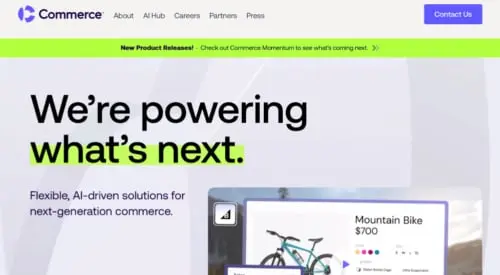
- WP Engine and Commerce Partner on WP Engine Commerce Connect: WP Engine joined forces with Commerce—the open AI-driven commerce ecosystem and parent company of BigCommerce—to launch WP Engine Commerce Connect for BigCommerce. This collaboration equips mid-market brands with a high-performance infrastructure engineered to thrive in an increasingly content-driven digital marketplace.
5. Cross-Border Trade and Payment Innovations
- Manny Pay Global Launches Global Payment Facilitator Platform: Manny Pay Global, a merchant payments enterprise co-founded by boxing legend Manny Pacquiao, launched its global payment facilitator (PayFac) platform. Built in partnership with iMerchant and powered by Adyen’s global infrastructure, the platform delivers multi-currency settlement, advanced risk management, intelligent transaction routing, and rapid merchant onboarding.
- MarketLeap Expands U.S. Operations for Global Marketplace Access: Ecommerce marketplace accelerator MarketLeap expanded its U.S. operations to help American consumer brands scale across global channels. Operating as the seller of record, MarketLeap manages end-to-end compliance, logistics, advertising, customer experience, and inventory, opening doors to European marketplaces beyond Amazon, such as Walmart, eBay, and TikTok Shop.
- Ebanx and Pagaleve Partner to Launch Pix 4x in Brazil: Cross-border payments platform Ebanx partnered with Brazilian fintech Pagaleve to introduce Pix 4x. This buy-now, pay-later (BNPL) solution integrates directly into Pix, the instant digital payment rail established by the Central Bank of Brazil. Powered by Pagaleve’s machine learning risk engine, Pix 4x instantly extends installment options to over 60 million Brazilian consumers.
- Goflow Launches USPS Direct Integration: Multichannel operating system Goflow rolled out a direct integration with the United States Postal Service (USPS). The feature grants merchants direct access to eligible USPS commercial shipping rates and services natively within the Goflow workflow. Retailers can manage orders, print labels, and track shipments while retaining their negotiated postal terms.
- PayPal and Amazon Bring BNPL to Germany and Austria: In a landmark regional expansion, PayPal and Amazon announced that eligible consumers on Amazon.de and the Amazon app can utilize PayPal Ratenzahlung (installment payments). Customers can split purchases ranging from €30 to €10,000 into structured payment terms spanning 3 to 48 months, deepening the financial flexibility available on Europe’s largest online marketplaces.
Supporting Context, Industry Trends, and Financial Metrics
The concentration of capital and technological rollouts observed this month highlights broader, undeniable shifts within the digital commerce ecosystem.
- The Rise of Agentic and Conversational Commerce: The rebrand of Netcore to Netcore.ai and the debut of Onton’s Ontology 1 point toward an inevitable evolution: search and marketing are shifting from human-managed keyword optimization to autonomous AI agents. Retailers can no longer rely solely on legacy SEO. They must optimize their digital footprints for LLMs, ensuring that AI-driven discovery engines can verify product authenticity and surface their inventory accurately.
- Capital Flows into Physical Logistics Automation: Unit’s $12 million funding round underscores the acute financial pressure warehouse operators face. With labor shortages and rising fulfillment costs straining D2C margins, software-driven inventory orchestration that works within existing warehouse boundaries offers immediate ROI without requiring capital-intensive real estate overhauls.
- Regulatory Milestones in Autonomous Delivery: DoorDash securing FAA Part 135 certification is a watershed moment for commercial drone logistics. By clearing federal regulatory hurdles, autonomous delivery is transitioning from experimental pilot programs to viable, integrated shipping options that promise to slash last-mile delivery times and urban congestion.
- Cross-Border Payments as a Conversion Driver: Partnerships like Ebanx and Pagaleve launching Pix 4x in Brazil, alongside PayPal and Amazon bringing flexible BNPL terms to German and Austrian consumers, emphasize the critical role local payment methods play in international expansion. Cart abandonment rates plummet when merchants offer trusted, localized, and flexible installment structures at checkout.
Official Statements and Industry Perspectives
Key executives and industry leaders have offered vital context regarding these market-moving announcements:

- On Drone Delivery Certification: DoorDash representatives emphasized that achieving FAA Part 135 air carrier certification validates the safety and scalability of their autonomous initiatives. Integrating DoorDash Air into their existing Labs ecosystem bridges the gap between ground-based robotics and aerial delivery.
- On Agentic Marketing: Netcore.ai leadership noted that the modern consumer expects hyper-personalized, instantaneous engagement. By deploying a workforce of seven autonomous AI agents, brands can shift from reactive campaign management to proactive, accountable customer growth models.
- On Cross-Border Financial Infrastructure: Spokespeople for Manny Pay Global highlighted that partnering with iMerchant and Adyen allows them to combine localized agility with enterprise-grade security. Merchants gain immediate access to institutional-grade acquiring infrastructure without navigating fragmented regional compliance hurdles.
Future Outlook: What Merchants Must Do Next
As these advanced technologies transition from development labs to commercial availability, ecommerce merchants must proactively adapt their operational strategies.
- Audit for GenAI Discoverability: With platforms like Parsnipp launching Smart LLM Ads and Onton prioritizing trust models, brands must audit their product data schemas. Ensuring that product information is transparent, accurately tagged, and verifiable will dictate visibility in future AI search engines.
- Embrace Multichannel Flexibility: The integration between WP Engine and Commerce, alongside Goflow’s USPS Direct connection, proves that operational agility is paramount. Merchants should adopt modular, API-first software stacks that permit seamless switching between fulfillment channels and digital storefronts.
- Localize the Checkout Experience: International expansion is no longer reserved for multinational conglomerates. Tools like MarketLeap, paired with localized payment innovations like Pix 4x and PayPal Ratenzahlung, mean that mid-market brands can capture high-growth international markets by meeting regional payment preferences out of the box.
Ultimately, the merchants who thrive in this next era of digital commerce will be those who harness automation—not merely to cut costs, but to build deeper trust, faster delivery loops, and frictionless purchasing journeys for consumers worldwide.