Executive Overview
Meta is officially broadening the footprint of its innovative creative application, Pocket, bringing the AI-driven app-building tool to users across the United States. Following an initial regional launch in Brazil last month, this expansion marks a significant milestone in Meta’s ongoing strategy to democratize software development and integrate advanced generative artificial intelligence deeper into consumer-facing social ecosystems.
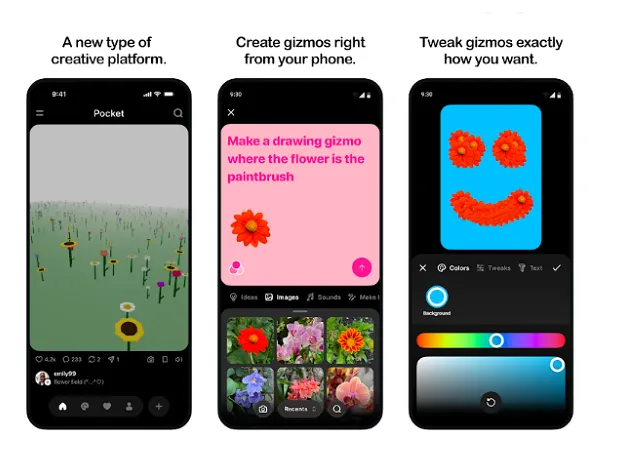
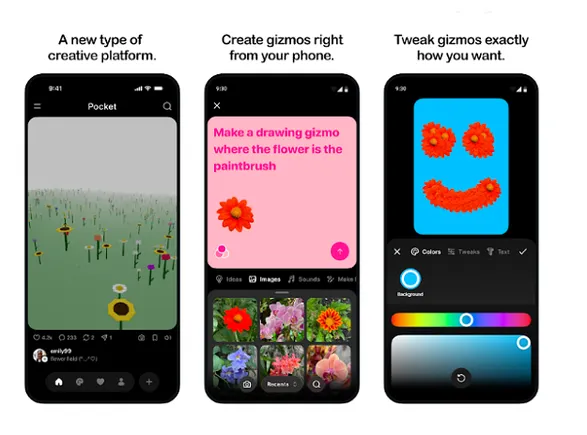
Pocket allows everyday users to design, build, and share lightweight interactive projects—affectionately termed "gizmos"—simply by entering conversational text prompts. By leveraging generative AI to handle the underlying code structures, formatting, and logic, Pocket effectively introduces mainstream audiences to the concept of "vibe coding." Users can talk or type their ideas into existence, transforming raw concepts into touchable, playable digital experiences within minutes.
This rollout is more than just a novelty feature; it is the direct product of Meta’s strategic acquisition of the startup Gizmo in March of this year. Originally launched in 2024 by former Snapchat engineers, Gizmo captured the tech industry’s attention by utilizing AI to streamline the app-creation process. Now housed under the umbrella of Meta’s ambitious artificial intelligence initiatives, the Pocket app combines the ease of AI generation with a dedicated social discovery feed. Users can scroll through, interact with, like, and comment on creations built by others, fostering a collaborative community of amateur developers and digital creators.
As Meta continues to champion its generative AI ecosystem, Pocket represents a crucial testing ground for user-generated software. While the technical barrier to coding is lowered significantly, the platform also underscores a timeless creative truth: while AI can build the machinery, the ultimate success of any interactive project still relies on human imagination and compelling conceptualization.
Detailed Chronology: From Startup Innovation to Meta’s U.S. Expansion
To fully understand the significance of Pocket’s arrival in the United States, it is necessary to trace the developmental timeline of the technology and Meta’s strategic maneuvers over the past several years.
The Origins of Gizmo (2024)
The foundation of Pocket was laid in 2024 when a team of former Snapchat engineers set out to revolutionize how lightweight software is built. Frustrated by traditional coding bottlenecks, they developed Gizmo, an application designed to let users "vibe code" apps and games into existence. The core philosophy behind Gizmo was simple: bridge the gap between imagination and execution by letting generative AI construct the foundational architecture of an application based entirely on natural language prompts.
The early iterations of Gizmo allowed users to prototype small utilities and interactive games, which could then be shared, tested, and iterated upon by a community of early adopters. This community-driven development model proved that there was a massive, untapped appetite for zero-code interactive media creation.
The Meta Acquisition (March 2026)
Recognizing the potential of conversational software generation, Meta moved quickly to secure the technology. In March 2026, industry reports confirmed that Meta had acquired Gizmo and integrated its core engineering talent into Meta’s advanced intelligence labs. This acquisition signaled a pivot in Meta’s product roadmap, moving beyond text and image generation toward interactive, functional application development powered by AI.
By absorbing the Gizmo framework, Meta positioned itself to capture the growing cultural shift toward accessible, prompt-based digital creation—a movement that promises to turn passive social media consumers into active digital producers.
International Soft Launch in Brazil (Early 2026)
Before bringing the technology to its massive domestic market, Meta utilized a strategic international rollout. Last month, the company officially launched the Pocket app in Brazil. This regional debut served as a live-fire stress test for the platform’s servers, community guidelines, and AI moderation tools.
The soft launch provided Meta’s engineering teams with invaluable data regarding user behavior, popular gizmo genres, and the overall stability of the natural-language coding engine. The positive engagement metrics observed in Brazil paved the way for the immediate greenlight for the U.S. market.
The U.S. Rollout (August 2026)
As reported by major technology outlets, Meta is now making the Pocket app widely available to all U.S. users. This expansion marks the true mainstreaming of the platform. By introducing Pocket to the U.S. audience, Meta is betting that American creators will embrace the ability to spin up custom mini-games and interactive widgets on the fly, seamlessly integrating these projects into their social streams and daily digital habits.
Supporting Context & Metrics: Understanding ‘Vibe Coding’ and the Creator Economy
To contextualize Pocket’s market potential, industry analysts are looking closely at broader technological trends, user behavior shifts, and the mechanics of the app itself.
The Rise of ‘Vibe Coding’
"Vibe coding"—a term that has rapidly gained traction across software development and tech culture—refers to a paradigm shift where humans act less as traditional programmers writing syntax and more as creative directors guiding an AI assistant. Instead of debugging lines of JavaScript or C++, creators use conversational language to describe the vibe, rules, and mechanics of what they want to build.
Pocket is designed to be the ultimate manifestation of this trend for the general public. According to the official Google Play Store description, "Pocket is a creative platform for making and sharing gizmos. A gizmo is a small interactive experience you can tap and touch… and you can make a gizmo just by describing it." This frictionless approach removes the intimidation factor of software engineering, inviting users of all technical skill levels to experiment with logic, physics, and interface design.
Anatomy of a Gizmo
What exactly can a user create with a text prompt? Pocket is primarily tailored for:
- Mini-Games: Simple arcade-style games, trivia challenges, puzzle formats, and physics-based simulations.
- Interactive Utilities: Basic calculators, decision-making spinners, visual generators, and dynamic greeting cards.
- Informational Projects: Micro-dashboards and educational flashcard decks.
These projects rely on basic formatting and structured templates generated dynamically by Meta’s underlying AI models. Once compiled, these gizmos are not siloed in a separate development environment; rather, they live natively within the app’s ecosystem.
The Social Discovery Loop
A key driver of Pocket’s anticipated engagement is its social architecture. The app features a dedicated scrollable feed filled with gizmos designed by other users.
- Community Curation: Users can browse, test, like, and comment on projects created by their peers.
- Organic Promotion: Similar to viral content on TikTok, Instagram, or Reels, successful or highly entertaining gizmos naturally rise to the top of the feed through user interaction.
- Iterative Culture: Much like its predecessor Gizmo, the platform encourages users to build upon existing ideas, remixing popular templates to create entirely new interactive experiences.
Official Statements & Industry Perspectives
While Meta continues to fine-tune its broader artificial intelligence strategy, spokespeople and tech analysts have shared insights into the strategic importance of applications like Pocket.
Industry observers note that Meta’s primary objective with Pocket is twofold: to maintain momentum in the hyper-competitive generative AI landscape and to foster deep user engagement through creation rather than passive consumption.

TechCrunch noted in its recent coverage that the launch is part of Meta’s aggressive push to make its proprietary AI tools ubiquitous across consumer touchpoints. By packaging complex language-model capabilities into an approachable, game-like interface, Meta is lowering the barrier to entry for AI experimentation.
Furthermore, former team members from Gizmo—now integrated into Meta’s advanced research divisions—have emphasized that the mission has always been to make software creation as effortless as human speech. In statements reported by Business Insider during the initial acquisition phase, engineers highlighted that the goal was to let users "speak any game or process into existence."
However, tech analysts also offer a balanced perspective on the limitations of such tools. As one AI researcher remarked, "While creation has never been simpler, coming up with a compelling, addictive, or genuinely useful concept remains as difficult as always." The AI can draft the code, but human creativity remains the ultimate bottleneck.
Future Outlook: What Pocket Means for the Future of Meta and Interactive Media
As Pocket gains traction in the United States, its long-term trajectory will likely influence how major technology conglomerates approach user-generated software and AI integration.
1. Integration into Mainstream Meta Ecosystems
A natural question for the future of Pocket is whether these interactive "gizmos" will eventually break containment from the standalone app. Given Meta’s historical playbook—such as integrating Reels into Facebook and Instagram—it is entirely plausible that successful gizmos could eventually be shared directly to Instagram Feeds, Facebook Timelines, or Messenger chats. Imagine chatting with a friend on Messenger and instantly generating a custom trivia game about a shared memory using a quick text prompt.
2. Monetization and Creator Incentives
As the creator economy matures, platforms that successfully mobilize users eventually introduce monetization frameworks. If Pocket builds a robust, highly active developer base, Meta may explore creator funds, ad-revenue sharing, or in-app purchases for advanced gizmo features. This would transform Pocket from a novelty experimental app into a legitimate economic engine for micro-developers.
3. The Evolution of AI Coding Assistants
Pocket is also a consumer-facing proof-of-concept for Meta’s enterprise-grade AI capabilities. By observing how millions of users prompt the system to build games and utilities, Meta can refine its foundational large language models (LLMs) to better understand spatial logic, user interface design, and real-time interactive rendering.
Conclusion
Meta’s U.S. expansion of Pocket represents an exciting intersection of social media, artificial intelligence, and amateur software development. By turning coding into a conversational art form, Pocket empowers a new generation of digital creators to bring their wildest interactive ideas to life. While the ultimate success of any individual gizmo will still depend on human ingenuity and imagination, the platform provides a valuable, highly engaging canvas for the future of interactive media.