Executive Overview
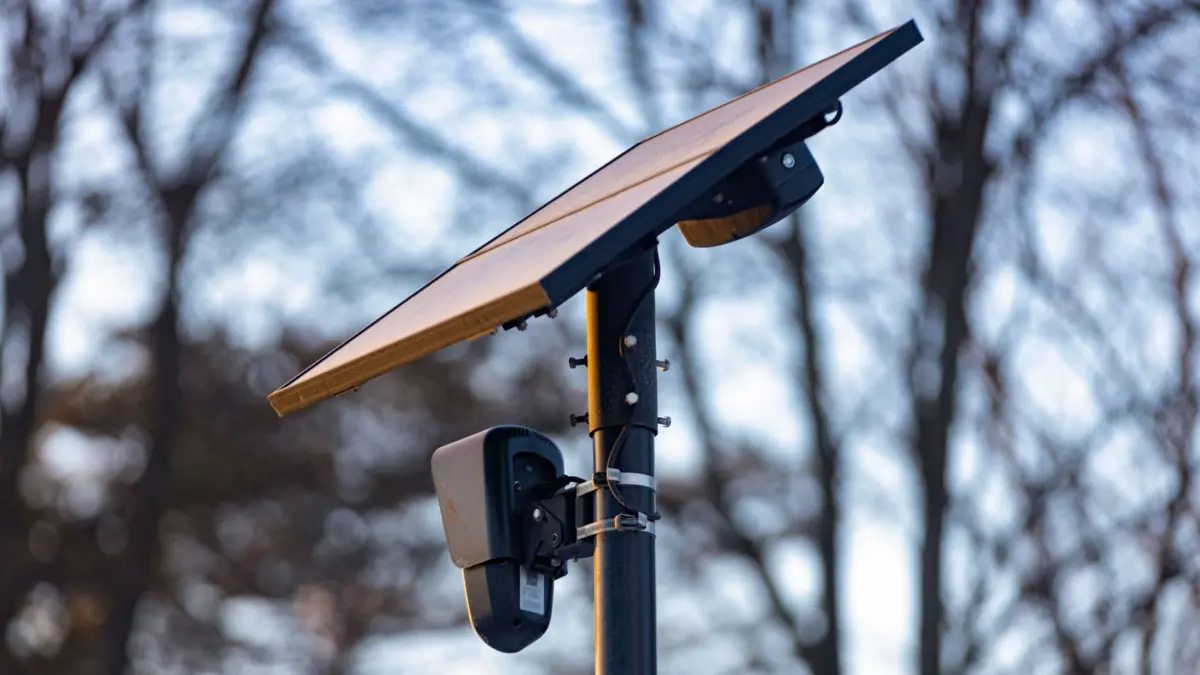
In an effort to stem a mounting wave of public backlash, regulatory pressure, and municipal contract cancellations, police-tech giant Flock Safety has announced a sweeping overhaul of its access policies for its nationwide network of automated license plate readers (ALPRs). The company, whose sprawling infrastructure of roughly 120,000 cameras blankets communities across the United States, is moving to make previously optional security features mandatory for law enforcement agencies.
The policy shift comes in the wake of high-profile investigative reports exposing systemic abuse of the technology, including instances where police officers used the vast location-tracking database to stalk, harass, and spy on romantic partners. Furthermore, civil liberties organizations, local government watchdogs, and political figures from across the ideological spectrum have raised alarms over the normalization of mass surveillance, prompting dozens of cities to sever ties with the company entirely.
While Flock’s leadership frames these new mandatory guardrails as a proactive leap forward in corporate responsibility—transitioning from optional safeguards to enforced operational standards—privacy advocates remain deeply skeptical. Critics argue that the company’s interventions rely heavily on the honor system, leave gaping compliance loopholes, and fail to address the core ethical dilemma posed by ubiquitous, warrant-free tracking. As Flock stands at a critical juncture in its corporate life cycle, the debate over its technology brings a fundamental question to the forefront of American policing: At what point does the pursuit of public safety eviscerate constitutional privacy?
Detailed Chronology: From Rapid Expansion to Crisis Management
The Rise of the Nationwide Camera Grid
Founded with the mission to "eliminate crime" through predictive data and physical security infrastructure, Flock Safety quickly established itself as a dominant force in municipal policing. By deploying high-definition cameras capable of capturing vehicle makes, models, colors, license plates, and unique characteristics (such as bumper stickers and roof racks), the company built a formidable data-gathering apparatus.
Police departments across the country integrated these feeds into a centralized search engine. This infrastructure allowed law enforcement to track the real-time movements and historical travel patterns of ordinary citizens, often without needing to secure a judicial warrant or establish individualized suspicion of a crime.
The Turning Point: Exposing Police Misconduct
The tipping point for public trust arrived through a series of meticulous journalistic investigations and civil rights audits. Most notably, an exhaustive investigative report published by The Washington Post uncovered at least 46 distinct cases in which police officers weaponized Flock’s vast network for unauthorized, personal objectives. Rather than tracking stolen vehicles or violent fugitives, officers were caught using government-funded surveillance infrastructure to stalk current and former romantic partners, monitor acquaintances, and pry into the personal lives of private citizens.
Simultaneously, the American Civil Liberties Union ( ACLU) released findings from public records requests that exposed widespread circumvention of the limited security prompts Flock had previously offered. When departments implemented optional text fields requiring officers to input a reason for their database searches, accountability checks frequently devolved into farcical mockery. In one egregious example highlighted by the ACLU, officers at an Oregon police department bypassed the prompt by entering the nonsense phrase "hehehe" more than 20 times.
The Policy Shift: Mandatory Safeguards
Faced with plummeting public confidence and the hemorrhage of municipal clients, Flock announced a series of mandatory system adjustments designed to curb unauthorized use:
- Mandatory Case Numbers: Officers are now required to input an active criminal case number before any search of the plate-reader database can be initiated. This mechanism is designed to create a verifiable paper trail linking every query to a legitimate, documented law enforcement investigation.
- Automated Auditing Tools: Introduced as an optional feature last year, Flock’s automated auditing system is now compulsory for all client agencies. The software uses algorithms to analyze search behaviors in real time, automatically flagging anomalous queries and suspicious search patterns for internal department administrators.
- Data Retention Rollbacks: Flock is formally recommending that law enforcement agencies slash their data retention windows from 30 days down to 7 days, though client agencies retain ultimate authority to override this recommendation.
- Inter-Agency Data Sharing Controls: Municipalities can now restrict external police departments from querying local camera feeds unless the search is tied to explicitly authorized criteria—such as active kidnapping investigations—while blocking access for other initiatives, such as local or federal immigration enforcement.
Supporting Context & Metrics: The Scale of the Backlash
The immediate catalyst for Flock’s policy revision is not merely isolated incidents of police deviance, but an accelerating institutional rebellion. Municipalities nationwide are increasingly pushing back against the normalization of dragnet surveillance.
Municipal Defections and Political Polarization
Estimating the exact number of cities abandoning Flock contracts remains complex, but municipal friction is undeniably widespread. An NPR analysis published earlier in the year documented at least 30 cities that had terminated or allowed their Flock contracts to lapse over privacy and immigration surveillance concerns. Grassroots activist coalitions, most notably the DeFlock movement, put the total figure significantly higher, tracking citizen-led resistance campaigns in dozens of additional jurisdictions.
The backlash has also transcended traditional political fault lines, drawing fierce criticism from both the progressive left and the populist right. High-profile conservative media figures, such as Tucker Carlson, have openly condemned the technology, warning that widespread automated license plate readers are paving the way for a digital "slave state." Concurrently, state legislatures and city councils are weighing or enacting outright bans on ALPR deployment, while other jurisdictions are pivoting away from Flock entirely to alternative vendors within the public-safety tech sector, such as Axon and Motorola.
Despite these high-profile defections, Flock leadership maintains that these losses represent a minute fraction of its massive footprint. The company currently counts roughly 5,000 law enforcement agencies nationwide among its active contractors.
The Civil Liberties Critique: Scale Versus Abuse
According to Chad Marlow, senior policy counsel at the ACLU and a prominent critic of the ALPR industry, framing the crisis solely around rogue officers misses the forest for the trees. While personal stalking and harassment by police officers are deeply alarming, Marlow argues that the primary danger of Flock’s technology is its unprecedented scale.
"In America, you only get to investigate someone if you think they’ve done something wrong," Marlow notes.
As license plate readers proliferate, law enforcement agencies acquire the structural capacity to bypass this foundational constitutional principle. By amassing petabytes of location data on millions of innocent drivers who have committed no infraction, police can reconstruct historical movements and map out social networks without ever establishing probable cause or acquiring a warrant.
Marlow poses a fundamental utilitarian question that animates the entire privacy debate: “Is it worth it to catch a certain number of criminals, return a certain number of stolen cars, to eviscerate Americans’ privacy?”
Official Statements and Corporate Defense
Flock CEO Garrett Langley paints a starkly different picture of the forces buffeting his company, attributing the crisis not to systemic overreach, but to a communications failure and widespread misinformation campaigns.
The "Misinformation" Narrative
In an interview with MIT Technology Review, Langley asserted that the primary driver behind lost municipal contracts is a misunderstanding of what Flock’s technology can and cannot do.
"If you look at the main reason we’ve lost customers, it’s misinformation," Langley said.
According to Langley, critics frequently fuel public panic by falsely claiming that Flock’s camera network incorporates facial recognition capabilities or that the company monetizes its collected data by selling it to commercial brokers and third-party advertisers—practices the company explicitly denies engaging in.
However, this charge of misinformation cuts both ways. Civil liberties watchdogs and academic researchers have repeatedly published documented instances in which Flock representatives allegedly mischaracterized the technical capabilities and data-sharing scopes of their products during presentations to city councils, police commissions, and municipal decision-makers. Critics argue that the company has historically relied on obfuscation to secure local approvals.
A Pivot from Optionality to Enforcement
Addressing the philosophical shift behind the newly announced guardrails, Langley acknowledged a fundamental change in the company’s corporate posture:
"Our change in stance is more of one from building things that are optional to building more confidence that as a technology company we have a responsibility to enforce guardrails, not provide optionality."
Despite this rhetorical pivot, the structural reality of the new rules leaves significant room for evasion. Because Flock’s software does not independently verify the legitimacy of the criminal case numbers entered by officers—nor does the company audit the underlying police reports—determined users can theoretically bypass the mandatory text fields just as easily as they previously bypassed voluntary prompts. Furthermore, while the automated auditing tool promises to catch suspicious behavior, Flock has declined to share specific metrics regarding the algorithm’s false-positive or false-negative rates, nor has it permitted independent, third-party researchers to audit the software’s efficacy.
Future Outlook: A Critical Crossroads for Public Safety Tech
As Flock Safety navigates this turbulent chapter, the company finds itself at a defining crossroads. The institutional tension between technological solutionism and constitutional liberties has never been more acute.
Civil rights advocates acknowledge that mandatory case numbers and automated audit trails represent a step in the right direction, but they dismiss these measures as superficial band-aids on a fundamentally invasive architecture. True reform, experts argue, would require radical transparency, independent academic auditing, mandatory judicial warrants for historical database queries, and strict limits on data aggregation.
Whether Flock’s incremental concessions will be sufficient to appease an increasingly skeptical public—or whether they will merely serve as a temporary delay against a rising tide of municipal bans and regulatory clampdowns—remains to be seen. What is clear, however, is that the era of unchecked, frictionless expansion for mass surveillance tech in America is facing its most formidable reckoning to date. As Chad Marlow observed of the company’s begrudging concessions:
"Flock has come to the table because this incredible, unprecedented nationwide uprising against their company has scared them. But at the same time, they are just absolutely unwilling to make the actual changes they need to make in order to legitimately respond to these concerns. So this is the best that the company is willing to do."