Executive Overview
For decades, the standard playbook for corporate publishing relied on volume. Content marketing teams churned out a ceaseless stream of blog posts, whitepapers, social media snippets, and video assets, crossing their fingers that sheer output would magically attract prospective buyers. Today, that scattershot approach is an expensive liability.
A content marketing ecosystem only generates genuine, direct business value when a team distributes assets through data-backed channels designed to reach buyers at the precise moment of intent. Publishing assets without connected measurement leads directly to wasted operational spend, demoralized creative teams, and reams of unread content that languish in digital archives.
Enter modern marketing business intelligence (BI). By serving as the connective tissue between audience research, multi-channel distribution networks, and advanced performance analytics, BI bridges the historic gap between creative output and financial outcomes. Industry leaders are no longer guessing what works; they are deploying unified data systems that show, in real-time, how every piece of content influences the enterprise pipeline. This article investigates the structural mechanics of building an analytics-driven content ecosystem, exploring the tools, methodologies, and strategic shifts required to turn content marketing from a cost center into a predictable revenue engine.
Detailed Chronology: The Evolution from Guesswork to Data-Backed Content Operations
To understand where modern marketing stands, it is essential to trace how enterprise organizations arrived at the current imperative for data-driven content operations.
Phase 1: The Era of Intuition and Vanity Metrics (Early 2010s)
In the early days of corporate blogging and social media marketing, success was measured by volume and surface-level engagement. Teams tracked page views, unique visitors, retweets, and "likes"—metrics that looked impressive in quarterly slide decks but shared virtually no correlation with bottom-line revenue. Content creation was dictated by internal stakeholders’ pet projects or the latest fleeting internet trend rather than concrete consumer demand. Marketing silos meant that creative teams rarely spoke to sales operations, leaving a vast canyon between the traffic generated and the actual deals closed.
Phase 2: The Multi-Channel Expansion and Data Fragmentation (Mid-to-Late 2010s)
As digital ecosystems matured, brands rushed to establish a presence everywhere. Companies built out owned websites, corporate newsletters, LinkedIn feeds, Instagram channels, and eventually, virtual event platforms.
While this multi-channel expansion broadened brand reach, it introduced a severe operational headache: data fragmentation. Analytics lived in isolated silos—Google Analytics tracked website traffic, email service providers measured newsletter open rates, and social media dashboards reported on platform-specific engagement. Marketers lacked a unified view of the customer journey. Evaluating each channel in isolation created conflicting narratives about campaign performance, making it nearly impossible to allocate budgets efficiently or prove ROI to skeptical chief financial officers.
Phase 3: The Rise of Marketing Business Intelligence and AI Augmentation (2020–Present)
Faced with tightening economic conditions and soaring customer acquisition costs, enterprise leadership demanded accountability. The past five years have witnessed the mainstream adoption of marketing business intelligence platforms. Organizations began unifying disparate data sources—CRM systems, marketing automation platforms, customer service logs, and web analytics—into centralized dashboards.
Simultaneously, artificial intelligence and machine learning entered the mainstream, shifting analytics from reactive reporting to predictive modeling. Today, mature content operations rely on automated workflows and continuous data feedback loops. Brands no longer look at content as a standalone creative exercise; they treat it as an interconnected, measurable supply chain where every asset is tracked from its initial conception to its ultimate impact on pipeline velocity.
Supporting Context & Metrics: The Cost of Flying Blind
The transition from intuition-based content creation to data-backed ecosystems is not merely a theoretical preference; it is a financial necessity driven by hard data.
The B2B Effectiveness Crisis
According to comprehensive industry research published by the Content Marketing Institute (CMI, 2025), a staggering 58% of B2B marketers describe their overall strategy as only moderately effective. When researchers dig into the root causes of this mediocrity, a clear pattern emerges: the vast majority of underperforming organizations produce assets without clear, quantifiable goals or foundational buyer data. They publish content because an editorial calendar demands it, not because real-time user signals indicate a market need.
This disconnect results in immense budgetary waste. When organizations generate unread content, they burn capital on writing, design, distribution, and promotion with zero return.
The AI Imperative in Data and Analytics
To combat this inefficiency, enterprises are rapidly automating their analytical processes. Gartner research indicates that 95% of data-driven business decisions will be automated or augmented by AI by 2025 (Gartner, 2024).
This shift fundamentally changes the role of the modern marketer. Instead of spending weeks manually exporting CSV files, cleaning data, and building static pivot tables, marketing professionals utilize automated dashboards that aggregate cross-platform data into a single, real-time view. This technological leap allows teams to spot micro-shifts in audience behavior before those shifts negatively impact quarterly revenue numbers.
Translating Insights into Operational Excellence: Real-World Parallels
High-performing organizations across industries have long understood that operational data must directly inform product and content delivery:
- Spotify: The audio streaming giant continuously analyzes real-time user listening habits, skip rates, and search queries to curate hyper-personalized daily playlists. This operational data informs both the user interface and the platform’s content discovery algorithms, proving that responsive data collection drives customer retention.
- Sephora: In the retail sector, Sephora seamlessly synchronizes email marketing campaigns with in-app push notifications and loyalty reward updates. By tracking how these touchpoints perform in tandem rather than in isolation, the brand ensures that customer messaging remains consistent across every digital and physical channel.
- Salesforce: Enterprise software leaders rely on centralized data architectures to keep thousands of sales enablement documents organized, searchable, and up to date. Structured marketing data management allows these firms to audit assets efficiently, identifying outdated articles that require updates, consolidation, or retirement, thereby saving thousands of production hours annually.
Official Statements & Industry Perspectives
As the digital marketing landscape matures, thought leaders and enterprise executives are increasingly vocal about the necessity of aligning content strategies with rigorous business intelligence.
"The era of publishing content for the sake of filling an editorial calendar is officially over," notes a leading enterprise data strategist. "If your content marketing team cannot draw a straight, mathematically verifiable line from a published article or whitepaper to an influenced pipeline opportunity, you are simply subsidizing an expensive digital hobby. Modern business intelligence forces marketing to speak the universal language of the enterprise: revenue, velocity, and efficiency."
Industry analysts emphasize that the integration of marketing data is no longer the exclusive domain of data scientists. Usable insights must be democratized across the entire organization.
"When audience insights, distribution networks, and performance analytics operate as one aligned system, marketing ceases to be a reactive department," explains a principal research director specializing in B2B marketing technologies. "Automated dashboards and AI-augmented insights allow creative teams to experiment intelligently. They can see, within hours of a campaign launch, whether a specific angle resonates with high-value accounts, allowing them to double down on what works and pivot away from wasted spend immediately."
Furthermore, experts stress that content governance is just as important as content creation.
"Building a scalable ecosystem means recognizing that old, unmeasured content is dead weight," warns a veteran marketing operations consultant. "Structured data management allows companies to audit their libraries continuously. By understanding which resources actively shorten the sales cycle, organizations can repurpose top-performing assets, protect their brand messaging, and maximize the ROI of every dollar spent on content production."
Future Outlook: Building a Scalable, Data-Driven Content Ecosystem
As we look toward the future of enterprise marketing, what steps must leaders take to build sustainable, compounding content ecosystems? The path forward requires a systematic approach built upon four foundational pillars.
1. Start With Concrete Audience Insights
High-performing campaigns must begin with hard customer data rather than subjective guessing games. Organizations should systematically analyze buyer demographics, search behaviors, and past purchase history to identify topics that solve immediate customer pain points.
In B2B organizations, business intelligence tools are vital for highlighting which whitepapers, case studies, or webinars actually convert prospects into active, qualified deals. By grounding your editorial calendar in real user signals rather than internal assumptions, you eliminate the budget wasted on ignored publications.
2. Distribute Strategically Across Connected Channels
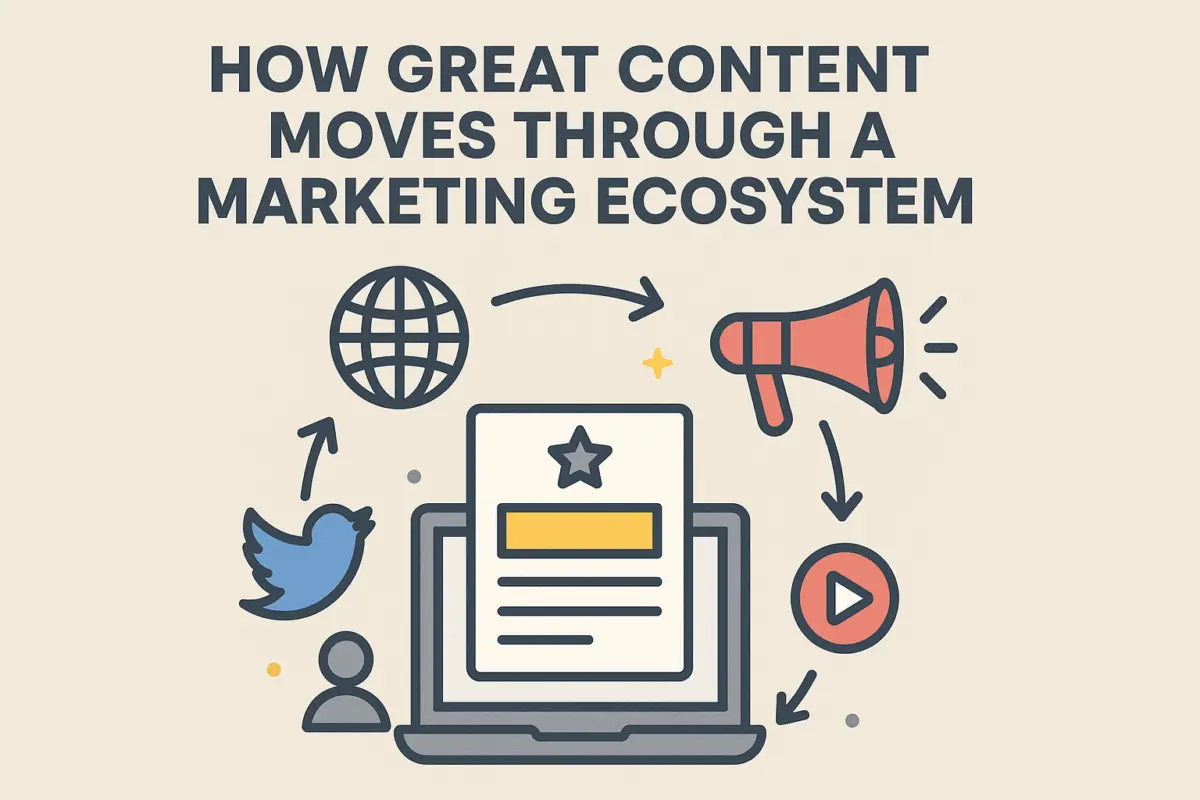
Creating a brilliant asset is only half the battle. Once content goes live, it must be distributed across the exact digital channels your target buyers frequent. Owned websites, corporate newsletters, social feeds, and virtual events each serve distinct, complementary roles in moving prospects down the marketing funnel.
Applying business intelligence allows you to track how individual platforms perform in tandem. Implementing comprehensive channel marketing solutions helps unify messaging across multiple distribution networks while keeping reporting consistent. Every channel contribution must connect directly to buyer engagement and operational efficiency.
3. Measure Beyond Vanity Metrics
To prove true business impact, leadership teams must look past simple page views and social media likes. Sustainable measurement requires a relentless focus on metrics tied directly to pipeline revenue, including:
- Sales-qualified leads (SQLs) generated by specific assets
- Conversion rates across different stages of the buyer journey
- Customer acquisition costs (CAC) influenced by organic content
- Pipeline velocity (how quickly content-engaged prospects move from initial contact to closed-won deals)
By leveraging automated content performance analytics, decision-makers gain instant visibility into which assets generate tangible sales, shifting reporting from static historical reviews to predictive insights.
4. Cultivate Continuous Improvement Through Data Management
Every publishing cycle yields a wealth of behavioral data that should be used to sharpen the next campaign. By evaluating search queries, form submissions, and customer service logs, teams can easily identify critical gaps in their current resource library.
Structured marketing data management enables teams to audit assets efficiently. Outdated articles can be systematically updated, consolidated, or retired, keeping the corporate repository clean and authoritative. Maintaining a well-structured repository makes top-performing assets easier to discover and reuse, preserving messaging quality while drastically reducing production hours.
Conclusion
Great marketing is no longer an art form detached from science. It succeeds when content moves through a structured, data-informed workflow that unites audience research, multi-channel distribution, and rigorous performance tracking. By breaking down internal silos and embracing marketing business intelligence, organizations can build sustainable content ecosystems that deliver compounding value over time—turning every published asset into a measurable building block for long-term enterprise growth.