Executive Overview
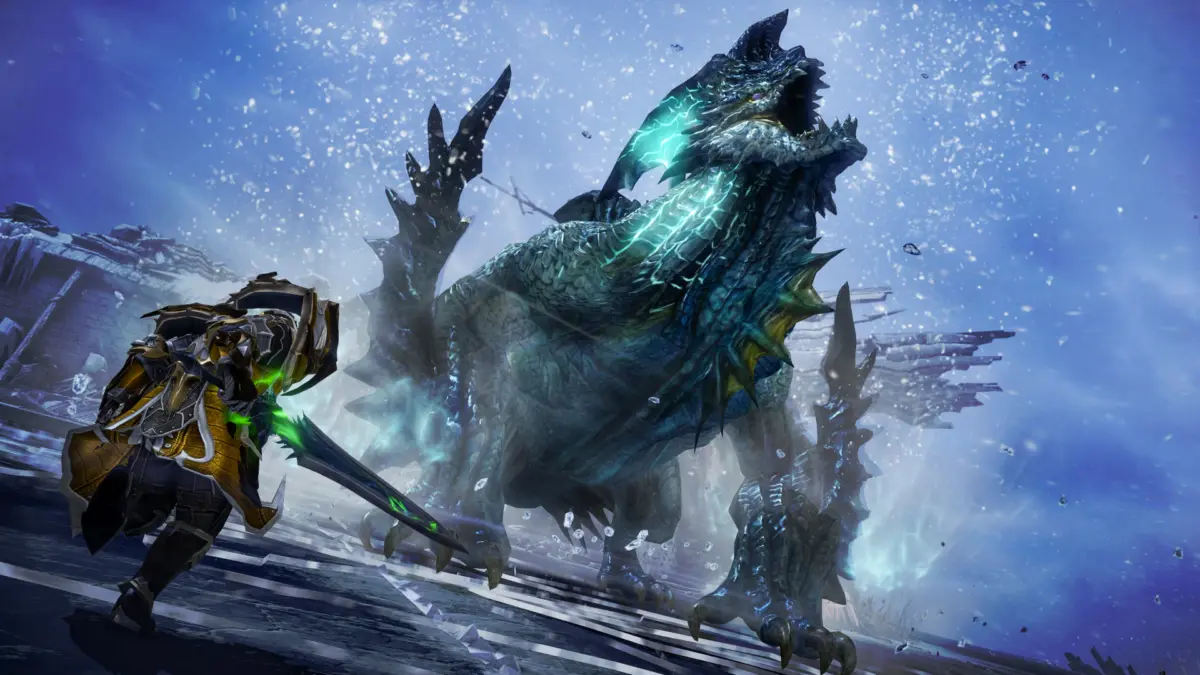
In a sweeping strategic retreat that signals a massive contraction of its footprint in the AAA PC and console publishing spaces, Amazon is officially parting ways with two of its cornerstone massively multiplayer online (MMO) titles. By early 2027, Amazon Game Studios will completely relinquish its publishing duties for Lost Ark and Throne and Liberty, returning global operational control to their respective original developers, Smilegate and NC (NCSoft).
This coordinated transition marks a watershed moment for Amazon’s gaming division. What began as a high-budget, multi-billion-dollar push to establish Amazon as a titan in traditional video game development and publishing has steadily deteriorated into a systematic dismantling of its first-party and major third-party portfolio. The announcements concerning Lost Ark and Throne and Liberty do not arrive in a vacuum; they follow closely on the heels of the cancellation of active development on New World: Aeternum, executive departures, sweeping layoffs, the downscaling of the Luna cloud gaming service, and the abrupt termination of multiple external publishing partnerships.
For players of Lost Ark and Throne and Liberty, both Smilegate and NC have reassured communities that live service operations will continue uninterrupted under their direct stewardship. However, for the broader video game industry, Amazon’s ongoing retreat paints a sobering picture of the perils tech conglomerates face when attempting to navigate the notoriously volatile, high-stakes waters of AAA game development and global publishing.
Detailed Chronology: The Unraveling of Amazon’s Gaming Ambitions
To fully understand the weight of Amazon’s decision to return Lost Ark and Throne and Liberty to their creators, one must examine the rapid, cascading sequence of events that has fundamentally reshaped Amazon Game Studios over the past several quarters.
The Rise and Stall of Amazon’s Publishing Push
Amazon entered the traditional gaming market with staggering financial backing, setting out to prove that the e-commerce and cloud computing giant could leverage its colossal resources—specifically Amazon Web Services (AWS) and Twitch—to dominate interactive entertainment. After early stumbles with proprietary titles like Crucible, the company found its footing primarily through publishing deals for established external MMOs, most notably Smilegate’s Lost Ark, which launched globally to massive concurrent player counts in early 2022.
Buoyed by that initial success, Amazon locked in a major publishing agreement with South Korean gaming powerhouse NC for the sprawling fantasy MMO Throne and Liberty, which eventually saw a global rollout under Amazon Game Studios’ banner. Internally, Amazon also leaned heavily on its proprietary, internally developed MMO, New World, pushing out major overhauls and expansions like New World: Aeternum in an attempt to capture console and PC audiences alike.
The Turning Point: Executive Departures and Internal Memo Shocks
The first major tremor in Amazon’s gaming hierarchy occurred with the departure of Amazon Game Studios boss Christoph Hartmann. Hartmann’s exit served as a catalyst for a sweeping internal evaluation. With leadership shifting, the company began quietly retreating from the traditional PC and console video game space, prioritizing its cloud gaming infrastructure, Luna, instead.
Just months after Hartmann’s departure, however, Amazon’s commitment to Luna itself wavered when the corporation announced it was downscaling the video game streaming service.
The most definitive blow to Amazon’s first-party ambitions came at the end of last year, when Amazon officially ended active development on New World: Aeternum. Around that same time, Steve Boom, Vice President of Amazon Audio, Twitch, and Games, circulated a candid internal memo to staff. Boom revealed that Amazon had made the "difficult decision to halt a significant amount of our first-party AAA game development work," specifically targeting the resource-heavy MMO genre within Amazon Game Studios.
In that same communication, Boom attempted to steady the waters by reassuring employees and stakeholders that Amazon remained fully invested in its role as the global publisher for Throne and Liberty and Lost Ark. Yet, barely a year later, even those publishing commitments have completely dissolved.
The Domino Effect Across the Portfolio
Amazon’s retreat from traditional publishing has triggered a cascade of project cancellations and studio disengagements across the industry:
- King of Meat: Amazon shuttered its user-generated content (UGC) dungeon brawler just six months after its initial launch.
- Maverick Games: Amazon quietly severed its ties with Maverick Games, ditching an anticipated open-world driving title that had been heavily anticipated by racing enthusiasts.
- Crystal Dynamics: Collaborations surrounding the upcoming Tomb Raider titles—published by Amazon and developed by the Embracer-owned studio Crystal Dynamics—have faced ripples of instability amid a continuous, steady stream of layoffs at Crystal Dynamics.
The return of Lost Ark and Throne and Liberty is, therefore, the final, logical chapter of Amazon’s systematic exit from the high-risk, high-overhead publishing ecosystem of modern AAA gaming.
Supporting Context & Metrics: The Anatomy of MMO Publishing Transitions
Transitioning a live-service MMO with a massive global player base from one publisher to another is an exceptionally delicate, logistically complex undertaking. Understanding the mechanics behind these handovers illuminates why both Smilegate and NC view these moves as necessary, if daunting, milestones.
The Throne and Liberty Transition (Target: Q4 2026)
By the end of the fourth quarter of 2026, the global publishing service for Throne and Liberty will officially transition from Amazon Game Studios to NC’s proprietary online publishing infrastructure.
To ensure continuity, NC is actively collaborating with FirstSpark Games, an internal NC studio, to unify the fragmented global audience under a single, streamlined online service. Maintaining data integrity, managing cross-region server infrastructures, handling account migrations, and honoring regional pricing and community management standards require monumental engineering and operational efforts. By bringing publishing back in-house, NC aims to eliminate intermediary bottlenecks, allowing for tighter feedback loops between the core development teams in South Korea and the global player base.
The Lost Ark Wind-Down and Handover (Target: Early 2027)
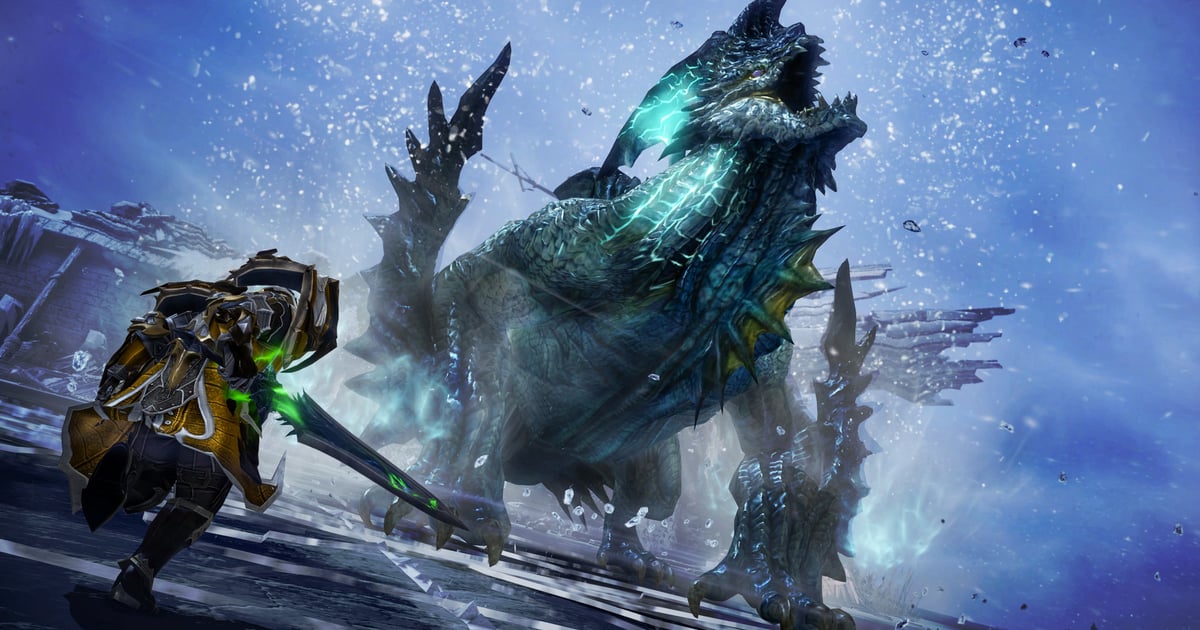
Amazon will officially conclude its live service operations for Lost Ark in early 2027, at which point Smilegate will take over direct operations in the West.
Over the years, managing Lost Ark in Western markets required immense localization efforts, server load management, anti-cheat implementations, and synchronization with the game’s faster-paced Korean update cadence. While the transition will inevitably spark questions regarding account safety, community management, and future content roadmaps, Smilegate has framed the transition as a positive milestone that will ultimately benefit the game’s long-term health.
Broader Industry Pressures
Amazon’s retreat mirrors a broader macroeconomic reality sweeping the video game industry. As development costs soar, inflation impacts consumer spending, and player attention increasingly fractures among a handful of everlasting live-service giants (such as Fortnite, Roblox, and League of Legends), traditional publishers are growing fiercely risk-averse.
The financial viability of running multiple capital-intensive, externally sourced MMOs no longer aligns with Amazon’s core corporate strategy, particularly as Big Tech companies face mounting shareholder pressure to streamline operations, cut unprofitable experimental divisions, and focus strictly on high-margin core competencies (such as cloud computing and e-commerce).
Official Statements
The companies involved have released carefully crafted statements addressing the transitions, balancing expressions of gratitude for past collaboration with enthusiasm for future autonomy.
FirstSpark Games and NC
FirstSpark Games CEO Moonyoung Choi emphasized the mutual respect built during the partnership while underscoring the strategic logic of reclaiming direct control:
"Amazon Game Studios has been an excellent partner, and we’re grateful to have launched and maintained our MMO thus far with their team. Taking a more direct role in global publishing makes so much sense for us, and so we’re thrilled to lead the next chapter of Throne and Liberty directly as NC."
NC’s leadership is betting that direct oversight will empower them to communicate more authentically with Western fans, roll out localized updates more efficiently, and align in-game economies without corporate layers slowing down decision-making processes.
Smilegate
Smilegate echoed a similar sentiment regarding Lost Ark, paying tribute to the behind-the-scenes labor that sustained the game through its Western launch and subsequent expansions:
"To every developer, community manager, support specialist, localization expert, and team member who worked behind the scenes on both sides of this partnership: thank you. Your dedication, late nights, and genuine passion made this game what it was."
Smilegate characterized the transition back to its own internal publishing umbrella as a "positive outcome" for players, promising a seamless handover designed to preserve community trust and continuity.
Amazon Game Studios’ Silence
Notably, leadership at Amazon has maintained a relatively muted public posture regarding the specific details of these handovers, letting the operational timelines and the prior restructuring memos speak for themselves. The silence underscores the quiet, pragmatic dismantling of an expensive gamble that simply failed to yield the transformative returns Amazon’s executive board originally envisioned.
Future Outlook: What Lies Ahead for Players, Developers, and Amazon?
As the industry looks toward the 2026 and 2027 transition windows, several critical questions remain regarding the future of these games, their respective studios, and Amazon’s place in the entertainment ecosystem.
For Throne and Liberty and Lost Ark Players
For the average gamer logging into Throne and Liberty or Lost Ark, the immediate impact will likely be minimal as operational handovers are planned years in advance. However, transitions of this scale always carry inherent anxieties.
- Will regional server populations remain stable?
- How will account data, purchased bundles, and progression be transferred?
- Will community management and customer support maintain their current standards during the multi-month migration phases?
Both Smilegate and NC have pledged transparency, but executing a flawless technical migration across millions of accounts remains a formidable hurdle.
For the Independent Developers
By reclaiming their intellectual properties, Smilegate and NC regain total sovereignty over their monetization models, patch schedules, and community outreach. Without a massive corporate intermediary dictating Western marketing beats, these developers can pivot toward community-first development strategies that resonate more deeply with hardcore MMO enthusiasts.
For Amazon Game Studios
Amazon’s retreat from AAA publishing raises existential questions about the viability of tech giant-backed gaming divisions that lack organic studio culture. Amazon’s strategy relied heavily on buying market share through massive capital outlays, external publishing contracts, and licensed intellectual properties. When those ventures faced the inevitable turbulence of game development, the corporation’s patience wore thin.
Today, Amazon Game Studios appears to have scaled back its ambitions to safer, more manageable parameters—perhaps focusing on smaller-scale internal projects, utilizing AWS to support third-party developers, or drifting away from traditional game production entirely.
The early 2027 departure from Lost Ark and Throne and Liberty closes the book on Amazon’s grand experiment as a major AAA publisher. For an industry that watched the e-commerce giant enter the ring with bottomless pockets, this definitive retreat serves as a powerful reminder: in the complex, creative world of video games, financial capital alone cannot buy enduring success.