By James Walker
Executive Editor, Data Center Knowledge
August 11, 2026
6-min read
Executive Overview
Amazon Web Services (AWS) has officially withdrawn its application for a sprawling, 2.5-million-square-foot data center complex in Calvert County, Maryland. The high-profile cancellation marks a dramatic escalation in the growing friction between hyperscale technology giants and local communities across the United States.
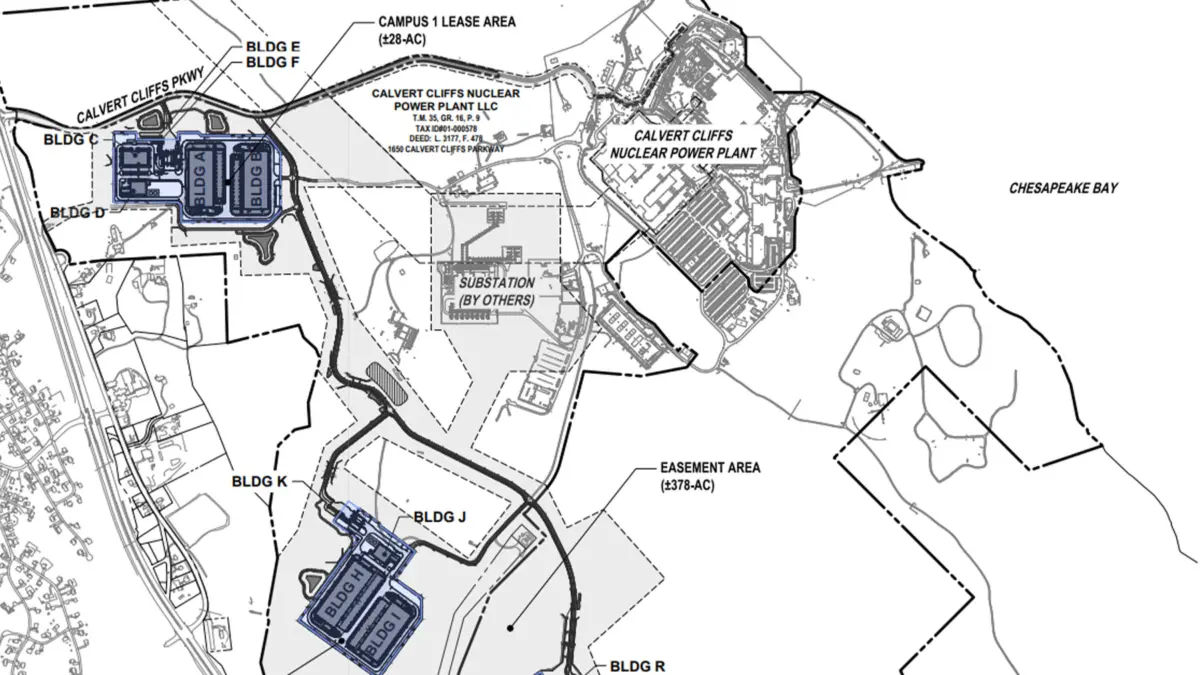
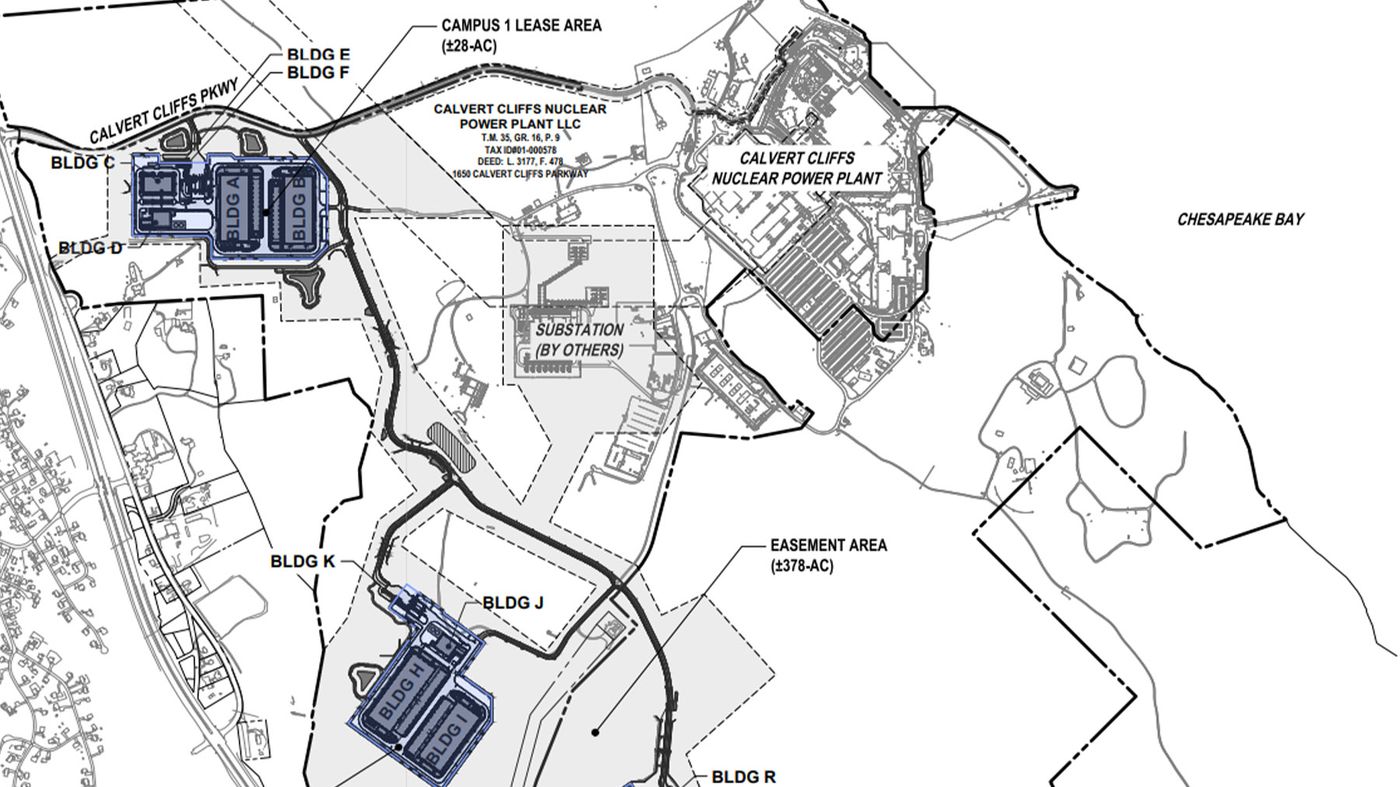
Initially proposed on May 18, the project envisioned an unprecedented co-location strategy: three distinct campuses spread across 200 acres, housing eight heavy-industrial data center buildings. The complex would have drawn up to 500 megawatts (MW) of electricity directly from the adjacent Calvert Cliffs Nuclear Power Plant, operated by Constellation Energy.
Yet, despite securing an emissions-free, highly coveted energy supply along the western shore of the Chesapeake Bay, the project crumbled under the weight of surging community pushback, political realignments, and shifting municipal priorities. The withdrawal coincides with Calvert County officials moving forward with a proposed six-month moratorium on data center site plan approvals.
As local resistance hardens from Maryland to Virginia and New York, industry experts warn that access to clean power is no longer enough to insulate data center developers from the rising tide of political risk and public skepticism.
Detailed Chronology of a Canceled Megaproject
The trajectory of the Calvert County project highlights how quickly regulatory and political landscapes can shift for digital infrastructure developments.
- May 18: AWS formally submits its site development application to Calvert County. The proposal outlines a massive 500 MW infrastructure investment designed to tap directly into the nuclear capacity of the Calvert Cliffs facility.
- June 23: The geopolitical underpinnings of Calvert County experience a seismic shock during the Republican primary elections. Three incumbent county commissioners who had previously opposed placing a freeze on data center developments—including Commission President Todd Ireland, Vice President Mark Cox, and Commissioner Earl Hance—suffer decisive defeats. The electoral sweep signals an undeniable voter mandate against unchecked heavy-industrial data expansion.
- August 4: Calvert County formally announces that AWS has withdrawn its application. Simultaneously, the Board of County Commissioners schedules a public hearing for August 18 to consider a temporary six-month moratorium on all data center site plan approvals.
- August 11: AWS confirms the cancellation to Data Center Knowledge, citing overarching infrastructure strategies, while local and national analysts begin dissecting the broader implications for the hyperscale sector.
When asked about the sudden reversal, an AWS spokesperson offered a measured corporate rationale: "After careful evaluation, Amazon has decided not to move forward with the proposed site development in Calvert County at this time. We regularly evaluate infrastructure opportunities based on a range of factors, including development timelines, operational requirements, and our ability to deliver quickly for customers."
Meanwhile, a Calvert County Government spokesperson explained the rationale behind the impending regulatory pause: "The proposed ordinance would establish a temporary moratorium to allow the county time to review and consider zoning text amendments related to data centers and heavy industrial use conditions, as well as complete any necessary studies or analysis."
The Rising Tide of Community Resistance
While neither AWS nor local municipal officials explicitly attributed the cancellation to grassroots activism, the timing speaks volumes. Opposition to the Calvert Cliffs project was swift, highly organized, and vocal. A local petition hosted on Change.org calling for a data center pause and moratorium quickly amassed over 10,000 signatures—a substantial figure in a rural-suburban county.
Alan Howard, an analyst at Omdia, noted that the simultaneous announcement of the withdrawal and the county’s moratorium hearing highlights a new reality for infrastructure planners.
"The timing is interesting that the AWS cancellation was announced the same day as a public hearing on a data center moratorium by Calvert County scheduled for August 18th," Howard told Data Center Knowledge. "The AWS Calvert County project is another sign of how data center operators will pivot to a strategy of cutting their losses and simply moving on. The time, effort, and investment are just not worth it; lessons learned the hard way."
This localized defeat is far from an isolated incident. Across the country, data center developers are running into an unprecedented wall of organized resistance:
- Prince William County, Virginia: In July, QTS withdrew its staggering $30 billion Digital Gateway project following years of intense community pushback and legal challenges.
- New York and California: Numerous municipalities and states have enacted strict legislative roadblocks, such as New York’s state-level pause on projects exceeding 50 MW and California cities passing voter-enacted data center bans.
- Worcester County, Maryland: AWS faces a parallel setback on Maryland’s Eastern Shore, where a 12-month permit moratorium directly impacts its proposed cable landing station in Ocean City.
Data compiled by Data Center Watch reveals that during the first three months of 2026 alone, roughly 75 major data center projects representing more than $130 billion in cumulative capital investment have been delayed, scaled back, or outright canceled—largely driven by organized local opposition and political friction.
The Nuclear Siting Paradox
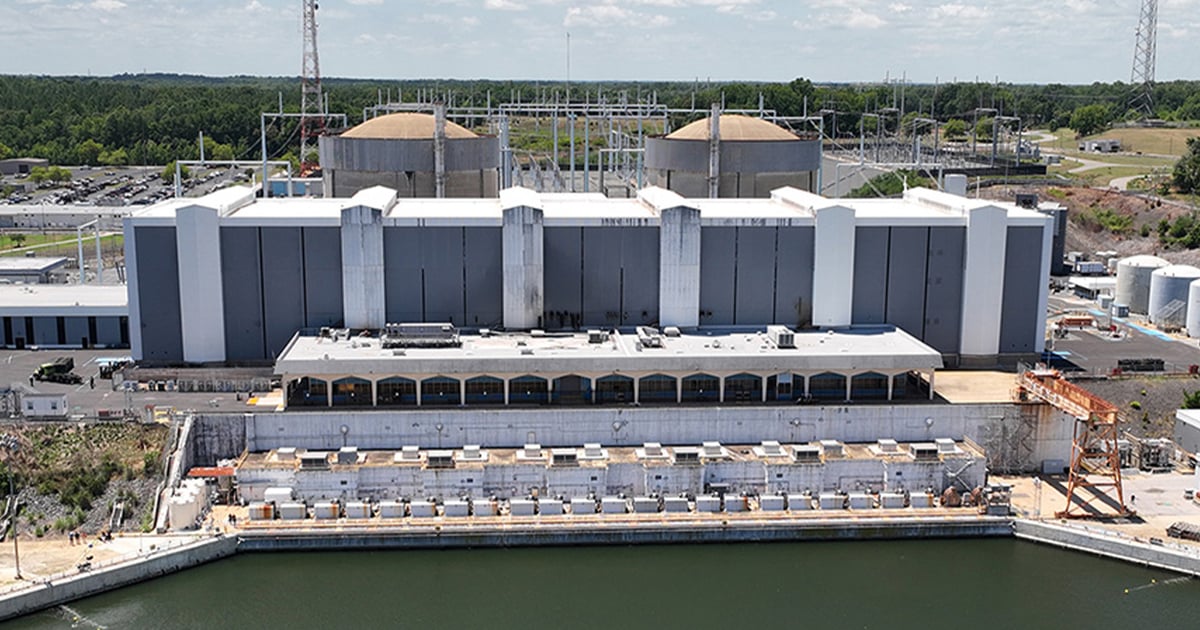
One of the most compelling elements of the abandoned Calvert County project was its proximity to the Calvert Cliffs Nuclear Power Plant. For years, tech giants hunting for massive, reliable, and carbon-free power to fuel energy-hungry artificial intelligence (AI) workloads have gravitated toward nuclear facilities.
Siting data centers directly beside nuclear plants was widely considered a masterstroke of logistical planning—a way to bypass overloaded transmission grids and secure dedicated baseload energy. However, the demise of the Calvert Cliffs project shatters the illusion that guaranteed power can insulate a developer from local politics.
"Siting next to a nuclear power plant has been viewed as a safe bet so far, but data center projects are now a bullseye in the game of politics, and I’m afraid we are in early innings," Howard warned. He pointed out that what started years ago as isolated local skirmishes has evolved into a widespread movement.
"The data center industry is now faced with a perception problem that the nuclear industry has battled for decades," Howard added. "The problem is no longer solvable through simple PR, so site selection is a new game, and a compelling community engagement plan is now the first priority if there is a hint of available power."
Broader Industry Perspectives: Bridging the Divide
The hurdles facing data center developers extend far beyond traditional zoning disputes. According to Lee Feldman, a senior advisor for local government strategy at Zencity, four primary drivers are fueling intense community pushback:
- Unprecedented Scale: Hyperscale campuses are expanding into massive industrial complexes that dwarf traditional commercial developments.
- Accelerated Timelines: Developers often push projects through planning phases faster than local municipalities are equipped to handle.
- Transparency Deficits: A perceived lack of clear, upfront communication regarding environmental, water, and noise impacts.
- AI Anxiety: Heightened public unease regarding the rapid, opaque expansion of artificial intelligence infrastructure and its societal trade-offs.
These factors have pushed data center development well outside the traditional regulatory frameworks that local governments were originally designed to manage.
Industry leaders are recognizing that operational secrecy and reactive public relations are no longer viable strategies. Bill Jabjiniak, senior vice president of national community and government relations at EdgeCore Digital Infrastructure, emphasized the necessity of early, transparent dialogue in a recent op-ed for Data Center Knowledge.
"Trust is earned when data center projects align with local priorities," Jabjiniak noted. "Residents want to understand how data centers will impact their neighborhoods after construction. Local leaders want to see long-term value. Businesses want growth that is responsible and sustainable. That level of transparency doesn’t happen overnight."
Future Outlook: What Next for AWS and Maryland?
Despite bowing out of Calvert County, AWS maintains that its broader economic footprint in Maryland remains secure. The company has invested more than $20 billion in the state since 2010, fostering an ecosystem that supports over 23,000 direct employees and 10,000 indirect jobs.
"We explore many potential locations, but we move forward only where the conditions support responsible development, community priorities, and lasting value," an Amazon spokesperson emphasized. "This decision does not change our long-term commitment to the state."
Nevertheless, the collapse of the Calvert Cliffs project sends an unmistakable warning flare across the digital infrastructure sector. As AI adoption accelerates power and land demands to historic highs, the path of least resistance for data center site selection has effectively vanished.
Going forward, hyperscalers, colocation providers, and independent developers can no longer treat community engagement as an afterthought or a box-checking exercise. Without early collaboration, transparent communication, and genuine alignment with local civic goals, even multi-billion-dollar projects backed by carbon-free nuclear energy will find themselves dead on arrival at the municipal gate.
About the Author
James Walker is Executive Editor at Data Center Knowledge. With two decades of experience writing for business and technology publications, he specializes in translating complex technical issues into accessible, engaging content. Before joining Data Center Knowledge, James served as editor of The Daily Swig and has contributed reporting to The Times and the BBC. He can be reached via email at [email protected] or connected with on LinkedIn.