Executive Overview
Every few decades, a collective hubris sweeps through the global scientific community, prompting prominent figures to declare that humanity has finally mapped the outer boundaries of knowledge. In 1903, revered physicist Albert Michelson famously asserted in his light-wave treatises that all the fundamental "facts of physical science have all been discovered." By the 1980s, Stephen Hawking predicted that theoretical physics might complete its grand synthesis and effectively close its doors by the turn of the century.
Today, with the explosive, transformative arrival of artificial intelligence, that same historic sense of finality is back in the air—this time supercharged by a Nobel Prize.
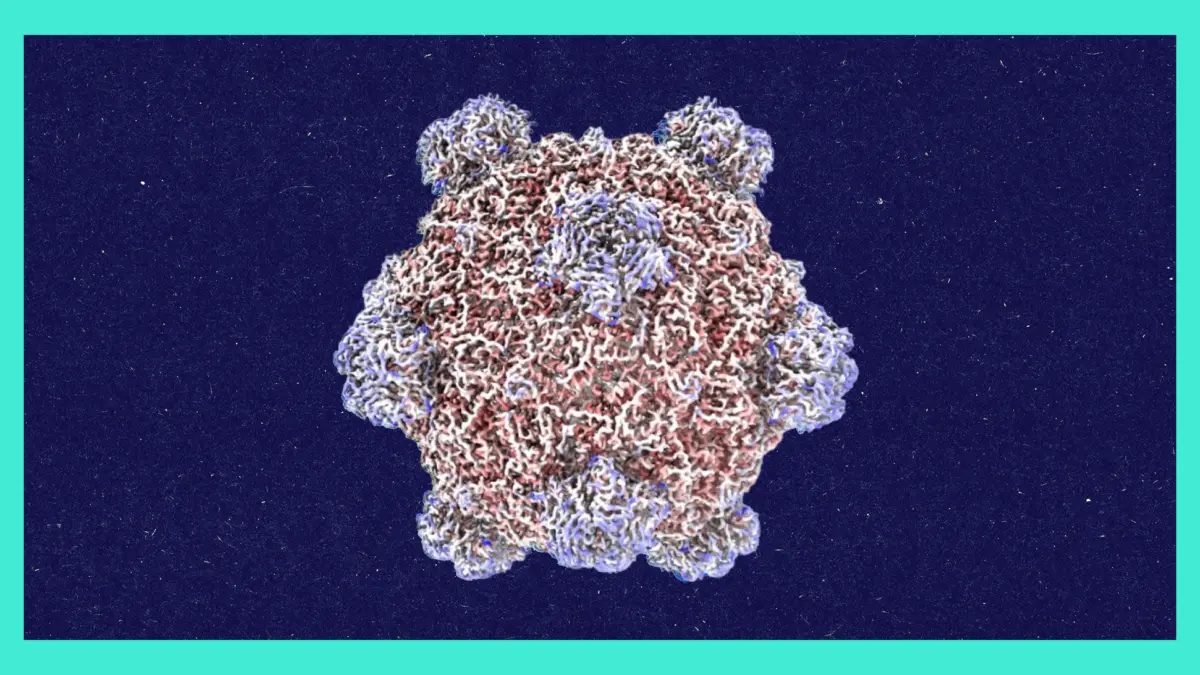
In 2024, Demis Hassabis and John Jumper of Google DeepMind were awarded a share of the Nobel Prize in Chemistry for AlphaFold, a revolutionary neural network capable of predicting the three-dimensional structures of proteins by learning from thousands of experimentally measured shapes. This devilish biochemical problem had stubbornly resisted systematic attacks for half a century. AlphaFold seemingly solved it once and for all, instantly fixing the global scientific imagination on the promise of end-to-end data-driven modeling.
Hassabis and his team hailed AlphaFold as "the template for how AI can accelerate all of science to digital speed." A tidal wave of venture capital followed, with startups building foundation models for biology, chemistry, and materials discovery raising billions of dollars. AlphaFold demonstrated that the potent combination of deep learning and sufficient data could unlock groundbreaking discoveries—even when human scientists could not fully decipher the underlying mechanisms. It felt, once again, as though a master key to the rest of science had finally been forged.
Yet, despite the extraordinary changes artificial intelligence will inevitably bring, a sobering realization is settling over research laboratories worldwide: AlphaFold and its data-heavy architectural kin may not actually serve as the best template for a universal scientific metamorphosis.
While AlphaFold is a monumental achievement, the hyper-specific conditions that produced it are vanishingly rare. The time and capital required to replicate those conditions across other scientific disciplines will be measured in decades, not years. Instead, the true acceleration of global science will likely be driven by an entirely different paradigm: AI agents.
Detailed Chronology: From Static Datasets to Autonomous Reasoning
To understand why the future of AI in science looks less like AlphaFold and more like an autonomous agent, one must trace the historical evolution of data dependency in experimental research.
The Era of Static Repositories (1970s–2020)
The primary catalyst for AlphaFold’s historic success was not simply DeepMind’s neural network architecture; it was the existence of the Protein Data Bank (PDB). Established in 1971, the PDB accumulated roughly 170,000 experimentally validated protein structures over decades of painstaking international cooperation.
Building this foundational dataset was a marathon of human effort. According to recent historical estimates, assembling the PDB required roughly 53 years of coordinated scientific work and an investment equivalent to roughly $21 billion in experimental labor. Efforts of this magnitude are historically difficult to fund, nearly impossible to coordinate globally, and excruciatingly time-consuming. In most scientific domains, attempts to curate datasets of this scale fail due to fragmentation, shifting standards, and a lack of institutional alignment.
The Deep Learning Boom and Its Limits (2020–2024)
When AlphaFold launched its high-accuracy predictions, it proved that given clean, massive, and highly structured training data, deep learning could bypass decades of human trial-and-error. This ignited a gold rush. Governments and corporations rushed to fund similar multi-billion-dollar data collection initiatives, assuming that every branch of science—from catalysis to neuroscience—was just one large database away from its own Nobel-worthy breakthrough.
However, pioneers in experimental science quickly ran into an insurmountable barrier: the laws of physical measurement. In protein crystallography (the key experimental technique underpinning the PDB), the measurement process is exceptionally replicable—so much so that over 25 Nobel Prizes have relied upon it.
In contrast, most of experimental science is notoriously messy. Cell lines drift over time. Chemical reagents arrive with trace contaminants. Ambient laboratory humidity shifts. Creating measured datasets that are consistent, accurate, precise, and scalable enough to train modern neural networks across broad fields like general chemistry or cellular biology would require entirely new classes of measurement tools and hyper-standardized laboratory protocols. None of these prerequisites are ready for deployment.
The Rise of the AI Agent (2024–Present)
Recognizing these data bottlenecks, computer scientists and researchers pivoted toward a quieter, more pragmatic software revolution: AI agents.
Rather than demanding millions of pristine, pre-computed data points to train a monolithic oracle, agents leverage the broad reasoning capabilities of Large Language Models (LLMs) and couple them with specific digital and physical tools. Instead of memorizing static facts, an agent acts like a human researcher: it forms hypotheses, queries databases, runs specialized simulations, critiques its own work, and iteratively adapts when experiments fail.
Supporting Context & Metrics: The Reality of Scientific Research
To appreciate the architectural shift toward AI agents, one must examine how real science is conducted under uncertainty.
Biologists working to identify novel drug targets have rarely enjoyed perfect, pristine datasets. Instead, they combine docking calculations with known molecular structures, factor in dynamic protein fluctuations, run a handful of binding assays, and apply expert human judgment to weigh conflicting signals. The true skill of scientific discovery has never resided in a single tool; it lies in the researcher’s ability to synthesize evidence from multiple flawed tools and revise hypotheses as new data emerges.
Until recently, software was incapable of this kind of dynamic orchestration. Today’s AI agents bridge that gap.
Key Structural Differences: AlphaFold vs. AI Agents
| Feature | Predictive Oracles (e.g., AlphaFold) | AI Agents (e.g., AI Co-Scientist) |
|---|---|---|
| Primary Requirement | Massive, highly curated, historical datasets | Access to reasoning engines (LLMs) and analytical tools |
| Scope of Application | Narrow, highly specialized questions (e.g., protein folding) | Generalist reasoning across diverse scientific domains |
| Handling of Uncertainty | Interpolates answers based on training distribution | Iteratively tests, critiques, and refines hypotheses in real-time |
| Reproducibility Profile | Dependent on static model weights and input data | Automatically logs exact workflows, code, and decision paths |
| Data Generation Cost | Billions of dollars in historical wet-lab experiments | Minimal upfront data collection; learns via tool use and synthesis |
While narrow models like AlphaFold apply immense computational power to specific questions, agents act as methodological generalists. They do not represent a radical new way to perform physical experiments; rather, they digitally emulate the messy, iterative, highly contingent process of human scientific discovery.
Official Statements & Breakthrough Case Studies
The practical viability of agentic AI transitioned from theoretical computer science to empirical reality with recent milestones from leading research institutions.
In May 2024, Google DeepMind and collaborating researchers unveiled the AI Co-Scientist, a multi-agent framework designed to automate the early stages of biomedical research. In a benchmark test, researchers provided the system with a simple, high-level prompt and a distinct goal: Determine how antibiotic resistance spreads between distinct bacterial species, a primary driver of intractable drug-resistant infections.
Rather than spitting out a single static prediction, the AI Co-Scientist dynamically spun up an ecosystem of specialized sub-agents:
- The Ideation Agent scoured existing literature to draft novel, competing hypotheses regarding gene transfer mechanisms.
- The Critic Agent acted as an aggressive peer reviewer, picking apart the hypotheses for logical flaws and biological inconsistencies.
- The Tournament Agent ran comparative evaluations to rank the strongest candidate mechanisms.
- The Refinement Agent polished the winning hypothesis into a coherent biological model.
The resulting conclusion was striking: the agent determined that specific resistance genes were hitching rides on bacterial viruses (phages), borrowing whatever viral vehicle could successfully ferry them into a new host organism.
Subsequent verification revealed that the hypothesis was entirely correct. Coincidentally, a team of human researchers at Imperial College London had spent an entire decade reaching that exact conclusion through painstaking wet-lab experimentation. Their formal paper, which had never been indexed or seen by the AI Co-Scientist, was still sitting in academic peer review when the agent published its findings.
A Structural Fix for the Reproducibility Crisis
Beyond accelerating discovery, agents offer an unexpected structural remedy for modern science’s persistent "reproducibility crisis"—the widespread inability of researchers to replicate published experimental results.
For decades, international scientific bodies have urged researchers to share raw data and exact code to standardize experimental pipelines. Yet, human researchers frequently resist this tedious administrative overhead, which occurs long after the exciting intellectual work is finished.
AI agents solve this friction inherently. By design, an agent automatically logs every digital query, parameter adjustment, simulation run, and tool invocation. This creates an immutable, exact audit trail of the methodology that led to a result, enabling instantaneous and precise replication by other labs.
Furthermore, agents dramatically amplify institutional memory. Traditionally, scientific knowledge transfer is murky and fragile. If techniques are not passed down through years of hands-on mentoring, incoming graduate students are left to decipher cryptic, decades-old lab notebooks. As agents become embedded in research workflows, a laboratory’s entire historical trajectory, protocol adjustments, and failed experiments will be cataloged in centralized, searchable repositories of institutional intelligence.
Future Outlook: The Acceleration of Human Curiosity
As agentic frameworks mature, their impact will compound across the entire scientific enterprise. However, significant engineering and theoretical hurdles remain. Current AI agents are still prone to hallucinations, their reasoning consistency can drift during extended execution loops, and token-window memory constraints limit how long they can run autonomously.
Nevertheless, as hardware capabilities expand and foundational models grow more robust, these technical barriers will fall.
The most profound impact of agentic AI will ultimately be velocity and economic cost reduction. In any scientific field, when testing a hypothesis takes less time than arguing about it in a committee meeting, institutional inertia collapses. Researchers stop endless debating and simply run the experiment. An agent capable of reading a thousand research papers in an hour, designing 500 distinct molecular variations, and learning from its failed simulations by morning will fundamentally alter the cost curve of innovation.
This dramatic compression of time and cost will grant scientists the freedom to chase bold, unorthodox questions they would never have risked betting their limited career timelines on previously, opening doors to realms of inquiry we have yet to formulate.
While AlphaFold-style predictive models will continue to yield breathtaking breakthroughs in data-rich domains, they alone will not bring us to the end of science. Instead, the migration toward agentic AI represents a much rarer, more transformative tier of technological evolution: a cognitive tool that envelops every field of science simultaneously.
Historically, intellectual tools of this sweeping scope have arrived only a handful of times—calculus, statistical inference, spectroscopy, the digital computer. Each of these paradigm shifts revealed entire universes of problems no one had previously thought to articulate, and those very problems redefined their respective fields anew.
With the maturation of autonomous AI agents, another such epochal transformation is officially upon us.
About the Authors
- Eric Schmidt served as the CEO of Google from 2001 to 2011. In 2024, alongside his wife Wendy, he co-founded Schmidt Sciences, a philanthropic venture dedicated to funding unconventional, high-risk areas of scientific exploration and technological development.
- Suhas Mahesh leads the AI for Science initiative at the AI Center of Schmidt Sciences and is a specialist in computational materials discovery and machine learning applications in the physical sciences.
- Additional research and editorial contributions provided by Maya Levin, associate and sciences lead in the Office of Eric Schmidt.