Executive Overview
In an era defined by data privacy, ad-spend optimization, and strict regulatory frameworks, Meta has rolled out a powerful new feature for digital marketers and advertisers: exclusion-only custom audiences. Designed to refine how campaigns are delivered across Facebook, Instagram, and the broader Meta ecosystem, this functionality provides businesses with an absolute safeguard to ensure specific groups of individuals are permanently omitted from ad sets.
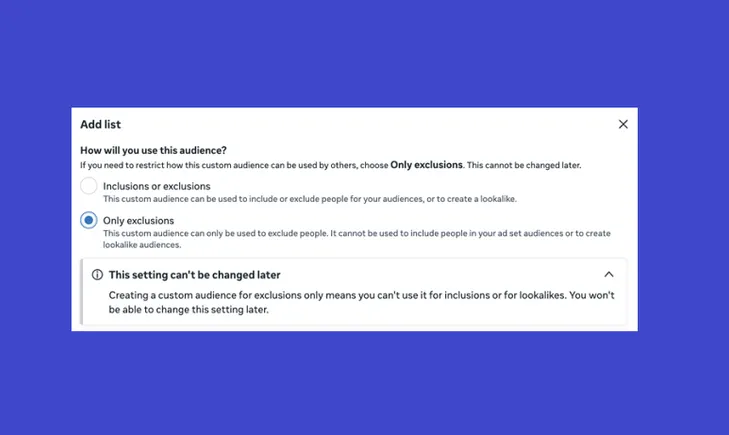
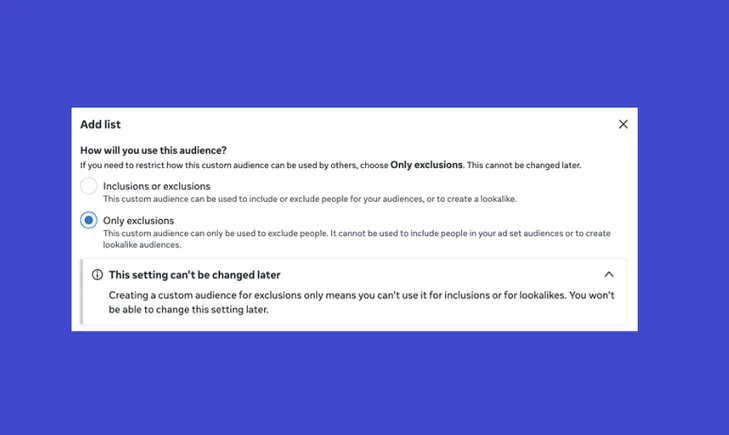
Unlike traditional custom audiences—which can serve dual purposes for both inclusion and exclusion depending on campaign configuration—the newly introduced exclusion-only lists are hardcoded strictly for filtering out users. Once established, these audiences cannot be repurposed for targeting, nor can their core structural definition be altered.
For brands grappling with rising customer acquisition costs (CAC), tightening data privacy regulations (such as GDPR and CCPA), and the need for rigorous corporate compliance, this feature addresses a persistent vulnerability in programmatic advertising: accidental ad exposure. By creating an unbreakable perimeter around specific segments—such as customers who have already churned, individuals restricted by legal mandates, or internal company employees—advertisers can eliminate wasted impressions, protect brand equity, and ensure absolute adherence to regulatory guidelines.
This comprehensive report explores the mechanics of Meta’s latest targeting update, examines strategic use cases recommended by industry experts, analyzes the broader implications for digital marketing efficiency, and evaluates what this means for the future of privacy-centric campaign management.
Detailed Chronology: The Evolution of Meta’s Targeting Safeguards
To understand the significance of exclusion-only audiences, it is essential to trace how Meta’s targeting architecture has evolved over the past decade.
1. The Era of Broad Targeting and Retargeting (Mid-2010s)
In the earlier days of Facebook advertising, custom audiences were primarily celebrated for their ability to hyper-target existing customer files, website visitors, and app users. Advertisers could upload Customer Relationship Management (CRM) databases to match email addresses and phone numbers, creating custom audiences to drive conversion campaigns. However, the mechanism for excluding these users was often an afterthought. Advertisers had to manually select exclusions at the ad-set level for every single campaign, introducing human error into the process. If a media buyer forgot to add a suppression list, newly converted customers would be bombarded with the exact same ads they had just acted upon, leading to ad fatigue and user frustration.
2. The Privacy Pivot and Regulatory Pressures (Late 2010s–2020s)
As global data privacy laws tightened—spurred by the European Union’s General Data Protection Regulation (GDPR) in 2018 and the California Consumer Privacy Act (CCPA) in 2020—the stakes for data handling skyrocketed. Advertisers could no longer afford sloppy targeting mistakes. Simultaneously, Apple’s rollout of App Tracking Transparency (ATT) in 2021 severely disrupted signal loss across iOS devices, forcing platforms like Meta to innovate alternative methods for audience management and attribution.
3. The Introduction of Exclusion-Only Custom Audiences (Current Development)
Recognizing that traditional inclusion-based custom audiences posed inherent risks of accidental user re-inclusion (due to faulty checklist configurations or template duplication errors), Meta engineered a structural firewall. The launch of exclusion-only custom audiences introduces a permanent, unalterable classification of customer lists. By separating suppression logic entirely from targeting logic, Meta has provided brands with a fail-safe mechanism designed from the ground up to prevent compliance failures and budget leakage.
Technical Mechanics: How Exclusion-Only Audiences Work
To deploy this feature effectively, media buyers and marketing operations teams must understand the strict technical boundaries Meta has placed around these lists.
Defining the Mechanism
According to official documentation from Meta, an exclusion-only custom audience is a specialized variant of a customer list custom audience built explicitly for negative targeting.
- The One-Way Street Rule: When a marketer uploads a customer file or syncs a data source to create an exclusion-only audience, that data can only be utilized to subtract users from an ad set.
- Immutability: Once an exclusion-only audience is created, its status cannot be changed to a regular custom audience. It cannot be used to target prospective buyers, run retargeting campaigns, or seed lookalike audiences.
- No Accidental Inclusion: Because the platform’s algorithm is fundamentally programmed to recognize these lists solely as barriers, there is zero risk of an automated campaign update or a human error mistakenly flipping the toggle to include the audience in active delivery.
[Customer Data Source (CRM / Email List)]
                   │
                   ▼
     [Meta Exclusion-Only Setup]
                   │
    ┌──────────────┴──────────────┐
    ▼                             ▼
[Active Suppression]     [Targeting Blocked]
(Ads NEVER reach these users) (Cannot be used for lookalikes)
Implementation Steps for Advertisers
- Navigate to Audiences: Within Meta’s Ads Manager, go to the Audiences dashboard.
- Create Audience: Click on "Create Audience" and select "Custom Audience."
- Select Source: Choose your data source (such as a customer list CSV file or a direct CRM integration).
- Designate Exclusion-Only Status: Opt for the exclusion-only configuration during the setup wizard.
- Apply to Ad Sets: Attach the list to the relevant ad sets where suppression is required.
Supporting Context & Strategic Use Cases
While standard custom audiences have long allowed for exclusions, the introduction of an exclusive exclusion mechanism opens up several strategic advantages for sophisticated marketing teams.
1. Eliminating Wasted Ad Spend on Opted-Out Consumers
For subscription services, SaaS companies, and transactional e-commerce brands, nothing burns through a media budget faster than serving acquisition ads to individuals who have recently cancelled their subscriptions or opted out of marketing communications. While suppression lists were previously used, human error during rapid campaign scaling often led to lapsed customers seeing promotional materials. An exclusion-only audience acts as a permanent corporate shield, ensuring that marketing dollars are never wasted on audiences with zero propensity to convert.
2. Meeting Strict Legal and Regulatory Obligations
Certain industries—such as financial services, pharmaceuticals, online gaming, and alcohol retail—face severe regulatory hurdles regarding who can be targeted with promotional content. For instance:
- Financial Services: Credit card offers cannot legally be marketed to individuals who have opted out via credit bureau suppression files or internal compliance lists.
- Age-Restricted Products: Brands selling alcohol, tobacco, or gaming products must ensure that self-excluded individuals or underage lists are completely walled off from programmatic reach.
Failure to comply with these mandates can result in multi-million-dollar regulatory fines and severe legal liabilities. An exclusion-only audience provides an auditable, structural guardrail that proves to regulators a brand has taken active, failsafe technical measures to prevent non-compliant ad exposure.
3. Protecting Brand Equity and Mitigating Ad Fatigue
Few things alienate a newly churned or disgruntled customer faster than being relentlessly pursued across Instagram and Facebook by the very product or service they just rejected. By permanently suppressing these users, brands preserve their reputation and maintain a positive consumer sentiment, preventing the "stalker effect" common in poorly managed retargeting campaigns.
4. Expert Insight: Employee Suppression
Prominent Facebook ads expert Jon Loomer highlighted another highly practical use case for exclusion-only audiences: suppressing internal employees.
Many companies run brand awareness or broad acquisition campaigns that encompass their entire corporate footprint. When employees are accidentally caught in the targeting net, the company ends up paying for internal impressions. Furthermore, employees frequently interact with company ads out of curiosity or professional oversight, artificially skewing engagement metrics, click-through rates (CTR), and conversion data. By uploading an internal staff email list as an exclusion-only audience, organizations can clean up their analytics and stop paying for internal ad views.
Comparative Analysis: Traditional Exclusions vs. Exclusion-Only Audiences
| Feature / Metric | Traditional Custom Audience Exclusions | Exclusion-Only Custom Audiences |
|---|---|---|
| Primary Function | Can be used for both inclusion and exclusion. | Strictly restricted to exclusion. |
| Risk of Accidental Targeting | Moderate (dependent on media buyer configuration). | Zero (systemically blocked from inclusion). |
| Reversibility | Flexible; audience types can be adjusted. | Permanent; cannot be converted to a targeting list. |
| Primary Use Cases | Dynamic retargeting, general suppression. | Compliance mandates, churned users, employee filtering. |
| Analytics Integrity | Prone to skewing if internal or churned users are missed. | High precision; guarantees clean campaign boundaries. |
Official Statements and Industry Reception
Meta’s engineering and product marketing teams have framed this update as part of their broader commitment to providing enterprise-grade controls for advertisers of all sizes.

In official release notes, Meta emphasized the operational security of the feature:
"An exclusion-only custom audience is a type of customer list custom audience that can only be used to exclude people from your ad audience… It acts as a permanent guardrail against accidental inclusion when utilizing custom audiences, safeguarding businesses against unwanted ad exposure."
Industry analysts have largely praised the update, viewing it as a mature response to the complexities of modern multi-channel marketing. As privacy regulations tighten globally, platforms that offer granular, fool-proof data governance tools stand to win the trust of enterprise compliance officers and corporate legal departments.
However, agency-side media buyers have noted that while the tool is immensely valuable, it requires rigorous upfront data hygiene. Because the list is immutable and permanent, brands must ensure their underlying CRM syncs and customer data pipelines are accurate before committing a list to exclusion-only status. If an incorrect file is uploaded, marketers cannot simply edit the list to fix targeting parameters—they must deprecate the audience and initiate a new upload workflow.
Future Outlook: The Road Ahead for Privacy-First Advertising
As we look toward the future of digital advertising, the boundary between data privacy and marketing efficacy will continue to tighten. Third-party cookies are disappearing, signal loss across mobile devices is forcing a reliance on first-party data, and consumer expectations regarding data transparency are higher than ever.
Meta’s introduction of exclusion-only audiences signals a broader industry shift toward negative data governance. In the past, ad tech innovation was almost exclusively focused on how to reach more people. Today, the cutting edge of ad tech innovation is increasingly focused on how to responsibly avoid reaching the wrong people.
We can anticipate several downstream developments following this rollout:
- Automated CRM Syncs: Marketing automation platforms (such as HubSpot, Salesforce, and Segment) will likely develop native, automated integrations with Meta’s exclusion-only API endpoints, ensuring churned customer lists and legal suppression files are synced in real-time without manual CSV uploads.
- Cross-Platform Adoption: Following Meta’s lead, competing ad networks—including Google Ads, TikTok, and LinkedIn—may introduce parallel exclusion-only governance frameworks to satisfy corporate legal and compliance teams.
- Enhanced Auditing Tools: Future iterations of privacy management tools within ad ecosystems will likely feature automated compliance reporting, allowing brands to generate audit trails proving that legally restricted groups were successfully walled off from marketing campaigns.
Conclusion
Meta’s exclusion-only custom audiences represent a quiet yet profound upgrade to the digital marketer’s toolkit. By addressing the fundamental human and algorithmic risks associated with ad suppression, Meta has provided brands with an indispensable instrument for budget optimization, regulatory compliance, and brand protection.
For marketing leaders, the directive is clear: audit your current customer data lists, identify segments that represent legal liabilities, financial waste, or analytical distortion, and leverage Meta’s new permanent guardrails to build a cleaner, more efficient, and fully compliant advertising operation.