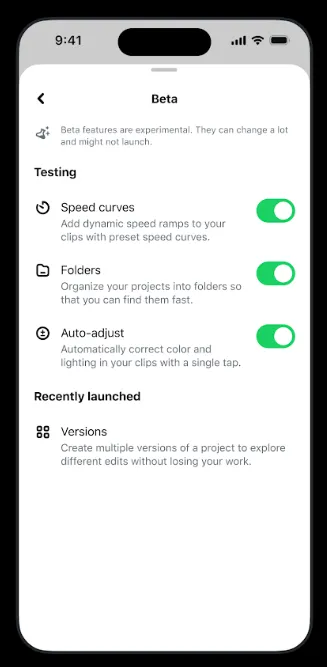
Executive Overview
In the rapidly evolving ecosystem of digital content creation, the tools wielded by creators are just as important as the platforms that host their output. Meta, a titan in the social media and digital technology landscape, has announced a significant expansion of its dedicated video creation platform, the Edits app. By introducing a new Beta tab, Meta is offering creators early, exclusive access to a suite of highly anticipated experimental video editing features. This strategic rollout is designed not only to equip digital artists with advanced technical capabilities—such as speed curves, automated color correction, and enhanced file management systems—but also to establish a collaborative feedback loop between software developers and the creative community.
The introduction of the Beta tab represents a shift in how tech conglomerates approach product development. Rather than executing top-down updates that risk missing the nuanced needs of modern influencers and short-form video producers, Meta is opening its development process to public testing. Creators can now toggle experimental features on and off at will, putting cutting-edge production tools to the test in real-world environments. With a simple shake of a mobile device, users can relay instant telemetry and experiential feedback directly to the engineering team.
This comprehensive report explores the architectural layout of the new Edits beta features, evaluates their impact on the short-form video landscape, details the mechanics of the rollout across iOS and Android platforms, and provides contextual analysis on Meta’s broader strategic ambitions in the creator economy.
Detailed Chronology: The Evolution of Meta’s Edits App
To fully understand the weight of the current beta release, one must trace the trajectory of the Edits application over the past year. The journey of the app has been marked by a steady cadence of feature integration, cross-platform expansion, and artificial intelligence implementation.
1. The Foundation and Desktop Expansion (June)
The framework for the current beta program was originally established with the launch of the dedicated Beta tab earlier this summer. Concurrently, Meta recognized that professional and semi-professional creators often require more screen real estate and processing power than a mobile phone can offer. This realization culminated in the rollout of a desktop version of Edits, paired with an AI production assistant designed to streamline the preliminary stages of video assembly. This early summer release laid the groundwork for transforming Edits from a rudimentary mobile trimmer into a robust, cross-platform editing ecosystem capable of competing with dedicated third-party applications like CapCut and Adobe Premiere Rush.
2. Typography and Layer Integration (November)
As the platform matured through the autumn months, Meta began introducing complex structural elements. In November, iOS users received a major update that included adjustable layers—a fundamental requirement for any serious video editor aiming to manage complex overlays, text, and visual effects seamlessly. This update also famously introduced specialty typography options, such as the Stranger Things-inspired font, signaling Meta’s intent to tap into pop-culture aesthetics and trending video formats to attract younger, more design-conscious creators.
3. The Current Beta Rollout
Building upon these foundational steps, Meta has now centralized its experimental pipeline within the Edits app’s Beta tab. By formally organizing how users test unreleased software, Meta is signaling a more transparent, agile approach to product iteration. The current batch of features targets some of the most persistent bottlenecks in short-form video production, promising to radically reduce editing time while elevating the polished look of final outputs.
Core Feature Breakdown: What’s New in the Beta Tab?
The newly accessible features within the Edits Beta tab are tailored specifically to address the demands of modern content creators, who must balance rapid publishing schedules with uncompromising visual standards. Below is a detailed technical breakdown of the updates rolling out across iOS and Android ecosystems.
1. Advanced Speed Curves (Speed Ramping)
- Platform Availability: iOS
- Functionality: Enables precise, dynamic speed ramping along a fully customizable curve.
For creators working within the TikTok, Instagram Reels, and YouTube Shorts ecosystems, pacing is everything. Speed ramping—the art of smoothly transitioning a video clip from slow motion to fast motion (or vice versa)—has historically required tedious keyframe manipulation in desktop editing suites.
Meta’s newly introduced speed curve functionality brings this advanced technique directly to mobile users. Creators can now draw and manipulate customizable acceleration curves, allowing clips to speed up and slow down organically in sync with audio beats. According to internal metrics and user feedback gathered by Meta, this has consistently ranked as one of the most requested video editing features for short-form content. By democratizing speed ramping, Meta is empowering creators to achieve cinematic pacing with minimal friction.
2. One-Tap Color Correction
- Platform Availability: iOS (Initial rollout)
- Functionality: Automatically optimizes exposure, contrast, and color tones in video projects.
Color grading can make or break a video, yet it remains one of the most technically challenging and time-consuming phases of post-production. Environmental factors—such as poor indoor lighting, harsh sunlight, or erratic smartphone sensor auto-exposure—frequently result in dull or inconsistent footage.
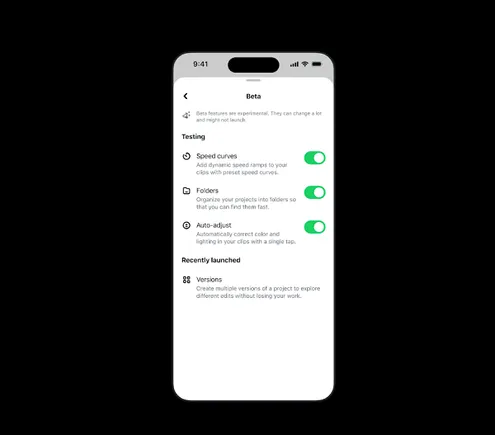
Meta’s new one-tap color correction tool leverages intelligent algorithms to analyze video frames and instantly balance exposure, contrast, and dynamic range. While seasoned colorists may prefer manual color wheels, this tool is a massive win for mobile creators who shoot on the fly and need a reliable, professional baseline grade before applying stylistic filters.
3. Creative Studio Organization: Custom Folders
- Platform Availability: iOS and Android
- Functionality: Allows users to group multiple ongoing projects into dedicated folders via a drag-and-drop interface.
As creators scale their operations, project management becomes a logistical nightmare. Juggling dozens of rough cuts, B-roll packages, and alternate versions on a mobile device often leads to clutter and accidental deletions.
To solve this, Meta is introducing a robust folder management system. By implementing a long-press gesture to enter "Organize mode," creators can easily drag and drop drafts into categorized folders. Meta describes this update as an effort to make the Edits app "feel like your own creative studio." This organizational upgrade allows creators to manage multiple complex campaigns simultaneously without losing track of valuable assets.
4. Adjustable Layers on Android
- Platform Availability: Android (Following prior iOS integration)
- Functionality: Provides precise control over video, audio, and graphical layers to ensure uniformity and complex compositing.
Parity between operating systems is a perennial challenge in app development. Following the successful introduction of adjustable layers on iOS devices in November, Meta is now bringing this crucial capability to the Android user base.
Adjustable layers allow creators to stack elements—such as background music, voiceovers, text overlays, stickers, and secondary video tracks—in a timeline view. This ensures absolute precision when timing visual gags, subtitles, or transitions, bringing mobile video editing a step closer to traditional non-linear editing (NLE) software standards.
Supporting Context & Metrics: The Battle for the Creator Economy
To contextualize Meta’s aggressive feature updates to the Edits app, one must examine the broader socio-economic and competitive landscape of digital media creation.
The Short-Form Video Boom and Tool Fatigue
The meteoric rise of short-form video has fundamentally shifted how audiences consume information and entertainment. Platforms like Instagram Reels and Facebook Watch are vital components of Meta’s engagement strategy. However, retaining top-tier talent—creators who command millions of views and, consequently, lucrative advertising dollars—requires providing them with the best possible tools.
For years, many mobile-first creators bypassed native platform editing tools entirely, opting instead for standalone applications like ByteDance’s CapCut. CapCut’s dominance in the market is largely attributed to its sophisticated suite of effects, speed ramps, and template integrations. Meta’s continued enhancement of the Edits app is a direct counter-offensive. By integrating high-end features directly into the ecosystem where creators ultimately publish their work, Meta reduces workflow friction, keeping creators within its proprietary app suite from conception to final export.
The Beta Testing Philosophy: Co-Creation
Meta’s explicit choice to house these features in an opt-in Beta tab—complete with the quirky "shake your phone to send feedback" mechanic—highlights a modern shift in software deployment: co-creation.
Software development in the digital age cannot rely solely on closed-door corporate testing. By turning its user base into an active QA (Quality Assurance) team, Meta achieves three distinct advantages:
- Accelerated Bug Detection: Real-world usage across thousands of different device models uncovers edge-case bugs that internal testing labs might miss.
- Community Buy-In: Creators feel a sense of ownership over the software. When they know their feedback directly shapes product updates, loyalty to the platform deepens.
- Market Agility: Meta can measure engagement metrics on beta features in real-time, allowing the company to fast-track popular tools to full public release while quietly shelving underperforming concepts.
Official Statements and Developer Insights
Meta’s communication strategy surrounding the Edits app emphasizes transparency, collaboration, and a user-first philosophy. In official press materials shared with industry analysts, the company articulated the precise operational ethos behind the Beta tab:

"The Beta tab is a dedicated section in Edits where upcoming features are available for early testing. Features are off by default; creators can choose to toggle them on, try them out, and shake their phone to send feedback. It’s how we build Edits alongside creators, giving them agency to shape the app into what will work best for them."
Furthermore, addressing the inclusion of the highly anticipated speed curve feature, Meta representatives noted that community demand served as the primary catalyst for development:
"Precise, dynamic speed ramping along a customizable curve has been consistently requested by our community, particularly by short-form video creators who rely on rhythm and pacing to capture and retain audience attention."
Regarding the organizational updates, Meta framed the folder system as an ergonomic necessity for modern digital artists:
"Long-press to enter Organize mode and drag-and-drop your drafts into folders, making Edits feel like your own creative studio."
These statements underline a calculated corporate pivot: Meta is positioning itself not merely as a broadcast platform, but as a comprehensive, empathetic partner invested in the operational success of individual creators.
Future Outlook: What Lies Ahead for Meta Edits?
As the digital content creation market matures, the boundary between mobile editing apps and professional desktop suites will continue to blur. The rollout of the Edits Beta tab is merely a waypoint on a much longer roadmap.
1. Deeper Artificial Intelligence Integration
Looking forward, industry analysts predict that Meta will double down on artificial intelligence within the Edits app. Following the introduction of the AI production assistant earlier this year, future beta iterations will likely feature automated smart-cut technologies, AI-driven transcription and captioning, and generative background removal. As generative AI models become faster and more accessible, integrating these tools directly into a mobile editing workflow will give Meta a significant competitive edge.
2. Cross-Platform Synchronization
With Edits now operating across iOS, Android, and desktop environments, the next logical frontier is seamless cloud synchronization. Creators should anticipate future updates that allow a project started on a smartphone during a commute to be seamlessly opened and polished on a desktop computer at home, without file degradation or missing asset links.
3. Monetization and Collaborative Workflows
As teams of creators—editors, thumbnail designers, scriptwriters—begin working together on single channels, future iterations of Edits may introduce multi-user collaborative workspaces. Enabling real-time cloud collaboration would transform Edits from an individual creator’s tool into an enterprise-grade solution for media agencies and large-scale publishing houses.
Conclusion
Meta’s strategic rollout of experimental features via the Edits app Beta tab demonstrates a mature, listening-first approach to software engineering. By addressing the granular technical needs of creators—such as speed curves, one-tap color correction, and structured project management—Meta is reinforcing its commitment to the creator economy. As these beta features graduate to full public releases, the Edits app is well-positioned to become an indispensable staple in the modern digital storyteller’s toolkit.