By Shane Snider | August 5, 2026
4-Minute Read
Executive Overview
LAS VEGAS — The artificial intelligence boom faces a sobering physical reality, and the industry’s most prominent leaders are no longer sugarcoating it. Speaking at the keynote stage of the Ai4 2026 conference in Las Vegas, former Intel CEO and current Playground Global general partner Pat Gelsinger delivered an unvarnished assessment of the hardware underpinning the current generative AI explosion: "Today’s GPUs suck."
While the provocative remark quickly captured headlines, Gelsinger’s broader message was far more strategic. Joined by Sachin Katti, OpenAI’s head of compute, in a panel moderated by The New Yorker staff writer Gideon Lewis-Kraus, the industry veterans argued that the next major leap in artificial intelligence will not be unlocked by simply throwing more capital at accelerators or fine-tuning software algorithms. Instead, the future of AI hinges on dismantling severe, multi-layered systemic bottlenecks spanning semiconductor architecture, high-bandwidth memory, regional electrical grids, and fundamental data center economics.
According to both leaders, the digital economy has hit a wall where compute capacity is inextricably bound to energy capacity, deployment timelines are dangerously sluggish, and the cost of generating machine intelligence remains unjustifiably high. For data center operators, hyperscalers, and utility providers, the takeaway is clear: the AI gold rush is shifting away from software-deep pockets toward a brutal physical competition over energy, silicon, and engineering efficiency.
Detailed Chronology: The Ai4 2026 Keynote Unfolds
Setting the Stage: Shifting Focus from Models to Hardware
The Ai4 2026 conference opened with immense anticipation, but day one quickly pivoted from discussions about large language model (LLM) parameters and reasoning capabilities down to the bare metal. Moderated by Gideon Lewis-Kraus, the Tuesday morning keynote immediately established that the narrative surrounding AI has fundamentally changed.
For the past several years, the race was defined by software supremacy—who could train the largest model, capture the most user mindshare, or demonstrate emergent reasoning capabilities first. However, the dialogue in Las Vegas signaled that the horizon of software capability is now strictly governed by the physical limitations of the hardware stack.
When asked by Lewis-Kraus what business leaders most frequently misunderstand about the AI paradigm, Gelsinger did not hesitate to point downward, metaphorically and literally. "There ain’t no compute without chips sitting underneath it," Gelsinger told the packed auditorium. He characterized semiconductors as the fundamental "fuel" of an emerging token-driven economy characterized by an insatiable, seemingly limitless public demand for machine intelligence.
The Gelsinger Critique: Power, Memory, and Efficiency
Diving deeper into the hardware constraints, Gelsinger elaborated on his opening critique of modern accelerators. While current GPUs have successfully driven the initial wave of generative AI, he emphasized that they remain fundamentally flawed for long-term scalability.
"They’re very power inefficient," Gelsinger stated, expanding on his keynote remarks. "They’re computationally limited… We need much greater efficiency in AI processing if it’s going to reach its potential."
Gelsinger—who stepped down from Intel in 2025 following an ambitious, high-stakes manufacturing comeback attempt—now channels his decades of semiconductor experience into early-stage deep tech investments at Playground Global. His current investment thesis centers heavily on four non-negotiable priorities for the future of AI: physical infrastructure, computational efficiency, energy availability, and macro-economics.
Directly challenging current hardware standards, Gelsinger took aim at High-Bandwidth Memory (HBM), a cornerstone of modern AI accelerator design. Despite its critical role in feeding data to power-hungry processors during training and inference, Gelsinger labeled HBM as "a very inefficient memory" technology, conceding only that it happens to be "the best one we have for AI modeling today." True progress, he argued, will demand radical redesigns across the entire compute stack—including advanced packaging, novel memory fabrics, high-speed networking, and system-level thermal architecture.
OpenAI’s Perspective: The Bottleneck Across Every Layer
Sharing the stage, Sachin Katti of OpenAI brought the perspective of the world’s leading model developer to the conversation. Katti reframed the industry’s primary hurdle: the challenge is no longer convincing corporate executives or enterprise clients that AI delivers tangible business value. Rather, the bottleneck is convincing governments, utility providers, and heavy manufacturers to build out physical infrastructure fast enough to keep pace with algorithmic ambition.
"The main real focus has been convincing the world that we need to invest in every layer of the infrastructure stack because of the potential this technology has in delivering intelligence to the whole world," Katti explained.
Detailing the friction points across the global supply chain, Katti painted a picture of widespread operational choke points. Building new data centers in the United States has transformed into a bureaucratic and regulatory marathon; sourcing stable, massive blocks of electrical power has become an uphill battle; and global semiconductor fabrication and memory capacity continue to lag behind compounding demand.

"It’s not easy to build data centers quickly in the US," Katti noted. "It’s not enough fab and memory capacity to supply the chips we need, and it’s not easy to put it all together into usable compute."
To circumvent these cascading delays, Katti revealed that OpenAI’s internal objective is to compress deployment timelines from years down to quarters. Achieving a goal where infrastructure can be deployed in "three quarters instead of three years" will require an unprecedented level of standardization in data center construction, streamlined silicon manufacturing, and radical innovations in software-hardware co-design.
Supporting Context & Metrics: The Infrastructure Crunch
The warnings voiced by Gelsinger and Katti at Ai4 2026 arrive against a backdrop of historic capital expenditure by hyperscale cloud providers—including Microsoft, Google, Amazon Web Services, and Meta—who are pouring hundreds of billions of dollars into AI infrastructure. Yet, beneath the staggering top-line investment figures lie profound structural vulnerabilities.
The Energy-Economy Equivalence
Perhaps the most alarming metric highlighted during the keynote was the absolute convergence of digital GDP and electrical generation. As Gelsinger succinctly summarized: "In a digital AI economy, economic capacity equals energy capacity."
For decades, the technology sector scaled by relying on Moore’s Law—shrinking transistors to pack more compute into tighter spaces while simultaneously reducing power consumption per operation. However, the computational demands of training trillion-parameter frontier models and running real-time multimodal inference at global scale have shattered historical efficiency curves.
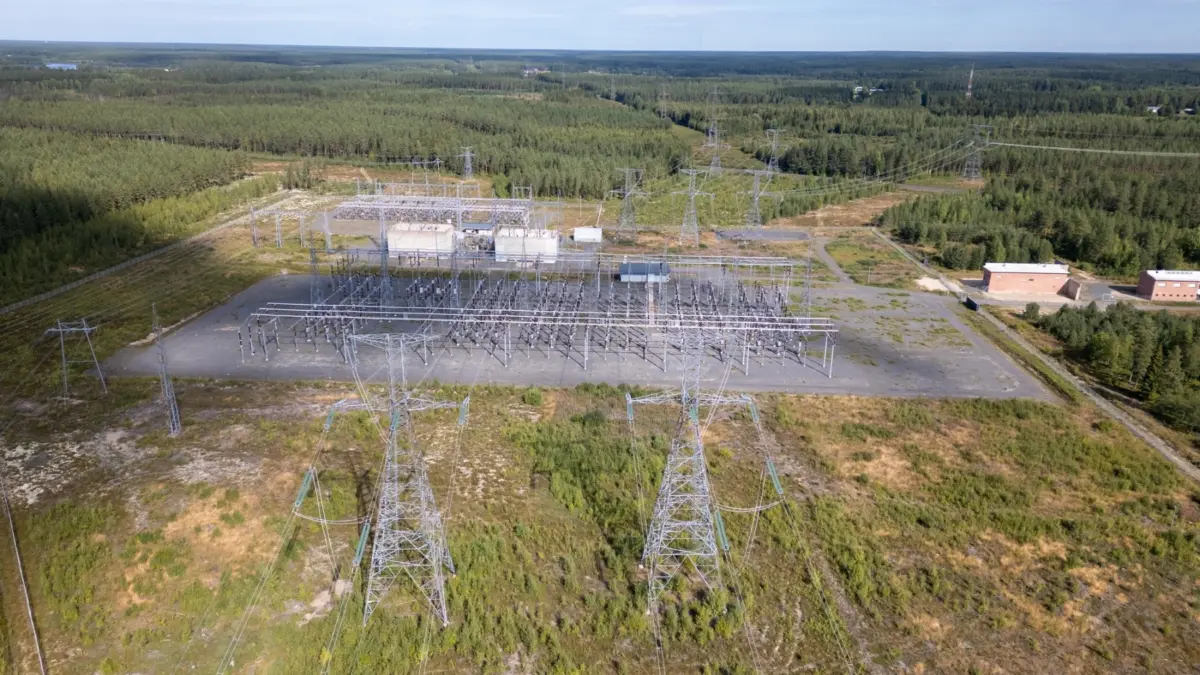
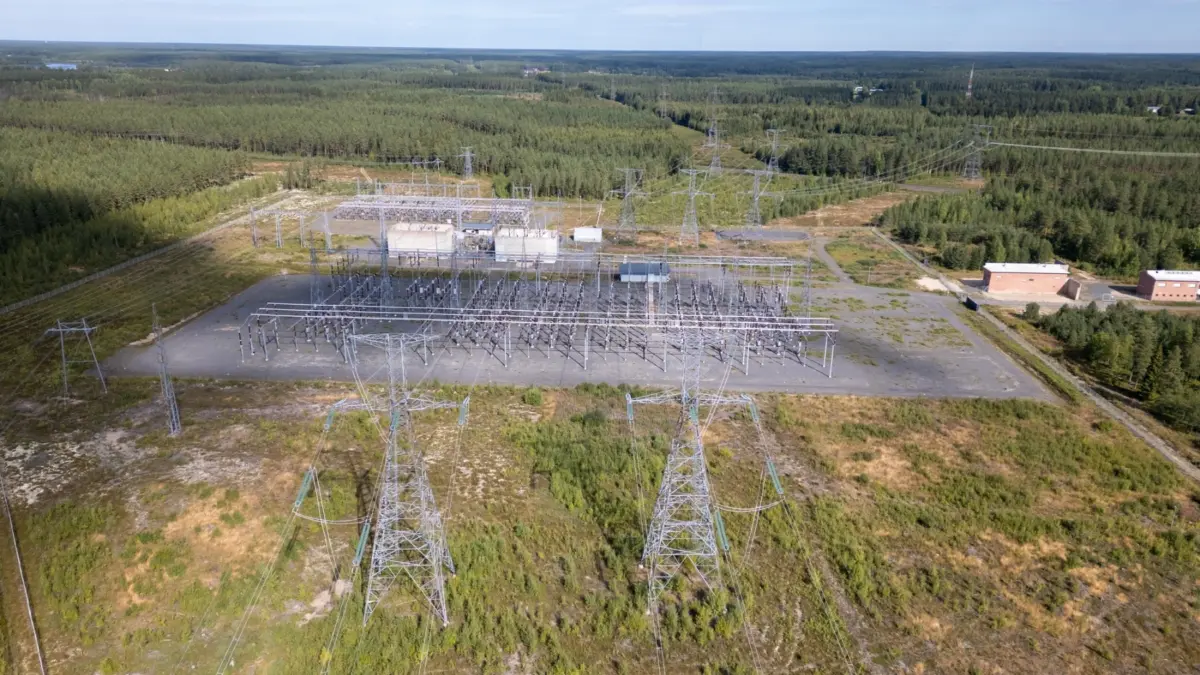
Modern AI data centers are no longer measured in tens of megawatts; they are scaling toward gigawatt campuses. These mega-facilities require power footprints comparable to medium-sized cities. Gelsinger warned that the industry is hurtling toward a hard economic ceiling dictated by grid capacity: "Nobody’s going to build a data center for chips that you can’t power up. Nobody’s going to put billions of dollars into chips that you don’t have power for."
The "Memory Wall" and Interconnect Bottlenecks
Beyond electrical generation, the physical constraints extend deep into silicon physics. As processors scale up, the speed at which data can be moved between memory banks and processing cores—frequently referred to as scaling the "memory wall"—remains a severe performance throttle.
While HBM bridges this gap temporarily, its manufacturing complexity, low yields, and high production costs make it an economic drag on the broader ecosystem. Furthermore, as clusters grow to tens of thousands of GPUs communicating over complex switching fabrics, networking has emerged as a primary latency driver. As explored in recent industry analyses, the switch is rapidly becoming the ultimate bottleneck in distributed AI training clusters, where data must flow seamlessly across vast arrays of processors without stalling the computational pipeline.
Official Statements and Industry Insights
The convergence of viewpoints between a veteran semiconductor executive and a leading AI research lab underscores a growing consensus: the easy phase of the AI revolution is over.
- On the Value of Silicon: Despite the technical roadblocks, Gelsinger highlighted that the structural shift in market economics has firmly favored hardware builders. Reflecting on the supply-demand imbalance, he remarked, "The silicon guys are the big winners. It has never been this good to be a silicon guy."
- On System-Wide Co-Design: Katti emphasized that solving these challenges cannot be left to any single segment of the technology supply chain. Chip designers, foundry operators, utility companies, and software developers must operate as a unified ecosystem. The bottlenecks in energy, manufacturing, and deployment are fundamentally intertwined, meaning that an innovation in power delivery or thermal management is just as critical to OpenAI’s roadmap as a breakthrough in transformer architectures.
Future Outlook: The Road Beyond Ai4 2026
As Ai4 2026 continues through the week, the overarching theme of the conference is unmistakably pragmatic. The era of unchecked hyper-growth driven purely by software iteration has hit physical boundaries.
To break through these ceilings, Gelsinger argued that the macroeconomic model of AI computation must undergo a massive correction. Pointing to the high cost of inference and training, his closing critique was as blunt as his opening statement:
"The economics today suck. It doesn’t need to get better. It needs to get 10,000 times better."
Achieving a 10,000-fold improvement in economic and computational efficiency will not be accomplished by incremental tweaks. It will require a wholesale reinvention of the AI compute stack—from next-generation non-volatile memory architectures and optical interconnects to carbon-free baseload energy integration and advanced liquid-cooling data center designs.
For enterprise leaders, data center operators, and technology investors navigating this volatile landscape, the message from Las Vegas is definitive: the winners of the next decade of AI will not simply be those with the best algorithms, but those who successfully solve the heavy, physical engineering problems of power, silicon, and infrastructure economics.