








Executive Overview
The intersection of human medicine, veterinary science, and public health policy is facing a mounting, insidious threat. Recent epidemiological data regarding human infestations of the New World Screwworm (Cochliomyia hominivorax)—often referred to in clinical and colloquial terms as NWS myiasis—have illuminated a growing vulnerability across populations neighboring and interacting with expanding vector zones.
While recent headlines have justifiably concentrated on the reemergence of the parasite within livestock populations in the southern United States and Central America, a granular analysis of historical and contemporary case data reveals a complex portrait of human susceptibility. A landmark study examining 202 validated cases of human NWS myiasis paints a stark picture: older adults, particularly males with pre-existing chronic health conditions, bear the brunt of the burden. Furthermore, the clinical manifestations of these infestations underscore the opportunistic nature of the flesh-eating fly, which preferentially targets the lower extremities while remaining capable of invading virtually any exposed tissue.
This report synthesizes the clinical demographics, anatomical distribution, mortality metrics, and geographic trends associated with NWS myiasis. It examines the profound implications of these findings through the lens of a "One Health" framework—an interdisciplinary model recognizing that human, animal, and environmental health are inextricably linked. As the geographic range of the New World Screwworm pushes northward, driven by ecological and climatic shifts, public health authorities are sounding the alarm. Preventing widespread human and animal devastation will require proactive surveillance, stringent animal movement controls, accelerated fly-suppression initiatives, and unprecedented cross-sector collaboration before localized outbreaks escalate into a continental crisis.
Detailed Chronology: The Reemergence and Global Trajectory of NWS
The history of the New World Screwworm is one of perpetual battle between agricultural eradication programs and the resilient, highly adaptable nature of the parasitic fly. For decades, the implementation of the Sterile Insect Technique (SIT)—a monumental biological control strategy involving the release of millions of sterilized male flies—kept the pest largely at bay, pushing its northern frontier far south of the United States border. However, ecological shifts, disruptions in surveillance, and shifting trade patterns have allowed the parasite to claw its way back into historical territories.
The 2024–2026 Resurgence
The modern chapter of this biological threat escalated notably in mid-2024 and accelerated into 2025 and 2026. Travel-related cases began trickling into non-endemic regions as tourists and international travelers returned from Central America and other endemic zones with larvae burrowing into their flesh. These imported cases served as an early warning system for the vulnerabilities posed by modern, rapid global transit.
By June 2026, the situation transitioned from theoretical risk to domestic reality when the United States Department of Agriculture (USDA) officially confirmed the first domestic animal cases of the New World Screwworm in South Texas. This detection marked a critical milestone in the reemergence of the parasite, signaling that the northern expansion boundary had breached US agricultural thresholds.
In the wake of the initial South Texas detection, the USDA and allied agricultural agencies mobilized containment protocols. To date, surveillance networks have logged 45 confirmed animal cases across the affected operational zones. While swift quarantine measures, livestock inspections, and aggressive vector control protocols have thus far prevented any locally acquired human cases of NWS myiasis within the US mainland during this current resurgence, public health officials emphasize that the margin for error is razor-thin. The parallel tracking of animal cases and human risk profiles reveals an undeniable trajectory: as the fly establishes a firmer foothold in livestock populations, the statistical probability of accidental human parasitism rises exponentially.
Supporting Context & Metrics: Demographics, Anatomy, and Clinical Outcomes
To understand the mechanics of New World Screwworm infestations in humans, researchers analyzed a comprehensive dataset comprising 204 total identified cases. Following a rigorous screening process, two cases were excluded due to insufficient clinical data, leaving a robust sample size of 202 verified patient files. The resulting epidemiological breakdown offers critical insights into who is most at risk, how the parasite attacks the human body, and what clinical outcomes to expect.
Demographic Vulnerabilities: Age, Gender, and Underlying Health
The analysis of the 202 cases revealed distinct demographic skews that can help clinicians and public health workers identify high-risk individuals in endemic or fringe zones:
- Gender Disparity: A striking 72 percent of the cases (145 patients) occurred in male individuals. While researchers continue to study the precise drivers behind this imbalance, leading hypotheses point toward occupational exposures, higher rates of outdoor labor, increased contact with livestock and domestic animals, a higher incidence of unattended or neglected wounds, and delays in seeking professional medical intervention.
- Age Distribution: Patient ages spanned a wide spectrum, from pediatric cases involving 12-year-olds up to elderly individuals aged 93. However, the data clearly skewed toward older adults, with the mean age of victims resting at 61 years old.
- Comorbidities: Vulnerability to myiasis is rarely an isolated phenomenon; it is heavily mediated by baseline health status. The study found that 77 percent of the myiasis patients suffered from one or more underlying health conditions. The most frequently observed comorbidities included type 2 diabetes mellitus, chronic alcoholism, various forms of cancer, and pre-existing dermatological or skin conditions. These conditions often compromise peripheral circulation, sensory perception, and immune response, making patients less likely to notice an initial fly strike or successfully mount a localized defense against the invading larvae.
Anatomical Distribution: Where the Flies Strike
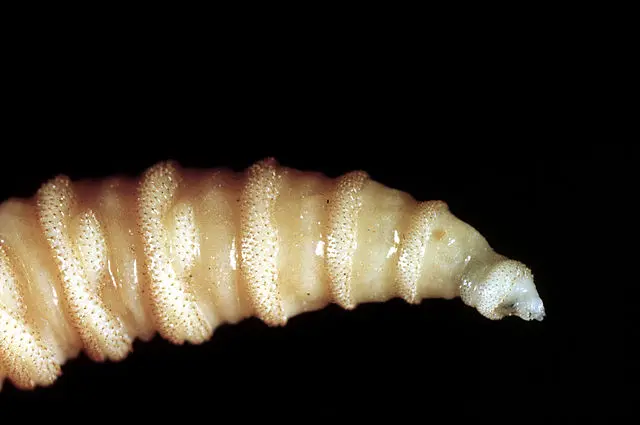
Female screwworm flies are notoriously opportunistic. They are attracted to the serous discharge, blood, and odors emanating from living tissue, open wounds, or mucous membranes. Upon locating a suitable host, they deposit their eggs, which rapidly hatch into voracious, tissue-destroying larvae.
The clinical data highlights clear anatomical preferences in human infestations:
- Lower Limbs (55 percent): More than half of all reported cases involved infestations of the legs and feet. This high prevalence is directly correlated with peripheral vascular disease, diabetic foot ulcers, chronic venous stasis ulcers, and decreased mobility or sensation in the lower extremities among older or diabetic patients.
- Head and Neck Region: The second most common site of infestation was the head and neck, a category that specifically included sensitive mucosal entry points such as the nose, mouth, and eyes. Infestations in these areas are particularly dangerous due to the proximity of the brain, cranial nerves, and major vascular structures.
- Other Sites: A minority of cases were documented in the upper limbs, the torso (trunk), the ears, the external genitalia, and the abdominal cavity. While less frequent, these sites often presented unique surgical challenges and severe psychological distress for the patients.
Mortality Analysis and Clinical Sequelae
Myiasis caused by Cochliomyia hominivorax is fundamentally distinct from typical superficial maggot infestations; the larvae of the New World Screwworm actively consume living mammalian tissue, leading to deep, destructive lesions that can result in massive tissue loss, secondary bacterial infections, and systemic toxicity.
Within the studied cohort, six deaths were reported among patients with confirmed NWS myiasis. However, determining direct causality required careful forensic and clinical distinction:
- In only one case was NWS myiasis officially listed as the underlying cause of death, typically resulting from overwhelming sepsis or intracranial extension of facial lesions.
- The remaining five deaths occurred in patients who harbored the parasite but whose primary causes of death were severe, concurrent medical conditions, including advanced cancers, fulminant encephalitis, acute respiratory failure, and profound septic shock.
- The demographic profile of these fatal cases skewed even older, with the average age of patients experiencing NWS-linked deaths reaching 79.5 years.
Official Statements and the "One Health" Approach
The complexity of controlling a biological vector that moves seamlessly across ecological boundaries—infecting livestock, wildlife, pets, and humans alike—demands an integrated response strategy. Public health experts, epidemiologists, and agricultural authorities are increasingly championing the "One Health" framework, an adaptive collaborative model that unites human medicine, veterinary science, and environmental ecology.
The Geographic Mirror: Animals and Humans
Data consistently shows that the geographic distribution of human myiasis cases directly mirrors the spatial distribution of reported animal cases. As the NWS fly expands its territory northward, human exposure risks increase in lockstep. This correlation reinforces the reality that human health cannot be safeguarded in isolation from agricultural and veterinary surveillance.
In recent expert commentaries and policy briefs, leading researchers have issued urgent calls for proactive, rather than reactive, public health administration.
"Because animal and human cases reflect northward spread of the NWS fly and that spread is expected to continue, surveillance, diagnostic preparedness, animal movement controls, and fly-suppression activities should be implemented proactively at the leading edge of expansion, rather than only after human cases are detected," research teams emphasize in current epidemiological evaluations.
This philosophy represents a paradigm shift away from traditional, siloed public health responses. Waiting for the first human case to appear in a newly encroached region is no longer acceptable; by the time a human case is clinically diagnosed, the local vector population is often firmly established and widespread.
Cross-Sectoral Coordination
The blueprint for future containment relies heavily on institutional bridges. Experts stress that seamless coordination between human healthcare providers, veterinary medicine practitioners, wildlife conservationists, and agricultural extension offices will be essential.
Veterinarians are frequently the first line of defense, identifying early infestations in livestock and companion animals. If human healthcare providers are not simultaneously educated on the clinical signs of myiasis—particularly in regions experiencing agricultural outbreaks or among returning international travelers—misdiagnoses can delay life-saving surgical debridement and larval extraction. Cross-training medical personnel in rural and urban clinics alike is paramount to intercepting the parasite before it causes catastrophic tissue damage.
Future Outlook: Mitigation, Surveillance, and Clinical Readiness
Looking toward the horizon, the resurgence of the New World Screwworm serves as a stark reminder of the fragility of modern biosecurity in an era marked by shifting climatic zones, increased international trade, and globalized travel.
Expanding Surveillance and Diagnostic Preparedness
To blunt the impact of the ongoing northward expansion, public health agencies must enhance surveillance infrastructure. This includes:
- Proactive Trap Networks: Deploying insect surveillance traps along known migratory corridors and trade routes to detect the presence of adult screwworm flies before they locate mammalian hosts.
- Livestock Quarantine Enforcement: Maintaining rigorous animal inspection and movement controls at domestic and international borders to prevent the transit of infested animals from endemic regions into clear zones.
- Clinician Education Campaigns: Equipping emergency room physicians, primary care doctors, and wound-care specialists with diagnostic guidelines to quickly identify and report suspected myiasis cases, especially in vulnerable demographics such as elderly patients with chronic ulcers.
The Biological Frontier: Sterile Insect Techniques
Ultimately, long-term containment will depend on the sustained deployment of biological control mechanisms. Mass-rearing facilities capable of producing billions of sterile male screwworm flies remain the gold standard for population suppression. By overwhelming wild populations with sterile competitors, breeding cycles are disrupted, leading to localized population collapses. Ensuring adequate funding and international cooperation for these bio-control facilities will dictate whether the current resurgence is successfully beaten back or allowed to become a permanent endemic fixture of North American ecosystems.
In conclusion, the threat posed by Cochliomyia hominivorax transcends simple pest control—it is a critical test of our global health infrastructure’s ability to anticipate ecological threats. Through rigorous application of the One Health framework, proactive surveillance, and rapid clinical intervention, public health and agricultural systems can protect vulnerable populations from the destructive path of the flesh-eating screwworm.