








Executive Overview
The countdown to the tech ecosystem’s most anticipated annual gathering has officially entered a critical window. TechCrunch Disrupt 2026 is slated to transform San Francisco’s Moscone West into a high-octane crucible of innovation from October 13 to 15. Bringing together more than 10,000 founders, venture capitalists, enterprise leaders, and forward-thinking builders, the three-day conference aims to chart the course for the next era of technological evolution.
As excitement builds around the initial agenda releases, organizers have announced a strictly limited-time flash sale. Running only until tonight at 11:59 p.m. PT, attendees can secure an additional $100 off the already established $300 discount on founder, investor, and general attendee passes. This promotional window serves as the final opportunity to capture maximum savings before the next tiered pricing structure takes effect on August 21.
Positioned at the intersection of capital, code, and commerce, Disrupt 2026 is shedding its identity as a conventional, passive conference. Instead, it has been meticulously engineered as an active, high-yield workspace. From ground-shaking keynote panels exploring a post-smartphone paradigm to specialized tactical tracks addressing artificial intelligence, infrastructure strain, and modern fintech, the event is built for professionals who are not merely observing the future, but actively writing it.
Detailed Chronology: The Road to Disrupt 2026
The trajectory toward TechCrunch Disrupt 2026 has been marked by strategic, rolling announcements that reveal a deeply thoughtful curation of today’s most pressing technological transitions. Understanding how the conference agenda has unfolded provides clear insight into why industry leaders are mobilizing in record numbers.
Late June and Early July: Laying the Technical Foundation
The programmatic rollout began in earnest during the summer months, establishing a heavy emphasis on tactical utility. The revelation of the Builders Stage agenda set the tone for early registrants. Designed specifically to cut through the noise of startup growth, this perennial favorite track focused on the granular mechanics of early-stage scaling, capital procurement, and strategic hiring in a volatile macroeconomic climate.
Late July: The Stage Expansions and Industry-Specific Reckonings
As July progressed, TechCrunch systematically unveiled specialized tracks addressing the tectonic shifts rippling through distinct sectors:
- July 24: The introduction of the New Smart Money Stage signaled a pivot toward the intersection of finance and software. Organizers designed this programming to dissect the practical realities of stablecoins, the institutional push toward instant payments, and the growing reliance on AI to build and maintain consumer financial trust.
- July 27: The unveiling of the Smart Systems Stage brought hard truths to the surface regarding physical infrastructure. By addressing fusion energy breakthroughs and the severe electrical grid strains accompanying the artificial intelligence boom, this track established that software scalability is inextricably linked to hardware and energy limits.
- July 28: The AI Stage agenda went live, directly confronting the security vulnerabilities, data privacy nightmares, and fundamental business model fractures that software-as-a-service (SaaS) companies face as artificial intelligence reshapes enterprise software.
Late July to Early August: Flagship Announcements and the Flash Sale
The momentum reached a fever pitch on July 30 with the announcement of the initial Disrupt Stage lineup. Featuring heavyweights like Amazon SVP of Devices and Services Panos Panay and Replit founder and CEO Amjad Masad, the flagship programming immediately captured industry-wide attention.
Capitalizing on this surge of interest, organizers dropped the August flash sale announcement, granting an extra $100 price slash on top of existing early-bird tier discounts. This temporal pricing strategy creates an undeniable sense of urgency, driving a final wave of registrations ahead of the August 7 flash sale deadline and the subsequent August 21 price hike.
Supporting Context & Metrics: What Defines Disrupt 2026
TechCrunch Disrupt is more than a localized gathering; it is a macro-indicator for the health, capital flows, and developmental directions of the global technology sector. To understand the gravity of the 2026 conference, one must examine the core metrics and structural pillars that define the event.
The Scale of Participation
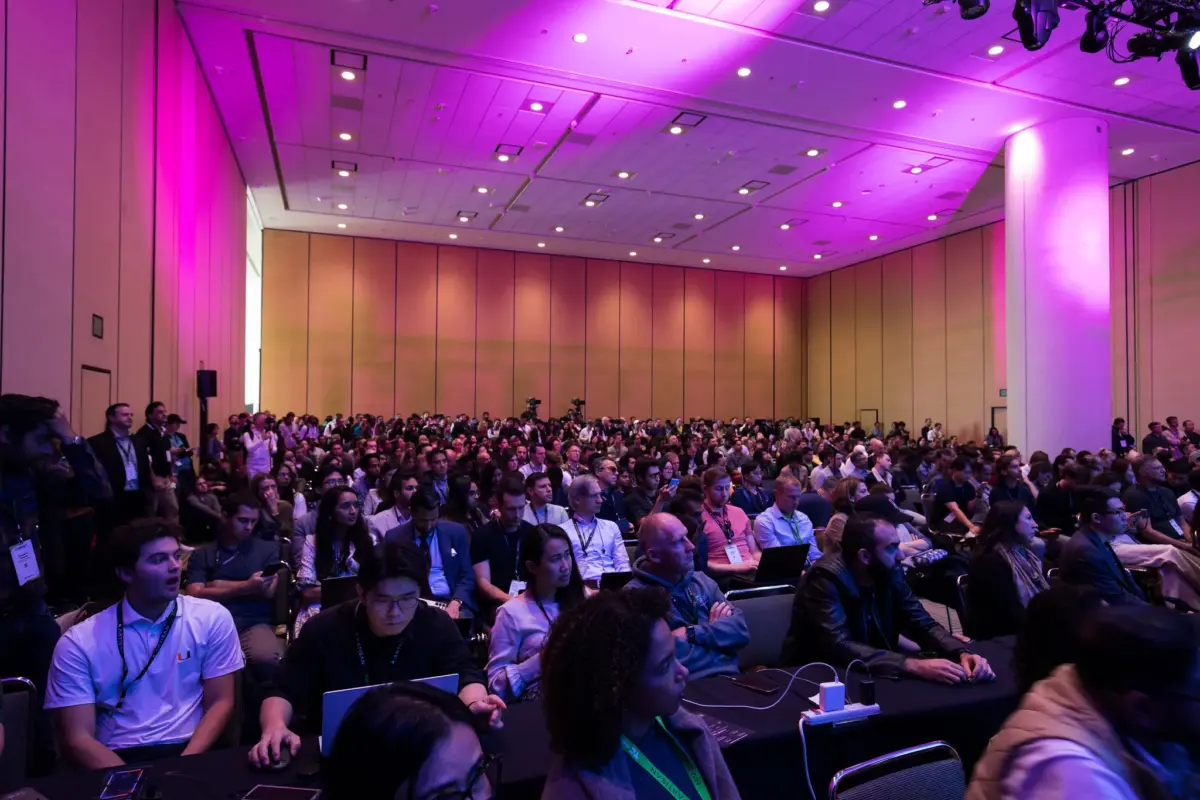
- 10,000+ Attendees: The floor of Moscone West will host a dense concentration of decision-makers, creating an environment where high-level serendipity and strategic meetings occur continuously.
- 200 Startup Battlefield Competitors: At the heart of the conference lies the legendary Startup Battlefield. Two hundred hand-picked startups will step onto the stage to compete live for the coveted Battlefield Cup, offering investors an unprecedented early look at tomorrow’s category leaders.
- Five Distinct Content Pillars: Rather than relying on a generalized speaker list, Disrupt 2026 partitions its educational and strategic content across five hyper-focused arenas: the Disrupt Stage, the AI Stage, the New Smart Money Stage, the Smart Systems Stage, and the Builders Stage.
Navigating the Macroeconomic Climate
The timing of Disrupt 2026 coincides with a critical maturation phase in the tech industry. The "growth-at-all-costs" era has definitively yielded to a hyper-rationalized focus on unit economics, operational efficiency, and sustainable integration of emerging technologies.
Founders attending the conference are no longer merely pitching vision; they are defending defensibility. Simultaneously, investors navigating high interest rates and cautious limited partner (LP) allocations are hunting for genuine technological moats rather than derivative AI wrappers. The sessions curated for Disrupt 2026 directly mirror these anxieties, offering hard-nosed, data-backed frameworks for survival and dominance.

Official Statements and Visionary Insights
The architectural philosophy behind Disrupt 2026 centers on confronting reality rather than chasing hype cycles. Leadership and key speakers have underscored the necessity of direct, unfiltered dialogue regarding the challenges facing the technology sector.
While discussing the curation of the flagship programming, event organizers emphasized the practical utility of the sessions:
"This isn’t a passive conference you simply watch — it’s a curated itinerary of speakers, workshops, networking opportunities, and post-event excitement for those actively building, investing, and looking for what’s next."
The caliber of the speakers reflects this mandate. Consider the inclusion of Panos Panay, Amazon’s SVP of Devices and Services, whose keynote on the Disrupt Stage will tackle the evolving definition of human-computer interaction and the architecture of a post-smartphone future. In an era where hardware form factors are undergoing a radical identity crisis, Panay’s insights offer an authoritative look at consumer electronics’ next frontier.
Equally compelling is the participation of Amjad Masad, founder and CEO of Replit. Masad’s work at the forefront of collaborative, AI-driven software development sits at ground zero of a profound existential question for the tech industry: What happens when the barrier to software creation drops to zero, and every individual becomes a developer? The implications for enterprise software, corporate IT spend, and technical employment will form the bedrock of one of the conference’s most scrutinized debates.
Furthermore, the introduction of infrastructure-focused tracks like the Smart Systems Stage highlights an industry awakening. Tech leaders are increasingly vocal about the physical limitations of digital expansion. As one programmatic overview noted, understanding "fusion breakthroughs and grid strain powering AI’s next decade" is no longer an academic exercise for energy companies—it is an existential bottleneck for every tech enterprise scaling compute-heavy models.
Future Outlook: The Stakes Beyond October
As the tech world looks toward San Francisco this October, the outcomes hatched within the halls of Moscone West will likely echo across boardrooms, venture portfolios, and engineering sprints for years to come.
The AI Implementation Era
By 2026, the novelty of generative artificial intelligence has entirely worn off, replaced by the grueling execution phase. Sessions across the AI and Builders stages will serve as post-mortems for early corporate deployments and roadmaps for hardening agent security. The insights gleaned here will dictate whether companies successfully transition from experimental pilots to margin-expanding automation.
The Financial Architecture of Next-Gen Fintech
The New Smart Money Stage addresses a parallel maturation in financial technology. As regulatory landscapes shift and consumer expectations for instant, borderless transactions harden, the integration of stablecoins and decentralized rails into traditional financial institutions is reaching a tipping point. Disrupt 2026 will act as a barometer for how traditional banking and decentralized infrastructure forge their uneasy, yet necessary, alliances.
The Ultimatum for Attendees
For those debating participation, the financial incentive provided by the current flash sale—slashing an additional $100 off before tonight’s 11:59 p.m. PT deadline—offers a practical nudge. However, the true ROI of Disrupt 2026 lies not in the ticket savings, but in the asymmetric advantage of being in the room where capital meets capability.
As the August 21 pricing tier shift approaches, the window to secure entry into this pivotal summit is narrowing. For the builders, investors, and innovators intent on shaping the next decade of technology, TechCrunch Disrupt 2026 promises to be the definitive staging ground of the year.