Executive Overview
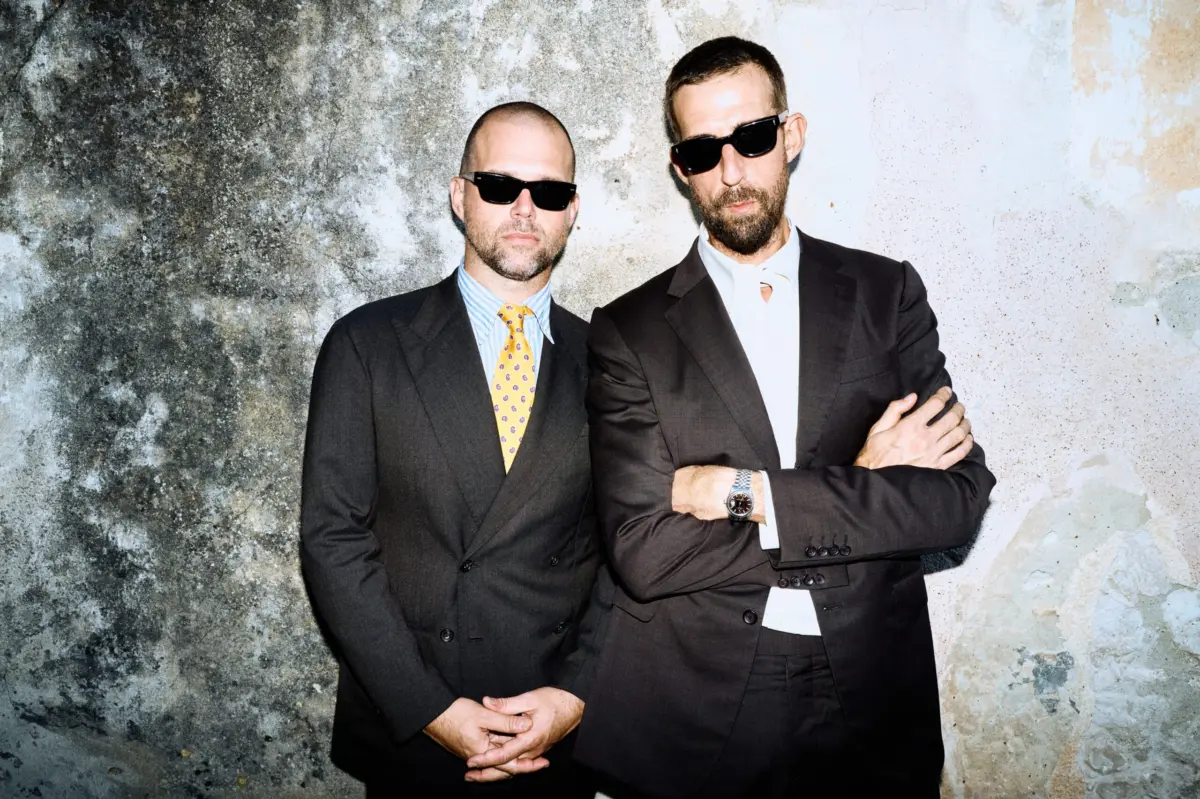
While Hollywood’s elite gathered under the bright lights of Los Angeles for television’s biggest night at the Primetime Emmys, an entirely different cultural axis was shifting across the country. In Manhattan, the independent creative class prepared for a new kind of reckoning: The Goneies, the inaugural awards show and live-event spectacle masterminded by Chris Black and Jason Stewart, the acerbic hosts of the culturally ubiquitous pop-culture podcast How Long Gone.
Hosted at the Lower East Side venue Racket NYC, the Goneies represents a major milestone for a show that has steadily expanded from a niche audio program into a bicoastal lifestyle brand. Featuring performances from indie cult favorites like Nirosta Steel, Blondshell, Kevin Morby, and J. Mascis, alongside a house band led by Grammy-winning producer Brad Cook, the event serves as a physical manifestation of the dry, hyper-online humor that has captivated the "terminally online" literati.
Yet, the Goneies is much more than a live-recording vanity project. It is a calculated entry into the burgeoning business of live podcast monetization, securing high-profile corporate backing from platforms like Meta’s Threads and audio powerhouse Marshall. Furthermore, the event inadvertently forced a public peace treaty between Black and Bowen Yang of the rival Las Culturistas podcast, transforming a satirical jab at the mainstream awards industrial complex into a moment of genuine industry diplomacy.
Detailed Chronology: From Lower East Side Bar to Racket NYC
The genesis of the Goneies reads less like a traditional corporate pitch meeting and more like a late-night riff between close friends—which is, fittingly, exactly how it started.
Sitting in a dimly lit Lower East Side hotel bar just hours before showtime, Black and Stewart recounted the origins of the event to Variety. The concept began as a piece of casual banter on How Long Gone.
"We were talking about the Las Culturistas Awards on the podcast, and we said, ‘What if there was a Las Culturistas Awards for guys like us?’" Stewart explains, referencing the annual crowd-pleasing kudocast hosted by Bowen Yang and Matt Rogers. While both podcasts anchor themselves in the upper echelons of modern cultural discourse, How Long Gone has cultivated a reputation for skewing slightly more straight, snarky, and cynical than its Bravo-adjacent counterpart.
What started as a throwaway joke about categories like "Best Normal Restaurant" and the tongue-in-cheek "Ally of the Year For the Gay Guy Who’s Rockin With Us the Most" quickly gained momentum. The turning point arrived when Ian Wheeler, co-founder of the podcast distribution hub Talkhouse, caught wind of the bit. Wheeler seized upon the idea, floating both the concept and the intentionally misspelled The Goneies.
"We’re trying to make the things the guys say on the show happen in real life," says Wheeler, affectionately dubbed the "fairy godmother" of How Long Gone by the co-hosts. Wheeler’s enthusiasm transformed a running gag into a logistical reality, driving the production forward with corporate alignment and a venue booking at Racket NYC.
Once the logistical framework was established, the co-hosts turned their attention to the physical artifact of the evening: the trophy itself. Eschewing the conventional aesthetic of traditional Hollywood statuettes, Black and Stewart had only one strict design mandate.
"Not like those stupid Emmy awards," Stewart quips.
"All those can do is sit in your bathroom in Brentwood," Black adds.
The primary requirement for the "Goneie" was simple: winners had to be able to drink directly out of it, à la the National Hockey League’s Stanley Cup. However, the final product vastly exceeded expectations in both physical scale and comedic irony. Recounting a preview of the trophy, Black notes that Wheeler sent a photograph of his home awards shelf—which includes a prestigious Peabody Award—only to find the towering Goneie utterly dwarfing his prior achievements.
"It’s kind of perfect," Black reflects. "I like that it means less, but is more."
Supporting Context & Metrics: The Bicoastal Creative Economy and Corporate Sponsorship
The launch of the Goneies arrives at a crucial inflection point for digital media and creator-led enterprises. As traditional podcast advertising models face margin compression, creators are increasingly looking toward "IRL" (in-real-life) activations to drive fan engagement, merchandise sales, and high-margin ticket revenue.
For How Long Gone, the move into live events capitalizes on a deeply loyal, highly discerning demographic often referred to as the "creative class"—architects, writers, stylists, designers, and media professionals primarily clustered in Brooklyn and Los Angeles.
"I think it’s a hard audience to have credibility with and to be actually authentic with," Wheeler notes of the show’s demanding listenership. "And I think these guys do it better than anybody else."
This cultural cachet did not go unnoticed by major corporate sponsors. Despite the podcast’s sardonic, anti-establishment tone, the Goneies successfully secured backing from mainstream heavyweights, including Meta’s real-time text app Threads and amplifier manufacturer Marshall.
Bridging the gap between underground credibility and corporate sponsorship is notoriously tricky, but Black approaches the dynamic with characteristic pragmatism. When asked about raising corporate awareness for a show known for its niche cultural gatekeeping, Black points to the inner workings of modern offices: "There’s always someone somewhere that listens to us. Maybe it’s not the boss, but it’s the cool person in the office who tells the boss."
Deconstructing the Categories and Nominees
Esoteric humor meets mainstream pop-culture curation in the official Goneie categories. Eschewing traditional industry metrics, the voting body for the awards consists exclusively of two individuals: Chris Black and Jason Stewart. Furthermore, nominees were not notified in advance, though the co-hosts readily admit that physical attendance at Racket NYC significantly boosted a contender’s electoral prospects.
"Being in town moves the needle a lot," Stewart acknowledges.
To ensure absolute procedural integrity—and perhaps to preempt any potential broadcast disasters—Black playfully reassures listeners: "The PricewaterhouseCoopers briefcase hasn’t landed yet," guaranteeing there would be no repeat of the infamous Moonlight–La La Land Oscar envelope mix-up.
Among the categories announced by Variety ahead of the event are two high-profile races:
- It Girl of the Year: A fiercely contested battle featuring Rachel Sennott, Audrey Hobert, Chëlita Collins, Veronika Slowikowska, Mary Beth Barone, Ivy Wolk, and Jake Shane.
- Album of the Year: An eclectic showdown pairing pop behemoths Drake and Charli xcx directly against indie-rock royalty Kevin Morby and Kurt Vile.
Despite wanting to lean fully into classic Hollywood tropes—such as deploying a celebrity’s offspring to hand out trophies—logistical realities intervened. "Obviously we wanted to get someone’s hot daughter to give the awards," Black says. "You know how they always have like Susan Sarandon’s daughter in a ball gown actually holding the award? But we just couldn’t get it together in time. We know too many famous people’s kids to make a choice."
Official Statements and Industry Diplomacy: Squashing the "Beef"
For years, comparisons between How Long Gone and Bowen Yang and Matt Rogers’ Las Culturistas have been a staple of media-industry gossip. Both podcasts command obsessive, culturally fluent followings, yet occupy distinct ideological spaces within the audio landscape.
Because Black has occasionally used the How Long Gone microphone to voice pointed critiques of Yang, the advent of the Goneies introduced a layer of awkward meta-commentary. The entire premise of an indie-guy awards show directly mirrors the path blazed by Las Culturistas, whose annual awards show grew in stature until it was broadcast on Bravo.
However, the process of bringing the Goneies to life prompted a surprising philosophical shift for Black—one that culminated in an unexpected, real-time public confession.
"I want to say something right here, right now on the record," Black states during the interview with Variety. "Two days ago, I sent Bowen a heartfelt apology. I was like, ‘You know what? We’re biting his whole shit right now. I need to pay respects.’ And so I did, and he received it warmly."
The revelation caught even co-host Jason Stewart off guard. "Really?" Stewart asks, genuinely surprised. "I didn’t know this."
Black elaborates on the nature of their past critique, contextualizing it within the broader ecosystem of comedy podcasting. "When we’re making fun of something like that over and over, it’s obviously sort of rooted in: These guys are doing the same thing we do, but they make a lot more money," Black explains, comparing their standing to heavyweight audio operations like SmartLess. "Bowen and Matt are people we would in theory socialize with. So I wanted to send the olive branch his way, via Instagram. We squashed the beef."
Future Outlook: The Death and Rebirth of the Awards Show
At its core, the Goneies is born out of a paradoxical sentiment: a profound, nostalgic love for traditional awards ceremonies paired with sheer disdain for what those ceremonies have become.
"Some of our early bonding moments were gathering around a hotel room to watch the VH1 Music Choice Awards or some shit," Stewart recalls. "Awards shows are cultural zeitgeist moments, and those don’t happen very often anymore."
Black laments the current state of televised kudocasts, describing them as "just a shell of what they once were." By stripping away the bloated corporate pageantry and injecting a healthy dose of insider roasting, the co-hosts aimed to preserve what they believe makes awards shows genuinely compelling: roasting the people in the room and celebrating transcendent live music.
With a star-studded house band led by Brad Cook, performances from indie luminaries, and a room split evenly between industry insiders and ticket-buying fans, the inaugural Goneies establishes a new blueprint for creator-led live entertainment. Whether the event expands into a multi-city tour or remains a singular Manhattan institution remains to be seen. But as Black, Stewart, and their corporate backers proved at Racket NYC, the cultural appetite for self-aware, high-concept irony is stronger than ever—trophy size notwithstanding.