






Date: October 2026
Industry Sector: Interactive Entertainment, Cloud Computing, Gaming Hardware & Software
Primary Focus: Cross-Platform Releases, IP Partnerships, Community Updates, and Generative Development Platforms
Executive Overview
The global interactive entertainment landscape is undergoing a period of profound restructuring, defined by the convergence of high-end console blockbusters, cloud-native distribution models, and democratized game development tools. Over the past week, the industry has witnessed several major developments that underscore how publishers and tech giants are redefining player accessibility and community engagement.
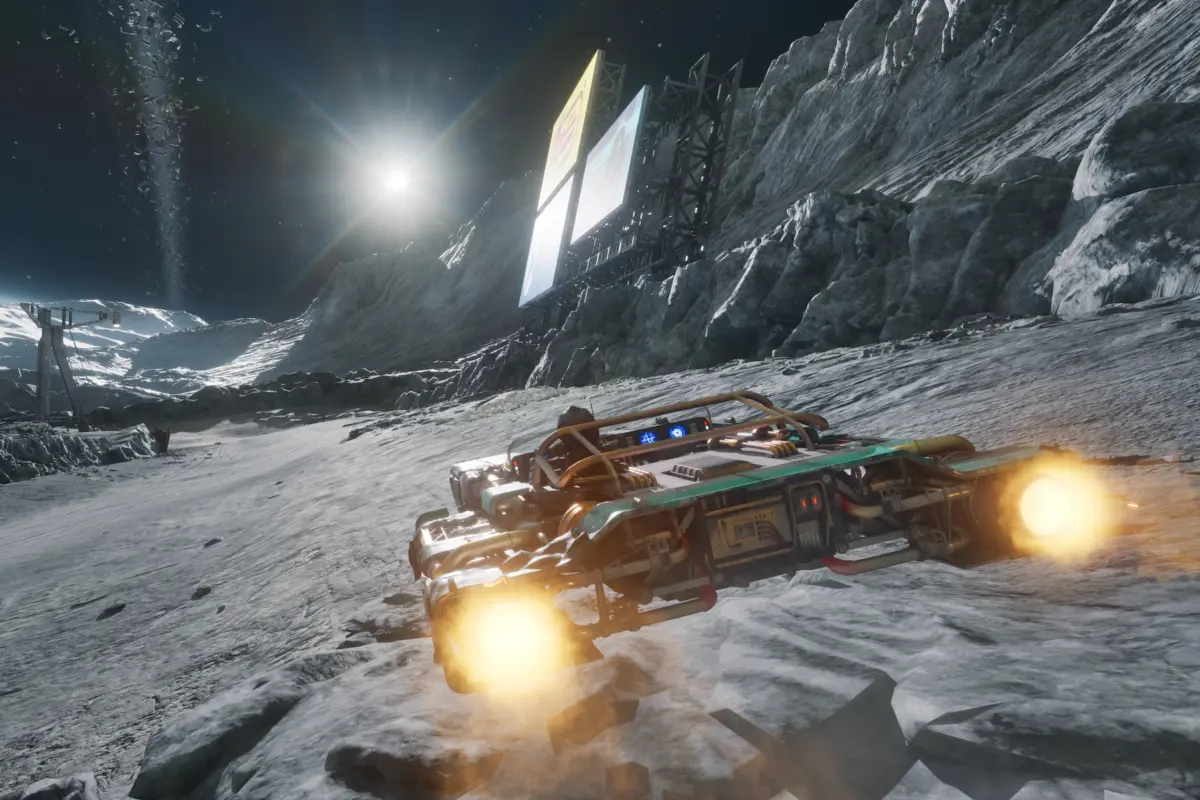
Foremost among these is the worldwide launch of Star Wars: Galactic Racer, a high-octane repulsorcraft racing title developed by Fuse Games. Notably, the game marks a major milestone for Amazon’s cloud gaming service, Luna, arriving via a day-and-date release that allows Amazon Prime members to stream the single-player campaign instantly without hardware restrictions.
Concurrently, major publishers and platform holders have leveraged major fan events—such as RuneFest 2026 and New York Comic Con—to unveil sweeping product roadmaps. Jagex announced an ambitious multi-year content pipeline for its RuneScape ecosystem, culminating in the early development of an unannounced fourth MMO built in Unreal Engine. In the realm of user-generated content and artificial intelligence, Google has introduced "Playground," an experimental browser-based platform enabling users to generate, modify, and publish fully realized multiplayer games using conversational natural-language prompts.
This report provides a comprehensive, multi-faceted analysis of these events, examining their strategic implications for publishers, developers, and consumers alike.
Detailed Chronology & Segment Breakdown
1. Cloud Gaming Breakthrough: Star Wars: Galactic Racer Arrives on Amazon Luna
The release of Star Wars: Galactic Racer represents a watershed moment for subscription-based cloud gaming. Developed by Fuse Games—an acclaimed studio founded by industry veterans celebrated for their work on the seminal Burnout and Need for Speed arcade-racing franchises—the title transports players to a galaxy far, far away for high-stakes, un-sanctioned repulsorcraft competition.
Set during the nascent years of the New Republic era, the narrative introduces the Galactic League, an underground racing circuit orchestrated by the enigmatic promoter Darius Pax. Players assume the identity of Shade, an independent racer driven by competing desires for personal glory and deep-seated vengeance. The racing circuits span iconic and treacherous planetary environments across the Star Wars universe, including the vast dunes of Jakku, the atmospheric debris fields of the Graveyard of Giants, the frozen wastes of Ando Prime, and the industrial infrastructure of Sentinel I.
Crucially, the game’s deployment strategy sets a new technical and commercial precedent. Eschewing traditional console exclusivity or delayed platform ports, Star Wars: Galactic Racer launched simultaneously on PlayStation 5, Xbox Series X/S, PC, and Amazon Luna.
For Amazon, this day-and-date parity represents the realization of long-held strategic goals for the Luna ecosystem. By bypassing lengthy installation processes and removing the barrier of dedicated console hardware ownership, Amazon has integrated AAA-tier gaming directly into its existing Prime subscription model at no additional cost.
2. Live-Service Longevity: RuneFest 2026 and the Future of RuneScape
At RuneFest 2026, British developer Jagex captivated its long-standing community by outlining a massive, multi-year strategic roadmap for the RuneScape intellectual property. The announcements spanned classic editions, modern survival spin-offs, and an entirely new generation of massively multiplayer online gaming.
The most monumental revelation of the weekend was the confirmation that Jagex has begun early development on a fourth RuneScape MMO. Designed to translate the lore-rich world of Gielinor into Unreal Engine, the untitled project aims to merge the institutional depth, systemic freedom, and community-driven ethos that have characterized RuneScape for a quarter-century with modern, high-fidelity graphics and advanced game design architecture.
In the near term, the developer announced "RuneScape Reignited," launching on December 2. Serving as a welcoming portal for both returning veterans and newcomers, Reignited will offer unrestricted access without a mandatory subscription from December 2 through December 12. Additionally, a dedicated Plugin API will enter early hands-on testing in October ahead of its official rollout.
The studio also detailed its 2027 content arcs, divided into three major thematic narratives:
- Hoard of Dragons (January): A direct narrative sequel to the legendary Dragon Slayer quest line.
- City of Gnomes: A continuation of the sprawling gnome storyline that first originated in 2002.
- Secrets of Karamja: The introduction of a challenging new endgame raid, accompanied by an extensive rework of the Agility skill, new skilling challenges, solo boss encounters, area expansions, and a brand-new Grandmaster Quest.
Meanwhile, RuneScape: Dragonwilds is set to receive "Luminance" in December, functioning as a narrative prelude to the 2027 "Blood Crystal Saga." This update introduces the Elves to Dragonwilds, complete with elven architectural customization options and the Prayer skill. The Blood Crystal Saga will officially commence in early 2027 with Song of Rebellion, bolstered by an official modding framework developed in partnership with CurseForge.
3. IP Partnerships, Comic Con Collaborations, and Seasonal Entertainment
The convergence of physical collectibles, music, and digital platforms was prominently on display through high-profile collaborations unveiled ahead of New York Comic Con.
- Kayou and Zara Larsson x Winx Club: Premium trading card manufacturer Kayou announced a limited-edition collectible card featuring international pop star Zara Larsson. Posing alongside the iconic fairies of the Winx Club, Larsson is depicted in the distinctive outfit from her popular "Midnight Sun" music video. The exclusive cards are slated to debut at New York Comic Con, alongside Kayou’s broader collectible offerings for KPop Demon Hunters, My Little Pony, and Monster Jam.
- Discord and The Living Tombstone: In anticipation of the Halloween season, voice and text platform Discord partnered with musical act The Living Tombstone to produce an original track titled "Don’t Hang Up the Call" alongside a custom-animated music video. The song draws thematic inspiration from modern digital socialization habits within online communities. Furthermore, The Living Tombstone has engineered a specialized, seasonal remix of Discord’s signature ringtone. This collaboration taps into Discord’s massive monthly active user base, which exceeds 30 million participants engaging across gaming, personal, and interest-based servers—including 7.2 million users within dedicated music communities.
- Fusebox Games and The Traitors: Mobile games publisher Fusebox Games officially launched The Traitors: Interactive Game on iOS and Android platforms. Based on the psychological television phenomenon, the game tasks players with surviving a 12-day social experiment in a remote castle alongside 22 virtual contestants. Players construct their foundational playstyles by selecting core character traits—such as the outspoken leader, the adaptable chameleon, or the chaotic wildcard—balancing cooperative mission objectives with strategic deception during high-stakes Round Table discussions.
4. Generative Democratization: Google’s "Playground" and Unity Spark Integration
In the technology sector, artificial intelligence and browser-based development took center stage with Google’s introduction of "Playground." This experimental gaming platform is designed to lower the barrier to entry for game creation, allowing users of all technical skill levels to conceptualize, play, and distribute fully functional games without writing a single line of code.
Utilizing an advanced conversational interface, Playground interprets natural-language instructions provided by the user. Creators can type descriptive prompts, remix existing starter templates, or engage with guided support frameworks to bring their ideas to life. The system enables real-time iteration, allowing users to modify rule sets, adjust character behaviors, and alter environmental parameters on the fly. Operating directly within standard web browsers, the platform ensures seamless accessibility across mobile phones and laptops.
Once a project is completed, creators retain absolute distribution control: games can be kept private, shared privately via customized URLs, or published directly to the public Playground community directory. Because the platform natively supports multiplayer infrastructure, published titles feature integrated in-game leaderboards and social follow systems.
Looking ahead, Google confirmed the upcoming rollout of the "Unity Spark Integration: Playground." This professional-grade bridge will allow advanced creators to seamlessly transition their browser-born concepts into Unity Spark, unlocking sophisticated mechanics, high-performance 3D rendering capabilities, and the robust flexibility of the Unity runtime environment.
Supporting Context & Metrics
To contextualize the commercial weight and technological significance of these developments, industry analysts have highlighted several key metrics:
- Cloud Accessibility Metrics: Amazon Luna’s day-and-date integration of Star Wars: Galactic Racer eliminates hardware purchase friction for an estimated tens of millions of Amazon Prime subscribers globally, representing one of the largest immediate addressable audiences for a day-one cloud release in history.
- Community Scale: Jagex’s announcement of its fourth MMO underscores the enduring commercial viability of the RuneScape intellectual property, which has sustained active player engagement and iterative expansions across two and a half decades.
- User-Generated Ecosystems: Discord’s cultural reach—highlighted by its 30 million monthly server participants—continues to serve as a vital nexus for cross-promotional entertainment campaigns, evidenced by its partnership with The Living Tombstone.
Official Statements
Industry leaders emphasized the strategic vision behind these product launches and corporate alignments:
"We’ve always believed Luna players deserve to be in the action from day one, and Star Wars: Galactic Racer makes that a reality for the first time. Luna players can jump into the single-player campaign today without needing to own a console or wait for a lengthy download. And the best part: if they’re a Prime member, they already have it at no additional cost. It’s exactly the kind of experience we want to deliver on Luna, and we think players are going to love it."
— Jeff Gattis, Head of Gaming at Amazon"When it comes to adapting iconic entertainment IP, Fusebox Games is as faithful a partner as they come. Our history is built on story-based, choice-driven games that put players in control, making the deceit and strategy of The Traitors a natural fit. We’re giving fans the chance to step out of the audience and take a seat at the table and tell their own story at the castle."
— Terry Lee, CEO of Fusebox Games
Future Outlook
The developments recorded this week point toward several structural shifts in the interactive entertainment sector over the coming 12 to 36 months:
- The Normalization of Day-One Cloud Parity: The successful execution of Star Wars: Galactic Racer on Amazon Luna sets a new standard for multi-platform releases. Publishers are increasingly likely to view cloud streaming services not as secondary ports, but as primary distribution channels capable of capturing subscription audiences on launch day.
- AI-Assisted Democratization: Google’s Playground platform—alongside its upcoming Unity Spark integration—signals a paradigm shift in user-generated content. By replacing rigid coding requirements with conversational AI prompts, the barrier between consumer and creator is rapidly dissolving, paving the way for hyper-rapid prototyping and community-driven game design ecosystems.
- Live-Service Longevity and Modernization: Jagex’s roadmap demonstrates that established intellectual properties can successfully bridge legacy communities with next-generation technology. The transition of classic franchises like RuneScape into modern engines like Unreal Engine, paired with robust modding pipelines via CurseForge, ensures that historical franchises will remain competitive against contemporary live-service competitors.
As the industry moves toward the close of the fiscal year, stakeholders will closely monitor the adoption rates of cloud-native releases, the consumer response to conversational game development engines, and the commercial performance of transmedia entertainment partnerships.