Executive Overview
In the perpetual cat-and-mouse game between digital rights management (DRM) providers and software pirates, a legal battle is unfolding that could forever alter the landscape of PC gaming security. Denuvo, the industry-leading anti-tamper protection software owned by multinational technology corporation Irdeto, has escalated its enforcement strategy from technical mitigation to direct federal litigation. In a landmark move, Denuvo has petitioned a California federal court for permission to issue expedited subpoenas to major technology giants Discord, Valve, and Reddit.
The primary objective of this legal maneuver is to pierce the veil of anonymity protecting “voices38,” a prolific and elusive game cracker accused of systematically bypassing Denuvo’s robust anti-tamper protections across dozens of high-profile commercial titles, including blockbusters like Hogwarts Legacy and Black Myth: Wukong. Because the initial Digital Millennium Copyright Act (DMCA) anti-circumvention lawsuit filed last month targeted an unknown pseudonym, Denuvo now relies on judicial intervention to unearth the true identity behind the digital persona.
Beyond seeking foundational registration data, IP logs, and billing histories from Valve’s Steam platform, court filings reveal that Denuvo’s investigative net extends into the complex world of cryptocurrency. Investigators have already mapped blockchain activity tied to the defendant on FixedFloat, an instant crypto exchange. As Judge Haywood S. Gilliam Jr. weighs whether to grant the motion for expedited discovery, the ripple effects of this litigation are already reverberating through the piracy underworld. Prominent cracking collectives have disbanded, and online forums have purged links, signaling that Irdeto’s aggressive strategy is successfully creating a chilling effect across the underground ecosystem—even if the primary target, voices38, initially dismissed the legal pressure with a nonchalant wave of bravado.
Detailed Chronology: From Digital Infractions to Federal Court
The legal confrontation between Irdeto-owned Denuvo and the anonymous entity known as voices38 did not materialize overnight; it represents the culmination of a protracted technological war of attrition.
The Campaign Against Anti-Tamper DRM
For years, Denuvo has served as the gold standard—and frequent lightning rod—for game publishers seeking to protect their initial sales windows from day-one piracy. By implementing sophisticated encryption and virtual machine-based anti-tamper technologies, Denuvo successfully stalled the rapid unzipping of major AAA titles. However, specialized reverse-engineers and crackers persistently targeted the software.
Among these actors, voices38 emerged as a remarkably effective disruptor. Operating from the shadows of online forums and encrypted chat rooms, the cracker managed to bypass Denuvo’s protections on 26 distinct video games. The scale of these bypasses inflicted substantial economic anxiety on game studios that invest hundreds of millions of dollars into production budgets, expecting protected sales windows to safeguard their bottom lines.

Filing the DMCA Lawsuit
Realizing that purely software-based countermeasures could not entirely deter determined bad actors, Irdeto took the fight off the digital grid and into the physical courtroom. Last month, legal representatives for Denuvo filed a formal DMCA anti-circumvention lawsuit.
The initial complaint, however, presented a unique procedural hurdle: Denuvo did not know the legal name, address, or true identity of the individual operating the account. The lawsuit relied entirely on digital footprints—specifically, a designated Discord user ID, a Reddit handle, and seven distinct Steam profiles associated with the cracking activities. To move past this procedural roadblock, Denuvo required court-ordered cooperation from the corporations hosting these digital touchpoints.
The Motion for Expedited Discovery
Following the filing of the initial complaint, Denuvo’s legal counsel attempted to quietly obtain user data from the platform operators directly. These outreach efforts yielded predictable brick walls. Valve and Reddit both cited rigorous internal privacy policies, stating they could not voluntarily surrender private user records without a binding court order. Meanwhile, Discord allegedly failed to respond entirely to the informal requests.
Faced with institutional resistance, Denuvo submitted an ex parte motion for expedited discovery to the United States District Court for the Northern District of California. Authored by attorney Ryan Morris, the motion asks the presiding judge to grant immediate subpoena power to compel Discord, Valve, and Reddit to turn over identifying records before the commencement of the standard civil discovery phase. This extraordinary legal step underscores the urgency with which Denuvo views the preservation and acquisition of perishable digital evidence, which could otherwise be deleted or obscured by a savvy defendant.
Supporting Context & Metrics: Unpacking the Subpoenas and Crypto Trails
The scope of Denuvo’s proposed subpoenas, as outlined in the recent federal filings, provides a fascinating glimpse into modern digital forensics and the multifaceted nature of online identity tracking.
The Steam Profile Nexus
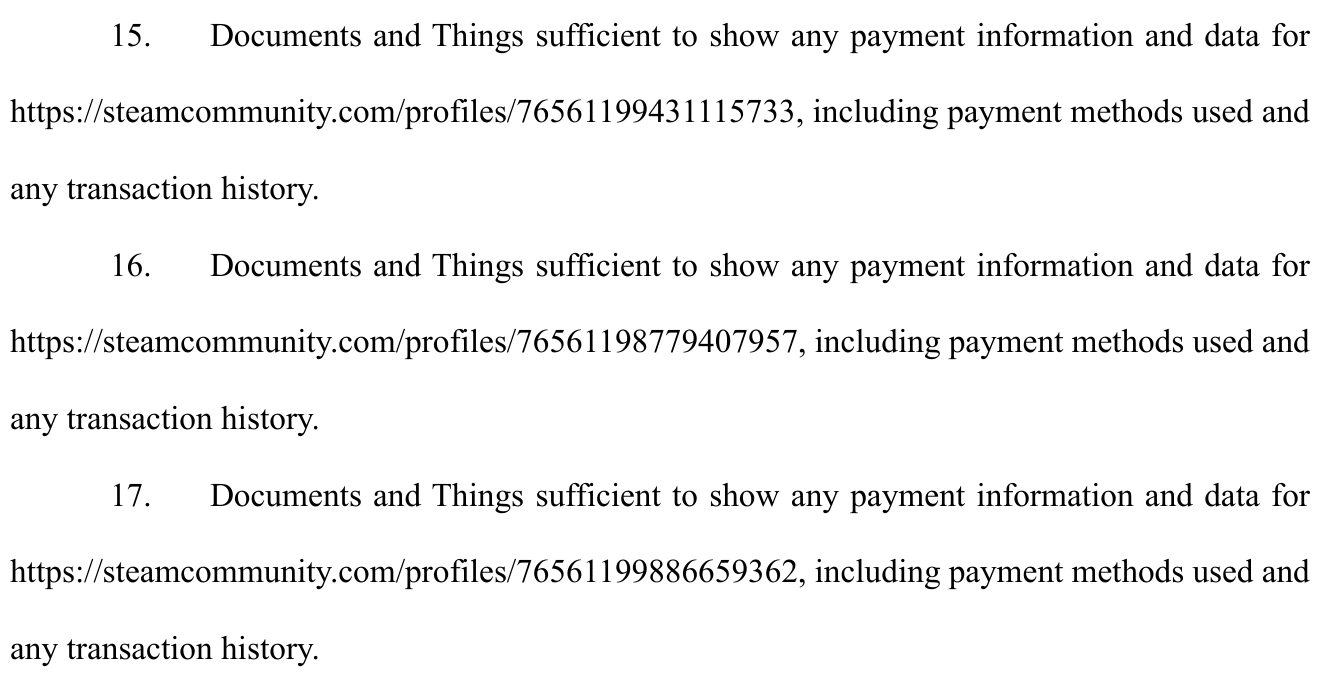
Valve Corporation finds itself squarely in the crosshairs of the discovery request. Denuvo has asked the court to compel Valve to hand over comprehensive registration data, legal names, and billing addresses tied to seven specific Steam user accounts.
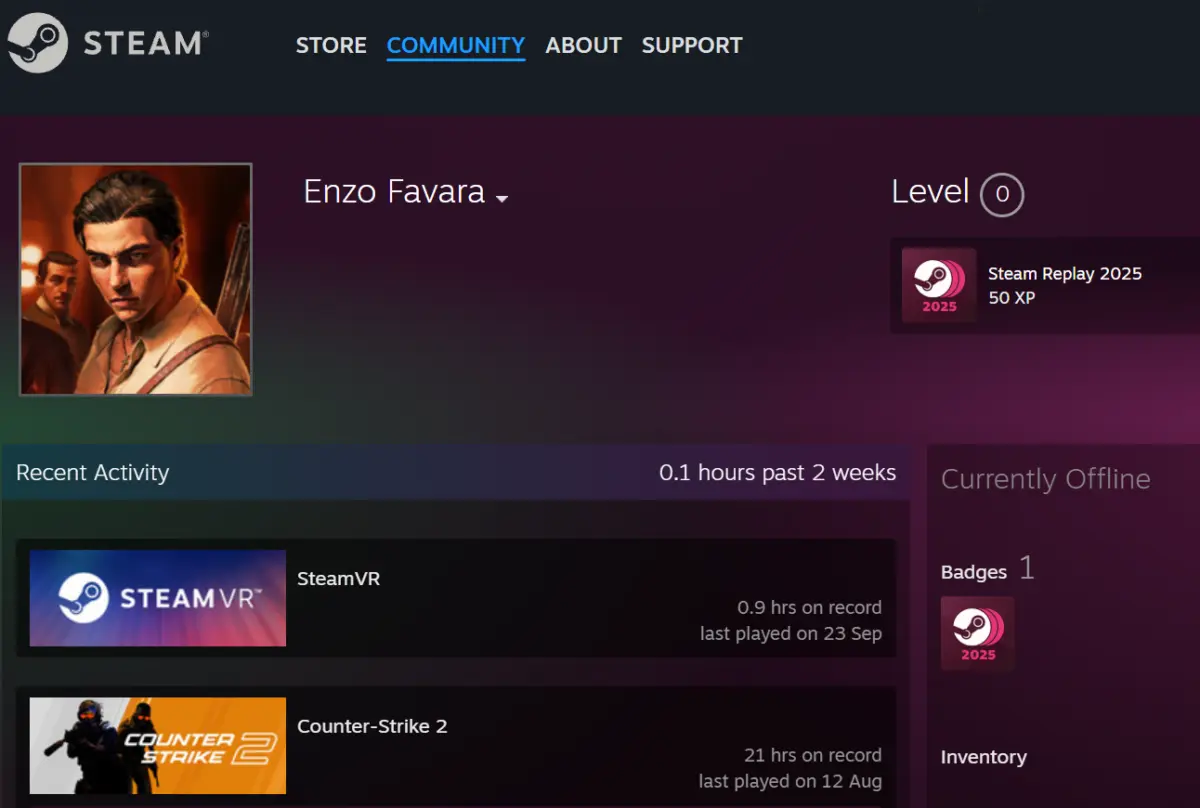
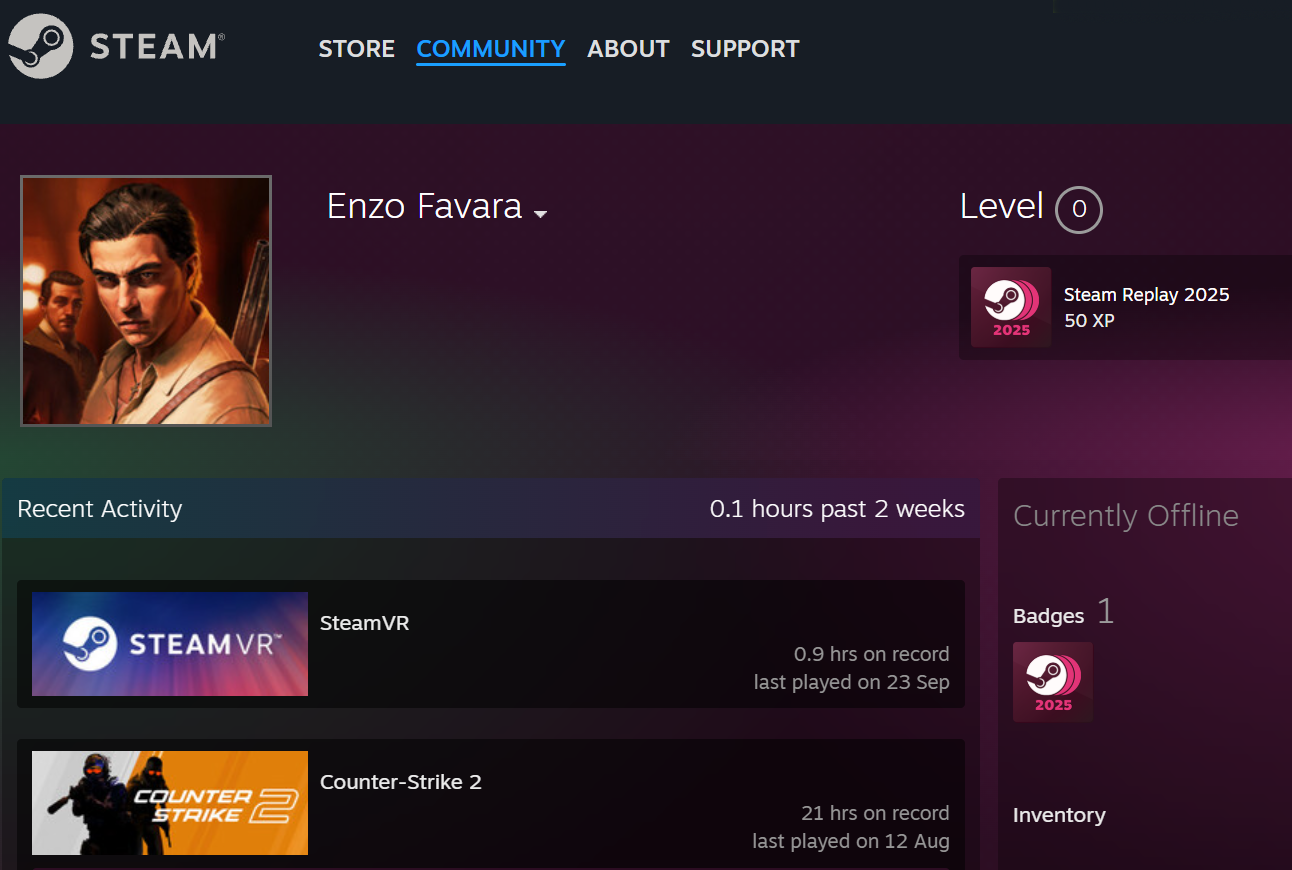
Curiously, one of the Steam profiles highlighted in the court documents utilizes the moniker "Enzo Favara"—the name of the protagonist from Mafia: The Old Country, a title included in Denuvo’s ledger of breached games. While the seven profiles exhibited relatively low direct gaming activity on the surface, Denuvo’s internal telemetry and analytical mapping successfully linked them to the broader orchestration of the voices38 cracking operations.
In addition to basic registration details, the proposed subpoena demands:
- Complete payment methods and historical transaction records.
- IP addresses accompanied by precise timestamps.
- Device identifiers used to access the platform.
- Cross-platform account linkages connecting Steam to external services.
Discord and Reddit Data Harvesting
The subpoenas directed at Discord and Reddit are equally granular, designed to map out the social and conversational footprint of the suspect.
- Discord: Denuvo is requesting a comprehensive list of all servers the target account is currently or previously a member of, along with the specific roles and permissions assigned to the user within those communities. This data could reveal inner circles, collaborative networks, or distribution channels utilized by the cracker.
- Reddit: The subpoena targets all public posts, private comments, and subreddit memberships associated with the voices38 handle. Given that Reddit often serves as a sounding board, status-reporting platform, and community hub for software modification and reverse-engineering enthusiasts, these archives could establish a paper trail of intent and authorship.
The FixedFloat Cryptocurrency Dimension
Perhaps the most intriguing revelation in Denuvo’s recent filings is the expansion of the investigation into the cryptocurrency ecosystem. According to declarations submitted by attorney Ryan Morris, Denuvo’s investigative team uncovered explicit cryptocurrency transactions executed by the defendant on FixedFloat, an instant crypto-asset exchange.
The transactions identified in the court documents involve major cryptocurrencies, including Bitcoin (BTC), Ethereum (ETH), and Solana (SOL). FixedFloat is particularly notable in the digital privacy landscape; the platform actively markets its exchange services as hassle-free, operating under a model that requires "no registration and unnecessary details."
While the legal declarations currently omit the precise methodology Denuvo used to bridge public blockchain ledgers back to the voices38 identity—and stop short of petitioning the court for a direct subpoena against FixedFloat itself—the inclusion of cryptocurrency data signals that financial tracking is becoming a cornerstone of anti-piracy litigation. By following the money, security firms hope to catch anonymous crackers who may believe crypto operations completely shield their illicit monetization or community tipping models from traditional scrutiny.
Official Statements and Industry Impact
While formal statements from the elusive defendant remain sparse, the wider cyber-security and gaming communities have reacted intensely to Denuvo’s aggressive legal posture.
The Defendant’s Defiant Stance
Initially, the entity behind the moniker appeared entirely unfazed by Irdeto’s legal offensive. Shortly after news of the initial DMCA lawsuit broke across mainstream tech and gaming media outlets, voices38 took to Reddit to project absolute calm and resilience.
"All is fine. Everything will continue as normal," voices38 wrote to the online community.
However, actions speak louder than anonymous forum posts. In the weeks following that public display of bravado, the cadence of new software releases bearing the voices38 signature dropped to a complete standstill. Whether this sudden silence is a tactical retreat, a precautionary measure prompted by legal counsel, or the direct result of investigative panic remains unconfirmed, but the silence has not gone unnoticed by industry observers.
A Chilling Effect Across the Underground
The true power of Irdeto’s lawsuit may lie less in its ability to extract civil damages from a single individual and more in its systemic psychological impact on the broader piracy community.
Late last month, industry analysis from outlets like Tom’s Hardware documented a massive shockwave running through software cracking circles. DenuvOwO, a prominent cracking collective notorious for releasing hypervisor bypasses that systematically undermined Denuvo’s protections on dozens of titles, abruptly announced it was disbanding. According to reports, group members cited the looming threat of federal litigation from Irdeto as a primary catalyst for their sudden shutdown.
Simultaneously, traditional clearinghouses and piracy hubs—most notably the influential CS.Rin community forum—began proactively purging links, threads, and hosting references related to DenuvOwO’s releases. Moderators and administrators across various underground platforms recognized that hosting tools designed to circumvent corporate DRM was no longer merely a violation of community guidelines or a low-risk copyright infraction; it had become an actionable federal offense carrying severe legal and financial liabilities under the DMCA.
Future Outlook: What Lies Ahead
As the legal proceedings enter their next critical phase, all eyes turn toward United States District Judge Haywood S. Gilliam Jr.
Judicial Discretion and Discovery Approval
The immediate milestone is the court’s ruling on Denuvo’s ex parte motion for expedited discovery. Under standard U.S. federal civil procedure, formal discovery occurs only after a defendant has been properly served and a Rule 26(f) conference has taken place. However, courts frequently grant narrow, expedited discovery requests in internet infringement cases where plaintiffs cannot otherwise identify anonymous John Doe defendants.
If Judge Gilliam grants the motion, Discord, Valve, and Reddit will be legally compelled to comply with the subpoenas, handing over the requested IP logs, billing details, and communication metadata. Should those records point directly to a verifiable real-world identity, Denuvo’s legal team will amend their complaint to name the individual directly, transitioning the lawsuit from an anonymous pursuit to a targeted federal prosecution.
The Broader Future of Digital Rights Management
Regardless of whether voices38 is ultimately unmasked and held liable for substantial statutory damages, the precedent established by this case will cast a long shadow over the future of PC gaming security.
For years, software crackers operated under the comforting assumption that geographical dispersion, VPNs, and pseudonymous forum handles provided an impenetrable shield against corporate retaliation. By successfully leveraging federal subpoena power, multi-platform data harvesting, and blockchain analysis, Irdeto and Denuvo are dismantling that sense of invulnerability.

If Denuvo successfully unmasks voices38, it will send an unmistakable message to the global cracking community: the corporate legal apparatus can, and will, cross the digital divide to find you. While the technological arms race between DRM providers and software reverse-engineers will undoubtedly persist, the battleground has permanently expanded from lines of code in a disassembler to the sobering reality of a federal courtroom.