Executive Overview
In the rapidly evolving landscape of digital cinematography, the boundary between camera bodies and peripheral monitoring systems is dissolving. Historically, production monitors have functioned as passive, "dumb" displays—reliable for framing, exposure evaluation, and color grading preview, but fundamentally disconnected from the internal mechanics of the camera itself. On September 8, 2026, Sony Electronics disrupted this paradigm by announcing the RM-DP7 and RM-DP5: two advanced remote control units designed to fuse high-brightness production monitoring with direct, deep-level camera control.
Priced at $3,099 for the 7-inch RM-DP7 and $2,299 for the 5-inch RM-DP5, these units are engineered to serve as the operational nerve center of modern camera rigs. By shifting critical menu systems, exposure tools, lens focus parameters, and power-zoom controls directly onto the monitor, Sony has addressed a critical pain point for documentary filmmakers, commercial crews, and solo operators. Whether a camera is isolated on a 15-foot jib, mounted to a high-speed vehicle rig, balanced on a heavy-duty gimbal, or positioned in a cramped interior, the operator can maintain absolute control from a comfortable, ergonomically sound viewing position.
Initially launching with native support for the compact tier of Sony’s Cinema Line—including the FX5, FX3, FX2, and FX30—Sony has laid out a clear roadmap to extend this ecosystem to its high-end workhorses, the FX6 and BURANO, via a major firmware update scheduled for the second half of 2027. This release represents a calculated move by Sony to secure its first-party hardware ecosystem, offering a highly integrated, zero-latency alternative to third-party monitoring and camera-control solutions.
Detailed Chronology
The development and rollout of the RM-DP7 and RM-DP5 highlight Sony’s long-term commitment to unified hardware ecosystems. Below is the timeline of this product cycle, detailing its announcement, commercial release, and planned software expansions.
[September 8, 2026] ────► [January 2027] ────────► [H2 2027]
  Official Product          Commercial Shipping      Firmware Update
    Announcement              & Market Release        • FX6 Compatibility
  • RM-DP7: $3,099          • Initial Support:       • BURANO Compatibility
• RM-DP5: $2,299 FX5, FX3, FX2, FX30- September 8, 2026 – The Announcement: Sony officially unveils the RM-DP7 and RM-DP5 remote control monitors, introducing the concept of "BIG6" monitor-integrated camera control to the global production market. The announcement highlights the physical design, pricing structure, and initial camera compatibility list.
- January 2027 – Commercial Release: The RM-DP7 and RM-DP5 begin shipping worldwide. Early adopters among solo operators, rental houses, and commercial production companies integrate the monitors into active workflows, leveraging immediate out-of-the-box compatibility with Sony’s compact cinema systems (FX5, FX3, FX2, and FX30).
- Second Half of 2027 – Enterprise Expansion (Planned): Sony is scheduled to deploy a major, free firmware update. This software release will expand the control protocols of both the RM-DP7 and RM-DP5 to support the mid-tier FX6 and the high-end BURANO cinema cameras. This update is highly anticipated, as it bridges the gap between compact run-and-gun setups and large-scale, multi-camera cine productions.
Supporting Context & Metrics
To appreciate the technological leap represented by the RM-DP7 and RM-DP5, it is necessary to examine their hardware specifications, display capabilities, and interface mechanics.
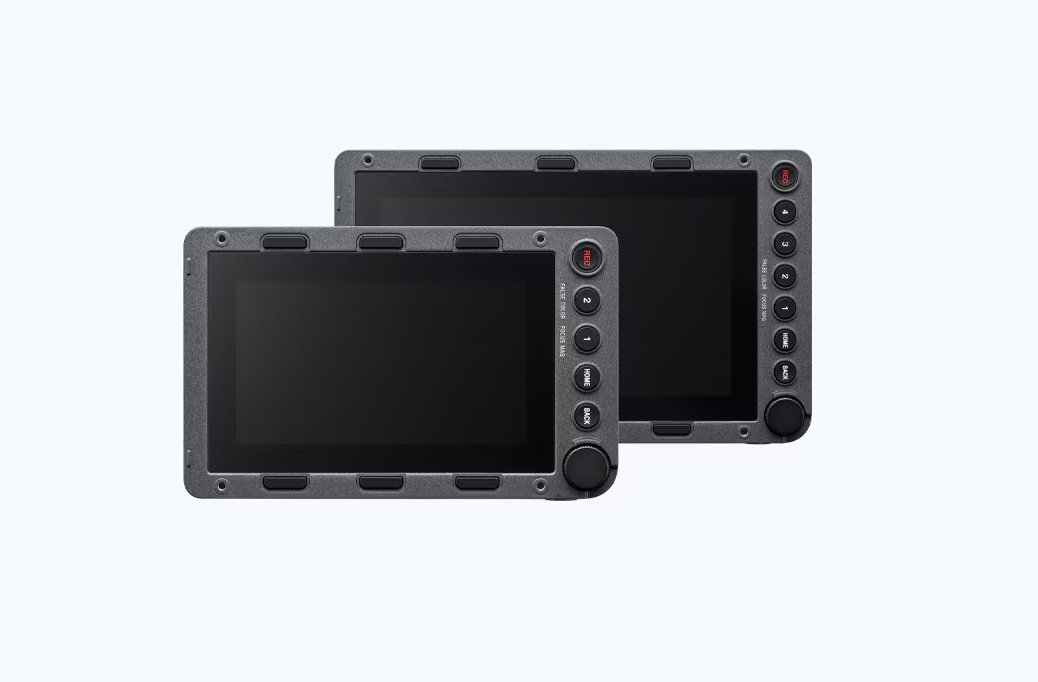
Hardware Specifications: RM-DP7 vs. RM-DP5
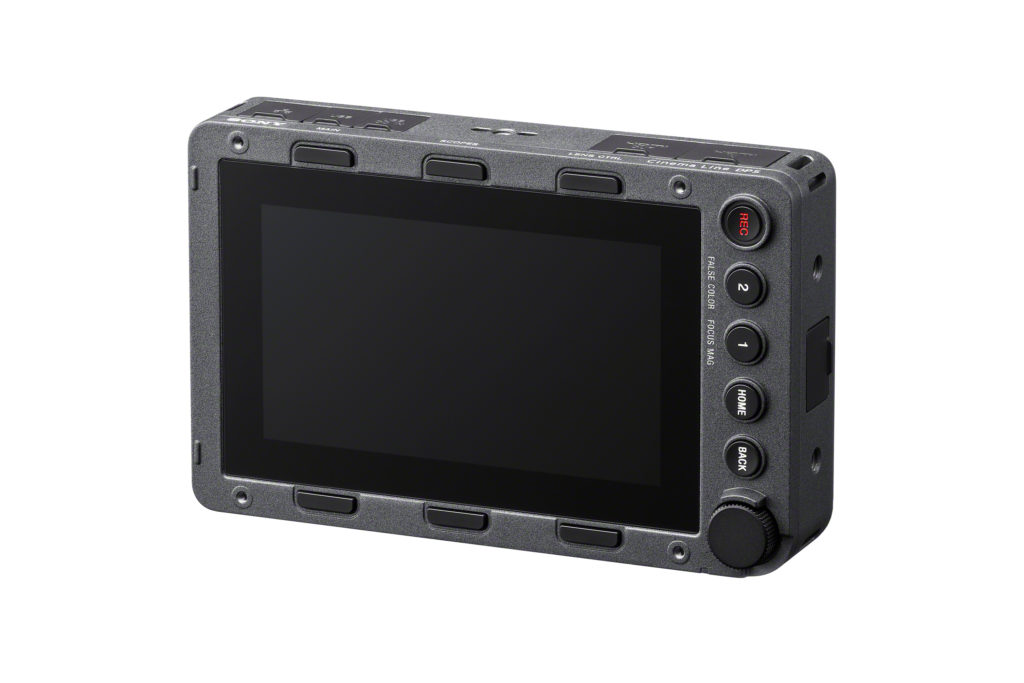
While both units share core processing architectures and software features, they are optimized for different production environments. The RM-DP7 is built as a robust, studio-grade monitor-controller, while the RM-DP5 focuses on lightweight mobility.
| Feature | Sony RM-DP7 | Sony RM-DP5 |
|---|---|---|
| MSRP | $3,099 | $2,299 |
| Display Size | 7.0 inches | 5.0 inches |
| Resolution | Full HD (1920 x 1080) | Full HD (1920 x 1080) |
| Peak Brightness | 2,000 cd/m² (nits) | 2,000 cd/m² (nits) |
| Chassis Material | Rigid Aluminum | Rigid Aluminum |
| Video I/O | 12G-SDI, HDMI (Bidirectional Conversion) | HDMI |
| Power Inputs | Sony BP-U, USB PD, Dedicated DC Input | Sony BP-U, USB PD |
| Environmental Protection | Dust & Moisture Resistant | Dust & Moisture Resistant |
Display Technology and Color Calibration Metrics
High-brightness monitors often sacrifice color accuracy in favor of pure luminance. Sony has countered this limitation by implementing its high-end professional broadcast-monitor calibration technology directly into the RM-DP7 and RM-DP5.
- Luminance and Outdoor Usability: Both panels boast a peak brightness of 2,000 cd/m² (nits). This level of illumination allows for clear viewing under direct, harsh sunlight without requiring a bulky sun hood, which is a critical advantage for outdoor documentary and sports shooters.
- Active Color Drift Compensation: Display panels naturally undergo shifts in color temperature and chromaticity as they warm up during extended operation. Sony’s internal processing engine actively monitors panel temperature and dynamically compensates for color drift, ensuring that the image viewed by the operator remains color-accurate from the first take of the morning to the wrap call at night.
- LUT and Preset Management: To facilitate precise on-set visualization, both monitors support up to 16 user-loadable 3D LUTs alongside six factory-calibrated color presets. This allows crews to view log footage in its final graded state, ensuring exposure and lighting decisions are made with the final output in mind.
Technical Deep-Dive: The Interface Shift
The defining feature of the RM-DP7 and RM-DP5 is their ability to transform the user interface of the camera. At the core of this integration is Sony’s proprietary "BIG6" home screen.
┌─────────────────────────────────────────────────────────┐
│                      "BIG6" UI                          │
├─────────────┬─────────────┬─────────────┬───────────────┤
│    SHUTTER  │     IRIS    │     ISO     │   AUTOFOCUS   │
│   [1/48s]   │    [T2.0]   │   [800]     │  [Active/MF]  │
├─────────────┴─────────────┼─────────────┴───────────────┤
│         WHITE BAL         │         POWER ZOOM          │
│          [5600K]          │           [Direct]          │
└───────────────────────────┴─────────────────────────────┘
The "BIG6" interface consolidates the six most critical shooting parameters—typically Shutter Speed/Angle, Iris, ISO/Gain, White Balance, Focus Control, and Zoom parameters—into a highly visible, instantly accessible dashboard on the monitor.
Tactile Controls vs. Pure Touchscreen Operations
While touchscreens are ideal for navigating complex menus, they can be unreliable in professional shooting environments. Rain, sweat, cold weather, and the use of production gloves can render touch interfaces frustratingly unresponsive. Furthermore, making fine adjustments on a touchscreen requires the operator to look away from the composition.
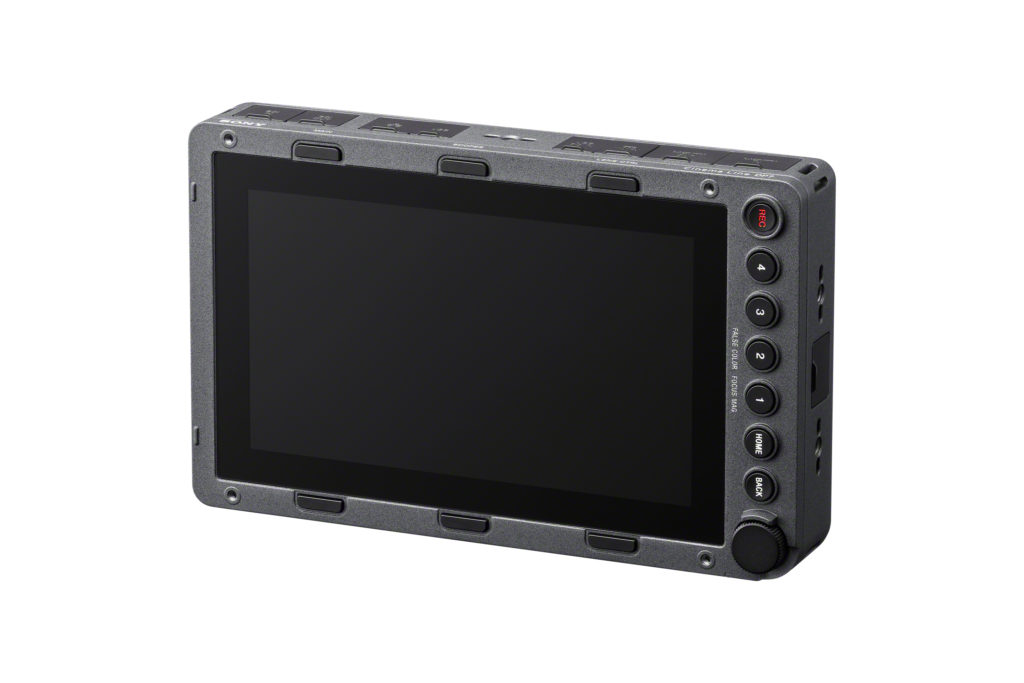
To solve this, Sony has engineered a hybrid interface. The RM-DP7 and RM-DP5 combine capacitive touch screens with dedicated physical hardware:
- Control Knob: A high-precision, tactile rotary dial designed for smooth, incremental adjustments of parameters such as manual focus pull or iris stepping.
- Multifunction Dials: Programmable dials that can be assigned to adjust ISO, white balance, or shutter speed on the fly.
- Assignable Physical Buttons: Tactile buttons that can be mapped to trigger specific camera actions, such as toggling autofocus tracking, activating magnifying tools, or starting/stopping internal camera recording.
Direct Lens and Exposure Control
When connected to compatible Sony E-mount lenses, the RM-DP7 and RM-DP5 bypass the need for external, motorized follow-focus systems.
- Autofocus Integration: Operators can tap-to-focus directly on the monitor screen, utilizing Sony’s advanced real-time tracking and eye autofocus systems.
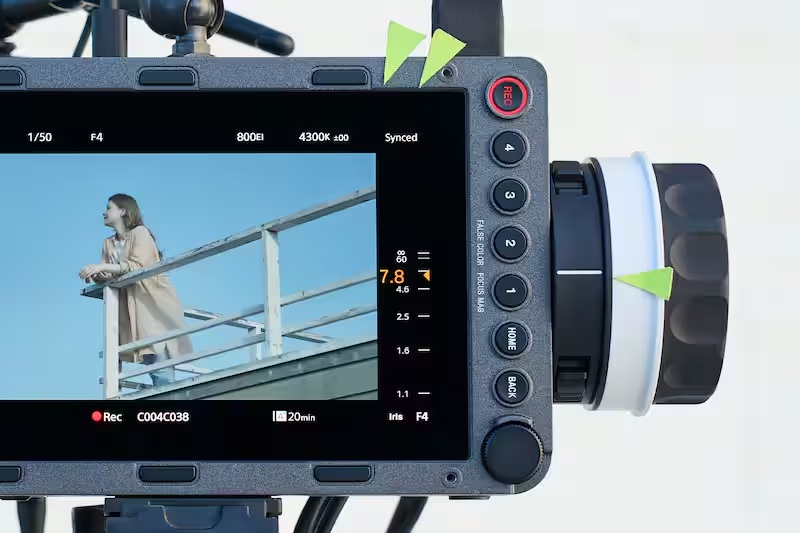
- Power-Zoom Control: For lenses equipped with internal power-zoom motors (such as the Sony FE PZ 28-135mm f/4 G OSS or FE PZ 16-35mm f/4 G), the monitors provide smooth, variable-speed zoom control directly from the physical dials.
- Exposure Manipulation: Internal electronic Variable ND filters (found in cameras like the FX6 and BURANO) can be adjusted in seamless increments from the monitor, allowing for precise exposure adjustments without affecting the depth of field.
Industry Implications & Workflows
The introduction of the RM-DP7 and RM-DP5 addresses several shifting dynamics within the film and television production industries.
The Rise of Small-Crew and Solo Operator Workflows
Modern production budgets increasingly favor small, highly efficient crews. In one- or two-person production environments, a single operator must often manage framing, focus, audio levels, and lighting.
By centralizing camera controls onto the monitor, Sony eliminates the physical strain of constantly reaching for the camera body. On a balanced gimbal, for example, touching the camera body to change an ISO or White Balance setting can disrupt the motor calibration or introduce unwanted vibration. Operating those settings from a monitor mounted to the gimbal’s crossbar keeps the system stable and operational.
Traditional Rig Workflow:
[Camera Body] <─── Physical Strain (Reaching for dials on a balanced gimbal)
      │
[Passive Monitor] (Image display only)

Sony RM-DP7/DP5 Unified Workflow:
[Camera Body] (Isolated on Gimbal / Crane / Car Mount)
      ▲
      │ (Single Control Cable)
      ▼
[RM-DP7 / RM-DP5] ◄─── Operator Interface (Tactile Dials, "BIG6" UI, Direct Control)
Studio and Remote Crane Operations
For larger productions utilizing cranes, jibs, or car-mounted chase rigs, the camera is frequently placed completely out of physical reach. Traditionally, controlling these cameras required complex, expensive wireless systems, specialized remote heads, and separate monitoring runs.
The RM-DP7, with its robust 12G-SDI input/output and bidirectional SDI/HDMI conversion capabilities, can be integrated directly into a video village or a crane operator’s console. It transmits control protocols over the same video cable infrastructure, simplifying the on-set footprint and reducing points of failure.
Official Statements
During the product launch, industry specialists and product developers highlighted the core design philosophy behind the RM-DP7 and RM-DP5.
"With the RM-DP7 and RM-DP5, we are redefining what a production monitor can be," stated a lead product manager from Sony Electronics’ Professional Display Division. "We listened to the feedback of documentary filmmakers and commercial shooters who were tired of fighting their rigs to change basic settings. By combining our industry-standard color calibration with direct, hardware-based camera control, we are delivering an ecosystem that respects the physical realities of modern, fast-paced sets."
Industry analysts have also noted how this release secures Sony’s competitive advantage against third-party monitor manufacturers.
"For years, third-party companies have tried to reverse-engineer camera control protocols over LANC or USB-C, often resulting in glitchy performance or features that break with every camera firmware update," remarked an independent cinema technology consultant. "By offering a first-party, hardware-level control monitor, Sony provides a level of stability, speed, and deep lens integration that third parties simply cannot replicate. It makes the entire Sony Cinema Line ecosystem vastly more cohesive."
Future Outlook
Looking past the immediate release window of January 2027, the strategic positioning of the RM-DP7 and RM-DP5 points to a broader trend: the complete convergence of monitoring, control, and transmission technologies.
The Phased Firmware Roadmap
The success of these units will depend heavily on the execution of the scheduled firmware update in the second half of 2027. While compact cameras like the FX3 and FX30 are widely popular, the professional production industry relies on the FX6 and the full-frame BURANO for high-end episodic, documentary, and commercial work.
Integrating these larger cameras involves navigating more complex internal menus, multi-channel audio controls, and sophisticated raw recording settings. If Sony successfully delivers low-latency, comprehensive control for the FX6 and BURANO, the RM-DP7 could easily become a standard fixture in rental packages worldwide.
The Evolution of Wireless Integration
As wireless video transmitters become smaller and more integrated, the logical next step for Sony’s remote control monitor lineup is wireless camera control. Future iterations or software modules could allow the RM-DP7 and RM-DP5 to transmit control signals wirelessly over proprietary protocols, completely freeing the monitor from physical tethering. This would allow a director or focus puller to walk the set with a lightweight, fully calibrated, high-brightness control panel, changing settings on the fly without ever stepping near the camera rig.
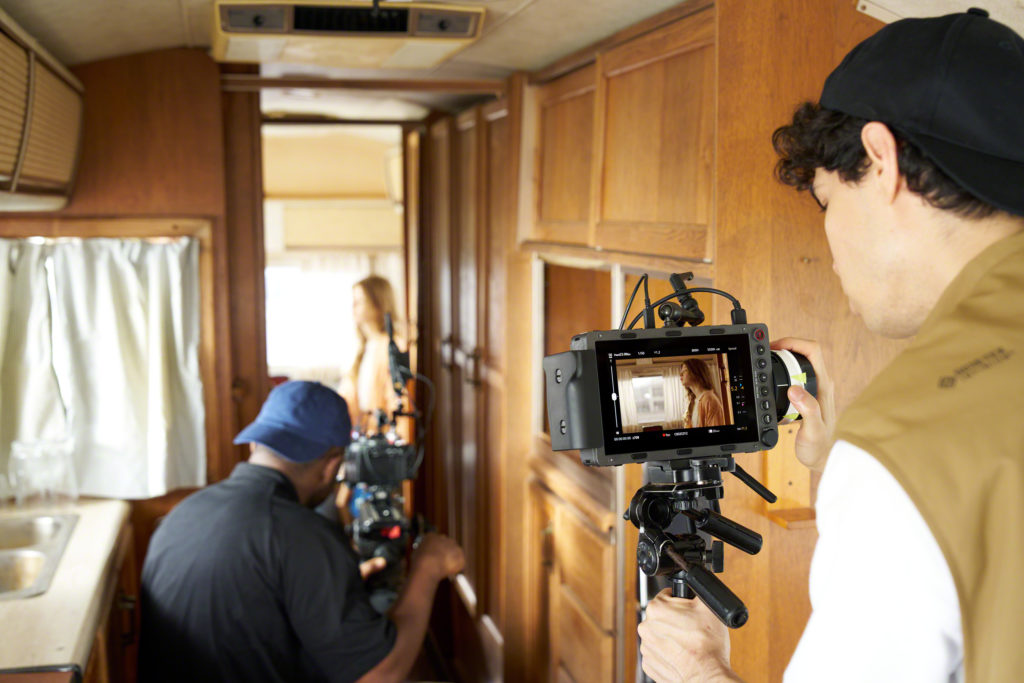
By bridging the gap between hardware and display, the RM-DP7 and RM-DP5 are not merely accessories; they represent a fundamental shift in how cinematographers interact with their cameras, prioritizing speed, ergonomics, and color precision on set.