Executive Overview
The landscape of independent digital entertainment is experiencing a massive nostalgic renaissance, driven by some of its most enduring pioneers. Felicia Day, the visionary creator behind the landmark web series The Guild and founder of Geek & Sundry, is officially reteaming with her longtime friend, collaborator, and fellow geeker icon Wil Wheaton. Together, they are launching Conludo—a brand-new, 10-episode board game television series designed to capture the cozy, unpredictable magic of friends hanging out around a table.
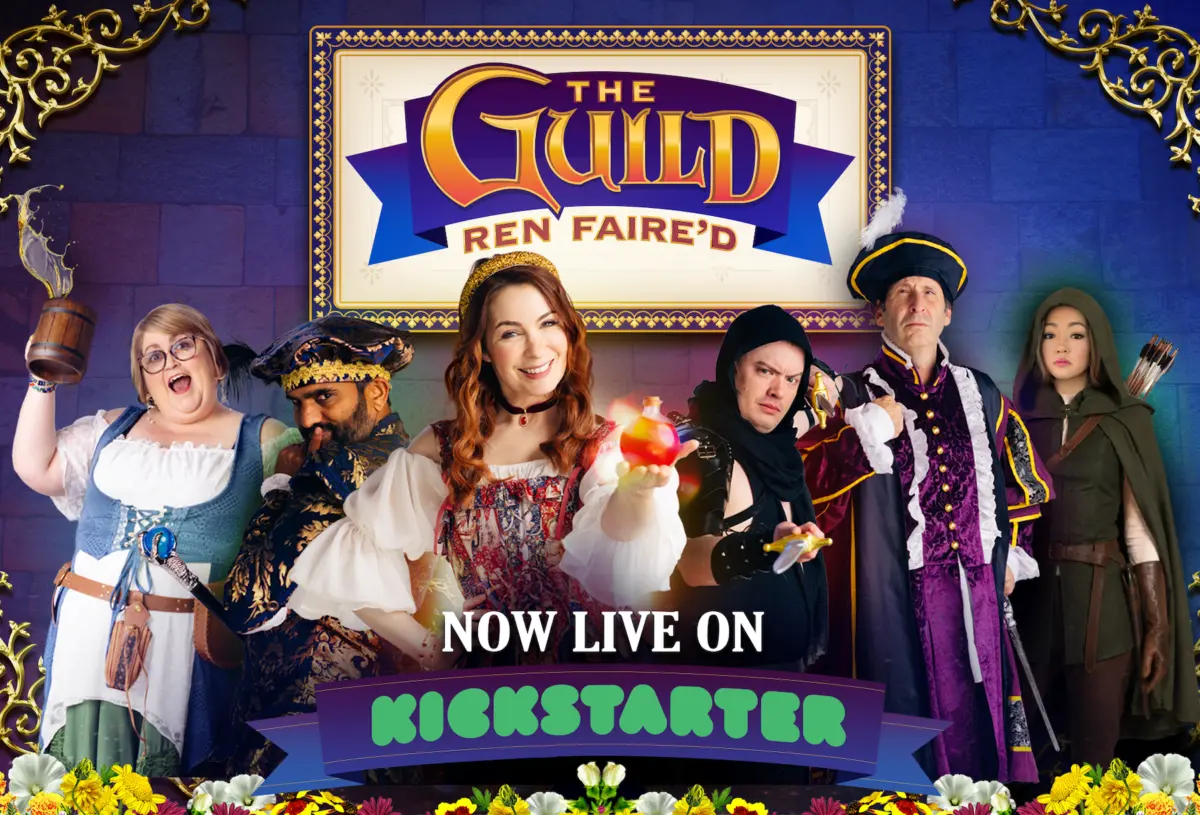
Derived from the Latin word meaning "to play together," Conludo is being unlocked as an exclusive fan reward tied to the record-shattering Kickstarter campaign for The Guild: Ren Faire’d. That crowdfunding initiative has already amassed a staggering $5.26 million, blowing past its initial $1.5 million target and threatening to dethrone the Veronica Mars movie as the largest crowdfunded film project in history.
However, this joyful reunion of digital media royalty comes against a backdrop of systemic challenges within the modern entertainment industry. Despite their monumental crowdfunding success, Day and her team were recently denied a critical California film tax credit—a bureaucratic hurdle that highlights the harsh economic realities facing independent creators trying to produce content in Los Angeles. This in-depth report explores the genesis of Conludo, the evolution of the dynamic duo’s creative partnership, the inner workings of their blockbuster crowdfunding campaign, and the broader implications of California’s struggling independent film infrastructure.
Detailed Chronology: From TableTop to Conludo
To understand the significance of Conludo, one must trace the lineage of tabletop gaming entertainment on the web. Back in 2012, long before actual-play podcasts and "let’s play" streaming channels dominated Twitch and YouTube, Felicia Day and Wil Wheaton pioneered the genre with TableTop. Airing for four successful seasons between 2012 and 2017 on Day’s digital network, Geek & Sundry, the show featured celebrities and creators learning and playing various tabletop board games.
At the time, traditional media gatekeepers were deeply skeptical of the format. "I was told that people wouldn’t want to be watching people play board games," Day recalls. "I was told that the web was not a place for narrative fiction. I was told that streaming D&D was a waste of money."
Despite this initial skepticism, TableTop became a runaway hit. It wielded so much cultural and economic power that it frequently caused commercial stampedes. Wheaton notes that after only a few episodes, the production team had to actively coordinate with game publishers and distributors so they could ramp up manufacturing before episodes aired. "Things were selling out so quickly," Wheaton recalls.
When Geek & Sundry was eventually sold and the landscape shifted toward corporate-backed streaming ecosystems, Day and Wheaton felt a collective sense of "FOMO" (fear of missing out) that lasted for over a decade. They simply wanted to play together again.
When the opportunity arose to fund The Guild: Ren Faire’d movie through Kickstarter, Day recognized a unique vehicle to bring back the spirit of TableTop through Conludo. Featuring 10 episodes, Conludo will pair Day and Wheaton in deep-dive conversations before they select a board game tailored to their discussion topic. They will then invite prominent contemporary content creators and actors to join them at the table.
Crucially, Conludo shifts its primary focus away from rigid game mechanics and toward interpersonal chemistry. While TableTop was meticulously structured around teaching viewers how to play commercially available games in-print, Conludo focuses squarely on what happens around the table. "The game is obviously important and fun and joyful, but it’s about the experience that you have when you’re hanging out," Wheaton explains. "We can play games that there are 40 copies of in the world."
Supporting Context & Metrics: Breaking Crowdfunding Records
The momentum behind Conludo is inextricably linked to the unprecedented financial explosion of The Guild: Ren Faire’d. Initially setting a modest goal of $1.5 million to bring the beloved original cast back together for the first time since the web series concluded in 2013, the Kickstarter campaign quickly snowballed into a cultural phenomenon.
At the time of writing, the campaign has raised an astounding $5.26 million and is on a knife-edge race to surpass the record set by the Veronica Mars movie, which raised $5.7 million via Kickstarter back in 2013. According to Day, a major catalyst for pushing the campaign past its wildest expectations was the inclusion of physical media rewards—specifically, a collector’s edition Blu-ray.
"Our fans loved the Blu-ray; it was the minimum requested thing," Day notes, acknowledging that despite the logistical hurdles of international shipping and fulfillment, backers were more than willing to pay extra to secure physical artifacts of their favorite internet history.
With the Kickstarter campaign concluding at the end of the week, the pressure is on to deliver not only the feature-length film by its projected 2027 release window, but also the 10 episodes of Conludo promised to backers as a stretch-goal reward.
Official Statements and Creative Vision
The creative philosophies driving Conludo reflect a distinct fatigue with the traditional, corporate-controlled entertainment model. Both Day and Wheaton have spent decades inside and outside the studio system, giving them a sharp perspective on how content should be distributed to audiences.
When discussing the future of Conludo beyond its initial 10 Kickstarter-funded episodes, Wheaton emphasizes a commitment to accessibility:

"It’s a question of whether we want to have our own channel and build that specifically, or we want to use somebody else’s platform to distribute. And that’s something that we’re considering… Felicia has talked extensively about doing this in a nice, flat, democratic way that gets it out to absolutely everybody, which is another thing that very much puts us at odds with the standard business model in the entertainment industry."
For Day, who spent years scaling Geek & Sundry into a massive multi-show production house before stepping back, Conludo represents a return to personal artistic fulfillment rather than corporate expansion.
"I’ve highlighted a lot of other people as performers in the past, and now I’m all about just doing things for me and with my friends," Day says. "I’m hoping that we figure out how to sustain this in as democratically available a way as possible, whether that’s our own YouTube channel or whether that’s another free-to-stream service, we’re going to explore a lot of that."
The guest lineup for Conludo has also been officially confirmed, featuring an eclectic mix of veteran character actors and internet darlings. Newly announced guest stars include:
- Todd Stashwick (Star Trek: Picard, 12 Monkeys)
- Anjali Bhimani (Critical Role, Overwatch)
- Grace Helbig (The Grace Helbig Show)
- Mamrie Hart (You Deserve a Drink)
- John Ross Bowie (The Big Bang Theory, Speechless)
These performers embody the cross-section of traditional Hollywood talent and digital-native creators that Day and Wheaton want to bring together.
Future Outlook: The Crisis of Independent Film in California
While the celebratory mood surrounding Conludo and The Guild movie is palpable, the production faces a sobering systemic hurdle that threatens the viability of independent filmmaking in Southern California.
Despite raising over $5 million from passionate fans, The Guild: Ren Faire’d movie was recently denied a California film tax credit during the initial review round. Day did not mince words when discussing the opacity and hostility of the state’s current incentive structures.
According to the California Film Commission, a meager 5% (approximately $37.5 million) of the state’s total film and television tax credit pool is earmarked for independent projects with budgets under $10 million. Another 5% is allocated for independent projects exceeding $10 million. Because independent projects under $10 million are lumped into a single, hyper-competitive tier alongside projects featuring A-list stars and major showrunners, sub-$10 million films are routinely squeezed out.
"We didn’t make it past the first round," Day explains. "Having learned that only 5% of the money goes to anything under $10 million, that category is extremely competitive."
Day points out the perverse economic incentives baked into the system. If an independent creator chooses to shoot in states like Georgia, tax credits are easily obtained and monetized through institutional buyers immediately. Staying in California, however, requires jumping through complex bureaucratic hoops with zero guarantee of success.
Furthermore, the mechanical structure of California’s tax credits makes them exceptionally unfriendly to cash-strapped independent artists. Unlike other jurisdictions that provide immediate relief, California’s tax rebate wouldn’t be paid out until well after production concludes—meaning creators must take out high-interest bridge loans.
"As an independent creator, I would have had to take a loan out to float my production to be able to actually use the money when I need it, which means people are charging up to 20%, 30%, 40% of that money to be able to defer payment," Day warns. "The mechanics of it are so unfriendly, especially to people who are independent and don’t have millions of dollars in a bank to float that it’s impossible. There’s no way that independent film will ever flourish in the home of film, and that is very sad to me."
Rather than packing up production and moving to Atlanta for months—a disruption Day is eager to avoid for personal and creative reasons—she is forced to rewrite aspects of her script to make the budget work locally without state assistance.
Conclusion
Despite the administrative roadblocks erected by California’s archaic tax credit policies, the sheer willpower of Felicia Day, Wil Wheaton, and their millions of dedicated fans proves that community-driven art remains an unstoppable force. Through Conludo, fans are not merely getting a nostalgic callback to the golden era of web content; they are witnessing a masterclass in how creators can bypass studio gatekeepers, collaborate with close friends, and build sustainable, democratic platforms for digital entertainment. As The Guild: Ren Faire’d barrels toward its 2027 release, the return of Day and Wheaton to the gaming table signals that the heart of internet culture is alive, well, and ready to roll the dice once again.