Executive Overview
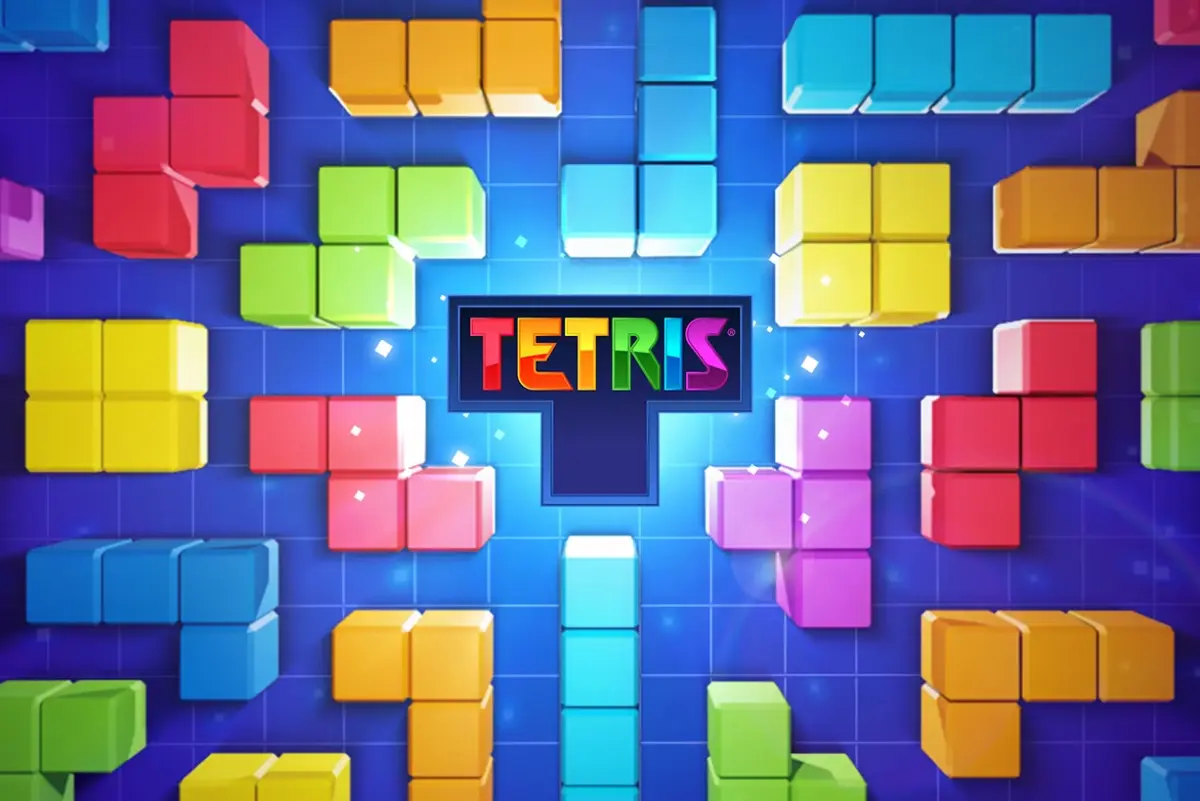
In an unexpected collision of global pop-culture history and contemporary American political messaging, The Tetris Company has officially distanced itself from a controversial new video game launched by the White House.
On Thursday, the administration unveiled a dedicated gaming portal at whitehouse.gov/arcade, featuring a suite of six titles. Among them is "Build the Wall," an unmistakable clone of Alexey Pajitnov’s legendary 1984 block-dropping puzzle game, Tetris. The game tasks players with stacking physical barriers to stop a wave of animated, zombie-like foreigners from crossing the U.S. southern border.
By Friday, the intellectual property holders moved swiftly to clarify their position. In a public statement issued via social media, The Tetris Company firmly stated that it had no involvement in the creation, authorization, or licensing of the White House minigame. Stressing the brand’s four-decade ethos of global unity and human connection, company representatives added a pointed postscript: "We take copyright infringement very seriously."
When pressed by industry media regarding potential legal action, a company spokesperson confirmed that the firm’s legal team is "currently reviewing the matter."
This developing controversy highlights the volatile intersection of government digital communication, intellectual property law, and the weaponization of classic gaming mechanics for political propaganda. As legal experts weigh the merits of potential copyright and trademark infringement claims, the incident raises critical questions about the limits of fair use, parody, and government-sponsored digital media.
Detailed Chronology: From Portal Launch to Legal Scrutiny
Thursday: The White House Arcade Debut
The controversy began quietly on Thursday with the unassuming launch of a new sub-domain on the official federal website: whitehouse.gov/arcade. Designed as an interactive digital outreach initiative, the portal debuted with six distinct web-based games aimed at younger or digitally native demographics.
While several minigames featured standard, arcade-style tropes, one title immediately drew widespread scrutiny and disbelief from the gaming community: "Build the Wall" (subtitled "Zombie Border Siege").
The gameplay mechanics are a direct, unvarnished facsimile of Tetris. Geometric blocks fall from the top of the screen, and the player must rotate and position them to form solid horizontal lines. However, the thematic overlay subverts the benign puzzle-solving of the original: instead of clearing lines, the player is instructed to "Protect the border from the coming horde."
Animated figures representing foreign migrants bounce futilely against the walls constructed by the player, eventually disintegrating. If the player fails to manage the blocks efficiently and the stack reaches the upper bound of the playfield, the game terminates with a stark, red-lettered warning: "BORDER BREACHED."
Friday Morning: The Tetris Company Responds
The digital footprint of the game drew immediate backlash across social media platforms, prompting swift action from the stewards of the Tetris intellectual property.
On Friday, The Tetris Company published a carefully crafted statement addressing its global community while drawing a hard line against the White House’s use of its mechanics:
"At Tetris we believe in the power of connection and bringing people together, not dividing them. To our fans everywhere: we love you, we see you, and we’re grateful to have you in our community."
The statement concluded with a sharp, legally pointed sign-off:
"P.S. The Tetris Company was not involved in the creation of ‘Build the Wall.’ P.P.S. We take copyright infringement very seriously."
Friday Afternoon: Legal Review Confirmed
As the story gained traction across mainstream news outlets and trade publications like Variety, institutional pressure mounted. Journalists formally inquired whether the copyright holders intended to pursue litigation against the federal government.

A spokesperson for The Tetris Company issued a clarifying follow-up statement, emphasizing the sanctity of the brand’s four-decade heritage:
"The Tetris Company was not involved in the creation of ‘Build the Wall’ and did not authorize or license the Tetris brand or intellectual property for the game. For more than 40 years, Tetris has brought people together across generations and cultures through play and joy. The objective of the game has always been to stack with purpose to clear as many lines as possible. We are currently reviewing the matter."
As of press time, Variety and other major journalistic outlets have reached out to the White House press office for an official response regarding the origin of the game’s code and whether permission or licensing was ever sought, though no official comment has been provided.
Supporting Context & Metrics: The Undisputed Legacy of Tetris
To understand the gravity of The Tetris Company’s response, one must examine the colossal economic, cultural, and legal footprint of the Tetris franchise. It is not merely a video game; it is a meticulously guarded piece of global cultural heritage.
Origins and Global Phenomenon
Tetris was originally conceptualized and programmed in 1984 by Soviet computer scientist Alexey Pajitnov at the Dorodnicyn Computing Centre of the Soviet Academy of Sciences in Moscow. Because Pajitnov was a state employee at the time of its creation, the initial rights were held by the Soviet government agency ELORG (Elektronorgtechnica).
Over the decades, the rights were successfully reclaimed and consolidated. Today, Tetris Holding LLC holds the exclusive worldwide rights to the Tetris intellectual property, while The Tetris Company serves as its exclusive licensee, managing global brand strategy, licensing agreements, and aggressive legal enforcement against unauthorized clones.
Key Metrics and Reach
- Global Sales: Over 520 million units have been sold across dozens of hardware platforms since its commercial inception, making it one of the best-selling video game franchises in history.
- Digital Engagement: Billions of Tetris games are played online and via mobile applications annually.
- Official Partnerships: The brand maintains an expansive, high-value global licensee network. This includes premier video game publishers such as Nintendo and Sega, alongside hundreds of multi-national partners spanning consumer electronics, toys, board games, high-end apparel, accessories, and location-based entertainment.
- Ongoing Creator Involvement: Alexey Pajitnov remains actively engaged with the brand, participating in global events, anniversary retrospectives, and strategic brand decisions.
Given the immense commercial value of the Tetris trademark and trade dress, unauthorized adaptations—especially those used for overtly political or partisan messaging—threaten the brand’s carefully cultivated universal appeal.
Official Statements and Industry Reaction
The crossover between partisan political campaigning and video game appropriation has stunned legal and gaming industry observers alike.
The Brand’s Stance on Unity vs. Division
The decision by The Tetris Company to explicitly mention that its game promotes "connection and bringing people together, not dividing them" was viewed by branding experts as a masterclass in values-driven communication. By contrasting the core cooperative and universal nature of puzzle-solving with the exclusionary, nativist themes of "Build the Wall," the company firmly insulated its brand identity from the political content of the White House arcade title.
Legal Perspectives on Copyright and Clone Culture
The video game industry has historically struggled with "clone culture"—the proliferation of games that mimic the mechanics of successful titles (such as Flappy Bird, Wordle, or Vampire Survivors). However, Tetris occupies a unique legal space.
Intellectual property law generally does not protect raw game mechanics or abstract rules; anyone can design a game where geometric shapes fall into a grid. However, copyright law does protect specific audiovisual expressions, code, asset designs, user interfaces, and the distinctive Tetris trademarks (including the famous tetromino shapes, rotation systems, and the proprietary nomenclature).
Legal analysts note that if the White House arcade game lifted specific code libraries, asset designs, or proprietary styling associated with official Tetris releases, The Tetris Company would possess a formidable foundation for a copyright infringement claim. Furthermore, even if the code was written from scratch, the use of the iconic falling-block puzzle mechanic in direct conjunction with a politically charged border wall narrative could potentially dilute the Tetris trademark or imply an unauthorized corporate endorsement.
Future Outlook: What Lies Ahead
As The Tetris Company’s legal counsel continues its active review of the "Build the Wall" minigame, several potential pathways lie ahead:
- Quiet Removal or Modification: It is common for government digital projects outsourced to third-party web developers to be hastily assembled and deployed with minimal oversight. Facing mounting pressure, international media ridicule, and potential corporate litigation, the White House may quietly remove the game from the
whitehouse.gov/arcadeportal under the guise of "site maintenance." - Formal Legal Demands: Should The Tetris Company determine that the minigame crosses the legal threshold into copyright infringement or trademark dilution, it could issue a formal cease-and-desist letter. Taking legal action against a sitting presidential administration would be an unprecedented legal showdown, testing the boundaries of sovereign immunity, government speech, and intellectual property rights.
- Broader Industry Repercussions: This incident serves as a cautionary tale for public relations and digital strategy teams regarding the use of recognizable cultural artifacts in political communication. As entertainment and politics increasingly blur in the digital age, copyright holders are showing zero hesitation in fiercely protecting their intellectual property from partisan co-optation.
For now, millions of fans worldwide are watching closely as the guardians of the world’s most famous puzzle game decide how to respond to an unauthorized political clone sitting at the highest digital address in the United States.