By Chris Kerr, Senior Editor, News, GameDeveloper.com
Published: August 14, 2026
Executive Overview
The video game industry finds itself locked in a deeply paradoxical era. On one hand, creative expressions of joy continue to capture the public imagination, exemplified by massive commercial successes like House House’s Big Walk, which crossed one million global sales in just six days. On the other hand, the foundational pillars of the medium—its workforce, its data privacy standards, and its corporate accountability—are being severely tested.
In a single week in August 2026, the industry has witnessed a devastating continuation of corporate downsizing, epitomized by Netflix shuttering internal studios like Oxenfree developer Night School Studio and Moonloot Games, alongside Supermassive Games initiating its third round of layoffs in as many years. Simultaneously, platform holders like Twitch have enacted aggressive default data-harvesting policies to fuel parent company Amazon’s generative AI aspirations, prompting widespread anxiety over digital consent.
Yet, amid the gloom, union solidarity has grown increasingly visible—highlighted by striking CWA workers confronting Xbox leadership with a stark visual protest outside Bethesda’s offices—while critical preservation efforts, such as the UNC Greensboro library initiative, fight back against political and financial setbacks. This report provides an exhaustive, multi-faceted breakdown of the major developments shaking the games industry this week, examining the macroeconomic forces reshaping development, labor, and culture.
Detailed Chronology of Events
The events shaping the gaming landscape during the week of August 14, 2026, reflect an accelerating corporate consolidation of power running parallel to an increasingly organized worker resistance.
1. Netflix Swings the Ax on Night School Studio and Moonloot Games
Despite boasting commercial and critical wins, Netflix’s internal video game division has claimed two more casualties. The streaming giant has officially decided to shut down Night School Studio—best known for the acclaimed narrative mystery Oxenfree—alongside Moonloot Games.
The closure feels particularly punishing for Night School given its recent trajectory. The studio just launched its newest horror title, Unhinged, to glowing metrics. In fact, the project was recently highlighted by Netflix co-CEO Greg Peters as delivering one of the most successful cloud game launches in the platform’s history. Yet, strong performance metrics were insufficient to shield the studio from the chopping block, reinforcing a growing developer consensus that working under tech conglomerates offers little long-term job security, regardless of project success.
2. Twitch’s Mandatory Generative AI Data Harvesting
In a move that drew sharp criticism across the creator and player ecosystems, Twitch confirmed its intention to harvest user data automatically to train the proprietary generative AI models of its parent company, Amazon.
Rather than implementing an opt-in structure, Twitch has opted to automatically enroll all users and creators into the data-sharing pool by default. When questioned on the aggressive posture, Twitch Chief Product Officer Mike Minton bluntly defended the measure, stating that "if it was opt-in, nobody would opt-in." The statement lays bare the modern corporate philosophy toward data consent: if transparency yields rejection, compulsion takes its place.
3. CWA Workers Confront Xbox Leadership at Bethesda Offices
Labor activism met high-level corporate tourism this week in Rockville, Maryland. As Xbox boss Asha Sharma visited Bethesda’s local offices—taking to social media to build hype for the development progress of the next Elder Scrolls title—union members from the Communications Workers of America (CWA) ensured her visit was impossible to ignore.
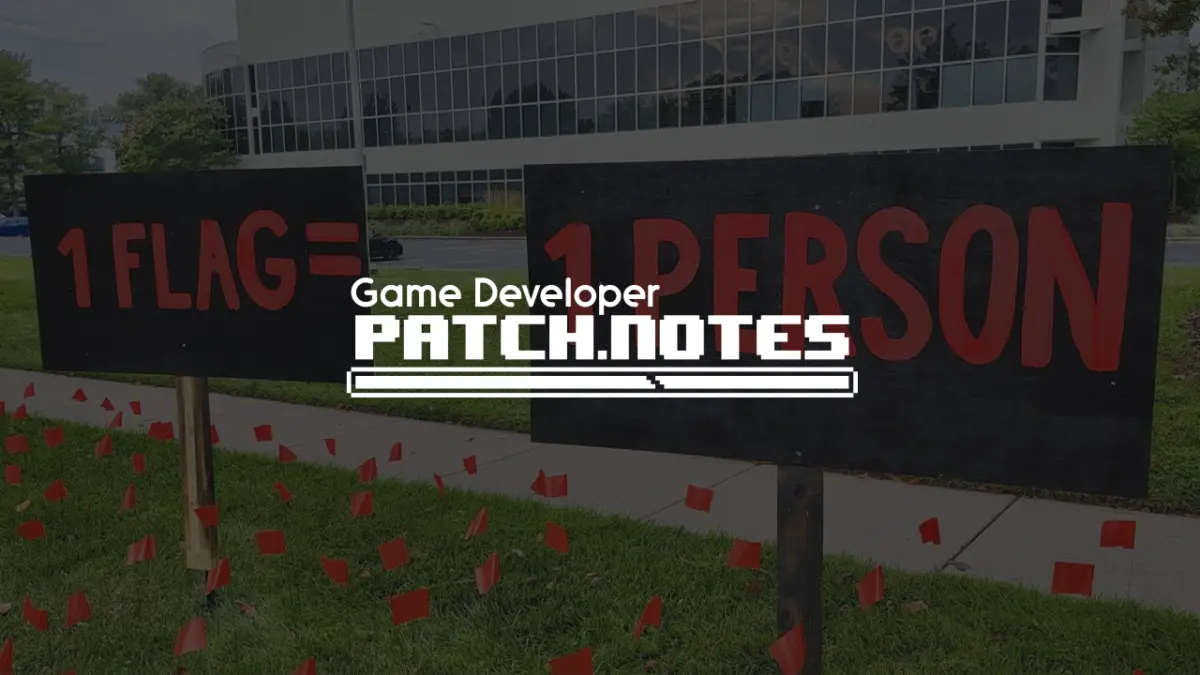
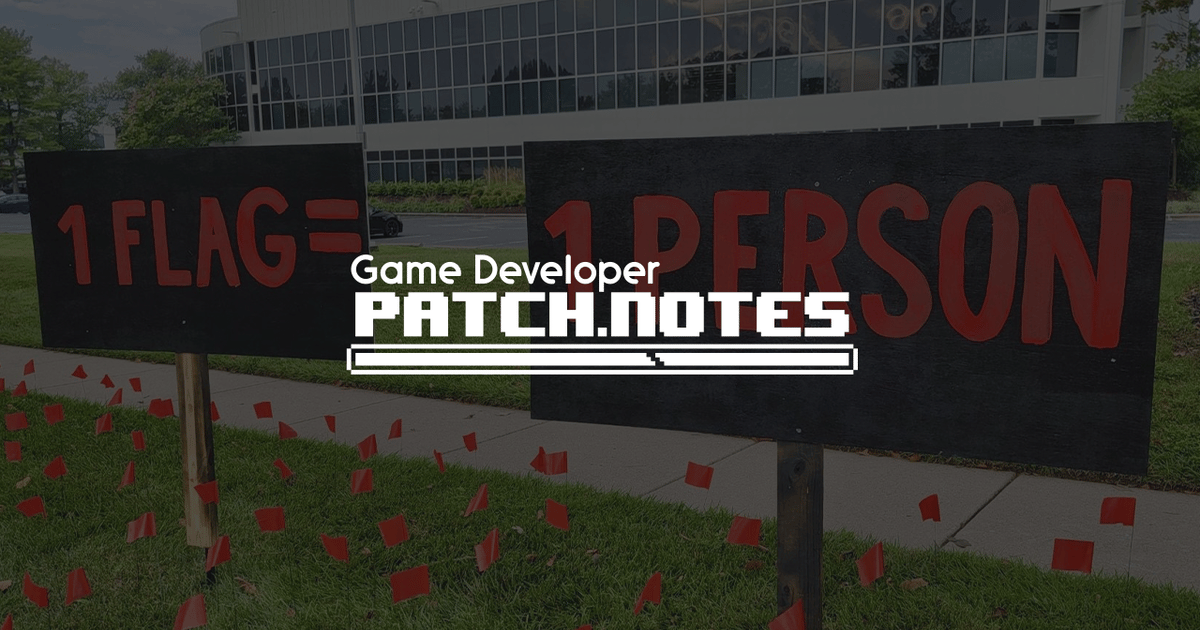
In a striking visual demonstration, workers erected a giant inflatable rat (traditionally known as ‘Scabby’) outside the studio gates. Surrounding the protest was a sea of red flags, meticulously calculated to represent one flag for each laid-off developer impacted by recent reductions at the Xbox maker. The protest served as a direct rebuke to executive PR tours that attempt to mask ongoing labor contractions behind upbeat announcements.
4. Supermassive Games Enters Its Third Consecutive Year of Redundancies
In the United Kingdom, narrative horror specialist Supermassive Games confirmed its third consecutive year of workforce reductions. The studio announced plans to make up to 75 employees redundant, citing an ongoing need to "ensure the sustainability of the company."
When pressed by journalists regarding the total headcount remaining after the cuts, a company spokesperson declined to comment. This lack of transparency has compounded anxieties among UK-based developers regarding the long-term viability of mid-to-large-scale studio models in the current economic climate.
5. A Lifeline for Digital Preservation at UNC Greensboro
Offering a rare piece of positive legislative and institutional news, a game preservation project based at the University of North Carolina at Greensboro is back on track. The initiative—which aims to safeguard and secure public access to digital titles through public libraries—had previously been stalled following funding cuts executed under former U.S. President Donald Trump. With new momentum behind it, the project represents a vital win for cultural historians fighting against digital decay and publisher-led title delistings.
Supporting Context & Metrics
To fully understand the turbulence of the current market, one must look at the broader numbers and structural shifts driving these headlines:
- The Indie Counterbalance: While AAA and corporate-backed studios struggle with retrenchment, independent projects continue to prove that creative risks pay off. Panic’s publication of House House’s Big Walk—a cooperative "sensory stroller" experience—hitting 1 million copies sold in just six days proves that consumer appetite for novel, cooperative multiplayer experiences remains insatiable.
- The Scale of Labor Volatility: Supermassive’s third round of layoffs in three years highlights a systemic disease within modern game development: boom-and-bust cycle management. Studios scale up rapidly during development greenlights only to prune their workforce ruthlessly post-launch to appease investor balance sheets.
- AI Compliance and Trust Deficit: Twitch’s default opt-in policy mirrors a wider tech sector rush to acquire human-generated creative output to feed large language and generative models, frequently bypassing intellectual property rights and user consent frameworks.
Official Statements and Industry Reactions
The fallout from this week’s events has prompted sharp commentary from industry leaders, union representatives, and developers alike:
"If it was opt-in, nobody would opt-in."
— Mike Minton, Chief Product Officer, Twitch, defending the platform’s decision to automatically enroll users into Amazon’s AI training pipelines.
This candid admission has become a lightning rod for digital rights advocates, signaling that major tech platforms are increasingly willing to override user autonomy to secure critical inputs for machine learning infrastructure.
On the labor front, the CWA’s action in Rockville sent an equally unvarnished message to executive leadership:
"One flag for each laid-off dev."
— CWA Union Workers, framing their protest outside Bethesda’s Rockville offices to counter corporate PR narratives with human statistics.
Meanwhile, corporate messaging surrounding studio closures continues to lean heavily on sanitized corporate phrasing. Supermassive Games defended its latest downsizing by stating the cuts were necessary to "ensure the sustainability of the company," a refrain that has provided cold comfort to the 75 families impacted by the UK studio’s restructuring.
Future Outlook: Navigating the Industry’s Next Phase
As the video game industry moves through the second half of 2026, the path forward remains fraught with systemic challenges. The aggressive consolidation of game development under large tech firms—exemplified by Netflix’s ruthless pruning of profitable internal teams—suggests that traditional publisher stability is a relic of the past. Developers are increasingly forced to weigh the financial safety net of major corporate backers against the constant threat of sudden studio closures.
At the same time, the institutionalization of labor organization, as seen in the CWA’s high-visibility protests against Xbox, indicates that the workforce is no longer willing to quietly accept mass layoffs as an inevitable cost of doing business. Union power is solidifying into a permanent check on executive overreach.
Ultimately, the dichotomy between runaway creative successes like Big Walk and systemic corporate distress proves that while the art of video games is healthier and more imaginative than ever, the business infrastructure supporting it requires urgent, fundamental reform. Until industry leaders prioritize human capital and sustainable growth over short-term financial engineering, the ecosystem will continue to liven its quiet moments with digital anxiety—punctuated, if we are lucky, by the soothing, distant sounds of nature.