Executive Overview
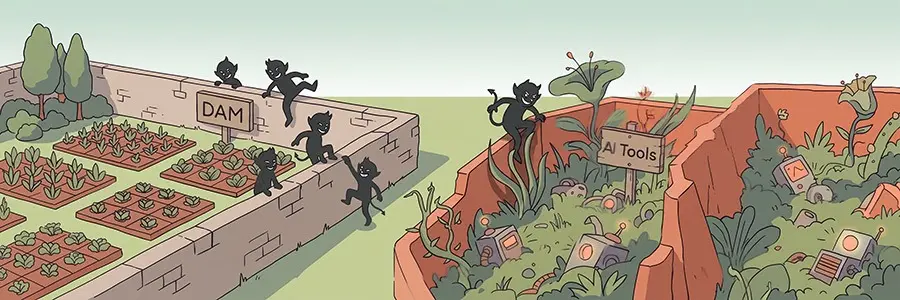
The modern digital workplace is facing an invisible yet structural crisis: a profound misalignment between rigid corporate policy and the frantic, high-pressure reality of creative production. According to a striking recent survey conducted by Santa Cruz Software and highlighted by industry expert Ralph Windsor, 96% of organizations are currently enforcing formal, strict AI usage restrictions. Yet, in a glaring testament to the friction between governance and productivity, 96% of creative employees are systematically bypassing them.
This is not merely a failure of employee compliance or a lack of adequate staff training. Instead, it is a predictable structural breakdown. When designers, copywriters, and multimedia producers face unyielding deadlines, they will inevitably gravitate toward whichever tools save them hours of labor every week—whether those tools are sanctioned by IT or hidden in the shadows.
This phenomenon—aptly dubbed "Shadow AI"—is rapidly repeating the dangerous playbook of the early cloud storage saga, where rogue personal Dropbox and Google Drive accounts stepped in to fill the massive gaps left by sluggish enterprise IT departments. However, the stakes with Generative AI are exponentially higher. As creative assets flow seamlessly between centralized Digital Asset Management (DAM) platforms and unvetted external AI generators, critical metadata is being stripped away. This creates a terrifying pipeline of untracked "file zeros," threatening intellectual property, regulatory compliance, and brand integrity on a global scale.
Detailed Chronology: The Evolution of Shadow AI and Creative Defiance
To understand how enterprises arrived at this precarious juncture, it is vital to trace the timeline of how digital tools have historically outpaced corporate governance.
1. The Precursor: The Wild West of Cloud Storage
Long before generative models dominated headlines, enterprise organizations grappled with "Shadow IT"—most notably during the rapid ascent of consumer cloud storage in the early 2010s. When corporate file-sharing networks were clunky, slow, or locked behind frustrating approval workflows, employees took matters into their own hands. They uploaded proprietary documents, sensitive client contracts, and raw design assets to personal Dropbox, Box, and Google Drive accounts.
IT departments responded with heavy-handed bans and severe warning memos. Yet, because the unsanctioned tools offered vastly superior speed and convenience, the bans failed entirely. Employees simply worked around them.
2. The Arrival of Generative AI and the Compliance Mirage
Fast forward to the current landscape. As generative AI tools matured into everyday creative assistants capable of instantly upscaling images, generating background elements, or rewriting copy, enterprises rushed to draft defensive policies. Pressured by mounting legal uncertainties, copyright lawsuits, and the arrival of landmark frameworks like the European Union’s AI Act, corporate legal teams rushed to publish comprehensive AI governance guidelines.
However, many organizations made a fatal strategic error: they mistook the creation of a policy document for the enforcement of security. As Windsor astutely points out, relying on a written policy to curb Shadow AI is:
“…rather like assuming a smoke alarm works simply because one is fitted to the ceiling.”
3. The 96% Disconnect
The breaking point was quantified in Santa Cruz Software’s research, revealing the staggering chasm between executive intent and creative execution. While executive boards patted themselves on the back for enacting strict AI rules, 96% of creative professionals actively ignored them daily. The pressure to deliver campaigns faster, cheaper, and at a higher volume rendered abstract legal frameworks utterly powerless against the raw utility of rogue AI applications.
Supporting Context & Metrics: The Mechanics of the "File Zero" Phenomenon
The true danger of Shadow AI goes far beyond a technical violation of corporate rules; it actively sabotages the foundational integrity of the Digital Asset Supply Chain.
Breaking the Digital Asset Supply Chain
In a healthy enterprise ecosystem, a digital asset lives within a secure DAM. It possesses a rich, immutable trail of extrinsic metadata: copyright data, licensing restrictions, geographic usage limits, embargo statuses, and model releases.
When a creative professional bypasses the DAM to process an asset through an external, unintegrated AI service (such as an independent image generator or upscaler), a destructive loop occurs:
- The Extraction: The asset leaves the controlled DAM environment.
- The Processing: The external AI model modifies, alters, or builds upon the asset based on visual probabilities.
- The Re-importation: The modified derivative is saved locally and dragged back into the production pipeline.
Upon re-entry, this asset becomes a "file zero"—a piece of completely untracked media characterized by:
- No recorded provenance or creation history.
- No version control linking it back to its original parent asset.
- Completely stripped permissions, leaving the organization blind to whether the AI model was trained on copyrighted material or if the output violates third-party rights.
The Conflict Between Probability and Determinism
At the heart of this technical breakdown lies an inherent philosophical and operational mismatch. As Windsor highlights:
“Generative models operate entirely on visual probability — governance requires deterministic rules.”
Generative AI models do not "know" rules, constraints, or copyright laws; they calculate statistical probabilities based on pixel patterns and linguistic tokens. Conversely, corporate compliance, metadata schemas, and Digital Asset Management systems are built entirely on deterministic, binary rules. When probabilistic art generation collides with deterministic asset tracking in an unmanaged environment, metadata—the single source of truth—is inevitably lost.
Crucially, malicious intent is rarely the culprit. In the vast majority of cases, the creative professional is not trying to hide anything; they simply do not know what happens to the asset’s underlying data packet once it leaves the DAM ecosystem. Once that vital chain of custody is broken in the creator’s mind, it is lost to the audit trail permanently.
Official Insights & Industry Perspectives
Industry leaders and software architects are increasingly vocal about the futility of punitive management styles. Trying to police creative workflows through disciplinary threats or exhaustive PDF policy manuals is a losing battle.
Ralph Windsor’s analysis for Santa Cruz Software serves as a clarion call for a complete paradigm shift. Organizations must stop treating creatives as rule-breakers and start treating them as overextended professionals who need better pathways.
Rather than building higher, more impenetrable walls around a central DAM—which creatives will simply route around—enterprises must rethink how governance is deployed. The consensus among forward-thinking DAM strategists is clear: Governance must be engineered directly into the native applications creatives already use every day.
By embedding DAM and approved AI capabilities natively into software suites like Adobe Photoshop, Illustrator, and Premiere via robust APIs, the friction disappears. In this ideal workflow:
- Approved, licensed assets are pulled directly into the native workspace.
- Sanctioned AI tools operate within secure, enterprise-compliant guardrails.
- Automatic check-ins occur seamlessly, preserving the entire audit trail and reattaching metadata without the user ever leaving their canvas.
When the compliant, governed route is faster and easier than the shadow alternative, adoption spikes naturally, and the enterprise audit trail remains pristine.
Future Outlook: Reclaiming Control Without Stifling Creativity
As we look toward the horizon of enterprise technology, the battle against Shadow AI cannot be won with the weapons of the past. Punitive corporate memos, restrictive firewalls, and token compliance checklists are relics of an era that moved much slower than modern media production.
What Lies Ahead for DAM and AI Integration?
- The Death of Standalone Governance: Policies written in isolation will become obsolete. Future-proof governance will be algorithmic, automated, and invisible to the end user.
- Embedded Compliance Architecture: Software providers will increasingly compete on their ability to offer "frictionless compliance." Tools that successfully merge generative speed with airtight metadata preservation will dominate the market.
- Proactive Provenance Standards: Initiatives like the Coalition for Content Provenance and Authenticity (C2PA) will become deeply integrated into enterprise DAMs, making content authentication a hardware- and software-level guarantee rather than an afterthought.
Ultimately, the 96% statistic should serve as a permanent wake-up call to corporate leadership. You cannot legislate away human ingenuity and the pressure to meet deadlines. The only durable, long-term solution to Shadow AI is to stop fighting the tools your creatives rely on, and instead bring governance directly to where the creative work happens.