The global e-commerce and retail technology landscape is undergoing its most profound transformation since the advent of mobile shopping. As artificial intelligence moves past the novelty phase and matures into foundational infrastructure, merchants are facing a dual imperative: they must overhaul their backend supply chains to accommodate autonomous software, and they must redesign their front-end acquisition strategies to capture shoppers who increasingly rely on conversational agents and AI-driven platforms.
This week’s product releases, strategic acquisitions, and multi-national partnerships illustrate the rapid acceleration of this trend. From logistics giants like FedEx and DHL deploying artificial intelligence to streamline cross-border friction, to fintech leaders such as Visa, Mastercard, and Ant International establishing global frameworks for "agent-to-agent" payments, the tools available to modern merchants are evolving exponentially. Concurrently, advertising models are breaking out of traditional silos. Platforms like Amazon Ads and OpenAI are breaking ground with conversational ad units inside ChatGPT, while omnichannel CRM systems like Klaviyo and Mntn merge connected television data with real-time customer lifecycle messaging.
This comprehensive report examines the structural shifts occurring across international shipping, cross-border payments, agentic commerce, conversational advertising, and reputation management. By analyzing the week’s critical rollouts, merchants can better position their operations to navigate the complexities of modern digital retail.
Detailed Chronology of New Products and Services
The past week has witnessed a sweeping wave of product announcements spanning nearly every facet of the digital commerce ecosystem. Below is the chronological breakdown of the major tooling updates released for merchants, brands, and enterprise sellers.
International Shipping & Logistics Innovation
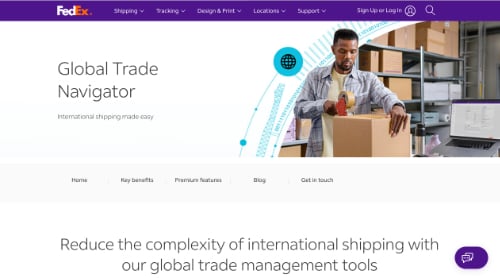
FedEx Launches Global Trade Navigator: FedEx Corp. debuted a comprehensive suite of digital tools designed to simplify international shipping complexities. The offering includes Trade Planner for login-free self-service compliance guidance; a Shopify Duty and Tax app enabling merchants to display transparent guarantee pricing at checkout; Global Trade APIs for embedding product classifications and tax estimates directly into bespoke systems; and Ship Manager updates allowing users to review Harmonized System (HS) codes, customs values, and manufacturing origins.
DHL and Alibaba.com Partner on AI Logistics: DHL Group and Alibaba.com formed a strategic alliance to integrate DHL Global Forwarding’s logistics capabilities into Alibaba’s agentic AI platform, Accio. Small and medium-sized enterprises (SMEs) can now generate real-time freight quotes, evaluate alternative shipping routes, and book international freight directly within an AI conversational interface.
Fintech, Payments, and Agent Standards
Ant International, Visa, and Mastercard Collaborate on AI Payments: Singapore-based Ant International (operator of the Alipay+ gateway) joined forces with payment heavyweights Visa and Mastercard to draft a standardized framework for autonomous payment agents. The initiative focuses heavily on "know your agent" protocols—establishing cryptographic linkages between AI agents and verified legal entities while monitoring agent behavior for fraud and compliance.
Xflow Expands India Collections for Global Brands: Backed by Stripe, PayPal Ventures, and General Catalyst, cross-border B2B payments platform Xflow launched dedicated India collections. This service allows global businesses to receive payouts from Indian clients via cards, bank transfers, and local UPI systems, settling funds in foreign currencies without requiring the merchant to establish a physical entity in India.
Mastercard and Flowcart Power WhatsApp Commerce in East Africa: Mastercard partnered with conversational e-commerce platform Flowcart to embed native card payment rails inside WhatsApp. Designed initially for Kenya and expanding to Nigeria, South Africa, and Côte d’Ivoire, the integration enables end-to-end shopping journeys—discovery, cart management, and secure checkout—entirely within a chat application.
Agentic Infrastructure and Trust Platforms
M11 Labs Introduces Agentic Trust Platform and OpenMarket: Seeking to close the "trust gap" where autonomous AI buying agents cannot visually verify web properties, M11 Labs unveiled a brand protection and threat detection platform. Alongside it, the company launched OpenMarket, a marketplace powered by the Universal Commerce Protocol where brand agents compete to fulfill consumer requests while real-time security systems audit every product claim made.
Mastercard Introduces Agent Connect: Mastercard rolled out Agent Connect alongside expansions to its Agent Suite for Merchants. The unified interface allows merchants, digital platforms, and payment providers to plug into AI shopping ecosystems via a single integration, letting sellers retain strict control over pricing, inventory rules, fulfillment networks, and brand equity.
Lightsage Secures $4 Million to Build AI Growth Stack: Formerly known as Sapient, agent-led growth platform Lightsage raised $4 million led by Nexus Venture Partners. The funding will fuel the development of infrastructure that measures how software and retail brands appear across answer engines and coding assistants, providing attribution and optimization analytics for agent-driven traffic.
Conversational Advertising & Marketing Automation
Amazon Ads and OpenAI Pilot ChatGPT Advertising: In a landmark collaboration, Amazon Ads partnered with OpenAI to bring conversational ad units to ChatGPT. Selected U.S. advertisers are currently testing native ad placements that allow consumers to explore product options, compare features, and execute purchase decisions directly inside conversational AI threads.
Mntn and Klaviyo Integrate Performance TV with B2C CRM: Connected TV (CTV) advertising leader Mntn integrated its Performance TV software with Klaviyo’s email and SMS marketing suite. Marketers can now target specific Klaviyo CRM audiences on streaming televisions, using television ad exposure events to automatically trigger multi-channel lifecycle messaging via email and text.
Telesign and B2Metric Partner on Predictive Conversational Commerce: Digital identity firm Telesign teamed up with analytics company B2Metric. By combining B2Metric’s predictive customer behavior models with Telesign’s secure messaging APIs for WhatsApp and email, brands can pinpoint high-intent shopping moments and deliver automated, secure outreach at scale.
Marketplace Insights, Dropshipping, and Customer Experience
Jungle Scout Releases AI Solutions for Amazon Sellers: Jungle Scout rolled out AI Solutions, featuring Ask Cobalt, a proprietary question-and-answer interface for brand performance and category trends, alongside the Jungle Scout MCP, which connects marketplace analytics directly into enterprise AI tools like Claude, ChatGPT, Gemini, and Microsoft Copilot.
Instacart Debuts "Clementine" and Expands Cart Assistant: Instacart introduced Clementine, a consumer-facing AI grocery shopping assistant available across North America, while simultaneously onboarding new retail partners to Cart Assistant, its white-label AI tool that powers custom branded grocery experiences.
Shipt Launches "Ask Shipt": Same-day delivery platform Shipt launched Ask Shipt, an in-app AI assistant allowing users to query recipes, upload food photographs, and build grocery orders seamlessly across partner networks.
TopDawg Integrates with Temu: Dropshipping and wholesale network TopDawg announced a live integration with Temu. The connection allows qualified U.S.-based suppliers and retailers to manage inventory, automate listings, and scale fulfillment directly through Temu seller accounts.
RankRabbit AI Launches Reputation AI: Expanding its brand visibility software suite (which includes Search AI, Listing AI, and Social AI), RankRabbit AI debuted Reputation AI. The tool automates multi-platform review monitoring, runs sentiment analysis to catch emerging customer service issues, and generates draft management responses.
SurveyMonkey Releases AI Analysis Suite: SurveyMonkey launched a conversational feedback analytics suite that allows users to query customer surveys using natural language while automatically classifying open-ended text responses into actionable business themes.
Supporting Context & Metrics
The velocity of these product rollouts is directly correlated with tectonic shifts in consumer behavior and macro-economic pressures facing digital merchants. To understand why infrastructure providers are racing to release agent-centric solutions, several key industry dynamics must be considered:
The Shift from Search Engines to Answer Engines: Traditional SEO strategies are rapidly losing share to conversational large language models (LLMs) and specialized AI buying agents (such as OpenAI’s ChatGPT, Anthropic’s Claude, and specialized utilities like Instacart’s Clementine). Consumers are no longer browsing static category pages; instead, they are delegating purchasing intent to software agents. This necessitates new visibility metrics, as evidenced by funding rounds for startups like Lightsage and M11 Labs.
Cross-Border Friction: Cross-border e-commerce continues to grow exponentially, but regulatory hurdles—specifically localized tax compliance, Harmonized System code accuracy, and foreign currency settlement—remain primary bottlenecks for SMEs. Tools like FedEx’s Global Trade Navigator and Xflow’s India collection service directly target these friction points, reducing compliance overhead for merchants expanding into emerging economies.
Conversational Commerce Adoption: Social and messaging apps (such as WhatsApp in East Africa and global chat interfaces) are transitioning from simple communication channels into transactional endpoints. Partnerships like Mastercard and Flowcart’s integration prove that frictionless, chat-based checkouts dramatically improve conversion rates by keeping users inside native messaging environments.
Official Statements and Industry Insights
Executives across the technology and retail sectors have offered profound perspectives on what these developments mean for the future of commerce:
"International trade has historically been bogged down by administrative complexity, fragmented data, and opaque duty calculations. By introducing unified digital navigators and robust APIs, our goal is to democratize global shipping so that businesses of any size can move goods across borders with absolute predictability."
— FedEx Global Logistics Spokesperson
On the financial infrastructure front, the collaboration between payment networks highlights the urgent need for security standards in an autonomous software economy:
"As AI agents transition from simple recommendation engines to autonomous purchasing actors, the financial system must establish unbreakable trust boundaries. Knowing your agent is just as vital today as knowing your customer was twenty years ago."
— Ant International Product Strategy Statement
Meanwhile, the convergence of advertising and conversational platforms signifies a fundamental rewrite of the marketing playbook:
"Consumers are spending their formative product discovery hours inside conversational environments like ChatGPT. By integrating Amazon Ads into these platforms, we are ensuring that brands can meet shoppers dynamically at the exact moment of decision-making, without disrupting the conversational flow."
— Amazon Ads Executive Team
Future Outlook: Navigating the Agentic Commerce Era
As we look toward the remainder of 2026 and beyond, several clear trajectories emerge for merchants and technology developers alike:
The Mainstreaming of Autonomous Purchasing: Within the next 24 months, a significant percentage of routine household and B2B procurement will be handled entirely by machine-to-machine interactions. Merchants who fail to adopt protocols like the Universal Commerce Protocol or optimize their product data for agent consumption risk invisibility.
Consolidation of Marketing and Logistics Data: The siloed approach to advertising—where connected TV, email CRM, and marketplace search operate independently—is officially obsolete. Cross-channel integrations, such as the Mntn and Klaviyo alliance, set a new benchmark for hyper-personalized, trigger-based customer journeys.
Regulatory Scrutiny on AI Agents: As payment standards from Visa, Mastercard, and Ant International take shape, regulatory bodies will likely begin enforcing stricter compliance around how autonomous agents access funds, handle consumer data, and make financial commitments on behalf of humans.
Strategic Recommendations for Merchants
Audit Your Technical Readiness: Ensure your product catalogs feature clean, highly accurate structured data, complete HS codes, and real-time inventory feeds compatible with external APIs and agentic platforms.
Embrace Conversational Engagement: Do not treat chat platforms as auxiliary customer service desks. Integrate native payment methods (such as WhatsApp checkout rails) to capture mobile-first and social commerce audiences.
Monitor Brand Representation: Utilize emerging reputation and visibility tools (such as RankRabbit’s Reputation AI and Jungle Scout’s AI Solutions) to track how your brand is perceived and recommended across AI answer engines.
The transformation documented this week is not merely a collection of incremental software updates; it is the foundational blueprint for the next generation of global commerce. Businesses that adapt proactively to this agent-driven paradigm will capture unprecedented efficiencies and market share, while those that lag behind risk obsolescence in an automated world.