Executive Overview
For over a decade, Georgia has proudly worn the crown of the "Hollywood of the South." Driven by one of the nation’s most aggressive and enduring film tax incentive programs, the state has transformed into a production powerhouse. Billions of dollars have poured into physical infrastructure, from the sprawling soundstages of Trilith Studios and Tyler Perry Studios to the state-of-the-art facilities at Assembly Atlanta. Yet, for all of Georgia’s success in attracting physical production—the cameras rolling, the sets being built, and the trucks lining local streets—a persistent structural vulnerability has remained: the "post-production gap."
Historically, once a director yelled "cut" on a Georgia soundstage, the hard drives containing the precious footage were routinely packed up and shipped back to Los Angeles, New York, or Vancouver. The high-paying, highly specialized creative work of picture editing, color grading, visual effects (VFX), and sound design was largely exported, leaving Georgia’s creative economy incomplete.
[Production Phase (In Georgia)] ──► [Post-Production Flight] ──► [Finishing & Distribution (LA/NY/London)]
                                            ▲
                                            │ (Historically lost revenue & talent)
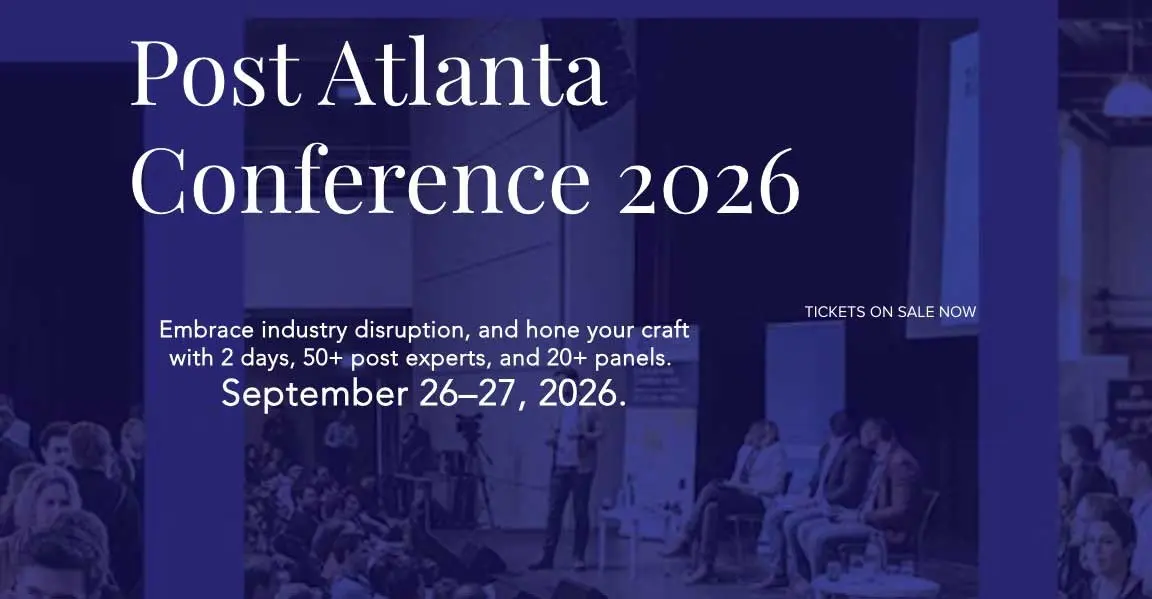
The arrival of the inaugural Post Atlanta Conference, scheduled for September 26–27, 2026, at the historic Plaza Theatre on Ponce, represents a deliberate, coordinated effort to dismantle this trend. Spanning two days and featuring over 50 post-production professionals across more than 20 specialized panels, the conference is not merely a local networking meetup; it is a declaration of industrial maturity.
By bringing together industry-leading editors, colorists, sound designers, and VFX supervisors, the event aims to consolidate Atlanta’s growing post-production talent pool, foster regional business-to-business pipelines, and position the American South as a premier, self-sustaining destination for end-to-end filmmaking.
Detailed Chronology & Event Blueprint
The selection of the Plaza Theatre on Ponce as the venue for the inaugural conference is deeply symbolic. As Atlanta’s oldest continuously operating cinema, the Plaza has survived decades of industry shifts—from the transition to talkies to the digital projection revolution. Hosting a cutting-edge post-production conference within its historic walls bridges the gap between cinema’s rich history and its technological future.
+-----------------------------------------------------------------------------+
|                        POST ATLANTA CONFERENCE 2026                         |
|                       Venue: Plaza Theatre on Ponce                         |
+------------------------------------+----------------------------------------+
|              DAY 1                 |                 DAY 2                  |
+------------------------------------+----------------------------------------+
| • Keynote: The Southern Pipeline   | • Technical Workshops & Masterclasses  |
| • Panel: Navigating Studio Post    | • Interactive Color Grading Demos      |
| • Networking & Peer-to-Peer Mixers | • VFX & AI Integration Roundtables     |
+------------------------------------+----------------------------------------+
Day 1: Establishing the Ecosystem
The opening day of the conference focuses on macro-level industry trends, regional economics, and panel discussions designed to dissect the current state of the post-production market.
- Keynote Sessions: Industry leaders will address the shifting global landscape of post-production, exploring how remote collaboration tools (such as Frame.io and Evercast) have democratized geographical locations while emphasizing the continued necessity of local creative hubs.
- Panel Discussions: Panels will cover topics ranging from navigating studio-level post-production pipelines to managing the business logistics of running a boutique post facility in the Southeast.
- Networking Mixers: Peer-to-peer networking sessions are strategically interspersed to connect independent filmmakers with established post-production houses, facilitating local deal-making.
Day 2: Deep Dives and Technical Workshops
The second day shifts toward practical, technical mastery. Rather than focusing solely on high-level inspiration, the organizers have designed a curriculum focused on actionable, "useful-on-Monday" knowledge.
- Technical Masterclasses: Sessions will explore advanced workflows in HDR color grading, Dolby Atmos sound design, and the integration of real-time rendering engines (like Unreal Engine) into traditional post-production pipelines.
- VFX and AI Integration: Specialized roundtables will address the practical and ethical implications of artificial intelligence in editing and VFX, a critical topic of debate in modern Hollywood.
- The Student-to-Professional Pipeline: Panels specifically tailored for university students and emerging freelancers will provide direct guidance on breaking into the industry, understanding guild requirements, and mastering the client-management skills necessary to sustain a freelance career in the South.
Supporting Context & Metrics: Closing the Georgia "Post-Production Gap"
To understand the economic significance of the Post Atlanta Conference, one must examine the metrics of Georgia’s film industry. According to data from the Georgia Department of Economic Development, the state’s film and television industry generated an estimated $4.1 billion in direct spending in recent fiscal years.
However, historically, only a fraction of that spending remained in the state during the post-production phase.
Estimated Georgia Film Spend Allocation (Historical Trend)
┌─────────────────────────────────────────┐
│ Physical Production (85-90%)            │ █████████████████████████████████░░░░░
├─────────────────────────────────────────┤
│ Post-Production / Finishing (10-15%)    │ ░░░░░
└─────────────────────────────────────────┘
The Economic Drain of "Post-Flight"
Post-production typically accounts for 15% to 25% of a project’s total budget, depending on the volume of visual effects and sound design required. When a major studio project with a $100 million budget shoots in Atlanta, approximately $15 million to $25 million is allocated for post-production.
Historically, due to a lack of local infrastructure and a shortage of resident "above-the-line" post-production talent, that budget would immediately exit the state. This phenomenon, known as "post-flight," has meant that Georgia has missed out on:
- High-paying, long-term employment: Post-production jobs are typically longer in duration than physical production gigs, offering steadier employment that can last from six months to over a year per project.
- Intellectual property development: Post-production houses are hotbeds for technological innovation, proprietary software development, and creative IP.
- Local tax revenue retention: While physical production generates temporary hospitality and service-industry spending, post-production facilities represent permanent, taxable commercial footprints.
Shifting the Incentives
To combat post-flight, Georgia has quietly adjusted its legislative and marketing focus. While the core 20% base tax credit (plus a 10% Georgia Entertainment Promotion logo distribution match) remains the primary draw, the state has seen a organic rise in local post-production infrastructure.
The Post Atlanta Conference arrives at a pivotal moment in this transition, serving as a catalyst to prove to major studios that Atlanta possesses not just the stages, but the specialized labor force required to finish tentpole projects locally.
Profiles of Key Voices: The Architects of the Southern Pipeline
The caliber of the speakers headlining the inaugural Post Atlanta Conference indicates that the event is designed to compete on a national scale. The lineup features seasoned veterans who have successfully bridged the gap between traditional entertainment capitals and the emerging Southern market.
Drew Sawyer: The Infrastructure Builder
As the founder of Moonshine Post, Drew Sawyer represents the entrepreneurial vanguard of Atlanta’s post-production scene. After a successful career producing content for major platforms including Netflix, AMC, Warner Bros., and IFC, Sawyer made a calculated bet on Atlanta.
Drew Sawyer (Founder, Moonshine Post)
   │
   ├── Career Roots: Producer (Netflix, AMC, Warner Bros., IFC)
   └── Strategic Vision: Establishing a full-service, end-to-end post house in Atlanta
Rather than operating as a satellite office for a West Coast firm, Sawyer built Moonshine Post as a homegrown, full-service post-production house. His presence at the conference offers a blueprint for how local companies can scale their operations, invest in high-end hardware, and win the trust of major Hollywood studios.
Deanna Nowell, A.C.E.: The Prestige Editor
Representing the peak of narrative editing talent is Deanna Nowell, A.C.E. Her editing credits span some of the most prominent properties in modern entertainment, including:
- Ironheart (Marvel Studios / Disney+)
- Grand Crew (NBC)
- Beauty in Black (Netflix)
Nowell’s participation is a major coup for the conference. As a member of the prestigious American Cinema Editors (A.C.E.) honorary society, her presence signals to the broader industry that elite, guild-level creative talent is actively working and thriving within the Atlanta ecosystem. Her insights will be invaluable to local editors seeking to transition from indie projects to major studio television and streaming series.
Kristina Kromer: The Cross-Disciplinary Cut
Kristina Kromer brings a unique and essential perspective to the speaker lineup. Having built her career through the traditional journeyman process, Kromer has edited film, television, and advertising projects for heavyweights such as Netflix, AMC, Warner Bros., and Paramount.
Kristina Kromer (Film, TV, & Commercial Editor)
   │
   ├── Narrative Work: High-end episodic television & feature films
   └── Commercial Work: Fast-paced, high-margin advertising campaigns
Kromer’s ability to navigate both the long-form narrative cutting room and the fast-paced, high-margin world of commercial advertising is highly relevant. A sustainable regional post-production economy cannot rely solely on sporadic feature films; it requires a steady foundation of commercial and corporate work to keep local editors employed between major studio gigs.
Historical Precedents: Learning from the Past
The ambition of the Post Atlanta Conference inevitably draws comparisons to past attempts to organize the region’s creative industries. Most notably, industry veterans recall the Southeast Creative Summit held in Atlanta in 2013.
| Feature / Metric | 2013 Southeast Creative Summit | 2026 Post Atlanta Conference |
|---|---|---|
| Market Maturity | Emerging; primary focus on physical production | Mature; established multi-billion dollar production hub |
| Local Infrastructure | Limited boutique post facilities; minimal local VFX | Multiple full-service post houses; specialized color & sound stages |
| Talent Pool | Largely transient; crew flying in from LA/NY | Large, permanent resident base of post-production professionals |
| Remote Workflow Tech | Infancy; limited cloud collaboration capabilities | Standardized; seamless integration between local & global teams |
| Event Focus | Broad creative industries (advertising, film, design) | Deeply specialized; dedicated exclusively to post-production |
The Southeast Creative Summit was a highly praised event that sought to establish a recurring, high-profile creative gathering in the South. However, it ultimately became a "one-and-down" initiative, unable to sustain momentum.
In 2013, the local industry was still too young. Atlanta was still viewed primarily as a cheap place to shoot, not a place to establish long-term creative roots. The infrastructure was thin, and the talent pool was highly transient—workers would fly in for a shoot and immediately return to Los Angeles or New York.
By 2026, the landscape has fundamentally transformed. The talent pool is no longer transient; thousands of post-production professionals have relocated to Georgia permanently, buying homes, raising families, and establishing local businesses.
Furthermore, the technological landscape has evolved. The widespread adoption of secure, high-speed cloud workflows has made remote post-production seamless, allowing an editor in Atlanta to collaborate in real-time with a director in London and a studio executive in Los Angeles. The Post Atlanta Conference is built upon this mature foundation, making it far more likely to succeed where past initiatives faltered.
Future Outlook: Can the South Redefine the Finishing Industry?
As the Post Atlanta Conference prepares to open its doors, the broader entertainment industry will be watching closely. The success of this event will be measured not just by ticket sales, but by its long-term impact on the regional economy.
                  [Post Atlanta Conference Success]
                                 │
         ┌───────────────────────┴───────────────────────┐
         ▼                                               ▼
[Creative Retention]                          [Inward Investment]
Keeping Georgia-shot                          Attracting external projects
projects in local suites                      to finish in the South
The Path to a Self-Sustaining Creative Economy
For Georgia to secure its future as a global film capital, it must transition from a service provider to a creative hub. Physical production is highly sensitive to tax policy; if another state or country offers a slightly higher incentive, productions can easily pack up and move.
Post-production, however, is stickier. Once a studio establishes a relationship with a high-end post facility and a trusted local editor, they are far more likely to return, regardless of minor fluctuations in tax percentages.
By fostering a highly skilled, collaborative, and visible post-production community, the Post Atlanta Conference is helping to build a moat around Georgia’s entertainment industry. If successful, the event will help ensure that the state is no longer just a place where movies are shot, but the place where they are brought to life.