Executive Overview
As climate change continues to fundamentally alter the environmental landscape of North America, the collateral damage of a warming planet is increasingly measured not just in acres burned, but in human biology—specifically, the health of the next generation. A groundbreaking body of research is shedding light on an insidious and rapidly growing public health crisis: the impact of catastrophic wildfire smoke on prenatal development.
While public health messaging has long focused on the immediate respiratory hazards of heavy smoke for the elderly and those with pre-existing conditions, emerging data reveals that unborn children are facing severe, lifelong consequences from in utero exposure to fine particulate matter. Led by researchers examining the intersections of environmental science, public health, and socioeconomic disparity, recent studies show that wildfire emissions are rapidly driving up "acute, massive air pollution days." These toxic events directly threaten fetal health, particularly in rural, low-income, and Indigenous communities that are doubly burdened by geographic isolation and a lack of access to adequate neonatal care.
The implications of this research are profound. Exposure to wildfire smoke during the prenatal period is no longer viewed merely as an occasional seasonal inconvenience; it is recognized as a major determinant of lifelong health trajectories. As smoke penetration indoors becomes more prevalent—confirmed by networks like Purple Air that track indoor particulate migration—experts argue that a fundamental paradigm shift is required. Protecting maternal and fetal health in an era of megafires will necessitate aggressive public health interventions, targeted resource distribution, and, ultimately, a global reckoning with the root causes of climate change itself.
Detailed Chronology: The Escalating Crisis of Smoke and Vulnerability
To understand the current urgency surrounding prenatal wildfire exposure, one must examine how the nature of North American air pollution has evolved over the past decade.
The Shift in Air Quality Paradigms (2018–2020)
For decades, environmental regulations and public health frameworks in the United States were built around managing stationary and mobile sources of ambient air pollution—such as industrial smokestacks and vehicular exhaust. These traditional pollutants typically followed predictable seasonal or diurnal patterns, allowing public health agencies to issue localized advisories.
However, the late 2010s marked a sharp inflection point. Driven by prolonged drought conditions, beetle-killed forests, and decades of fire suppression policies, wildfire seasons in the Western United States and Canada began to stretch longer and burn with unprecedented intensity. Researchers tracking environmental exposure windows noted that pregnant individuals were no longer just breathing standard urban smog; they were increasingly subjected to dense plumes of biomass smoke containing complex mixtures of toxic compounds, volatile organic compounds (VOCs), and microscopic particulate matter known as PM2.5.
The Catastrophic Fires of the 2020s (2021–2024)
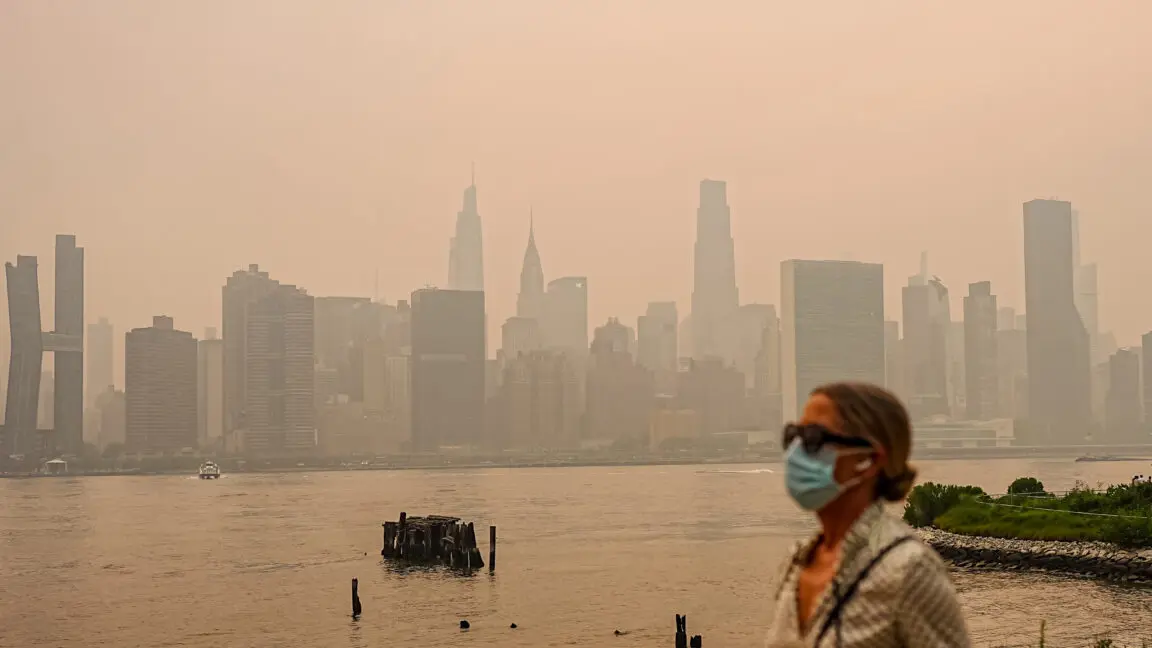
Between 2020 and 2024, the West witnessed some of the most destructive wildfire seasons in modern history. Entire towns were consumed, and skies thousands of miles away turned an apocalyptic orange. During these years, researchers expanded their observational frameworks to track how these massive plumes traveled across state lines, elevating background pollution levels nationwide.
It was during this period that the data began to crystallize regarding vulnerable populations. While urban centers often possessed civic infrastructure—such as municipal clean-air centers, widespread air conditioning, and robust healthcare networks—rural, low-income, and tribal communities found themselves directly in the crosshairs of the heaviest smoke plumes. The structural inequities of the American healthcare landscape meant that populations experiencing the steepest reversals in air quality frequently had the least access to routine prenatal care and specialized interventions.
The Present Horizon (2025–2026)
Today, as researchers project environmental metrics through 2026, the scientific consensus is stark. Wildfire smoke is no longer a peripheral environmental issue; it is a central driver of deteriorating air quality trends, particularly in the West and Northwest, where the contribution of wildfires to overall air pollution has more than doubled over the study periods. The intersection of intensifying fire seasons and vulnerable pregnancy windows has transformed a seasonal hazard into a systemic, year-round public health emergency.
Supporting Context & Metrics: The Science of PM2.5 and Fetal Vulnerability
To grasp the mechanics of this threat, one must examine the specific pollutant driving the crisis: PM2.5.
Understanding PM2.5 and Indoor Infiltration
PM2.5 refers to atmospheric particulate matter that has a diameter of less than 2.5 micrometers—roughly 30 times smaller than the width of a human hair. Because these particles are microscopic, they evade the upper respiratory tract’s natural filtration systems, penetrating deep into the lungs and crossing the alveolar-capillary membrane directly into the bloodstream.
A common misconception in public health messaging is that staying indoors provides a complete shield against wildfire pollution. However, modern air quality monitoring—utilizing low-cost, high-density sensor networks like Purple Air—has fundamentally debunked this assumption. Data sources tracking particulate migration reveal that a significant amount of outdoor wildfire smoke successfully infiltrates residential structures.
Researchers acknowledge several methodological limitations in current observational studies—such as not definitively tracking the exact amount of time an expectant mother spent outdoors, whether she consistently wore a high-efficiency N95 mask, or if her home was retrofitted with a dedicated HVAC air-filtration system. Nevertheless, the telemetry data is undeniable: when massive wildfire plumes blanket a region, indoor PM2.5 concentrations spike dramatically, exposing resting and sleeping pregnant individuals to sustained levels of toxic air pollution.
Disproportionate Impacts on Marginalized Populations
The burden of wildfire smoke is far from democratically distributed. The new study highlights deep regional and demographic disparities:
- Geographic Concentration: In the Western and Northwestern regions of the United States, wildfires’ contributions to overall air pollution have more than doubled over the analyzed timeframes.
- Demographic Vulnerability: The communities experiencing the most dramatic reversals in local air quality are predominantly low-income households, rural residents, and American Indian and Alaska Native populations.
- The Healthcare Deficit: Tragically, these exact populations—who bear the highest burden of toxic smoke exposure—frequently suffer from a severe deficit of neonatal care infrastructure. Maternity wards in rural areas have closed at an alarming rate over the last decade, leaving pregnant individuals miles away from specialized medical oversight when environmental crises strike.
Long-Term Health Trajectories
The stakes during the prenatal period are uniquely high. Fetal development is a rapid, highly sensitive symphony of cellular division, organogenesis, and neurological wiring. Exposure to systemic inflammation triggered by maternal inhalation of PM2.5 can disrupt placental function, restrict fetal growth, and imprint the developing immune and respiratory systems with vulnerabilities that manifest as chronic illnesses later in life.
As environmental health scientist Boudreaux emphasizes, reducing exposure during the prenatal period yields profound, lifelong benefits. Conversely, failing to protect the developing fetus locks generations into higher baseline risks for cardiovascular disease, respiratory disorders, and neurodevelopmental challenges.
Official Statements & Expert Analysis
The urgency of this crisis has mobilized researchers and public health advocates to issue clear warnings and strategic recommendations.
Dr. Boudreaux, a leading voice in environmental exposure research, points directly to the evolving nature of air pollution as the primary challenge for contemporary public health:
"What that tells me is that the next frontier is how do we help people manage exposure to wildfire smoke, which is a different kind of exposure than ambient pollution from other sources."
Unlike industrial or vehicular pollution—which tends to remain relatively stable and localized—wildfire smoke is dynamic, unpredictable, and characterized by acute, massive spikes that overwhelm traditional coping mechanisms. Boudreaux notes that the past six years of catastrophic fires in the American West and Canada have fundamentally transformed the baseline environment. Extending analytical models through 2026 suggests an even higher contribution of wildfires to unhealthy prenatal exposures, though researchers remain cautious about direct speculation.
Crucially, the focus must shift from observation to active intervention. Boudreaux outlines a multi-tiered approach required to safeguard vulnerable communities:
- Immediate Resource Deployment: Providing affected communities with tangible assets, including the establishment of municipal clean-air shelters, distribution of high-efficiency air filters, and enhanced healthcare access during active smoke events.
- Systemic Health Integration: Ensuring that obstetric and neonatal care providers are equipped to screen for and manage the fallout of acute smoke exposure in pregnant patients.
- Macro-Level Mitigation: Confronting the underlying driver of the crisis. As Boudreaux asserts, "Ultimately, we should be asking, are there things we can do to reduce the risk of climate change in general?"
Future Outlook: The Next Frontier in Public Health and Climate Resilience
Looking ahead, society stands at a critical crossroads. The convergence of increasingly severe wildfire seasons and the undeniable vulnerability of prenatal health demands a radical evolution in how we approach environmental protection and disaster response.
Rethinking Public Health Infrastructure
Traditional public health responses to natural disasters have been reactive—issuing stay-indoors advisories when the sky turns gray. However, the realization that indoor spaces are heavily compromised by fine particulate infiltration means that public infrastructure must be systematically upgraded.
- Clean-Air Infrastructure: Municipalities must invest in designated public clean-air spaces equipped with commercial-grade HEPA filtration systems, ensuring that pregnant individuals in low-income or inadequately housed communities have a safe haven during multi-week smoke events.
- Equitable Healthcare Access: Addressing the rural maternity care desert is no longer just a healthcare access issue; it is an urgent climate resilience strategy. Telehealth expansions, mobile clinics, and subsidized travel for prenatal check-ups must be integrated into climate adaptation funding.
The Climate Policy Imperative
While localized adaptation strategies—such as air filters, masks, and shelters—are vital triage measures, experts agree they are ultimately stopgap solutions. As long as global temperatures continue to rise and forest management challenges persist, the frequency and severity of megafires will continue to outpace our capacity to adapt locally.
Protecting the next generation requires aggressive, coordinated action on climate mitigation. Reducing greenhouse gas emissions, modernizing forest management through prescribed burns and Indigenous ecological knowledge, and stabilizing global temperature trajectories are not merely abstract environmental goals—they are fundamental prerequisites for safeguarding human reproduction and child health.
The research is clear: the air our children breathe tomorrow is shaped by the policy and lifestyle choices we make today. Ensuring a healthy start for the next generation means recognizing that climate action is, at its core, a profound act of maternal and child healthcare.
This article is adapted and expanded from foundational reporting originally published by Inside Climate News, a nonprofit, non-partisan news organization dedicated to covering climate, energy, and the environment.