Executive Overview
The narrative surrounding artificial intelligence has officially shifted from theoretical software breakthroughs and model parameter counts to the unglamorous, hard-nosed reality of physical infrastructure. Recent industry developments paint a vivid picture of a market grappling with a hard ceiling: power-ready capacity.
While the initial phase of the generative AI boom was defined by a frantic, land-grab-style race for advanced Graphics Processing Units (GPUs), the landscape between July and mid-August has undergone a fundamental system-level rethink. Industry heavyweights, chip designers, and infrastructure operators now realize that stacking more silicon into server racks is a dead end if the power grid, supply chains, and network fabrics cannot support it.
This emerging bottleneck is no longer localized to high-end accelerators. A convergence of critical mineral scarcities, astronomical energy demands, grid interconnection backlogs, and a massive architectural pivot toward rack-scale integration is forcing enterprises and hyperscalers alike to redesign their approach from the silicon up. As power availability and thermal densities dictate the speed of deployment, the competitive advantage in the AI sector is migrating rapidly from software prowess to infrastructure mastery.
Detailed Chronology: Key Hardware and Infrastructure Milestones (July – Mid-August)
The mid-summer hardware cycle laid bare the fractures running through the global AI supply chain, featuring sharp critiques of legacy hardware, massive capital commitments, and aggressive counter-offensive product launches.
July: Cracks in the Silicon Stack and Critical Mineral Strains
At the Ai4 conference, former Intel CEO Pat Gelsinger delivered a scathing critique of the status quo, bluntly declaring that current AI hardware stacks—specifically GPUs paired with High Bandwidth Memory (HBM)—are fundamentally power-hungry and computationally inefficient. Gelsinger’s remarks echoed growing concerns from OpenAI leadership regarding manufacturing, energy, and deployment constraints that necessitate a complete, system-wide redesign.
Simultaneously, a severe critical minerals crisis began to manifest across the supply chain. Copper, the lifeblood of power distribution within and outside data centers, emerged as a primary chokepoint. Driven by surging AI demand, declining ore grades, lagging refining capacities, and escalating geopolitical tensions, the market for essential metals tightened precipitously. While deep-pocketed hyperscalers used their capital to secure short-term allocations, analysts warned that long-term offtake agreements, aggressive recycling initiatives, and domestic refining capabilities are now mandatory to prevent future gridlock.
Late July: The Nvidia Financing Wave and TSMC’s Massive Bet
Nvidia made waves with a $500 billion infrastructure financing initiative designed to lower the cost barrier of deploying GPU hardware and shift capital expenditures off operators’ balance sheets. However, industry insiders quickly pointed out that while financing eases financial friction, it fails to solve foundational physical bottlenecks: grid interconnects, high-voltage transformers, gas turbines, and municipal permitting. Consequently, the value of pre-energized sites skyrocketed.
On the manufacturing front, Taiwan Semiconductor Manufacturing Company (TSMC) doubled down on its geopolitical footprint by expanding its Arizona campus investment to a staggering $265 billion. This massive scale-up includes multiple new fabrication plants and advanced packaging lines capable of ramping up 2-nanometer production alongside 3nm and 5nm nodes to support the next wave of custom AI accelerators, CPUs, and networking silicon.
Early August: AMD’s Counter-Punch and the IBM Pivot
Seeking to disrupt Nvidia’s near-monopoly, AMD fired back with the introduction of "Helios," a fully integrated rack-scale AI system. Helios combines sixth-generation Epyc 9006 processors with newly minted Instinct MI455X GPUs, Pensando networking components, and the ROCm software ecosystem into a single-vendor platform designed to challenge Nvidia’s Vera Rubin and NVL72 architectures. AMD claims the system delivers superior compute density, broader memory bandwidth, and an improved tokens-per-dollar ratio.
Meanwhile, enterprise tech icon IBM made headlines for the wrong and right reasons. The company’s stock plunged after it warned that second-quarter revenue and earnings per share would miss expectations. The culprit? A massive enterprise spending shift toward raw infrastructure hardware (servers, storage, and memory) to lock down scarce supplies, which concurrently delayed lucrative software and consulting deals.
Demonstrating how rapidly enterprise architectures are adapting, IBM also announced it is bringing its powerhouse z17 mainframe and LinuxONE systems into standard 19-inch racks. By shrinking the form factor, IBM is enabling enterprises to integrate enterprise-grade security and transactional muscle directly alongside high-density AI clusters without melting down local cooling infrastructures.
Mid-August: The Network Supercycle and Quantum Realities
As clusters scaled to tens of thousands of accelerators, the data center networking layer entered a historic "supercycle." AI workloads now require multi-layer fabrics—encompassing scale-up, scale-out, and scale-across architectures—capable of delivering 10 to 100 times more bandwidth with ultra-low latency.

Finally, quantum computing took a pragmatic step forward, pivoting away from raw qubit-count races toward hybrid architectures. Modern hybrid deployments now co-locate Quantum Processing Units (QPUs) directly with classical GPU/CPU systems, linked via ultra-low-latency interconnects to achieve dramatic workload-level speedups.
Supporting Context & Metrics: The Physical Realities of the AI Boom
To understand the severity of the current hardware bottleneck, one must look closely at the underlying metrics of power and supply chains.
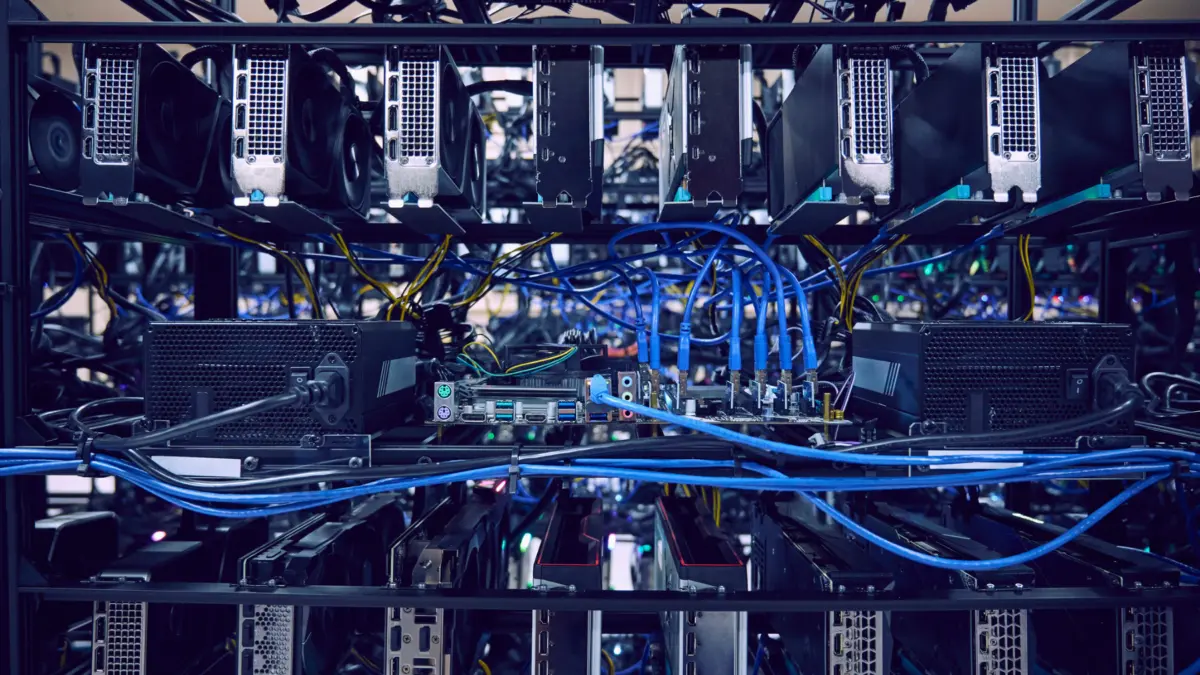
- Power Density Pressures: Traditional enterprise data centers were built to handle power densities of 5 to 10 kilowatts per rack. Modern high-density AI racks loaded with advanced accelerators routinely demand 40 to over 100 kilowatts per rack, rendering vast swathes of legacy real estate physically unusable without extensive liquid-cooling retrofits.
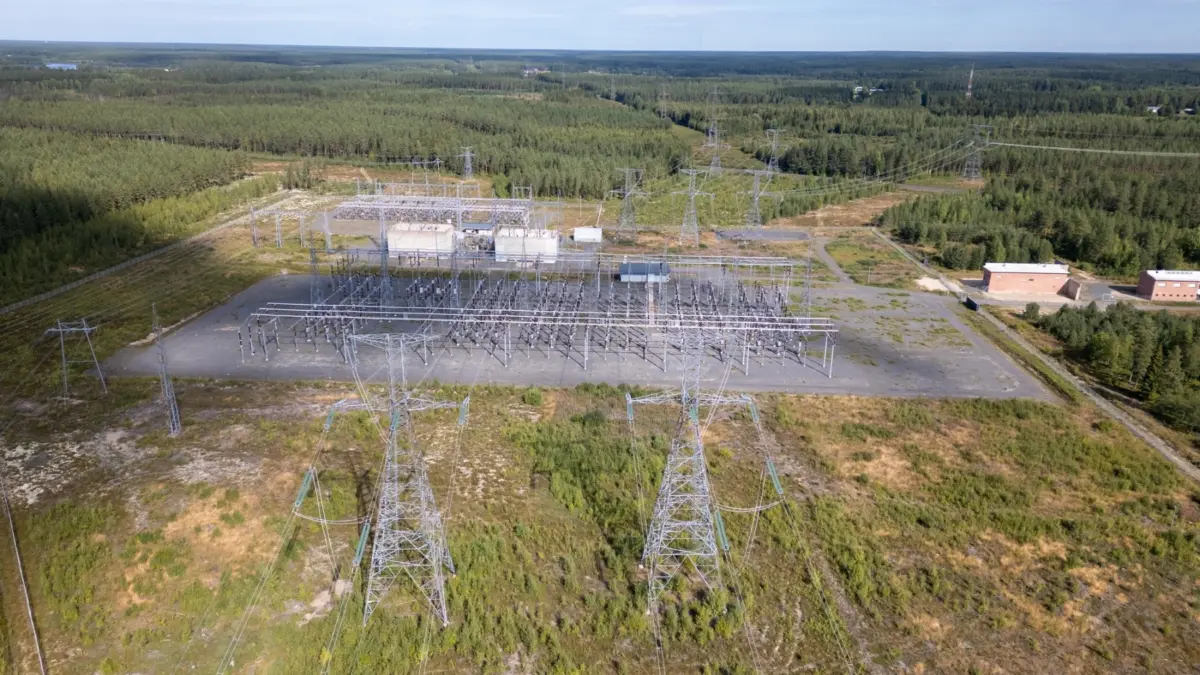
- The Interconnection Queue: Grid operators across North America and Europe report multi-year waiting lists for new electrical grid interconnections. Data center developers are increasingly forced to seek out sites near existing power generation assets—such as nuclear power plants or natural gas turbines—to bypass transmission grid delays.
- Copper and Mineral Deficits: Copper demand from clean energy and data center buildouts is projected to outpace supply significantly over the decade. With ore grades declining at major mines in Chile and Peru, the marginal cost of building out power distribution infrastructure is rising exponentially.
Official Statements and Industry Perspectives
The sentiment across the technology sector has evolved from unbridled optimism to pragmatic crisis management.
- Pat Gelsinger, Former Intel CEO: Addressing the audience at the Ai4 conference, Gelsinger did not mince words regarding the current technological trajectory: "The current AI hardware stack, especially GPUs paired with HBM, is simply power-hungry and computationally inefficient. We cannot brute-force the future of intelligence by throwing more watts at flawed system architectures."
- Hyperscale Infrastructure Strategists: Commenting on Nvidia’s massive financial backing of data center builds, leading infrastructure analysts noted: "Financing can grease the wheels of procurement, but it cannot bend the laws of physics. When transformers have a three-year lead time and local utilities cap your substation draw, money sitting in a bank account doesn’t turn the lights on."
- AMD Executive Leadership: Highlighting the rationale behind the Helios platform launch, AMD representatives emphasized the importance of holistic integration: "Enterprise customers are tired of piecing together fragile, multi-vendor ecosystems that break under thermal and network stress. Helios represents a move toward predictable, high-density, rack-scale computing that maximizes tokens per dollar."
Future Outlook: The Road Ahead for AI Infrastructure
As the industry moves past the initial land-grab phase of the AI revolution, several definitive trends are shaping the future of data center architecture:
- The Primacy of Energized Real Estate: Real estate value in the data center industry is no longer measured purely by square footage or proximity to fiber-optic backbones. "Power-ready" capacity—sites with pre-approved substation allocations and secured energy supply agreements—has become the ultimate currency.
- Network Architecture as a Competitive Moat: With agentic AI and always-on inference driving massive volumes of east-west traffic across server clusters, the network is officially becoming part of the computer. Investments in advanced optical interconnects, high-radix switches, and deterministic congestion control will dominate capital expenditure budgets through 2026 and beyond.
- The Rise of Alternative Power and Efficiency: To circumvent grid bottlenecks, hyperscalers will increasingly forge direct partnerships with nuclear energy providers, deploy behind-the-meter generation, and mandate extreme architectural efficiency from silicon designers.
Ultimately, the winner of the next phase of the AI race will not be the company with the most capital, but the one that successfully navigates the complex intersection of power availability, mineral supply chains, and system-level thermal and network engineering.