Executive Overview
In the modern enterprise, a quiet yet profound operational rebellion is taking place on the desks of creative professionals. A recent landmark survey published by Santa Cruz Software and analyzed by digital asset management (DAM) expert Ralph Windsor reveals a staggering paradox at the heart of corporate technology strategy: 96 percent of organizations are enforcing strict, formal AI restrictions, yet 96 percent of creative employees are systematically bypassing them.
This is not merely a tale of unruly employees or a failure of staff training. It is a predictable structural crisis born of an immovable clash between rigid corporate bureaucracy and the relentless velocity of modern deadlines. When unsanctioned external artificial intelligence tools can shave hours—or even days—off a designer’s weekly workload, compliance becomes an afterthought.
The parallels to the "Shadow IT" boom of the early cloud era are glaring. Just as personal Dropbox and Google Drive accounts once filled the operational voids left by sluggish enterprise file-sharing systems, unregulated generative AI is now stepping in to meet the daily demands of content creation. However, the stakes are exponentially higher this time.
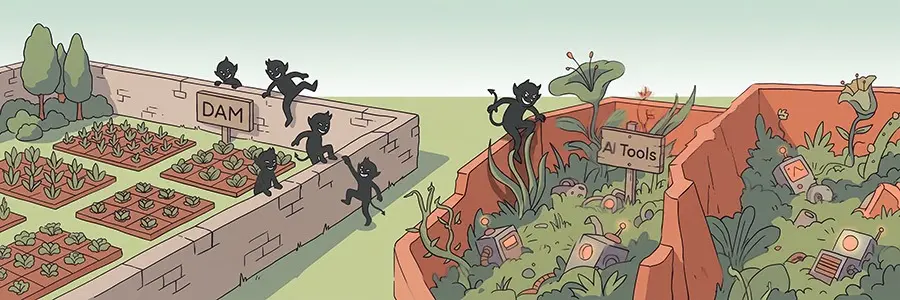
As Windsor points out, the rise of "Shadow AI" is actively fracturing the Digital Asset Supply Chain. When media assets leave a secure DAM environment to be processed by external, unsanctioned AI services, they frequently return stripped of their critical extrinsic metadata—such as copyright details, embargo statuses, model releases, and usage boundaries. They re-enter the corporate pipeline as "file zeros": untracked, unprovable digital ghosts.
As regulatory landscapes tighten—exemplified by frameworks like the European Union’s landmark EU AI Act—enterprises can no longer afford to treat policy documents as token security blankets. The solution does not lie in building higher walls or enforcing harsher bans, but in engineering seamless, native governance directly into the tools where creative work actually happens.
Detailed Chronology: The Evolution of Creative Compliance and the AI Pivot
The Pre-Cloud Era and the Rise of Shadow IT
To understand the current crisis surrounding Shadow AI, industry analysts often look back at the chaotic evolution of enterprise cloud storage a decade ago. Initially, IT departments maintained absolute control over corporate data storage by locking down local servers and restricting external data transfers. However, as remote work expanded and file sizes ballooned, sanctioned enterprise systems failed to provide the frictionless user experience that workers required.
Employees naturally gravitated toward consumer-grade cloud solutions like Dropbox, Box, and personal Google Drive accounts because they simply worked faster. Organizations initially responded with blanket bans and punitive compliance warnings. Yet, history proved that when corporate policy stands as an obstacle to productivity, policy always loses. Organizations eventually had to pivot from prohibition to integration, adopting enterprise-grade cloud ecosystems that balanced security with user experience.
The Generative AI Explosion
Fast forward to the current technological landscape. The sudden, explosive democratization of generative artificial intelligence—spanning text-to-image models, automated upscalers, inpainting tools, and AI-assisted layout engines—fundamentally altered the capabilities of individual creators.
Almost overnight, a designer working under a tight deadline could utilize an external, low-cost or free AI tool to execute complex compositing tasks that previously required specialized rendering farms or hours of tedious manual masking.
The Regulatory Awakening: The EU AI Act and Beyond
Concurrently, governments and regulatory bodies began waking up to the legal and ethical perils of unregulated machine learning. The implementation of the EU AI Act, alongside evolving data privacy frameworks (such as GDPR expansions) and emerging copyright lawsuits regarding training data, forced corporate legal teams into a defensive posture.
Organizations scrambled to draft comprehensive AI usage policies. They prohibited the uploading of proprietary brand assets, restricted the use of external generative models, and mandated internal reviews for AI-generated content.
The 96% Disconnect
However, these policies were largely drafted in boardrooms detached from the daily realities of production floors. According to the Santa Cruz Software survey data highlighted by Ralph Windsor, this disconnect reached a boiling point in 2026. The data exposed a near-total collapse of top-down authority: 96% of companies have rules, and 96% of creatives ignore them.
Rather than signaling a systemic breakdown in employee ethics, this statistic highlights a fundamental failure of architectural design. Creatives are not breaking rules out of malice; they are breaking them to survive in fast-paced environments where speed equals survival.
Supporting Context & Metrics: The Anatomy of a Structural Problem
Breaking Down the Numbers
A closer examination of the data surrounding corporate AI utilization reveals several critical friction points between IT mandates and creative workflows:
- 96% Enforcement Rate: The vast majority of mid-to-large enterprises have established formal, written guidelines governing the use of generative AI tools within marketing and design departments.
- 96% Circumvention Rate: Virtually matching the restriction metric, creative teams routinely utilize unsanctioned browser-based AI tools, plugins, and third-party SaaS platforms to hit tight project deadlines.
- Zero Visibility: In over 80% of these shadow-processing instances, enterprise DAM administrators have zero algorithmic or audit visibility into which assets were modified, what prompts were used, or what external training sets may have inadvertently ingested proprietary imagery.
The Illusion of Governance: The "Smoke Alarm" Fallacy
One of the most compelling arguments advanced by Windsor involves the psychological comfort that organizations derive from written documentation. Many corporate executives operate under the assumption that drafting a comprehensive 30-page AI governance policy fulfills their risk-mitigation obligations.
Windsor dismantles this illusion with a sharp, evocative analogy:
"The problem arises when the existence of a policy is mistaken for evidence that the activity is being governed — rather like assuming a smoke alarm works simply because one is fitted to the ceiling."
A policy document sitting dormant on a corporate intranet does nothing to intercept a designer who is staring down a midnight deadline for a campaign launch. If the sanctioned internal tool requires twelve clicks, five security approvals, and twenty minutes of rendering time, while an unsanctioned web-based AI utility accomplishes the task in five seconds, the policy is rendered entirely impotent.
The Threat to the Digital Asset Supply Chain
To truly grasp the danger of Shadow AI, one must look beyond legal copyright concerns and examine the mechanics of the Digital Asset Supply Chain.
A healthy enterprise DAM functions much like a meticulous supply chain in manufacturing. Every asset possesses a documented lineage:
- Provenance: Where was the asset originally captured or created? Who holds the moral and commercial copyright?
- Metadata Integrity: What are the embedded usage rights, model releases, geographic restrictions, and expiration dates?
- Version History: How has this asset evolved across different iterations of a campaign?
When an asset is dragged out of the DAM, saved to a local desktop, and uploaded to an external, unintegrated AI tool for retouching or expansion, this meticulously maintained chain of custody is violently severed.
Official Insights & Expert Perspectives
Ralph Windsor on Probabilistic AI vs. Deterministic Metadata
At the technical core of Windsor’s analysis is a profound incompatibility between how generative artificial intelligence operates and how digital asset management systems maintain order.
As Windsor notes:
"Generative models operate entirely on visual probability — governance requires deterministic rules."
Generative AI models are fundamentally probabilistic engines. They do not "know" facts, copyright laws, or contractual obligations; instead, they calculate the statistical probability of pixel arrangements based on vast training datasets. They excel at hallucinating, blending, and recreating visual concepts based on statistical weightings.
Conversely, enterprise compliance, digital rights management (DRM), and metadata tracking are strictly deterministic. A digital asset either possesses an active model release or it does not. An embargo either expires on October 1st at midnight, or it remains locked. There is no probabilistic gray area when it comes to legal liability, brand safety, and trademark compliance.
When an asset returns from an external AI process, it often comes back as what Windsor describes as a "file zero."
"When the modified derivative is eventually re-imported into the production pipeline, it arrives as a ‘file zero’ — a piece of untracked media with no recorded provenance, no version history and no linked permissions."
The Psychology of Compliance Failures
Interviews with creative directors and digital asset managers across the marketing sector reinforce Windsor’s findings. Malicious intent is almost never the driver behind Shadow AI usage. Designers, copywriters, and video editors are overwhelmingly focused on creative output and meeting campaign schedules.
When an employee utilizes an external tool to remove a distracting background or expand a photo’s aspect ratio, they rarely consider the downstream implications for enterprise metadata. Once that asset leaves the secure perimeter of the DAM and returns via an undocumented route, that operational knowledge vanishes. Even if no malicious activity occurred, the enterprise audit trail is permanently compromised, exposing the brand to potential copyright infringement claims, compliance audits, and regulatory penalties.
Future Outlook: Engineering Compliance Into the Creative Workflow
Moving Beyond the "Higher Walls" Mentality
As organizations look toward the future of digital asset management and artificial intelligence integration, a clear consensus is emerging: higher walls do not work.
Attempting to block external websites via corporate firewalls, disabling USB ports, or threatening disciplinary action against creatives who use unauthorized tools will only drive Shadow AI further underground. In an era where decentralized workforces and cloud-based freelancers dominate the creative economy, rigid perimeter security is a relic of the past.
The Solution: Native API Integration
The definitive fix to the Shadow AI crisis requires a paradigm shift in how software vendors and enterprise IT architects approach governance. Instead of treating policy as an external constraint, governance must be engineered directly into the native tools that creatives use every day.
Rather than forcing a designer to switch contexts—leaving Adobe Photoshop or Illustrator, logging into a standalone DAM portal, downloading an asset, modifying it externally, and manually re-uploading it—the workflow must be unified.
By embedding DAM connectivity and approved AI capabilities directly into native creative applications via robust APIs, organizations can automate compliance. Imagine a workflow where:
- An approved asset is pulled directly from the corporate DAM into Photoshop.
- The designer applies AI enhancements, but only through sanctioned, enterprise-approved AI engines integrated directly into the software plugin.
- The asset’s metadata, rights management tags, and version history remain securely attached throughout the entire manipulation process.
- The modified derivative is checked back into the DAM automatically, complete with a flawless audit trail, without the creator ever leaving their primary workspace.
Conclusion: Making the Compliant Route the Easiest Route
Human behavior in enterprise technology is governed by the path of least resistance. If the compliant route is slower and more cumbersome than the shadow route, employees will inevitably choose the shadow route, regardless of what any policy document dictates.
To solve the crisis of Shadow AI, organizations must stop relying on written edicts that serve merely as administrative smoke alarms. The future belongs to systemic control—placing secure, sanctioned, and intelligent tools precisely where the creative work happens, ensuring that compliance and productivity finally march hand in hand.