Executive Overview
In late 2022, a wave of digital schadenfreude swept across social media platforms following an unconventional municipal auction. Comedians Pete Davidson and Colin Jost—alongside a consortium of private investors—shelled out $280,000 to acquire the John F. Kennedy, a rusted, 57-year-old decommissioned vessel that once served as the crown jewel of the Staten Island Ferry fleet. Stripped of mechanical viability and plagued by sensationalized headlines detailing asbestos remediation and structural decay, the purchase was universally branded as a punchline.
For nearly four years, the vessel sat largely out of the public consciousness. That is, until September 2026, when an embargoed digital invitation arrived in media inboxes nationwide, teasing an unexpected pop-up: The Snapple Island Ferry Comedy Show.
Executing a masterclass in experiential marketing, Davidson and Jost partnered with beverage giant Snapple to transform the sweltering, orange-painted hull of the JFK into a one-night-only, invite-only floating comedy club. More than just a novelty gig for New York City’s younger generation, the event served as a high-stakes living laboratory for two distinct, parallel brand comebacks. For Snapple—which recently capitulated to overwhelming consumer outcry by returning its iconic beverages to traditional glass bottles after a disastrous plastic-bottle transition—the night was a calculated pitch to win back skeptical Gen Z and millennial consumers. For Davidson and Jost, it was a triumphant vindication, transforming years of online mockery into a physical testament to the messy, unfiltered, and deeply human art of live performance.
Detailed Chronology: From Internet Punchline to Floating Stage
The Genesis of a Mocked Acquisition
When the John F. Kennedy was retired by New York City in August 2022 due to mounting mechanical failures, few imagined its final chapter would involve Saturday Night Live mainstays. Built in 1965, the vessel was slated for scrap until Davidson, Jost, and their partners stepped in with a vague vision to convert the sprawling maritime antique into a floating entertainment venue.
The media response was swift and merciless. Tabloids published exposés citing ex-crew members warning of roaches and environmental hazards, while viral tweets recast the project as a floating health code violation named "Tetanus." On Saturday Night Live, Jost played into the bit with deadpan sarcasm, noting, “We thought the whole thing through.” Yet behind the self-deprecating humor lay a genuine, if wildly chaotic, entrepreneurial ambition.
The Ticket Scramble and the Arrival
Instead of monetizing the event through high-priced ticketing tiers—a move that easily could have grossed low six figures—the organizers chose a model engineered for maximum digital urgency. Beginning September 3 and running through September 8, a limited batch of free tickets dropped daily at 3:00 p.m. The resulting digital frenzy mirrored the exclusive drop culture seen around major cinematic events, driving a stampede of younger New Yorkers eager to secure access.
Upon arrival at the pier, attendees were ushered onto the vessel, where the logistical realities of a retrofitted ferry immediately set in. Lacking modern architectural flow, the ship featured a packed main room and an overflow space outfitted with live-feed projectors. The atmosphere was thick, humid, and notably devoid of central air conditioning—a glaring oversight that both hosts and comedians would repeatedly lean into as part of the evening’s unpolished charm.

The Comedic Lineup and Front-Row Carnage
Sharp at 9:00 p.m., the lights dipped. Davidson and Jost emerged to thunderous applause beneath a glowing neon "Snapple Island Ferry" sign. Delivering a brief, punchy opening set, Davidson wasted no time addressing the years of internet ridicule: "The amount of shit that people have talked… Well, suck it!" Jost followed up with dry industry wit, thanking their sponsor while joking about their financial backers.
Following the hosts’ departure, a fierce roster of rising comedic talent took the stage, utilizing the intimate, phone-restricted environment to workshop bold, provocative material.
- Matt Richards, serving as the night’s emcee, instantly broke the ice by chugging a Snapple and leaning into absurd, self-deprecating teenage anecdotes.
- Sal Vulcano, star of Impractical Jokers, offered a masterclass in live-performance anxiety, momentarily freezing when a local photographer snapped a flash photo before pivoting into affectionate crowd interaction.
- Caitlin Peluffo delivered a blistering, advanced-stage crowd-work set that targeted front-row media personnel, turning intimate personal inquiries into high-wire interactive comedy that left the audience screaming with nervous laughter.
Supporting Context & Metrics: The Anatomy of Two Comebacks
The partnership between Davidson, Jost, and Snapple was not merely a quirky pairing of pop-culture icons; it was a synchronized corporate and personal rehabilitation strategy targeting the psychological profile of modern consumers.
The Psychology of Risk-Aversion
As noted by cultural analysts and media psychologists, contemporary youth culture exhibits unprecedented levels of risk aversion—a phenomenon exacerbated by algorithmic environments that penalize failure and reward sanitized perfection. By leaning aggressively into their failures—the heat, the rust, the financial speculation, and the public clowning—the organizers created a safe space for imperfection. The willingness of performers to "die on stage" and workshop raw, unrefined jokes provided an antidote to digital over-cautiousness.
Snapple’s Glass Bottle Resurgence
The corporate engine behind the night was equally strategic. Between 2017 and 2021, Snapple phased out its signature glass bottles in favor of plastic containers, justifying the transition under the banner of sustainability. However, operational savings—slashing manufacturing costs to roughly a third of their original baseline—were transparently tied to the corporate bottom line. Consumers revolted against the tactile loss of the classic bottle experience.
Recognizing the erosion of brand equity, Keurig Dr Pepper greenlit a limited glass-bottle revival in late 2025 across select bodegas and retailers in New York, explicitly responding to an "overwhelming number of consumers" demanding nostalgia. The Snapple Island Ferry activation served as the physical capstone of this campaign, cementing the return of "the glass" directly into the hands of influential millennials and Gen Z trendsetters.
Official Statements and Industry Insights
Reflecting on the cultural lineage of comedy clubs and the necessity of public failure, legendary comedian Chris Rock noted in a recent career retrospective regarding his historic Oakland set in 1996:

"You gotta go over the line to find the line. That’s what people don’t understand. When a comedian gets in trouble for saying something at the club, it’s like, ‘Dude, that’s what the club’s for.’"
That ethos defined the JFK experiment. By restricting smartphones and forcing audiences to be present in a physical space, the event resurrected the foundational danger of live performance.
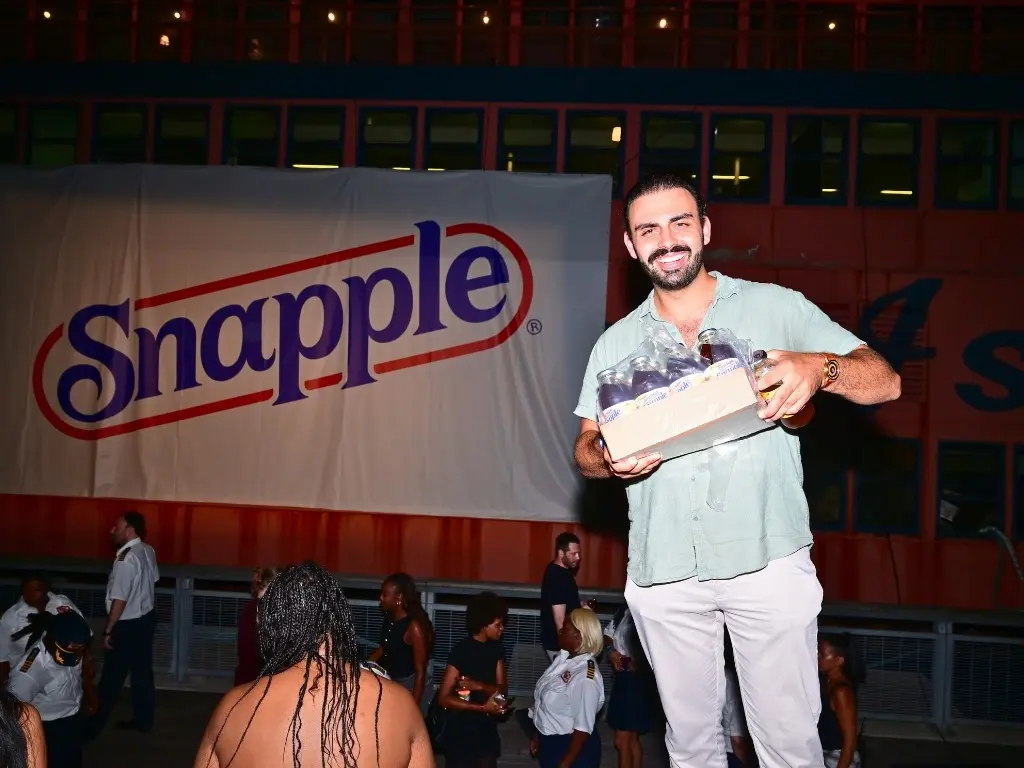
Corporate sentiment echoed a similar appetite for high-risk engagement. Event coordinators and brand representatives noted that the organic digital footprint generated by the ticket scramble and the subsequent word-of-mouth buzz vastly outweighed traditional advertising metrics. As one onboard Snapple representative whispered frantically near the end of the evening while distributing surplus cases of Peach Tea to departing guests: "Please, take one now and leave before anyone sees you… We need to get rid of all of these before the end of the night."
Future Outlook: Can a Rust Belt Relic Become a Permanent Cultural Hub?
As the night concluded and attendees filtered back onto the pier clutching complimentary glass bottles of Snapple, larger questions remained regarding the long-term viability of the John F. Kennedy.
While the one-night-only comedy show successfully proved that Davidson, Jost, and Snapple could generate massive cultural cachet through experiential marketing, turning a 57-year-old, structurally complex ferry into a permanent, scalable entertainment venue presents monumental engineering and regulatory hurdles. Millions of dollars in infrastructure upgrades—including the desperately needed installation of modern climate control systems—stand between the current rusted hull and a fully realized commercial nightlife destination.
Nevertheless, the Snapple Island Ferry experiment achieved its primary objective. It demonstrated that in an era dominated by algorithmic safety and risk-averse digital curation, there remains an insatiable, roaring appetite for physical chaos, unpolished authenticity, and the shared, communal joy of laughing in the dark—even if you’re sweating through your clothes on a boat that everyone said would sink.