Executive Overview
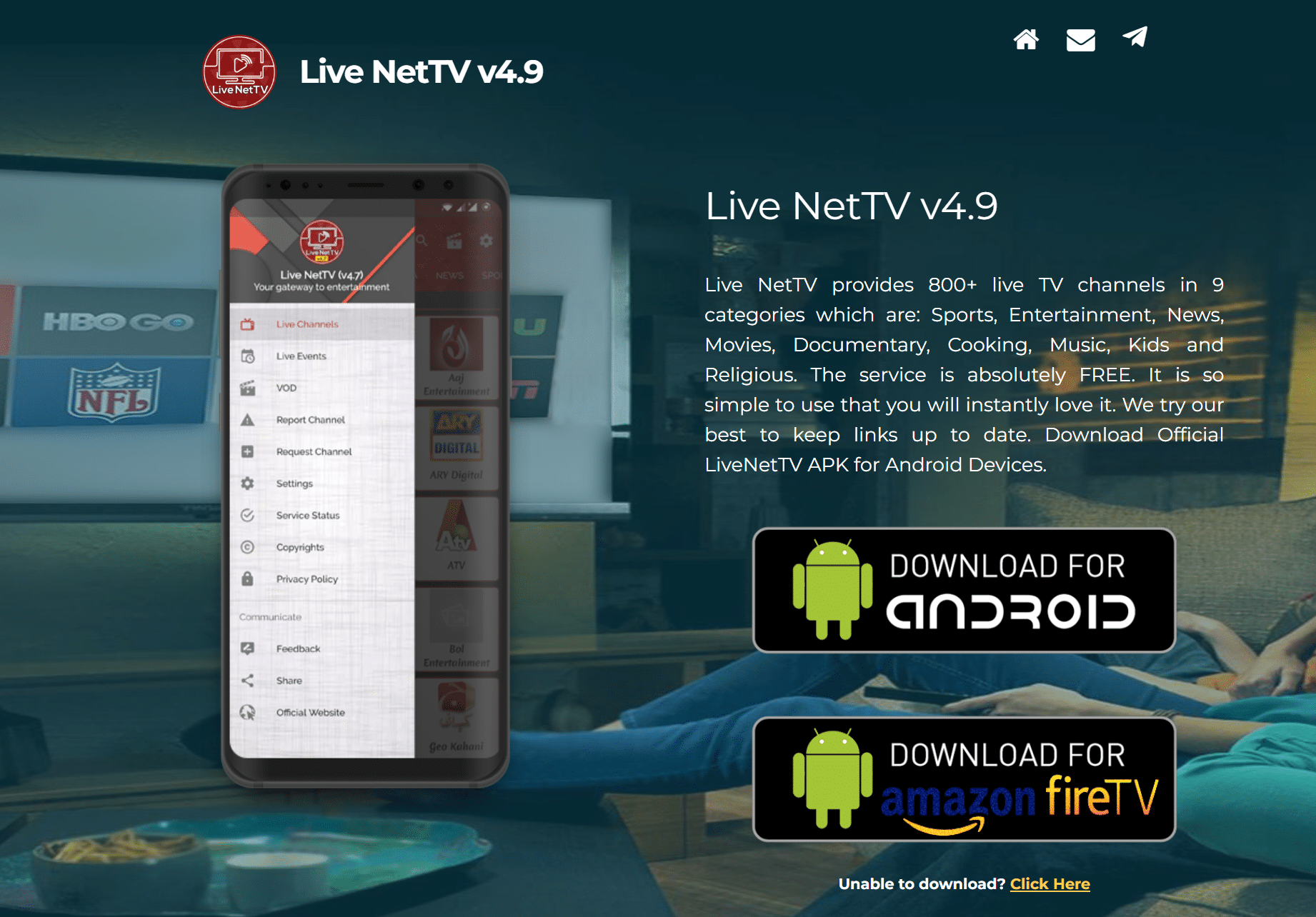
In the sprawling, high-stakes ecosystem of global digital piracy, few applications have demonstrated the resilience, longevity, and sheer defiance of LiveNetTV. For an astounding ten years, the free Internet Protocol Television (IPTV) application operated in a legal gray zone, defying relentless regulatory pressures, countermeasures from tech giants, and coordinated assaults from international copyright holders. Offering ad-supported access to hundreds of live television channels spanning dozens of countries, LiveNetTV became a household name—particularly among users of Android-based streaming media players and Amazon’s Fire TV sticks.
However, the decade-long run has officially come to a definitive end.
The Alliance for Creativity and Entertainment (ACE), the world’s leading anti-piracy coalition, announced the total shutdown of LiveNetTV following a comprehensive, cross-border enforcement operation. The decisive blow was struck in late February, when local law enforcement in Istanbul, Turkey, raided the primary operators of the service. Following months of legal proceedings and intense negotiations, two Turkey-based operators—identified publicly only by their initials, A.B. and R.B.—reached a formal settlement with ACE.
As part of the agreement, the operators surrendered ten vital domain names to the Motion Picture Association (MPA), which manages the ACE coalition, and issued a rare public mea culpa. Today, visiting any of LiveNetTV’s former digital gateways no longer yields downloadable APK files or streaming directories; instead, visitors are redirected to ACE’s official "Watch Legally" portal. This exhaustive report chronicles the rise and fall of LiveNetTV, detailing the clandestine police raids in Istanbul, the quiet dismantling of its infrastructure, the strategic domain takeovers, and the broader implications of this landmark anti-piracy victory.
Detailed Chronology: From 2016 Genesis to the Istanbul Raids
To understand the magnitude of LiveNetTV’s collapse, one must examine its remarkable timeline. The platform first emerged in 2016, a period that coincided with the explosive growth of side-loadable applications on Android devices and smart streaming hardware. Capitalizing on the shift away from traditional cable subscriptions toward decentralized, internet-based media consumption, LiveNetTV positioned itself as a comprehensive aggregator of global television content.
Operating primarily as an ad-supported mobile application, LiveNetTV bypassed traditional distribution channels. Users could easily sideload the application onto hardware like Amazon Fire TV devices, turning an affordable streaming stick into an unrestricted gateway for international sports, news, and entertainment networks.

The Cat-and-Mouse Game with Tech Giants
As LiveNetTV’s user base ballooned over the years, it inevitably drew the ire of rightsholders and major technology corporations. The application’s heavy footprint on Amazon’s Fire TV ecosystem made it a prime target for platform integrity measures. Responding to mounting pressure from the anti-piracy community and copyright syndicates, Amazon implemented aggressive countermeasures last year. The tech giant began remotely disabling and blocking several popular pirate applications that had been sideloaded onto user devices, explicitly targeting LiveNetTV in its sweep.
Yet, LiveNetTV’s developers proved stubbornly resilient. Rather than folding under Amazon’s digital pressure, the team behind the app engineered workarounds. They rapidly released updated iterations designed to slip past Amazon’s detection algorithms. By the turn of the year, LiveNetTV was fully operational, streaming live content to millions of devices as if nothing had changed.
The February Crackdown
The true turning point arrived not from Silicon Valley, but from the criminal justice system in Turkey. Behind the scenes, member companies of the MPA filed a formal criminal complaint with the Chief Public Prosecutor’s Office in Istanbul, setting a powerful international legal apparatus into motion.
In late February, the invisible walls surrounding LiveNetTV finally crumbled. Users across the globe noticed that the application’s interface still loaded—thumbnails populated and menus remained responsive—but every single stream was dead. The operators offered no public explanation for the sudden blackout, leaving the global user base and online piracy forums to speculate whether the developers had voluntarily retired or had been silenced by legal threats.
The reality, however, was far more severe. According to disclosures provided exclusively to investigators, local law enforcement agencies in Istanbul, working alongside a court-appointed technical expert, executed a coordinated search-and-seizure operation targeting the infrastructure and residences associated with the platform’s core operators.
Confronted with the sudden seizure of their hardware and facing imminent criminal prosecution, the operators made the unilateral decision to pull the plug on the service permanently. This pre-emptive shutdown occurred immediately following the February raid, long before formal settlement discussions with ACE even began.

Supporting Context & Metrics: The Scale of the Operation
While web-scraping metrics often fail to capture the full scope of mobile-first application networks, the digital footprint left behind by LiveNetTV provides a compelling window into its massive scale.
According to data compiled during the investigation, the primary web domains utilized by the service accumulated roughly 2.4 million annual visits at the height of their popularity. ACE representatives were quick to clarify that this figure represented only traditional web traffic—namely, users visiting the desktop or mobile sites to download the application’s APK installation files. It did not account for the continuous, daily in-app streaming traffic generated by millions of active users worldwide who already had the software installed on their Fire TV sticks and Android boxes.
The Surrendered Domain Portfolio
The formal settlement inked in late June—and finalized across subsequent weeks—involved the absolute surrender of ten strategic domain names originally registered by the operators during the app’s launch window in 2016. WHOIS registration records trace the systematic transfer of these assets to the Motion Picture Association.
The complete roster of seized domains, alongside their final update timestamps, illustrates the methodical unwinding of the network’s digital infrastructure:
- livenettv.net – Transferred / Updated: June 29, 2026
- livenettv.info – Transferred / Updated: June 29, 2026
- livenettv.pro – Transferred / Updated: June 29, 2026
- livenettv.cc – Transferred / Updated: June 29, 2026
- livenettv.co – Transferred / Updated: June 30, 2026
- livenettv.org – Transferred / Updated: August 12, 2026
- livenettv.me – Transferred / Updated: August 13, 2026
- livenettv.us – Transferred / Updated: August 24, 2026
- livenettv.tv – Transferred / Updated: August 24, 2026
- livenettv.xyz – Transferred / Updated: September 8, 2026
Today, each of these domains functions as a redirection funnel, steering former visitors away from illicit content and directly toward ACE’s educational initiative encouraging consumers to explore authorized digital marketplaces.
Official Statements and the Public Mea Culpa
In an industry where enforcement actions are frequently met with silence, recidivism, or protracted legal battles, the LiveNetTV settlement stands out due to the inclusion of a public statement issued by the operators themselves. As part of the negotiated legal resolution finalized in late June, operators A.B. and R.B. agreed to publish a joint mea culpa—serving both as an admission of guilt and a stark warning to other illicit streaming entrepreneurs.
In their published statement, the remorse of the defendants is palpable:
"What started as a way to make money online quickly got out of hand. We didn’t fully appreciate the legal consequences or the impact our actions would have."
"Looking back, the financial gains were simply not worth everything we’ve lost."
While ACE representatives declined to comment on whether the settlement included specific financial restitution or punitive monetary damages—figures that frequently stretch into the millions in typical copyright infringement lawsuits—industry analysts suggest that securing a public surrender of this magnitude holds immense strategic value. For an anti-piracy coalition dedicated to deterrence, the public confession of once-anonymous developers is often a more potent weapon than financial penalties alone.
Furthermore, ACE leadership was quick to heap praise on local law enforcement partners in Turkey. The successful execution of the search and seizure warrants highlights the increasing effectiveness of international judicial cooperation in dismantling decentralized, cross-border piracy rings.
Future Outlook: The Shrinking Landscape for Sideloaded IPTV
The permanent neutralization of LiveNetTV marks a major milestone in the ongoing war against unauthorized IPTV distribution. For years, free streaming applications have enjoyed a degree of impunity, operating under the assumption that their anonymous operational structures and offshore hosting shielded them from accountability.

The LiveNetTV case shatters that illusion. By combining the digital countermeasures of hardware manufacturers like Amazon with rigorous criminal investigations, international copyright coalitions, and domestic police forces, rightsholders have established a repeatable blueprint for hunting down and dismantling major pirate infrastructure.
As authorities increasingly target the individuals behind the applications—rather than merely playing an endless game of whack-a-mole with transient streaming links—the risk profile for operating illicit streaming platforms has skyrocketed. For the developers who remain in the shadows, the cautionary tale of A.B. and R.B. in Istanbul delivers an unmistakable message: the decade-long party for free, unauthorized television streaming is rapidly coming to an end, and the personal cost of illicit enterprise is ultimately far too high.