Executive Overview
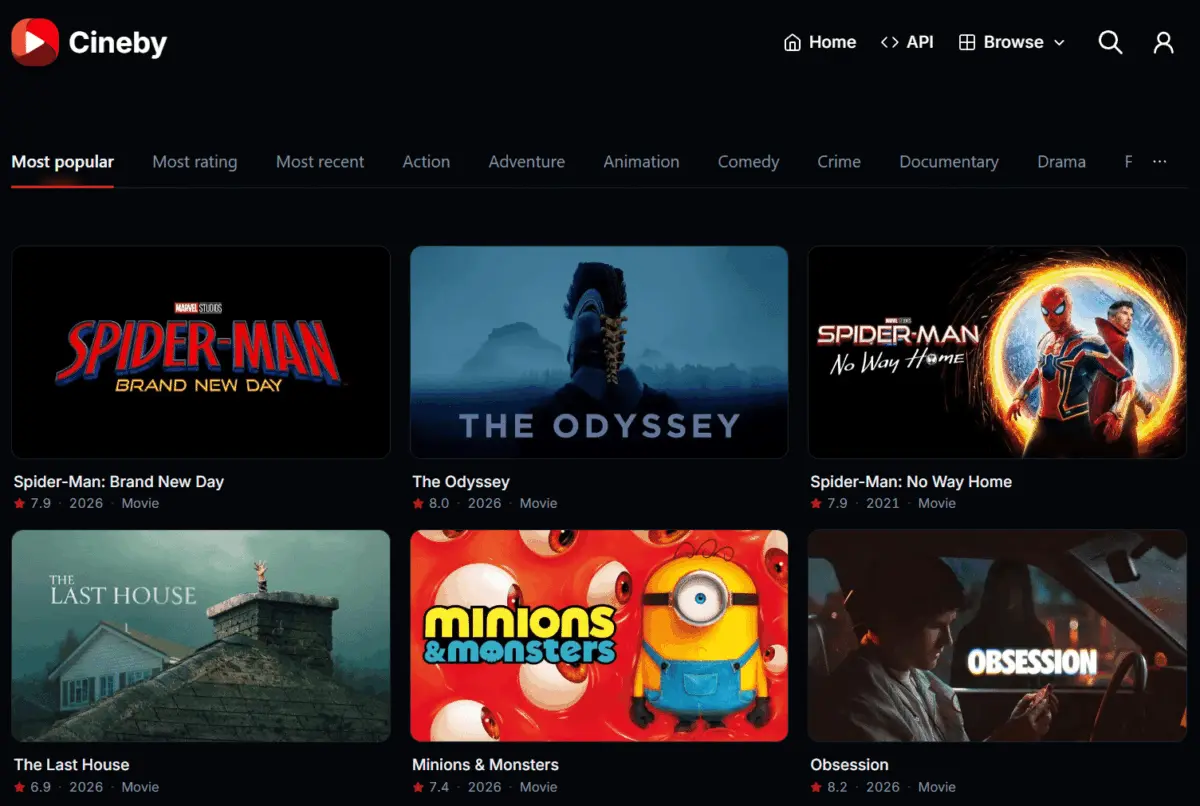
In the sprawling, volatile ecosystem of online digital piracy, few entities manage to scale to the stratospheric heights of mainstream platforms before collapsing under their own weight. Cineby, a titan in the pirate streaming landscape that recently commanded a staggering 160 million visits in a single month, has officially announced that it will permanently shut its doors on August 26. The platform, which functioned as a slick, subscription-free alternative to traditional streaming services and modern Internet Protocol Television (IPTV) setups, has long been a primary target for global copyright holders, major Hollywood studios, and international anti-piracy coalitions.
While the operators of Cineby have offered no explicit explanation for their sudden capitulation, the timing coincides with a relentless, coordinated global crackdown. Over the past year, Cineby found itself squarely in the crosshairs of the Motion Picture Association (MPA), targeted by aggressive diplomatic maneuvers, sweeping multi-jurisdictional site-blocking injunctions in the United Kingdom and Canada, and targeted domain seizures ordered by the High Court of Delhi. Furthermore, updates to the site’s network indicate that sister platforms—including Cineplay and Fmovies+—are echoing the exact same closure notices, signaling a coordinated withdrawal across a wider portfolio of illicit portals.
Yet, experienced observers of the digital piracy beat harbor few illusions about the permanence of such victories. Cineby’s planned extinction highlights a cyclical game of digital whack-a-mole that has plagued the entertainment industry for decades. As the platform prepares to wipe its servers and delete user accounts, millions of displaced monthly visitors are expected to scatter across the internet, instantly creating a lucrative vacuum. Industry analysts, legal experts, and copyright enforcement agencies know all too well that when a single "hydra" head is severed, several more are positioned to rise from the ashes, testing the limits of modern preventative legal frameworks.
Detailed Chronology of an Escalating Crackdown
The demise of Cineby did not happen in a vacuum; it was the culmination of a systematic, cross-border legal offensive orchestrated by the film and television industry to dismantle one of the internet’s most resilient "one-stop-shop" streaming hubs.
The MPA’s "Hydra Site" Designation
The first major public salvo against Cineby was fired last autumn when the Motion Picture Association explicitly singled out the platform in its submission to the Office of the United States Trade Representative (USTR). In its filing, the MPA classified Cineby within a rapidly expanding category of "hydra sites." These platforms differ fundamentally from traditional torrent indexes or direct-download lockers by offering a unified, polished user interface that aggregates content seamlessly, mimicking legitimate subscription video-on-demand (SVOD) services without requiring users to pay a dime or configure specialized hardware.
The MPA’s dossier not only highlighted Cineby’s explosive growth and Russian infrastructure roots but also drew attention to its reliance on "piracy-as-a-service" (PaaS) architecture. By embedding video streams hosted by fragmented third-party providers, Cineby managed to scale its catalog exponentially while insulating its core operators from direct, immediate hosting liabilities.
The Spring Offensive: Proactive Omnibus Blockades
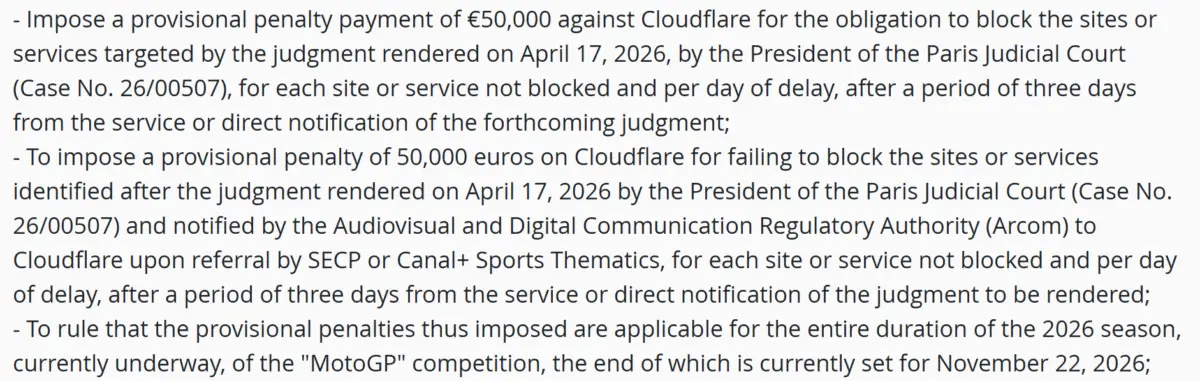
As diplomatic pressure transitioned into hard legal enforcement, copyright holders adopted novel, preemptive strategies to choke off Cineby’s traffic. In May, the United Kingdom implemented a sweeping "omnibus" site-blocking order facilitated through cloudflare infrastructure and major ISPs. Crucially, this order was crafted to look forward: it did not merely target Cineby’s current iterations, but explicitly authorized the preemptive blocking of future successors, copycats, and rebranded domains associated with the operation.

Simultaneously, a parallel legal development unfolded in North America. The Federal Court of Canada issued an expanded-scope site-blocking order designed with similar foresight. Recognizing the frustrating tendency of pirate operations to reappear under new web addresses moments after a takedown, Canadian authorities authorized broad injunctions intended to sweep up any subsequent iterations of Cineby before they could successfully re-establish a foothold among Canadian consumers.
The Indian Injunctions and Domain Battles
The pressure intensified drastically in July when the Delhi High Court issued a sweeping injunction following a lawsuit filed by HBO and several other major Hollywood studios. This judicial order took direct aim at Cineby’s infrastructure, commanding Indian Internet Service Providers (ISPs) to block multiple Cineby domains while simultaneously instructing domain name registrars to suspend the associated web addresses.
However, this front of the war revealed the logistical friction inherent in global domain regulation. Despite the explicit directive from the Delhi High Court, Cineby’s primary .at domain remained active and accessible, highlighting a compliance gap—presumably on the part of European registrar Registrar.eu—that allowed the site to continue operations. While legal gears ground away slowly in foreign jurisdictions, it became increasingly clear that external legal pressure was compounding internal operational strain, paving the way for the site’s abrupt, voluntary capitulation.
Supporting Context & Metrics: The Scale of the Operation
To fully comprehend the significance of Cineby’s shutdown, one must examine the sheer scale of the operation and the economic pressures it exerted on the global entertainment economy.
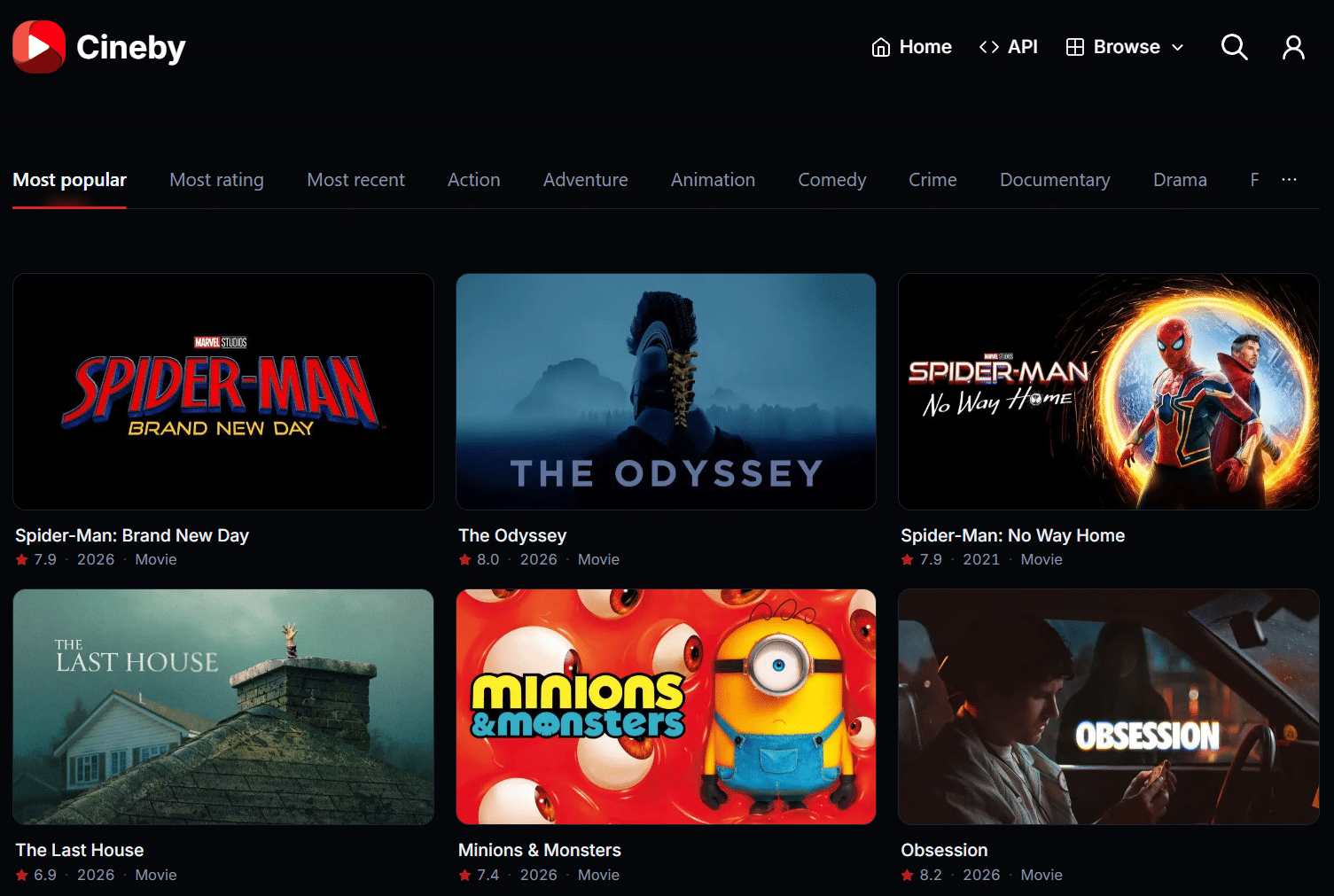
With over 160 million monthly visits recorded just prior to its closure announcement, Cineby operated on a scale that rivaled legitimate, venture-backed streaming applications. Its interface offered high-definition video playback, meticulously organized metadata, zero advertising clutter compared to its sleazier competitors, and a user account system that tracked watch histories—features that fostered immense user loyalty.
+-------------------------------------------------------------------------+
|                        CINEBY METRICS AT A GLANCE                       |
+---------------------------+---------------------------------------------+
| Monthly Visits            | 160,000,000+                                |
| Primary Infrastructure    | Piracy-as-a-Service (PaaS) / Hydra Model    |
| Key Target Regions        | UK, Canada, India, United States            |
| Primary Enforcement Bodies| MPA, HBO, Major Hollywood Studios           |
| Associated Sister Sites   | Cineplay, Fmovies+                          |
+---------------------------+---------------------------------------------+
This massive audience translated into millions of hours of diverted viewership, directly undercutting subscription revenues for major studios and streaming services. The economic incentive for the MPA and its member companies to neutralize Cineby was existential. Platforms like Cineby leverage modern content delivery networks and distributed cloud services to minimize overhead, allowing them to capture massive market share while contributing nothing to the multibillion-dollar production budgets required to create the underlying intellectual property.
Furthermore, the operational model utilized by Cineby—often referred to in enforcement circles as "Hydra-style" aggregation—represents an evolution in online piracy. Instead of storing massive video files locally, which invites immediate copyright infringement takedowns and heavy server costs, platforms like Cineby acted merely as sophisticated indexing and rendering front-ends. They tapped into decentralized, third-party video hosts that often remained online even when the primary user-facing portals faced legal interference. This structural resilience is precisely why the underlying piracy problem persists, even as marquee brand names vanish from the web.

Official Statements and the Anatomy of the Shutdown
The manner of Cineby’s exit has been characterized by a quiet, almost clinical finality. Visitors navigating to the platform’s primary web addresses are no longer greeted with the familiar, slick dashboard of streaming options, but rather with a stark, unadorned announcement detailing the end of the road:
"Cineby and all related services will cease operations on August 26th. It’s been a good run, but the time has come to stop. All servers will be shut down, and every user account will be deleted."
Conspicuously absent from this farewell message is any mention of legal threats, police raids, or domain seizures. The operators chose to frame the shutdown as a voluntary cessation—a pragmatic decision to walk away while the metaphorical lights were still on.
Security researchers and anti-piracy investigators, however, view such voluntary shutdowns with a healthy dose of skepticism. Historically, high-profile pirate operations rarely surrender out of sudden legal contrition. More frequently, voluntary closures serve as strategic pivots. By shutting down servers voluntarily and wiping user databases, operators can mitigate the risk of forensic data collection by law enforcement agencies, protect their identities from unmasking, and liquidate profitable brand equity before a criminal indictment forces their hand.
The simultaneous appearance of identical shutdown notices across affiliated portals such as Cineplay and Fmovies+ suggests that a centralized ownership group or administrative collective controlled the entire network. By pulling the plug concurrently, these operators effectively executed a coordinated retreat across their entire portfolio of digital properties.
Future Outlook: The Hydra Effect and the Next Generation of Piracy
As the August 26 deadline approaches, the broader digital media landscape is bracing for the inevitable "Hydra effect." The closure of a major platform serving 160 million monthly visits does not equate to the evaporation of consumer demand; rather, it triggers a massive migration of users seeking alternative avenues for free entertainment.
The Rebranding and Copycat Phenomenon
Industry precedent demonstrates that the void left by giants like Cineby is rapidly filled. When historical streaming heavyweights or anime giants like Zoro, Aniwatch, and the more recently defunct HiAnime were driven offline, they were almost instantly replaced by a wave of copycats, clones, and rebranded successors—sometimes operated by the very same administrative teams seeking to shed toxic legal baggage.
Even if the individuals behind Cineby successfully retire from the illicit streaming trade, entrepreneurial web developers across Eastern Europe, Asia, and other permissive jurisdictions are already spinning up new template-based streaming portals designed to capture the windfall of orphaned traffic.
Testing New Legal Frontiers
The true test in the wake of Cineby’s demise will not be whether the site stays down—its operators have made their intentions clear—but whether the innovative legal mechanisms deployed against it can successfully stem the tide of its successors.
The expanded-scope site-blocking orders pioneered in Canada and the omnibus injunctions implemented in the United Kingdom were specifically engineered for this exact scenario. By legally binding ISPs and intermediaries to block future copycats and successor domains automatically, without requiring copyright holders to initiate entirely new, protracted lawsuits for every spin-off site, lawmakers and courts hope to break the endless cycle of the Hydra effect.
When these new blocking powers are put to the test in the coming weeks and months, they will determine whether modern judicial frameworks can outpace the hyper-adaptable nature of decentralized internet piracy. Until then, while cineby.at and its sister portals tick down their final hours, the foundational architecture of piracy-as-a-service remains fully intact—waiting quietly for the next generation of domains to take flight.