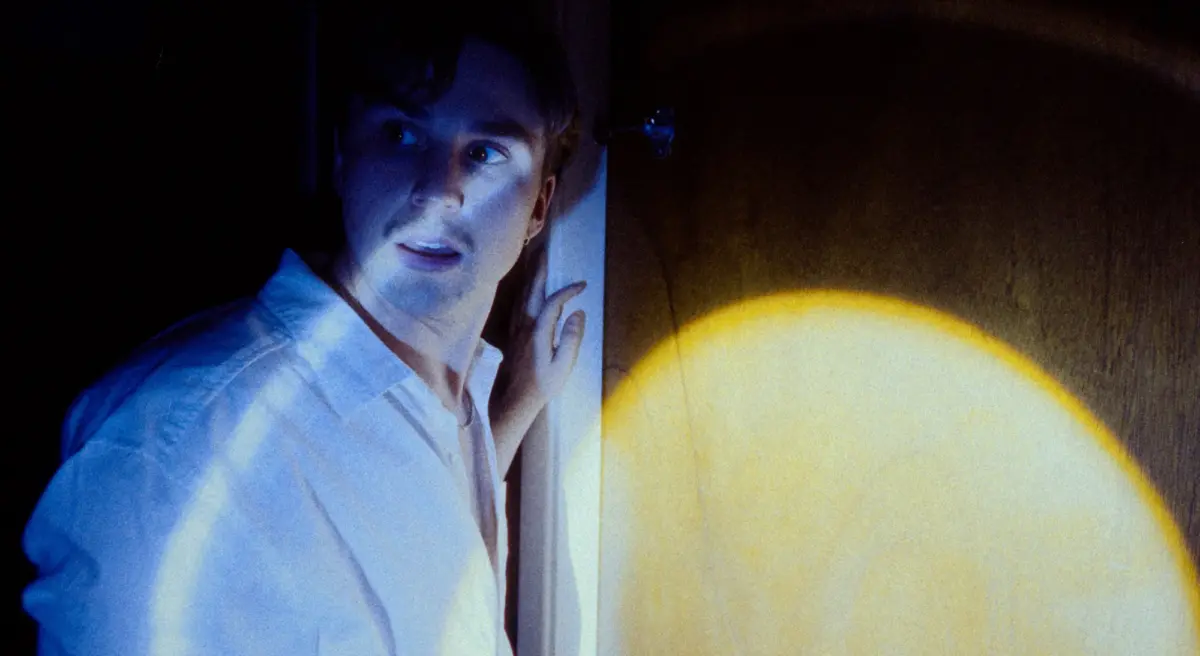
In the rapidly evolving landscape of contemporary cinema, the barrier to entry for feature-length narrative filmmaking has experienced a seismic shift. Once defined by multi-million-dollar budgets, massive production crews, and heavy, expensive camera packages, the medium is undergoing a radical democratization. At the forefront of this modern cinematic revolution is Fire Alive, an award-winning horror feature directed by seasoned visual artist James Demitri.
Shot entirely on an iPhone 16 Pro Max utilizing the free Blackmagic Camera application, Fire Alive was completed on an astonishingly brief five-day production schedule. Despite these radical logistical and budgetary constraints, the film achieved critical acclaim, earning finalist honors at the prestigious 2026 SF3 (SmartFone Flick Fest) Film Festival.
+-----------------------------------------------------------------+
|                       FIRE ALIVE: AT A GLANCE                   |
+-----------------------------------------------------------------+
| Director:          | James Demitri                              |
| Production Window: | 5 Days (Principal Photography)             |
| Post-Production:   | 2 Days (Editing & Color Grading)           |
| Primary Hardware:  | iPhone 16 Pro Max                          |
| Primary Software:  | Blackmagic Camera App                      |
| Lighting Strategy: | Strictly Practical & Ambient Lighting      |
| Critical Accolade: | Finalist, 2026 SF3 Film Festival           |
+-----------------------------------------------------------------+
Demitri, whose professional pedigree spans more than two decades of high-end celebrity and fashion photography, designed the project as a deliberate creative proof of concept. His objective was clear: to demonstrate that a gripping, visually sophisticated feature-length film could be executed using a consumer smartphone paired with professional-grade software. The resulting film does not merely pass as a traditional feature; in many respects, its visual texture, shadow detail, and color latitude rival productions shot on dedicated cinema platforms.
Detailed Chronology: The Five-Day Crucible
The genesis of Fire Alive lies in a combination of strict temporal limitations and deliberate creative constraints. The production timeline was dictated by a highly compressed window: the crew had access to their primary filming location—a private residence—for only five days.
Production Timeline:
[Day 1-5: Principal Photography] ──> [Day 6-7: Post-Production & Color] ──> [Delivery]
Pre-Production and the Creative Mandate
Before a single frame was captured, Demitri established a strict technical and aesthetic manifesto for the project:
Zero Traditional Film Lights: The production would rely entirely on practical lights inherent to the location (lamps, overhead fixtures, and flashlights).
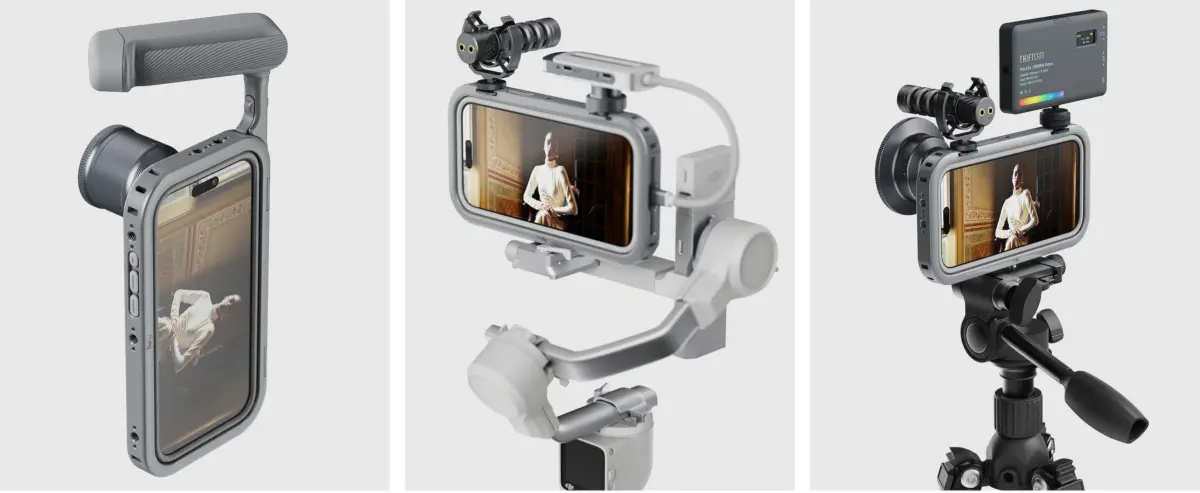
Minimalist Footprint: The camera package had to remain ultra-portable to allow rapid setups and spontaneous framing adjustments.
Narrative Focus: The script was engineered to maximize suspense through atmospheric tension rather than expensive practical or digital visual effects.
The narrative of Fire Alive follows a meta-premise: four independent filmmakers venture into an isolated environment to investigate whether supernatural hauntings are genuine. This narrative setup naturally accommodated a raw, immediate visual style.
Principal Photography: Inside the 1970s Basement
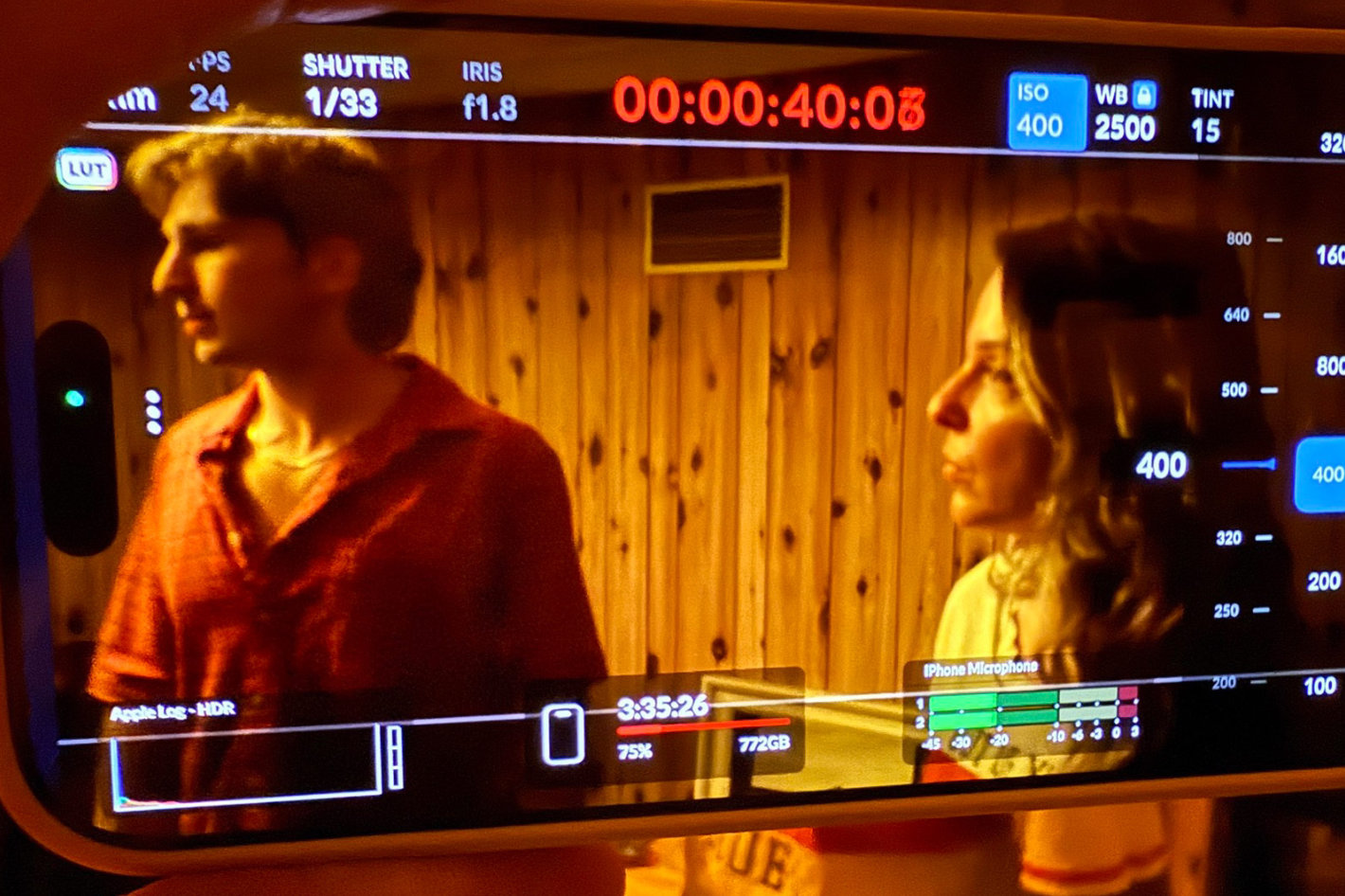
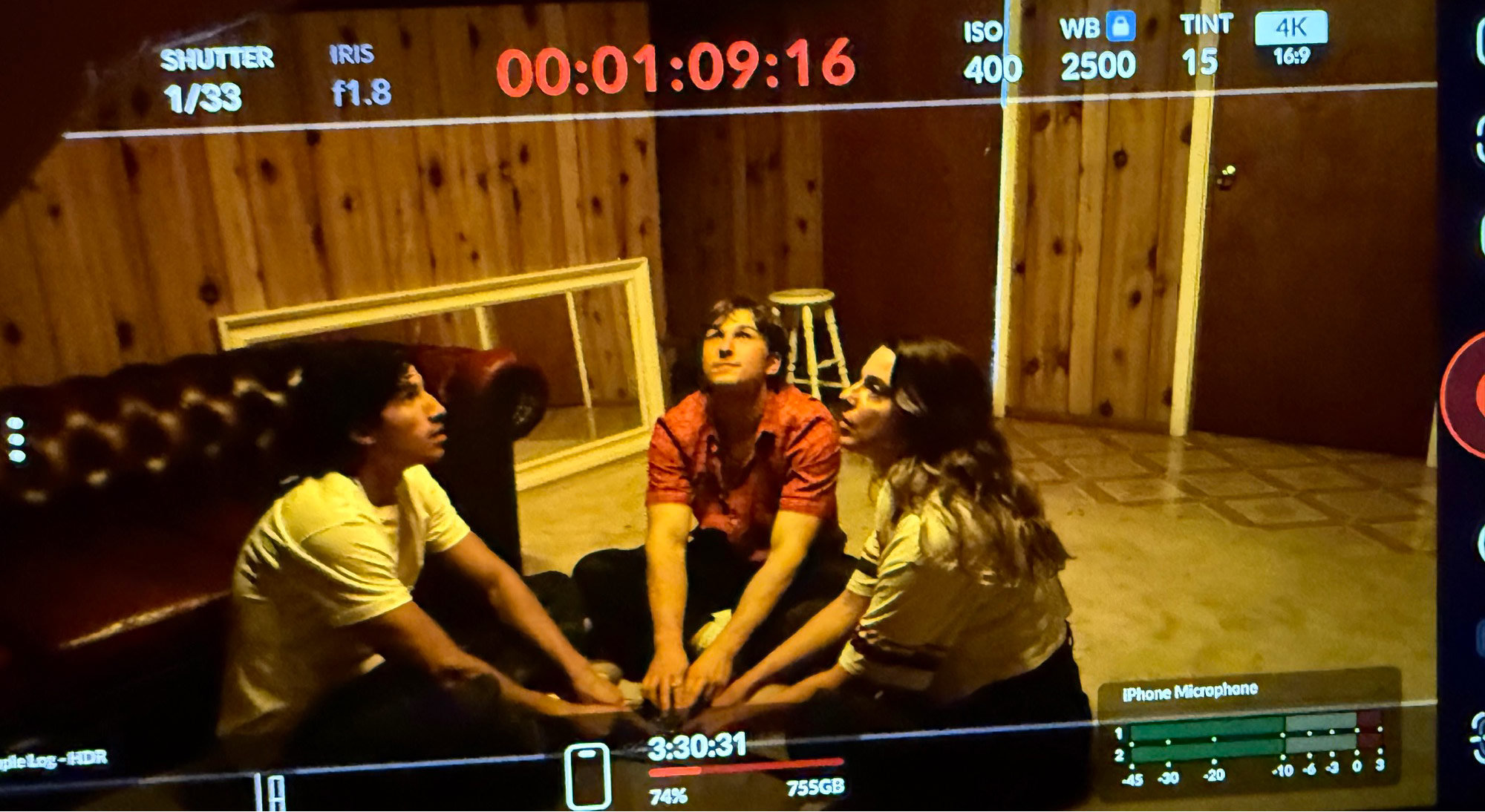
Principal photography took place almost exclusively within a darkened, wood-paneled basement constructed in the 1970s. This aesthetic choice served as a direct homage to the classic, grit-textured horror films of that era, such as The Texas Chain Saw Massacre and The Evil Dead.
However, shooting in a wood-paneled basement with minimal ambient light presented an extraordinary technical challenge. Dark wood absorbs light greedily, leaving very little ambient bounce to fill in the shadows. To navigate this, Demitri utilized the compact form factor of the iPhone to tuck the camera into tight corners, joists, and low angles that would have been physically inaccessible to a standard cinema camera rig.
The five days of shooting were characterized by intense, highly collaborative sessions. Because the camera setup time was virtually zero—requiring no heavy tripods, external monitors, or complex power distribution systems—the cast and crew could maintain a high-energy, continuous workflow. This agility allowed Demitri to capture a vast number of setups per day, ensuring he had the necessary coverage to construct a complex, fast-paced narrative.
Post-Production in the Fast Lane
Perhaps the most startling metric of the Fire Alive production pipeline is its post-production phase. Because the footage captured via the Blackmagic Camera app was highly organized and encoded directly into edit-ready formats, Demitri and his post-production team completed the entire edit, sound design, and color grading pass in just two days. By the seventh day after principal photography commenced, the film was fully realized and ready for exhibition.
Supporting Context & Technical Metrics
The success of Fire Alive cannot be attributed to creative ingenuity alone; it is equally a testament to the convergence of advanced mobile sensor technology and sophisticated software engineering.
+-------------------------------------------------------------------------+
|                  TECHNICAL WORKFLOW COMPARISON                          |
+-------------------------------------------------------------------------+
| Feature              | Standard Mobile Video     | Blackmagic App Workflow|
+----------------------+---------------------------+------------------------+
| Exposure Control     | Auto-hunting (unstable)   | Locked / Manual        |
| White Balance        | Dynamic shifting          | Fixed Kelvin Lock      |
| Codec Options        | Highly compressed H.264   | Apple ProRes (HQ/LT)   |
| Focus Control        | Contrast-detect auto      | Manual focus peaking   |
| Noise Profile        | Heavy digital artifacts   | Clean, organic grain   |
+-------------------------------------------------------------------------+
The Software Catalyst: Blackmagic Camera App
Historically, the primary obstacle to utilizing smartphones for professional filmmaking has not been the glass or the sensor itself, but the lack of manual control. Consumer camera applications are designed to make real-time, automated adjustments to exposure, focus, and white balance. In a narrative film environment, this automation is disastrous: a character moving through a shadow causes the camera to automatically boost the ISO, blowing out highlights and creating distracting shifts in color temperature.
The free Blackmagic Camera app (available on both iOS and Android) bypasses these consumer limitations by transforming the phone’s interface into that of a professional digital cinema camera. Key features utilized during the shoot of Fire Alive included:
Manual Exposure and ISO Locking: This prevented the phone from hunting for exposure in the pitch-black corners of the basement.
Kelvin-Locked White Balance: This ensured that the warm tones of the 1970s practical lamps remained consistent across different takes and angles.
Focus Peaking: This allowed the operator to pull focus manually with high precision, maintaining sharp details on the actors’ faces even in low-light environments.
Sensor Performance and Low-Light Capabilities
Shooting on the iPhone 16 Pro Max, Demitri leveraged the device’s advanced sensor architecture. In low-light environments, mobile sensors have historically suffered from severe digital noise, compression banding, and a loss of color saturation.
However, the hardware pipeline of the iPhone 16 Pro Max, combined with the high-bitrate recording options of the Blackmagic Camera app, yielded surprisingly clean source files. Demitri noted that the footage exhibited a level of dynamic range and shadow latitude that surpassed his experiences with several traditional large-format cameras.
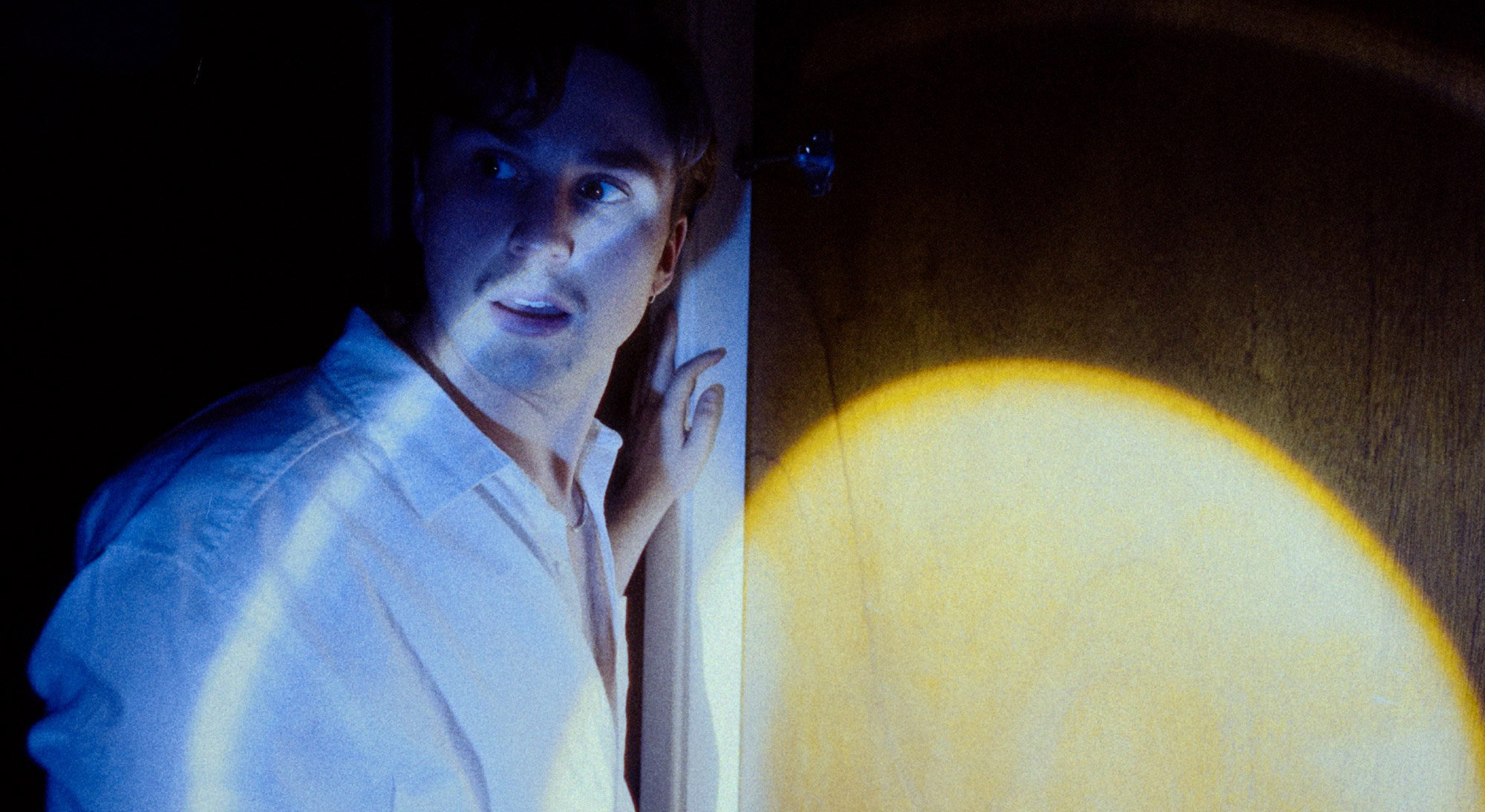
Specifically, the combination eliminated the harsh digital banding in deep shadow areas—a common issue when highly compressed codecs struggle to resolve subtle gradients of dark gray and black. Instead, the noise profile of the sensor behaved more like organic film grain, which the creative team embraced to enhance the grimy, retro atmosphere of the horror narrative.
Official Statements & Creative Philosophy
The implications of Fire Alive extend far beyond a single film festival placement. In industry statements, James Demitri has positioned the project as an open invitation to the global creative community to shed their technological inhibitions.
Reflecting on his experience transitioning from high-end fashion photography to mobile-based narrative cinema, Demitri remarked:
"Blackmagic Camera just feels like you’ve upgraded your gear to the next level. It swaps what feels like a phone to feeling like you’re using a professional camera."
For Demitri, the choice of camera platform was not a compromise born of financial desperation, but a deliberate aesthetic and operational selection:
"I really want to encourage other creatives to not do something because you think you can’t. The phone and the app will do an excellent job of something you can show on the big screen. It’s a genuine tool of choice, not a fallback."
This sentiment challenges the entrenched industry hierarchy, which often equates a project’s artistic and commercial validity with the cost of its gear package. By demonstrating that a feature-length film can achieve finalist status at a major international venue like SF3 using a device that fits in a pocket, Demitri has highlighted a new path forward for independent voices worldwide.
Future Outlook: The Evolution of Mobile Cinema
As the industry looks toward the remainder of 2026 and beyond, the precedent set by Fire Alive is already shaping future production models. The success of the film has solidified Demitri’s commitment to this agile workflow. He has officially confirmed that two additional feature films are currently in active pre-production for late 2026, both of which will exclusively utilize the iPhone platform and the Blackmagic Camera ecosystem.
Future Roadmap (Late 2026):
[Feature Project #2] ──> iPhone 17 Pro Max + Blackmagic App (Enhanced Dynamic Range)
[Feature Project #3] ──> iPhone 17 Pro Max + Blackmagic App (Advanced Color Science)
Demitri is particularly enthusiastic about the hardware advancements on the horizon, stating:
"The combination of the iPhone 17 Pro Max and Blackmagic Camera is mind blowingly good. I’m really looking forward to doing more with it."
This forward-looking perspective highlights the compounding speed of mobile technology cycles. While traditional cinema cameras often remain in service for five to ten years before receiving significant hardware updates, smartphone technology iterates annually. Each generation introduces massive leaps in processing power, sensor size, lens quality, and computational photography capabilities.
Broad Industry Implications
The success of Fire Alive signals a broader cultural and industrial shift:
Budget Reallocation: By drastically reducing camera and lighting rental costs, independent filmmakers can allocate precious capital toward securing better acting talent, securing high-quality locations, and investing in professional sound design—an area that often suffers in low-budget cinema.
Reduced Crew Sizes: Smaller, highly mobile crews reduce the logistical friction of transport, catering, and on-set management, making guerrilla filmmaking safer and more efficient.
New Curatorial Standards: International film festivals are increasingly dedicating premier programming slots to mobile-shot features, acknowledging that the medium has matured past its early "gimmick" phase into a legitimate, high-fidelity format.
Ultimately, Fire Alive stands as a monument to modern creative independence. It proves that the power to create compelling, theatrical-grade narrative art no longer resides solely in the hands of major studios or well-funded production houses. It resides in the pocket of anyone with a story to tell, a clear vision, and the drive to press record.