Executive Overview
For nearly half a century, enterprise software design has adhered to a single, foundational principle: the request-response model. Software was engineered to wait passively for explicit human direction. A user clicked a button, a web browser dispatched an HTTP request, a backend server processed a deterministic chain of pre-compiled logic, and a response returned. Entire paradigms—from load balancing and autoscaling to identity access management and enterprise security compliance—were built around this predictable, synchronous pattern.
That architectural consensus is currently fracturing. Driven by breakthroughs in large language models (LLMs) and reasoning engines, enterprise computing is shifting toward software that acts autonomously, continuously, and without human-in-the-loop dependencies. Rather than executing hard-coded branches written by software engineers, modern multi-agent systems work out execution steps dynamically at runtime. Given a high-level outcome, these agents reason through complex problems, generate custom code, execute that code, evaluate the output, and iteratively adjust their actions until the goal is achieved.
However, moving these AI agents from promising internal proofs-of-concept (POCs) to mission-critical production systems has exposed severe structural limitations in conventional IT infrastructure. Traditional shared application runtimes force organizations into a binary compromise: either grant autonomous agents unrestricted access to core infrastructure (creating unacceptable security risks), or lock them down so tightly that their reasoning capabilities are neutralized.
To resolve this impasse, a new enterprise architectural pattern has emerged: the formal decoupling of the agent governance control plane from the runtime execution environment. By combining centralized orchestration systems like Microsoft Foundry with hardware-isolated execution runtimes such as Azure Container Apps Sandboxes, enterprises are finally able to operationalize autonomous software at scale without compromising enterprise risk standards.
Detailed Chronology: The Architectural Evolution of Enterprise Software
To understand why traditional cloud environments struggle with modern AI workloads, it is necessary to examine how enterprise application architecture has evolved across four distinct eras.
+-----------------------------------------------------------------------------------+
| ERA 1: Deterministic Applications (1990s - 2022)                                  |
| Hard-coded paths -> Static security perimeters -> Request/Response loops          |
+-----------------------------------------------------------------------------------+
                                        │
                                        ▼
+-----------------------------------------------------------------------------------+
| ERA 2: Conversational AI & the Pilot Wall (2022 - 2023)                            |
| Stateless LLM API calls -> Impressive text generation -> Blocked by security gates |
+-----------------------------------------------------------------------------------+
                                        │
                                        ▼
+-----------------------------------------------------------------------------------+
| ERA 3: Autonomous Code Execution Breakdown (2023 - 2024)                          |
| Agents write/run code -> Shared infrastructure risk -> Broad access vs. containment |
+-----------------------------------------------------------------------------------+
                                        │
                                        ▼
+-----------------------------------------------------------------------------------+
| ERA 4: Decoupled Dual-Layer Paradigm (Present & Beyond)                            |
| Control Plane (Governance & ID) + Ephemeral MicroVM Sandboxes (Execution)          |
+-----------------------------------------------------------------------------------+
Phase I: The Era of Deterministic Logic (1990s–2022)
For decades, developers explicitly programmed every computational branch. Software execution paths were entirely known before a single line of code hit production. Operational teams designed perimeter-based security, static access controls, and predictable resource allocation models around these fixed behaviors. Applications were inherently deterministic: given input X, the system would reliably execute steps Y and yield output Z.
Phase II: The Conversational AI Boom and the "Pilot Wall" (2022–2023)
The mass adoption of generative AI introduced stateless, prompt-driven models. Initially, enterprise integration focused on basic retrieval-augmented generation (RAG) and conversational search interfaces. Organizations quickly connected LLMs to corporate datasets, creating internal chatbots that could summarize documents or answer basic support queries.
While these pilots demonstrated raw capability, they hit a barrier when asked to handle operational tasks. Text-based responses could not update records of system activity, process code, or navigate dynamic workflows across distributed IT environments.
Phase III: The Execution Pivot and Runtime Breakdown (2023–2024)
To make AI truly actionable, developers began building autonomous agents capable of tool call execution. When assigned a complex task, an agent no longer just returned text; it cloned code repositories, installed temporary dependencies, generated custom scripts, ran data analyses against live databases, and called enterprise APIs.
This shift severely strained legacy infrastructure. Running dynamically generated, autonomous code on shared application hosts created catastrophic "blast radius" vulnerabilities. If an agent generated unsafe code or fell prey to indirect prompt injection, it possessed the potential to wipe out shared filesystems, leak credentials stored in memory, or initiate rogue network traffic. Enterprise security teams routinely halted these initiatives, leaving hundreds of promising AI implementations stranded in pilot environments.
Phase IV: The Decoupled Dual-Layer Standard (Present and Beyond)
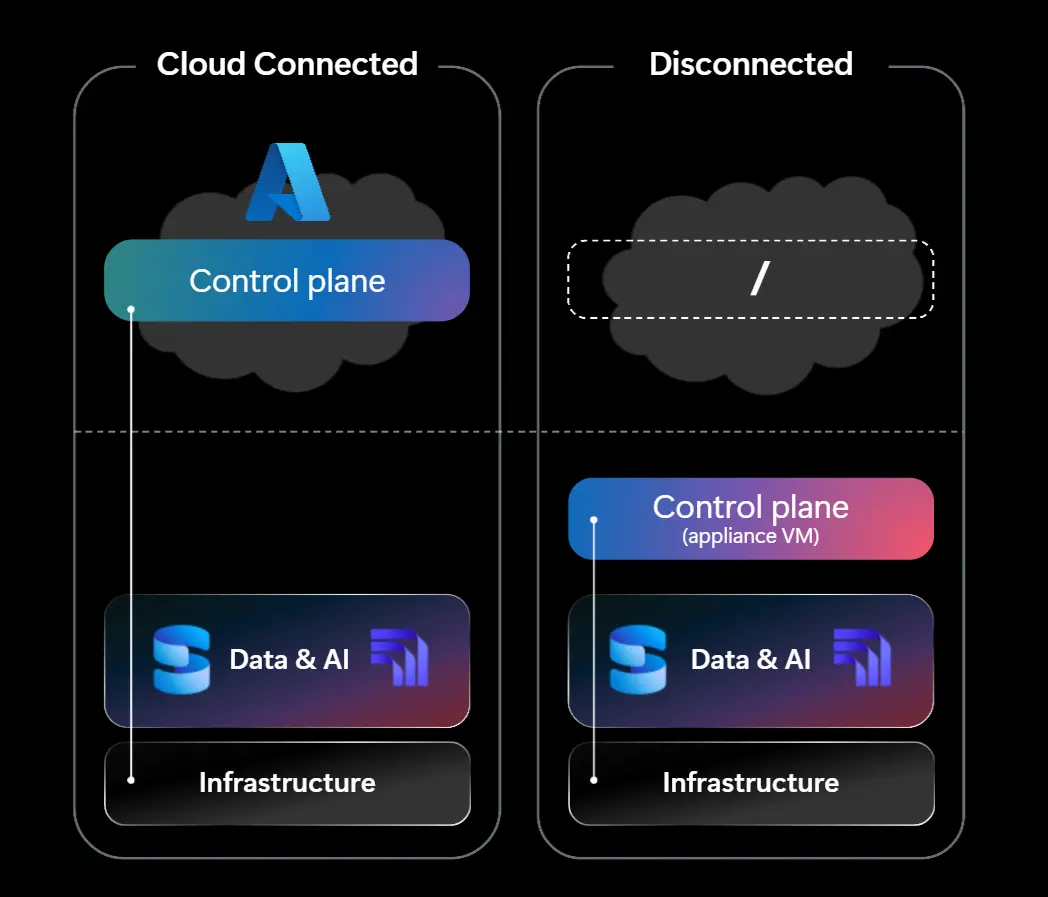
The industry has responded by establishing a clear separation between the agent’s control plane and its execution plane. The control plane manages agent identity, policy enforcement, reasoning tracing, and data grounding. The execution plane provides short-lived, disposable environments isolated down to the hypervisor level. This dual-layer standard allows autonomous systems to run untrusted code safely at enterprise scale.
Supporting Context & Metrics: Technical Deep-Dive
Operating an autonomous agent in production requires meeting the same stringent availability, auditing, and security metrics applied to traditional enterprise software. Achieving this balance requires specialized virtualization tech built specifically for agentic execution loops.
       [ Microsoft Foundry Control Plane ]
       ├── Entra Agent ID (Scoped Permissions)
       ├── Runtime Policy & Guardrail Enforcement
       └── Telemetry, Tracing & Evaluation Logs
                          │
                          │ (Dispatches Work Tasks)
                          ▼
       [ Azure Container Apps Sandboxes ]
       ┌─────────────────────────────────────────┐
       │ MicroVM Hardware Isolation Layer        │
       │  ├── MicroVM 1: Agent Task A (Secs)    │
       │  ├── MicroVM 2: Agent Task B (Stateful) │
       │  └── Ephemeral Epilog: Auto-Dissolve    │
       └─────────────────────────────────────────┘
The Anatomy of MicroVM Isolation
Traditional enterprise containerization (such as standard Docker containers sharing a host Linux kernel) is optimized for long-running, predictable services. However, standard containers lack kernel-level boundaries, meaning a privilege escalation vulnerability inside an agent script can compromise the host node.
To eliminate this vulnerability without introducing the massive compute overhead of traditional virtual machines, modern runtimes utilize specialized micro-Virtual Machines (microVMs).
| Architectural Dimension | Traditional Shared Runtimes (Docker/K8s) | Traditional Virtual Machines (VMs) | Ephemeral MicroVM Sandboxes |
|---|---|---|---|
| Isolation Level | OS Kernel-level sharing (Weaker) | Full Hardware Hypervisor (Strongest) | Hardware-Isolated MicroVM (Strongest) |
| Startup Time | ~1 to 5 Seconds | ~30 to 120 Seconds | Sub-second (<500ms) |
| Lifecycle | Months to Years (Persistent) | Months to Years (Persistent) | Seconds to Hours (Ephemeral) |
| Credential Storage | Stored in memory/env variables | Stored on local virtual disk | Zero persistent state / Tokenized |
| State Continuity | Requires external storage | Disk Snapshots (Slow) | Native Pause / Resume Context |
| Primary Risk | Kernel Exploits / Host Sprawl | Resource Inefficiency / Cost | Ephemeral compute consumption |
By deploying microVM sandboxes, each autonomous agent task receives an environment created in milliseconds. The execution environment runs under an identity explicitly managed through systems like Entra Agent ID, meaning permissions are strictly scoped to the exact systems required for that single task. Credentials are never written to disk or preserved in local memory. Once the task reaches completion, the entire microVM is dissolved, eliminating residual risk and preventing state contamination across tasks.
Long-Running Workloads and State Preservation
A significant challenge in agentic execution is managing tasks that span extended timeframes—such as complex code refactoring, deep log analytics, or asynchronous business workflow processing.
Advanced sandboxing solutions handle this via stateful pause-and-resume mechanisms. When an agent must pause execution to wait for an asynchronous callback, external verification, or rate-limited API queue, the entire memory context and execution state of the microVM are serialized and safely frozen. Once triggered, the environment restores in milliseconds, allowing the agent to resume execution without re-running earlier steps or losing internal context.
Enterprise Scale and Internal Validation Metrics
The validity of this architecture is substantiated by real-world telemetry from hyperscale deployments. Within Microsoft’s operational ecosystem alone, this sandboxed microVM architecture processes over 1,000,000 active production sandboxes per day.
This compute layer powers several high-volume enterprise AI solutions:
- GitHub Copilot Workspace: Executing, testing, and modifying untrusted pull requests directly inside dynamic code sandboxes.
- Microsoft Copilot Studio & Foundry Agent Service: Instantiating isolated sandboxes to execute user-defined Python scripts, evaluate data schemas, and compile reports.
- Security Copilot: Interrogating malicious code samples and analyzing network logs inside non-persistent execution spaces to prevent lateral threat movement.
- Azure SRE Agent: Performing real-time diagnostic scripts, processing live telemetry, and formulating remediation actions on production incidents without risking underlying host nodes.
Official Statements & Industrial Implementation Analysis
The real-world value of decoupling agent control from dynamic sandboxing is best illustrated through industrial deployments where autonomous code execution directly affects core business operations.
In heavy industry and energy infrastructure, operational platforms must process petabytes of unstructured telemetry, sensor readings, and engineering schematics. Cognite, a enterprise industrial data software company, encountered this challenge when scaling its Atlas AI agent framework within the Cognite Data Fusion environment.
Christian Flasshoff, Architect for Atlas AI at Cognite, detailed the architectural requirements necessary to elevate their industrial agents from pilot experiments to trusted operational tools:
"Atlas AI agents are powered by Azure OpenAI models in Microsoft Foundry, but to handle complex work in Cognite Data Fusion they needed to execute arbitrary code and work with files directly — which meant sandboxes that truly isolate each user’s agent, environment, and data. With Azure Container Apps Sandboxes we had a prototype running in hours and were testing with customers within weeks, because Azure handles the hard part: per-user isolation, egress policies, sub-second execution. For our industrial customers, that’s the difference between a days-long manual investigation into ‘which wells are underperforming and why?’ and a cited draft in minutes."
— Christian Flasshoff, Architect, Atlas AI at Cognite
Case Study Analysis: Industrial Data Fusion
Flasshoff’s statement highlights a critical enterprise reality: high-value tasks frequently require AI models to write and run arbitrary code on the fly. In Cognite’s operational environment:
- The Goal: Identify underperforming oil wells and determine technical root causes across thousands of continuous sensor streams.
- The Bottleneck: Human data scientists previously had to manually write scripts, query disparate data silos, aggregate time-series telemetry, and plot performance metrics—a process taking days per facility.
- The Agentic Approach: An AI agent writes custom data-processing scripts at runtime to analyze real-time stream topologies.
- The Security Requirement: Because these scripts run arbitrary computational logic on production data streams, running them in a shared cluster environment presents severe risks of cross-tenant data leakages or runaway script execution.
- The Solution: By combining Microsoft Foundry (for model governance, tracing, and data grounding) with Azure Container Apps Sandboxes (for sub-second microVM execution and strict network egress policies), the agent isolates every customer’s computational workload. The analysis time drops from days to minutes without violating safety or compliance standards.
Future Outlook: Preparing Infrastructure for Software That Acts
As enterprise software transitions from human-initiated actions to continuous, autonomous agent execution, technology leaders must fundamentally re-evaluate their underlying platform architectures.
                                [ STRATEGIC PARADIGM SHIFT ]

         LEGACY PLATFORMS                                    AGENT-NATIVE PLATFORMS
 ┌──────────────────────────────┐                   ┌──────────────────────────────────┐
 │ Static Request-Response      │                   │ Continuous Autonomous Execution  │
 │ Broad Host Permissions       │ ────────────────> │ Ephemeral Per-Task Scoping       │
 │ Implicit Trust Boundaries    │                   │ Hardware-Isolated MicroVMs       │
 │ Shared Monolithic Runtimes   │                   │ Decoupled Control & Execution    │
 └──────────────────────────────┘                   └──────────────────────────────────┘
Organizations planning to scale autonomous agent deployments over the next three to five years should align their platform strategies around four core imperatives:
1. Adopt Zero-Trust Runtime Isolation
The traditional security model of trusting code because it was written by internal personnel is obsolete. When software generates its own code at runtime, every execution loop must be treated as untrusted third-party code. Enterprise platforms must enforce hardware-level hypervisor isolation down to the individual sub-task.
2. Decouple Control Planes from Execution Layers
Platform architects must resist the temptation to run AI reasoning frameworks directly inside existing application hosting layers. Governance, permission scoping (via identity systems like Entra Agent ID), audit tracing, and runtime observability must remain strictly segregated from the underlying compute engine handling code execution.
3. Plan for Hyper-Scale Concurrent Agent Execution
As organizations transition from deploying dozens of supervised copilots to orchestrating thousands of specialized, continuous agents, compute demand will shift from predictable web traffic spikes to high-density burst workloads. Runtimes must support sub-second instantiation, rapid state suspension, and automatic clean-up to ensure economic viability at scale.
4. Continuous Runtime Guardrails over Static Scanning
Static code analysis and pre-deployment security reviews cannot fully protect systems against dynamic, runtime-generated reasoning loops. Guardrails must be enforced dynamically during execution, restricting egress network targets, monitoring system call boundaries, and applying absolute time-to-live (TTL) limits on active sandboxes.
Conclusion
The evolution toward autonomous software does not require re-engineering underlying global cloud infrastructure; rather, it requires modernizing the runtime environment operating on top of it. By decoupling the control planes that govern agent reasoning from the isolated runtime environments that execute generated code, enterprises can safely deploy autonomous AI agents at scale. The organizations that establish these architectural boundaries today will define the next generation of enterprise software performance and operational efficiency.